


Which Medications Treat Non-Small Cell Lung Cancer?
Several types of medication may be used to treat non-small cell lung cancer (NSCLC). What’s recommended for you depends on the stage of cancer and other factors.
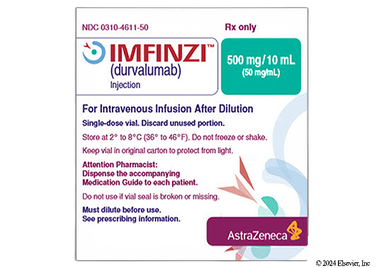
Imfinzi (durvalumab) is an immunotherapy medication used to treat several types of cancer, including lung cancer, bladder cancer, liver cancer, and endometrial cancer. It's given as an intravenous (IV) infusion by a healthcare professional, usually every 2 to 4 weeks depending on the treatment plan. The medication is also often used together with other anticancer medications. Common side effects include tiredness, cough, and nausea.

Imfinzi (durvalumab) is an immunotherapy that helps your immune system fight cancer, specifically a PD-L1 inhibitor. Cancer cells can use a protein called PD-L1 to “turn off” your immune cells so they don’t attack the tumor.
Imfinzi (durvalumab) works by blocking PD-L1. This helps turn your immune cells back on so they can find and attack cancer cells.
| Common Brands | Imfinzi |
|---|---|
| Drug Class | PD-L1 inhibitor |
| Controlled Substance Classification | Not a controlled medication |
| Generic Status | No lower-cost generic available |
| Availability | Prescription only |

The following side effects may get better over time as your body gets used to the medication. Let your healthcare provider know immediately if you continue to experience these symptoms or if they worsen over time.
Note: Side effects above were reported in people with NSCLC who took Imfinzi (durvalumab) alone
Contact your healthcare provider immediately if you experience any of the following.
Side effects that you should report to your care team as soon as possible:
Side effects that usually do not require medical attention (report these to your care team if they continue or are bothersome):




Imfinzi (durvalumab) can cause some serious health issues. This risk may be even higher for certain groups. If this worries you, talk to your doctor or pharmacist about other options.
Imfinzi (durvalumab) works by turning on your immune system to fight cancer, but this can sometimes cause your immune system to attack healthy parts of your body. These are called immune-related side effects and they can happen at any time, even after you stop treatment. They most often affect the lungs, gut, liver, skin, and thyroid, but can happen anywhere.
Your oncology care team will check your health with regular blood tests. Tell them right away if you notice symptoms like cough, shortness of breath, diarrhea, yellowing of your skin, rash, or unusual tiredness. Early treatment is important and might include medications like steroids or pausing or stopping Imfinzi (durvalumab).
Some people had reactions during the Imfinzi (durvalumab) infusion, and in rare cases they can be life-threatening. Tell your care team right away if you have chills, flushing, trouble breathing, itching, or dizziness during the infusion.
Your care team will pause the infusion and treat your symptoms. Once you feel better, they could restart it at a slower rate. They might also give you medications before future doses to help prevent another reaction.
Risk factors: People who have received a stem cell (bone marrow) transplant
If you’ve had a stem cell transplant, talk to your oncology team before starting Imfinzi (durvalumab). Using this type of immunotherapy before or after a transplant can lead to serious, and sometimes life-threatening, problems.
These can include graft-versus-host disease (when the new immune system attacks your body) and liver problems. Because of these risks, your oncologist will discuss careful monitoring or other treatment options with you.
Imfinzi (durvalumab) hasn’t been studied in pregnant people, but it might harm or cause loss of an unborn baby based on animal studies. If you can become pregnant, your oncologist will do a pregnancy test before you start treatment. Use birth control during treatment and for 3 months after your last dose.

Your oncology team will determine your dose and how often you receive it based on your type of cancer. You might also get other medications, like Imjudo (tremelimumab) or chemotherapy as part of your treatment.
In general, for adults weighing 66 lbs or more:
Your dose will be different if you weigh less than 66 lbs.


Prescription savings
Stop paying too much for your prescriptions. Compare prices, get pharmacy coupons, and save up to 80%. Find expert answers to your health questions so you can make the best decisions for yourself and your family.
Health conditions
Medications & treatment
Access & affordability
 Our monthly healthcare membership can help you save thousands on your prescription costs.
Resources

Imfinzi is an immunotherapy, not chemotherapy. Chemotherapy kills all fast-growing cells, but Imfinzi works differently. It blocks a specific protein that helps cancer hide, so it uses your own immune system to find and attack cancer cells. Depending on your cancer, you might also get chemotherapy with Imfinzi.
It takes over 3 months for most of Imfinzi to leave your body after you stop. This estimate is based on how long the medication stays in your system ( it's half-life), and can vary from person to person. Talk to your oncology team if you have questions about how this could affect your health.
No, Imfinzi doesn't cure cancer, but it can help some people live longer. For example, in a study of people with NSCLC where surgery wasn't an option, about 43% of those who got Imfinzi were alive after 5 years, compared to 33% who didn't take it. Your results can be different based on your cancer and health. Talk to your oncology team about what you can expect from this medication.
How long Imfinzi works can be different for each person. Some people respond to treatment for months, while others might have benefits that last for years. Your oncology team will check your progress with scans and tests to see how well the medication is working for you.
Your oncology team will determine how long you should get Imfinzi based on how well it's working and whether you’re able to tolerate its side effects. Most people continue treatment as long as it’s helping control the cancer. For some lung cancers, treatment could be limited to about 1 to 2 years. Talk to your oncology team if you have questions about how long you should take this medication.
Yes, Imfinzi can be given once a month for some people. The exact schedule depends on your treatment plan and cancer type. Your oncology team will choose the dosing schedule that’s right for you.
Yes, hair loss is a common side effect of Imfinzi. Keep in mind that you might also receive chemotherapy, which can also cause hair loss. If you’re worried about hair loss, talk to your oncology team before starting treatment. They can explain what to expect and suggest ways to manage it, like cooling caps or wigs.
Imfinzi was first approved by the FDA in May 2017. Since then, it has received additional approvals for more types of cancer over time.
