Key takeaways:
Clogged ears happen when the pressure in the middle ear is higher than the pressure outside of it. It’s that feeling when your ears haven’t “equalized.”
The eustachian tube is the part of your ear responsible for balancing that pressure. When there are problems with the eustachian tube, your ears might feel full of pressure.
Certain situations — like air travel, allergies, and head colds — can cause pressure to build up in the ear. Usually, this doesn’t last more than a few days.
Longer-lasting eustachian tube problems can cause hearing and balance issues, as well as ear infections.
Save on related medications
Have you ever had that uncomfortable feeling when your ear won't pop, and you’ve tried everything? You swallow and yawn repeatedly, but your hearing still feels muffled. Blocked or full ears are common, and it’s usually temporary. But if your ears feel clogged often, or the sensation doesn’t go away, it’s worth exploring the underlying cause.
Why does my ear feel clogged?
There are several reasons your ears may feel clogged or plugged. Many are related to problems with the eustachian tube. The eustachian tube is a small structure that connects the middle ear to the back of the nose and throat. The middle ear is the part of the ear located between the brain and the eardrum.

The eustachian tube opens when you yawn, sneeze, and swallow. This stops pressure from building up inside the middle ear. But when the tube is irritated, swollen, or narrowed, it can’t open as well to do its job.
The most common reason for eustachian tube constriction is inflammation. Less commonly, the eustachian tube may have a growth or an abnormal shape.
Some people are more likely to have problems with their eustachian tubes. For example, children have shorter eustachian tubes than adults. And a shorter tube is more likely to get blocked or infected. Also, people who smoke are more likely to get a buildup of mucus in their eustachian tubes.
There are also causes of clogged ears that have nothing to do with the eustachian tube at all, like earwax, swimmer’s ear, or hearing loss.
Let’s take a closer look at 11 common reasons for clogged ears, as well as treatment options.
1. Upper respiratory tract infections, including COVID-19
Many types of upper respiratory infections — including common respiratory viruses and COVID-19 — can cause inflammation in the nose and sinuses. This swelling of the lining of the upper airways can also affect the eustachian tubes.
This is why people with an upper respiratory tract infection may experience:
Ear pressure
Ear fullness
Muffled sounds
Ear pain
2. Allergic rhinitis (seasonal and environmental allergies)
Seasonal allergies — and allergies to other irritants — are another common cause of nasal and sinus congestion. People with nasal allergies have long-lasting swelling of the upper airways, including in their sinuses. This can lead to short- or long-term eustachian tube problems.
3. Otitis media (infection in the middle ear)
Fluid from the throat or sinuses can travel up the eustachian tubes and get stuck. This can cause otitis media, a middle ear infection. Otitis media is quite common in young children.
Swelling from allergies and viruses makes it even more likely that otitis media will occur. Fluid in the ear can also build up after an ear infection has passed. Either way, when the middle ear is full of fluid, it can feel clogged.

Read more like this
Explore these related articles, suggested for readers like you.



4. Sinusitis (sinus infection)
When fluid builds up in the sinuses, bacteria and other germs can grow there and cause a sinus infection. This causes swelling, which prevents air and fluid from passing through the system normally. When the infection and swelling extend into the eustachian tube, your ears can feel blocked.
5. Eustachian tube dysfunction
Sometimes, the problem is the eustachian tube itself. Eustachian tube dysfunction (ETD) usually happens for structural reasons, such as the eustachian tube being too narrow or being too floppy to stay open properly. This dysfunction prevents the pressure inside the middle ear from matching the pressure outside.
ETD can lead to symptoms such as:
6. Pregnancy and other hormonal causes
High levels of the hormone estrogen can cause swelling of the eustachian tube. This is common in pregnancy, but it can also happen with some contraceptive pills. Eustachian tube swelling can also be a side effect of some hormone-blocking prostate cancer treatments.
7. Altitude changes
Altitude changes — like with air travel or scuba diving — can cause plugged ears. This is especially true for people with underlying eustachian tube problems. It happens because pressure changes too quickly for the ears to be able to equalize.
8. Otitis externa (swimmer’s ear)
Swimmer’s ear is an infection of the outer ear canal. It causes inflammation and swelling in the part of the ear canal you can see with a flashlight.
Like its name suggests, swimmer’s ear often occurs after swimming, showering, or playing water sports. Water in the outer ear can irritate the skin and allow bacteria or fungi to grow in the outer ear canal. In addition to being painful, if the ear canal becomes swollen, it can also feel plugged.
9. Earwax
Some earwax (cerumen) is normal and healthy. But when too much earwax builds up in the outer ear, it can get impacted or blocked. This can cause muffled hearing and a feeling of fullness in the ear. Earwax impaction (when earwax is lodged in the ear canal) is common, affecting up to 5% of healthy adults.
You may be able to safely remove earwax at home with ear drops or irrigation. But a healthcare professional — like your primary care provider — may be a better choice. They can use a special scope to look inside the ear and safely remove the earwax.
Although it may be tempting, using Q-tips (cotton swabs) to clean out your ears can damage the eardrum or ear canal. Q-tips can also push earwax farther into your ear.
10. Temporomandibular joint disorders (TMD)
Temporomandibular joint disorders (TMD) affect the muscles and joints of the jaw. Often, the cause is bruxism (teeth grinding). While pain or clicking in the jaw are the most common symptoms, people with TMD sometimes experience ear fullness and pain.
A variety of treatments are available to help manage TMD.
11. Hearing loss
Ear fullness or a sensation of “stuffiness” can be a symptom of true hearing loss — also called sensorineural hearing loss. This type of hearing loss is caused by damage to the inner parts of the ear or the auditory nerve. It usually comes on gradually with age, but it can also happen in younger people. Hearing loss that happens suddenly can be one sign of a bigger problem.
Causes of hearing loss include:
Some viral infections
Exposure to sudden, loud noises
Head injuries
If you have sudden or new hearing loss, visit your primary care provider right away.
How to unclog your ears
Clogged ears often improve on their own over time. But there are many treatment options available, depending on the cause.
Home remedies for clogged ears
For newly clogged ears, you can try some of these tricks:
Chewing gum
Yawning
Swallowing
The Valsalva maneuver (taking a deep breath and then blowing out of your nose gently while pinching your nostrils closed and keeping your mouth shut)
Steam inhalation, if mucus congestion is a cause
If these approaches don’t work, visiting a healthcare professional can help determine the cause of your symptoms and the best treatment to try.
Medications for clogged ears
Depending on the cause, treatment options for clogged ears can include:
Decongestants: Pseudoephedrine (Sudafed) is a type of decongestant that can narrow the blood vessels in the nose and the eustachian tubes. This helps reduce swelling and congestion. Decongestants work quickly and last for up to 6 hours.
Nasal steroid sprays: Fluticasone (Flonase) or mometasone (Nasonex) can help if your clogged ears are due to allergies or nasal congestion. They work by reducing inflammation of the lining of the nose. You often need to use nasal sprays for about 2 weeks before they really begin to work.
Antihistamines: Loratadine (Claritin), cetirizine (Zyrtec), or fexofenadine (Allegra) can help if you have congestion caused by allergies.
Oral steroid pills: Prednisone or methylprednisolone may be an option for persistent swelling when other treatments have failed.
Antibiotics: If you have a sinus infection or an ear infection, antibiotics may be necessary. There are also ear drops and over-the-counter (OTC) medications, such as pain relievers, that can help with symptoms of an ear infection.
Allergy shots: For seasonal or environmental allergies, allergy shots can be helpful. But these can take a long time to show improvements.
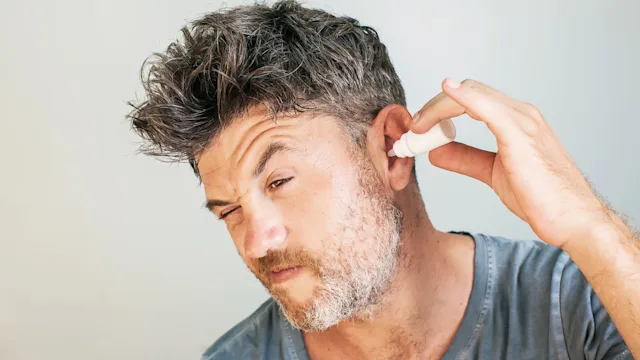
Ear drops: If earwax is the cause of your symptoms, ear drops to remove earwax can be helpful. Carbamide peroxide (Debrox) or hydrogen peroxide drops can break up and soften the impacted earwax. In some cases, a healthcare professional may need to flush out or remove excess earwax.
Medical procedures for clogged ears
There are also surgical procedures that can help with severe cases of ETD, including:
Balloon catheter dilation: This involves inflating a balloon to open up the eustachian tube.
Myringotomy: This is a surgical incision in the eardrum to drain trapped fluid, blood, or pus.
Tympanostomy: This is the surgical placement of ear tubes.
What to do if your ears won’t pop and you feel constant pressure?
Typically, clogged ears will ease up within a few days. Symptoms may last a little longer if you have a head cold, COVID infection, or allergies. But if clogged ears continue longer, it may be time to see a healthcare professional about your treatment options.
Although serious problems are rare, growths or tumors can sometimes occur in the eustachian tube or on the nerves around it. These problems might not show other symptoms right away, so it’s important to get a medical opinion if your clogged ears don’t get better over time.
Get medical attention if you have any of the following symptoms:
Ear pain
Fever
Ear discharge
Ear ringing
Hearing loss
Problems with balance or vertigo
Clogged ears that don’t get better after a few days
Frequently asked questions
Massaging earwax out with your finger or a Q-tip isn’t safe. But there are safe and effective over-the-counter (OTC) treatments for removing earwax. Most common are earwax removal drops containing carbamide peroxide or hydrogen peroxide. These treatments involve flushing out the ears afterward with water. It’s a good idea to check in with a healthcare professional if you’re unsure if OTC earwax removal drops are right for you.
Squirting warm water into your ear (irrigation) can be an effective at-home method for removing earwax. But it’s crucial to use sterile or distilled water to reduce the risk of infection. And you shouldn’t irrigate your ear if you have ear tubes, a perforated eardrum, ear pain, or drainage. In these cases, it’s important to see your primary care provider, who can safely remove the earwax and check for signs of infection or injury.
Massaging earwax out with your finger or a Q-tip isn’t safe. But there are safe and effective over-the-counter (OTC) treatments for removing earwax. Most common are earwax removal drops containing carbamide peroxide or hydrogen peroxide. These treatments involve flushing out the ears afterward with water. It’s a good idea to check in with a healthcare professional if you’re unsure if OTC earwax removal drops are right for you.
Squirting warm water into your ear (irrigation) can be an effective at-home method for removing earwax. But it’s crucial to use sterile or distilled water to reduce the risk of infection. And you shouldn’t irrigate your ear if you have ear tubes, a perforated eardrum, ear pain, or drainage. In these cases, it’s important to see your primary care provider, who can safely remove the earwax and check for signs of infection or injury.
The bottom line
Many people experience clogged ears at some point. Common reasons why your ears may feel full are allergies, head colds, and pregnancy, as well as changes in air pressure. The best treatment for clogged ears will depend on the cause. Make sure to visit a healthcare professional if your symptoms persist longer than a few days, or if you aren’t sure of the cause.

Why trust our experts?




References
ENT Health. (2018). Ears and altitude (barotrauma). American Academy of Otolaryngology–Head and Neck Surgery Foundation.
ENT Health. (2019). Sensorineural hearing loss (SNHL). American Academy of Otolaryngology–Head and Neck Surgery Foundation.
ENT Health. (2020). Autoimmune inner ear disease. American Academy of Otolaryngology–Head and Neck Surgery Foundation.
Familydoctor.org. (2025). Nasal sprays: How to use them correctly.
Hamrang-Yousefi, S., et al. (2023). Eustachian tube dysfunction. StatPearls.
Inoue, T., et al. (2024). Lipoma arising in the eustachian tube. Cureus.
Lee, H. A., et al. (2024). Contemporary review of idiopathic sudden sensorineural hearing loss: Management and prognosis. Journal of Audiology & Otology.
Ma, Y., et al. (2020). Eustachian tube dysfunction in patients with house dust mite-allergic rhinitis. Clinical and Translational Allergy.
Michaudet, C., et al. (2018). Cerumen impaction: Diagnosis and management. American Family Physician.
National Institute of Dental and Craniofacial Research. (2025). TMD (temporomandibular disorders). National Institutes of Health.
Oussoren, F. K., et al. (2024). Assessing risk of stroke after idiopathic sudden sensorineural hearing loss using data from general practice. Scientific Reports.
Pezzoli, M., et al. (2017). Effects of smoking on eustachian tube and hearing. The International Tinnitus Journal.
Searight, F. T., et al. (2023). Otitis media with effusion. StatPearls.
Yu, X., et al. (2024). Allergy in pathogenesis of eustachian tube dysfunction. World Allergy Organization Journal.