Key takeaways:
Spider bites look different depending on the type of spider, how much venom was injected, and how your body reacts. Their appearance can also change over time.
Most spider bites in North America aren’t dangerous and can be treated at home. Treatment focuses on relieving pain, reducing swelling, and preventing infection.
Signs of a serious spider bite include worsening pain, an open sore, or drainage. Other serious signs are muscle aches, abdominal pain, or fever. Seek medical care right away if these symptoms develop or if a young child is bitten.
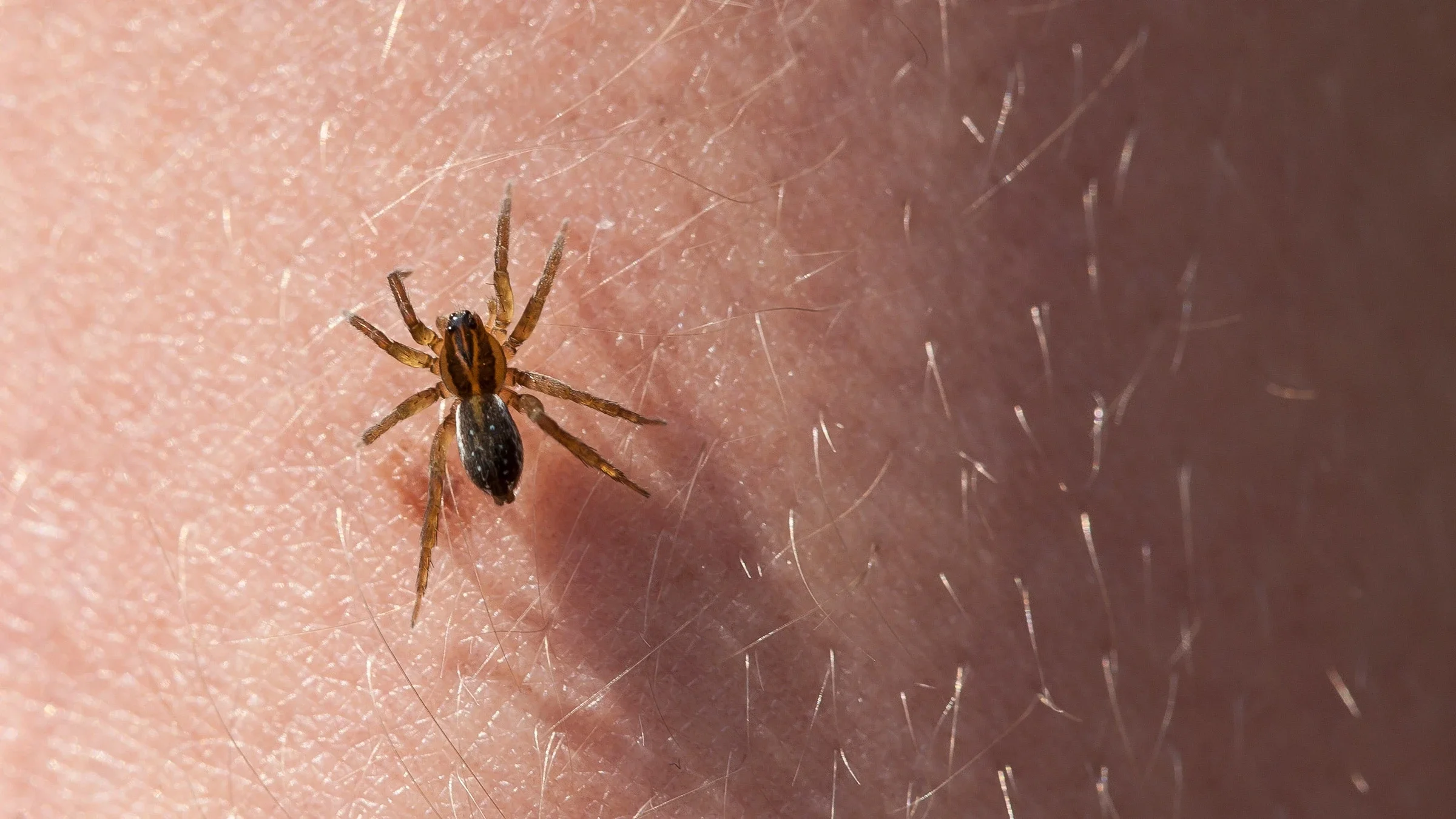
Spider bites can sound scary. But although there are thousands of spider species in the world, only a handful are actually poisonous to humans. Most spiders aren’t dangerous because their fangs can’t easily break the skin or their venom doesn’t affect people. Fortunately, very few poisonous spiders are found in North America.
Still, some spider bites can cause infection, skin damage, or more serious symptoms. And, sometimes, it’s hard to know if a spider actually bit you at all. That’s because most spider bites cause nonspecific symptoms like redness, swelling, itching, and pain.
Here, we’ll review what a spider bite can look like (including spider bite pictures), signs to watch for, and when to seek medical care.
Search and compare options
What does a spider bite look like?
Identifying spider bites can be hard. They don’t all look the same, and they can appear differently from person to person. A spider bite’s appearance may depend on:
What type of spider caused the bite
How much time has passed since the bite
How much venom the spider injected
How strongly your body reacts to the venom
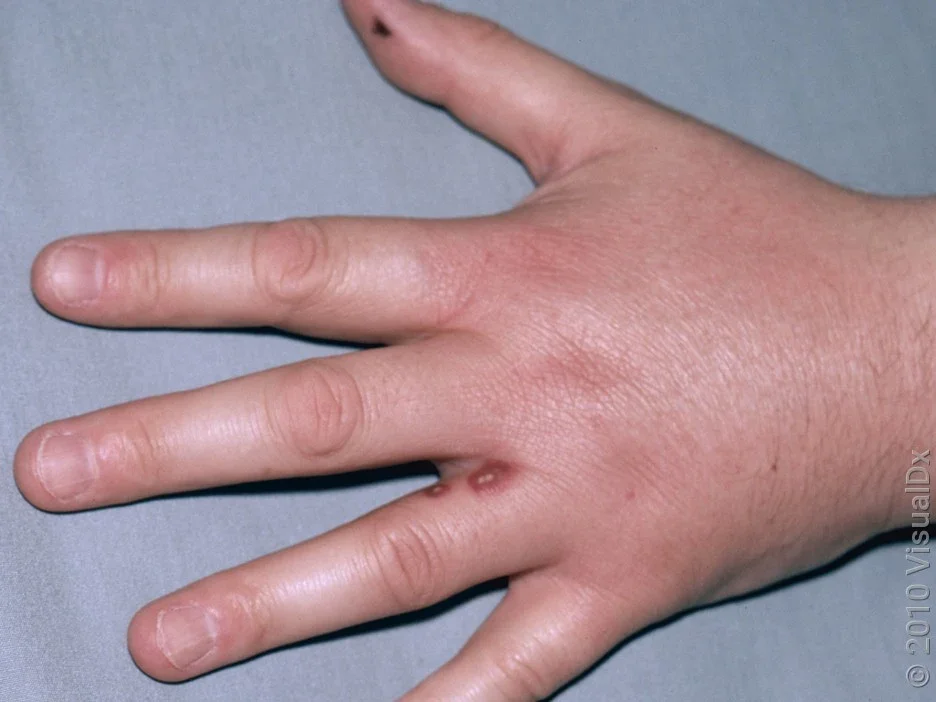
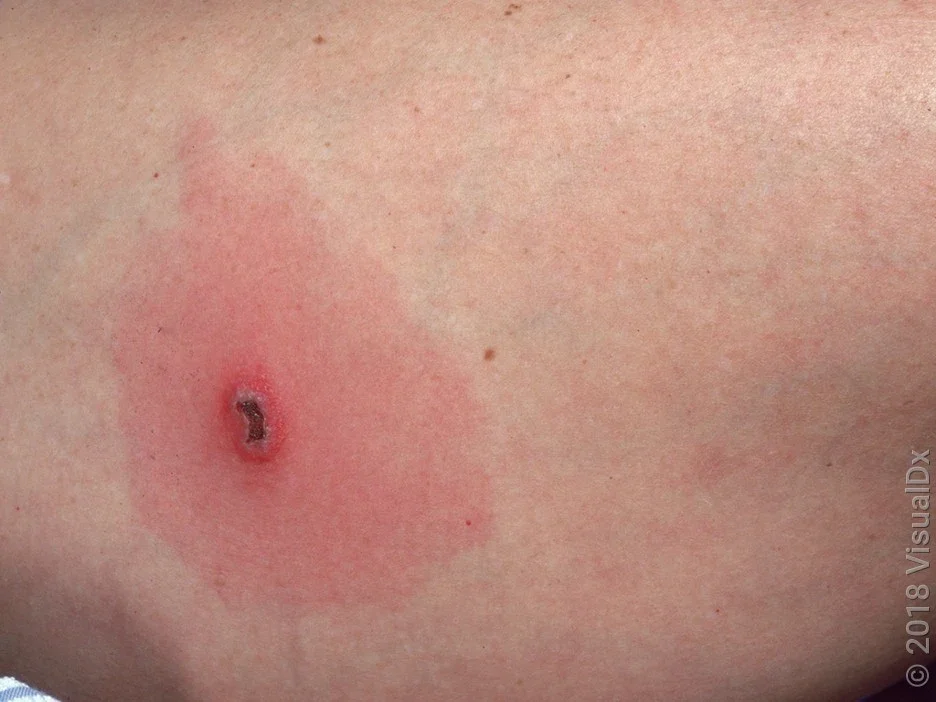
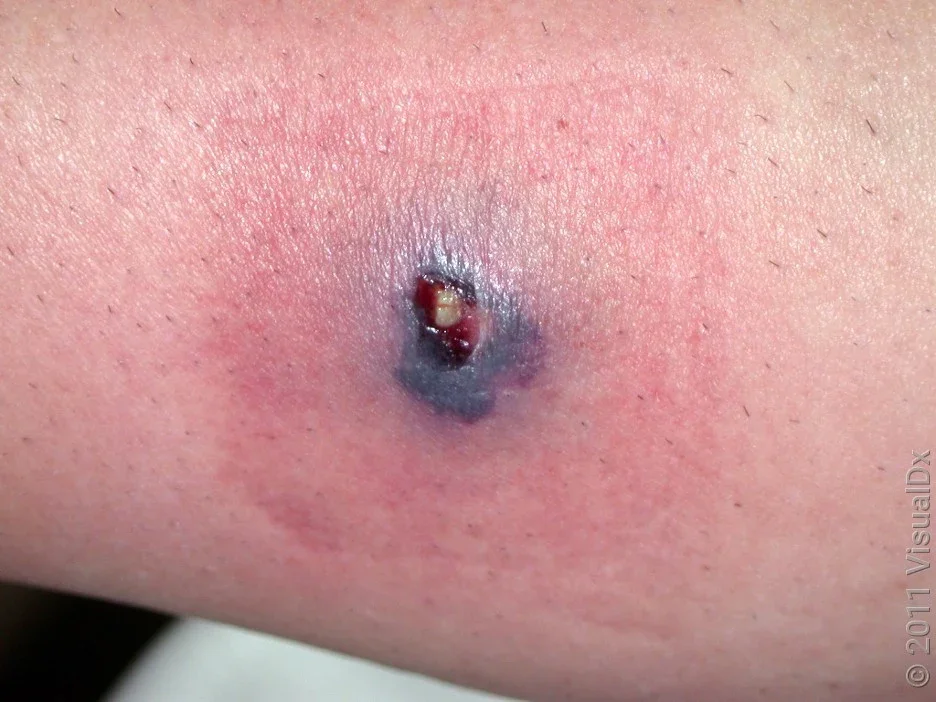
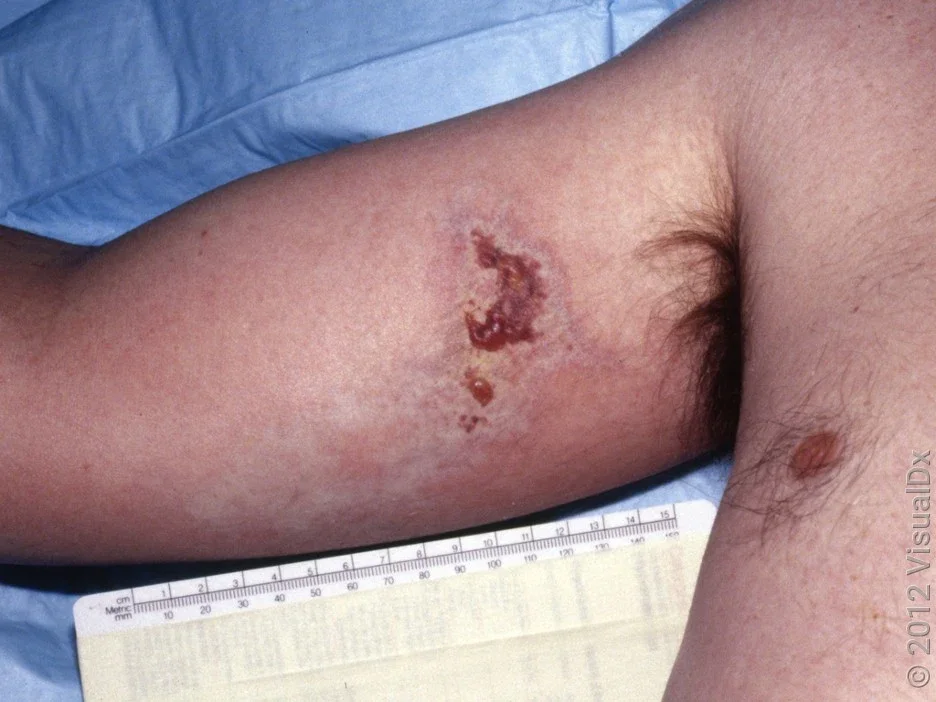
Here are what some common spider bites can look like, followed by different spider bite pictures.
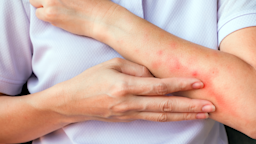
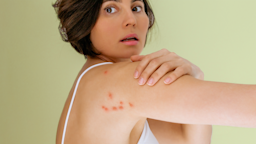
Spider bite rash
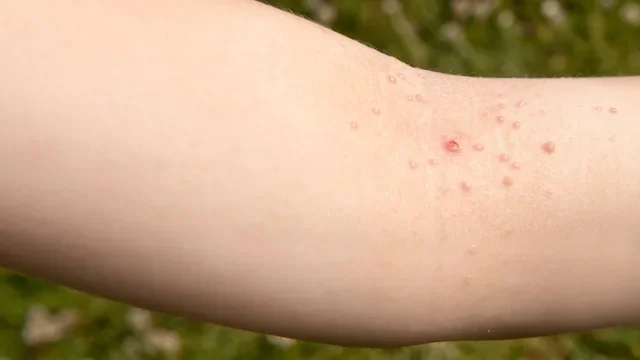
A spider bite rash can vary in color: pink, red, violet, or brown. It can also have different appearances, including:
A bull’s-eye rash
A firm, smooth bump
A flat, spreading rash
A dark crust surrounded by skin discoloration
Fang or bite marks
Sometimes, it’s possible to see the actual fang marks left by the spider. These usually look like two tiny, side-by-side holes in your skin.
Swelling blisters and lesions
Spider bites can also cause fluid-filled blisters and skin sores (open wounds). These may be surrounded by red, brown, or black skin discoloration.
Spider bite pictures
Here are some spider bite pictures to help you identify signs of different types of spider bites.

Symptoms of a dangerous spider bite
Most spider bites are mild and improve on their own. But, some can cause serious symptoms that need medical attention. Seek immediate medical care if you notice any of the following after a spider bite:
Nausea, vomiting, or diarrhea
Weakness
Fever
Feeling lightheaded, drowsy, or faint
Muscle spasms
Rapid swelling, a large sore, or black tissue at the site of the bite

Read more like this
Explore these related articles, suggested for readers like you.


Black widow and brown recluse bites
Two of the most common dangerous spider bites are from brown recluse and black widow spiders. Here are some signs to look for.
Brown recluse spider bites
A brown recluse spider bite is usually painless at first. But then it can become inflamed and painful. The bite can cause localized tissue death, which leads to blistering, an open sore, and black skin. More serious symptoms are less common, and they usually happen within 3 to 7 days. These can include:
Fever
Chills
Nausea and/or vomiting

Black widow spider bites
A black widow spider bite usually hurts right away, even though there may not be a lot of skin inflammation or discoloration. Within 2 hours, the following symptoms may occur:
Pain throughout the body
Muscle cramps
Nausea and/or vomiting
Trouble breathing
Fever
Which spiders are most likely to bite?
According to experts, spiders in the U.S. aren’t normally aggressive. But any spider can bite, especially if it’s being disturbed. Although rare, the most dangerous spider bites are ones caused by brown recluse and black widow spiders. Less severe spider bites commonly come from any of these spiders:
Wolf spider
Garden spider
Trapdoor spider
Mouse spider
Huntsman spider
Running crab spider
Green lynx spider
False black widow spider
Jumping spider
Tarantula
Orb-weaver spider
Crab spider
Parson spider
Keep in mind that if you’re allergic to the venom, even a normally mild spider bite can be serious. In rare cases, they can cause severe allergic reactions, like anaphylaxis (more on this below).
How to treat a spider bite
Most spider bites are harmless. But any break in the skin can lead to an infection. Following these simple steps will help control pain and reduce the risk of infection:
Wash the area with soap and water right away.
Place an ice pack on the area of the bite.
Take an over-the-counter (OTC) pain medication, if needed, like acetaminophen (Tylenol) or ibuprofen (Motrin, Advil).
Use an antihistamine like diphenhydramine (Benadryl) to help with itching or swelling
Get medical attention for young children or adults with serious symptoms.
Get a tetanus booster if your vaccines aren’t up-to-date.
How do I know if a spider bite is getting infected?
Despite your best efforts to clean the area, a spider bite could still get infected. Some signs of a spider bite infection include:
Redness or swelling extending out from the bite
Warmth in the area
Increasing pain
Yellowish drainage (pus)
Fever
Some of these symptoms can overlap with the bite itself. But most spider bites should start improving within a day or two. If the area keeps getting worse instead of better, it could be a sign of infection or a bite from a venomous spider.
When to seek medical treatment for a spider bite
It’s important to take all spider bites seriously. Fortunately, you can treat most spider bites at home. But sometimes you may need to get medical treatment. Here are some things that should prompt you to seek medical treatment:
You recognize the spider as being poisonous (or you suspect it is).
You develop headache, abdominal cramping, or nausea and vomiting.
The pain gets worse or spreads to other parts of your body.
The bite becomes an open sore or starts draining pus (yellow discharge).
You develop fever, chills, joint pain, or body aches.
Pain, redness, or swelling continues to worsen after 24 hours.
In rare cases, spider bites are a medical emergency. You should get immediate care if you have any of these signs of a severe allergic reaction:
Rapid heart rate
Trouble breathing or swallowing
Chest tightness
Swelling of your mouth or face
Frequently asked questions
Most spider bites start with mild redness, swelling, pain, or itching at the site of the bite. Some bites may leave small puncture marks (tiny holes), but many look similar to other insect bites.
Most spider bites don’t need antibiotics. A healthcare professional may prescribe an antibiotic if the bite becomes infected, with symptoms like increasing redness, warmth, pain, or pus drainage. It depends on the type and severity of infection. Some common antibiotic examples include cephalexin (Keflex) or trimethoprim / sulfamethoxazole (Bactrim).
Many different skin conditions can look like a spider bite. Some common examples include:
If you’re not sure what is causing your rash, talk to your healthcare team to get the right diagnosis and treatment.
Most spider bites start with mild redness, swelling, pain, or itching at the site of the bite. Some bites may leave small puncture marks (tiny holes), but many look similar to other insect bites.
Most spider bites don’t need antibiotics. A healthcare professional may prescribe an antibiotic if the bite becomes infected, with symptoms like increasing redness, warmth, pain, or pus drainage. It depends on the type and severity of infection. Some common antibiotic examples include cephalexin (Keflex) or trimethoprim / sulfamethoxazole (Bactrim).
Many different skin conditions can look like a spider bite. Some common examples include:
If you’re not sure what is causing your rash, talk to your healthcare team to get the right diagnosis and treatment.
The bottom line
Many people get bitten by spiders every year. The good news is that most spider bites aren’t poisonous and can be treated at home. But although dangerous spider bites are uncommon, they can sometimes cause serious symptoms or skin damage.
Take any suspected spider bite seriously and watch closely for signs of infection or worsening symptoms. Seek medical care right away if you think a poisonous spider bit you, or if you develop severe symptoms, increasing pain, or signs of infection.

Why trust our experts?




Images used with permission from VisualDx (www.visualdx.com)
References
Centers for Disease Control and Prevention. (2024). Venomous spiders at work.
Diaz, J. H., et al. (2007). Common spider bites. American Family Physician.
Ignite Healthwise. (2024). Toxic reaction to insect or spider venom. MyHealth.Alberta.ca.
MedlinePlus. (2023). Spider bites.
Rahmani, F., et al. (2014). Poisonous spiders: Bites, symptoms, and treatment; an educational review. Emergency.
Rich, R. C., Jr. (2025). What should I do if I get a spider bite? Familydoctor.org.