Key takeaways:
Bedbug bites often appear as small, raised bumps in groups or lines. They can be very itchy, but they don’t cause serious health problems.
Bedbug bite treatments can help relieve itching and discomfort. Common options include topical steroids, oral antihistamines, and cold compresses.
Scratching bedbug bites can break the skin and increase your risk of a skin infection. Treating the itch can help you avoid scratching while you work to get rid of the infestation.
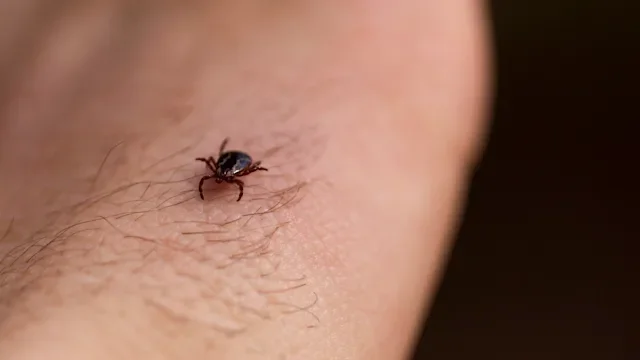
For most people, just hearing the word “bedbug” is enough to make them feel itchy all over. These pests hide during the day and come out at night to feed. They can hitchhike from place to place in luggage, clothing, and other belongings, making infestations difficult to treat. Adult bedbugs can survive for a long time without a meal and hide in tight spaces during the day.
Bedbug bites can cause intense itching and make it difficult to sleep. Although the bites rarely cause serious health problems, scratching can damage the skin and increase the risk of infection.
Getting rid of bedbugs can take time. In the meantime, bedbug bite treatments can help relieve itching and keep you more comfortable while you work on eliminating the infestation.
Search and compare options
What are the most effective bedbug bite treatments?
There’s no treatment that can make bedbug bites disappear immediately. Your body reacts to the bites with inflammation (redness, swelling, and itching). This reaction goes away over time.
Bedbugs don’t live on your body, so you don’t need medication to kill or remove them from your skin. This is different from infections such as scabies or lice, which require medication to get rid of them.
Fortunately, several treatments can help relieve the itching and inflammation caused by bedbug bites. They can also help prevent scratching, minimize the risk of infection, and keep you comfortable while you heal.
1. Soap and water
Scratching bedbug bites can create small breaks in the skin, giving bacteria a chance to enter and cause an infection. Washing the affected areas with soap and water helps keep the skin clean and lowers the risk of infection.
You don’t need a special antibacterial soap. Regular soap and water are enough. Try to avoid scratching the bites, and keep the affected skin clean and dry.
2. Steroid ointments
Topical steroids can relieve itchiness, redness, and swelling from bedbug bites. They come in different formulations (like creams, lotions, and ointments). Stick with ointments if possible. They don’t contain alcohol or other ingredients that may be irritating to your skin. Some options include:
Hydrocortisone, which is available over the counter (OTC)
Triamcinolone and other higher-strength steroid ointments, which are available with a prescription and may help if you have more severe itching
Use topical steroids as directed. Using them for too long or applying them too often can cause side effects, including skin thinning. Avoid applying them to sensitive areas like the face, unless a healthcare professional recommends it.
3. Antihistamines
When a bedbug bites you, your body releases histamines near the bite. Histamine contributes to itching, and antihistamine medications can help reduce this symptom. Antihistamines are available in oral and topical forms. Antihistamine pills may be especially helpful if you have multiple itchy bites. Options include:
Diphenhydramine (Benadryl), an OTC antihistamine that can relieve itching but may cause significant drowsiness
Cetirizine (Zyrtec) and loratadine (Claritin), newer OTC antihistamines that don’t cause drowsiness

Read more like this
Explore these related articles, suggested for readers like you.


4. Cold compresses
Cold can temporarily numb the skin and reduce itching and inflammation. Try rinsing the affected area with cool water or applying a cool, wet cloth.
You can also use an ice pack wrapped in a towel. Apply it for up to 20 minutes at a time, and repeat every few hours as needed. Don’t put ice directly on your skin.
5. Cotton clothes
Certain fabrics can rub against your skin and make itching worse. While your bites heal, choose loose-fitting clothes made from breathable materials like cotton.
Avoid tight clothing and rough fabrics like wool if they irritate your skin. Reducing friction can help keep already irritated skin from becoming even itchier.
6. Oatmeal baths
Oatmeal baths can soothe irritated skin and relieve itching. Colloidal oatmeal can also help moisturize the skin and support its natural barrier.
Use lukewarm rather than hot water, since hot water can dry out and irritate your skin. Soak for about 10 to 15 minutes, then gently pat your skin dry. You can make your own oatmeal bath or use a premade colloidal oatmeal product.
What do bedbug bites look like?
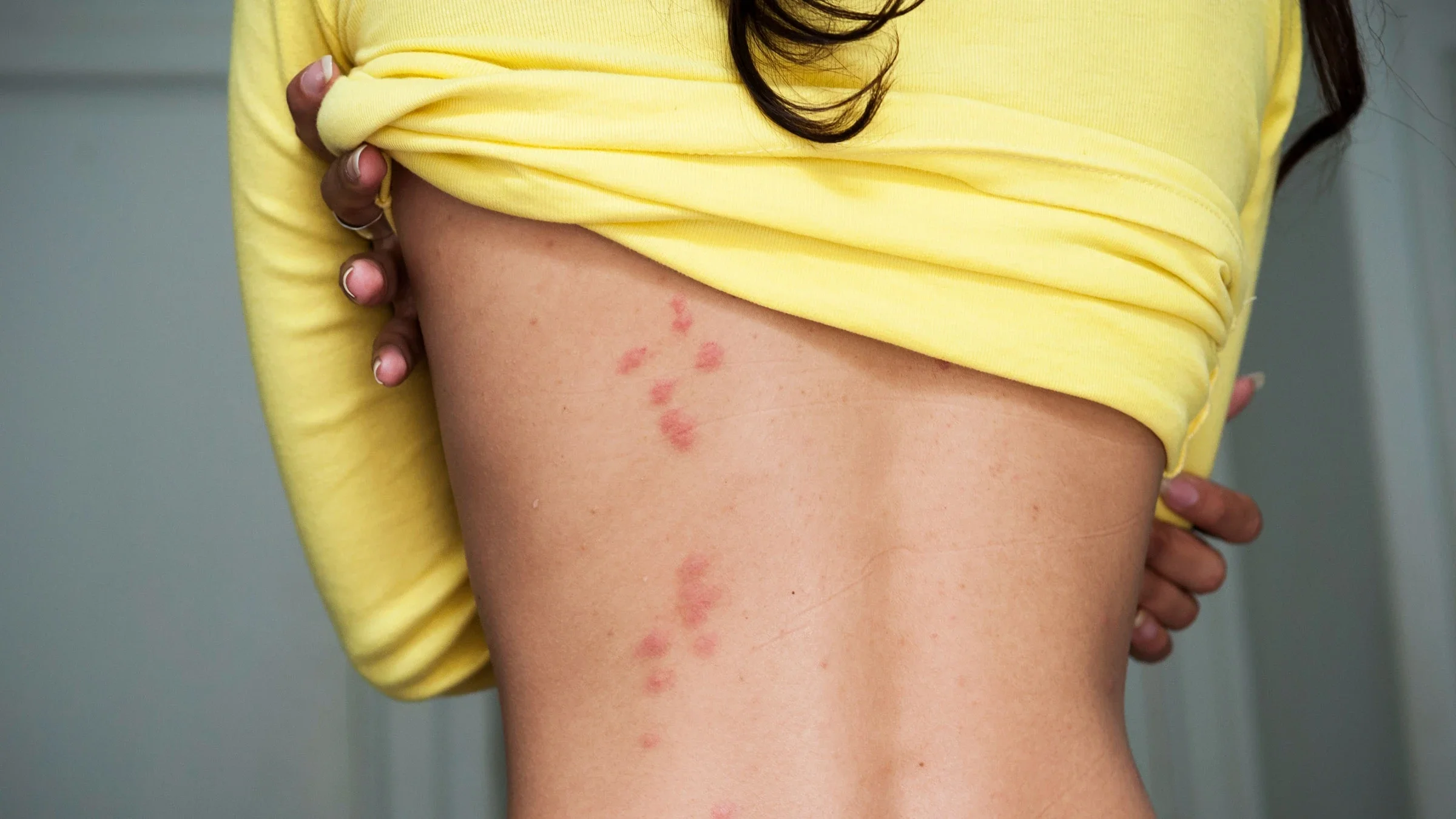
Before starting bedbug bite treatment, it’s helpful to know what the bites can look like. Bedbug bites can look different from person to person. And their appearance alone can’t confirm that bedbugs caused them. Here are a few features that can help you recognize them:
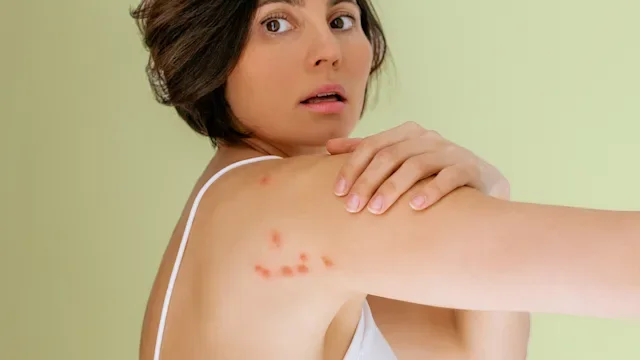
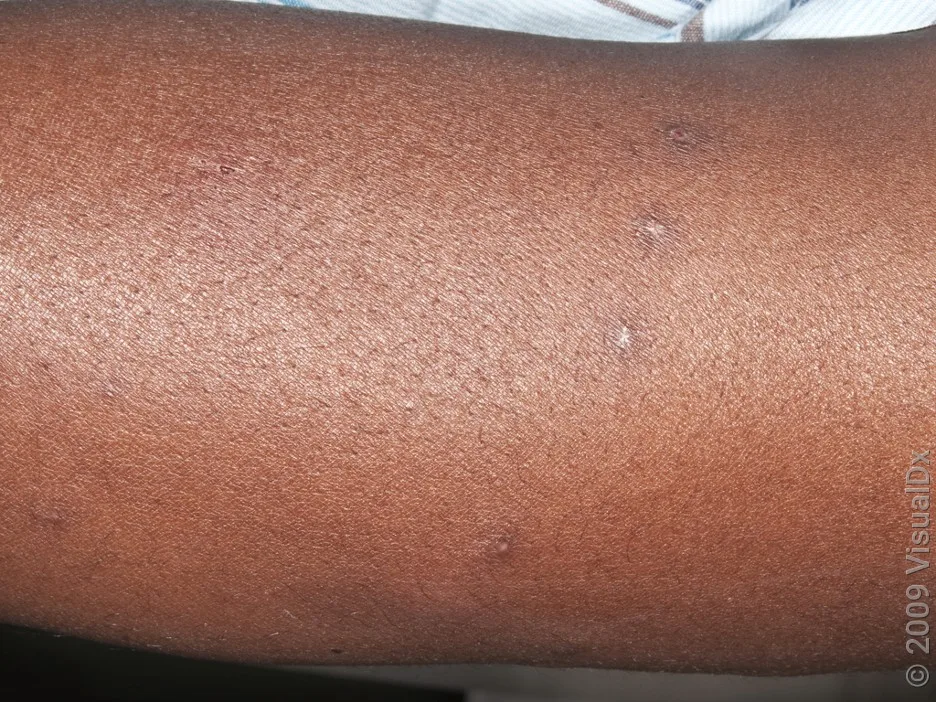
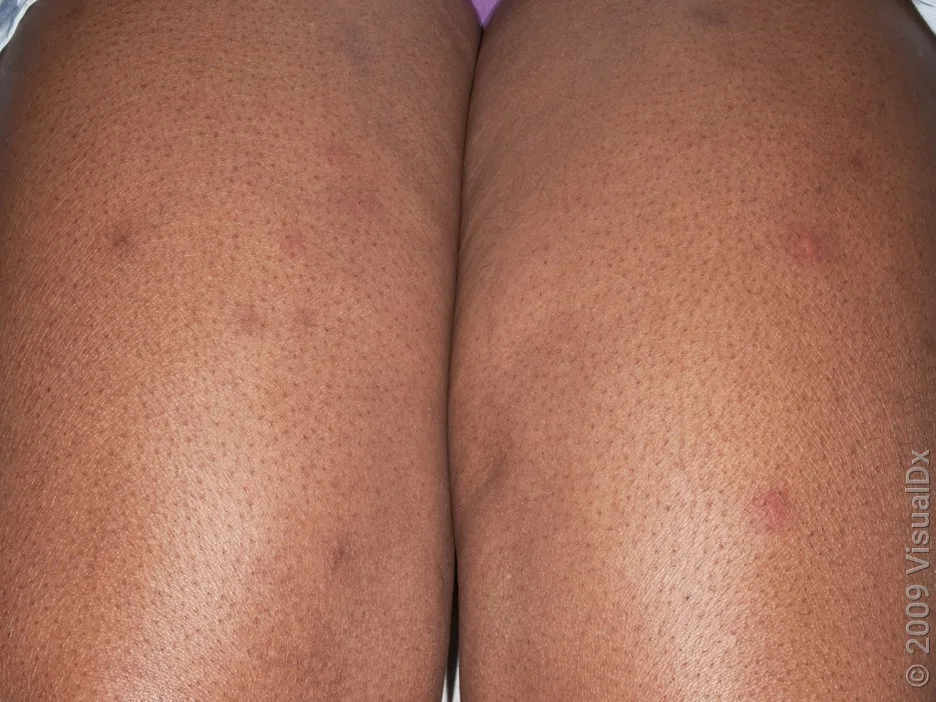
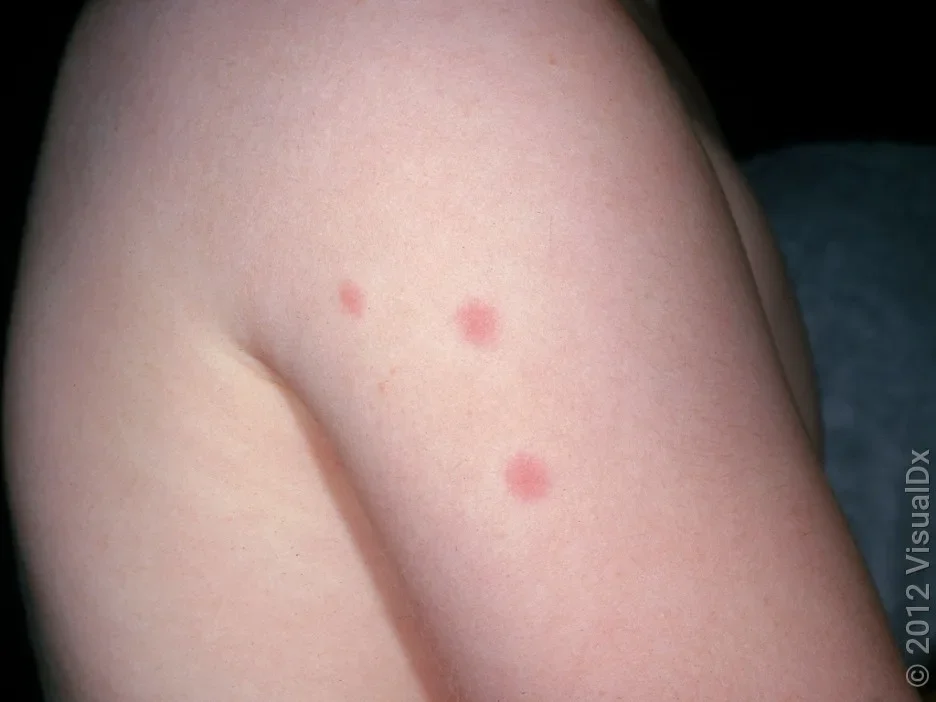
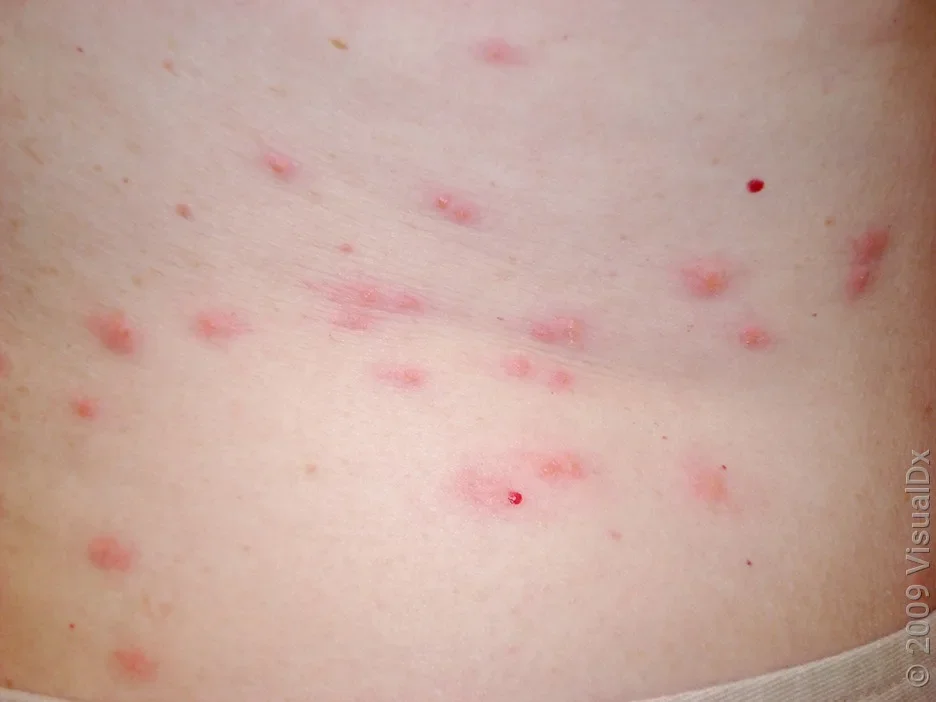
Appearance: On fair skin, bedbug bites look like small, pink or red, raised bumps On darker skin tones, they may look brown, violet, or skin-colored. As they heal, bedbug bites can leave behind dark marks that may take months to fade (post-inflammatory hyperpigmentation).
Pattern: Bedbug bites often appear in groups or lines. Bedbugs may bite several times as they move across the skin, creating a linear or zigzag pattern. (These are sometimes called “breakfast, lunch, and dinner” bites).
Location: Bedbugs tend to bite exposed skin, like the neck, arms, legs, and back. They generally can’t bite through clothing, so bites are more likely to appear on skin that wasn’t covered while you slept.
Not everyone develops a reaction to bedbug bites, even after being bitten. Because reactions vary from person to person, finding bedbugs in your environment can be a more reliable clue than the appearance of the bites alone.
Bedbug bite pictures
These pictures show what bedbug bites can look like on different skin tones and in different locations.
How can you check for bedbugs?
You won’t see bedbugs living on your skin. Instead, look for signs of an infestation around your bed and other places where they may hide. Check your mattress, bedding, and furniture, as well as nearby cracks and crevices. Here are common signs of bedbugs to look for:
Live bedbugs: Check the folds and seams of your mattress and sheets, couch seams, between cushions, curtain folds, and cracks of crevices around your bed and walls.
Rust-colored stains: Small red or rust-colored stains on your sheets can come from crushed bedbugs.
Dark spots: Tiny dark spots on your bedding or mattress may be bedbug feces.
Shed skins: Look for pale yellow or translucent exoskeletons, which bedbugs leave behind as they grow.

How long does a bedbug bite last?
Bedbug bites usually improve within 1 to 2 weeks, but the itching and skin changes can last longer in some people. If you continue to develop new bites, the bedbugs may still be alive.
To prevent new bites, you’ll need to address the infestation. This may include:
Washing and drying bedding and clothing on high heat
Using a mattress encasement
Reducing clutter
Contacting a pest-control professional
How can you prevent bedbug infestations?
It’s impossible to completely prevent bedbugs, but you can take steps to reduce your risk of bringing them into your home. Bedbugs are excellent hitchhikers, so paying attention when you travel or bring secondhand items into your home can help. Here are some other ways to prevent bedbugs:
Check your room when you travel. Look for signs of bedbugs around the mattress, headboard, bed frame, and nearby furniture before unpacking.
Keep luggage off the floor. When traveling, keep your suitcase and other belongings off the floor and away from the bed or other soft furnishings.
Inspect secondhand items. Check used furniture, mattresses, and other items for bedbugs before bringing them into your home.
Reduce clutter. Keeping bedrooms and other areas free of clutter gives bedbugs fewer places to hide.
Wash and dry bedding regularly. Wash bedding regularly and use the highest heat setting that’s safe for the fabric when drying it.
Vacuum regularly. Vacuum your bedroom frequently, including your mattress and upholstered furniture.
Handle laundry carefully. If you use shared laundry facilities, bring home laundry in a plastic bag and fold clothes at home.
When to see a doctor for bedbug bites
Most bedbug bites improve on their own and don’t require medical treatment. But it’s a good idea to see a healthcare professional if you have:
Many bedbug bites, especially if they’re causing significant itching or discomfort
Blisters or a severe skin reaction
Signs of a skin infection, like increasing redness, warmth, swelling, or pus
Bites that keep coming back or you’re not sure what’s causing them
Frequently asked questions
There’s no way to make bedbug bites disappear immediately, but treatments can help relieve itching while your skin heals. These include:
Topical steroids (like hydrocortisone)
Cold compresses
Oatmeal baths
Oral antihistamines
Most bites clear within 1 to 2 weeks, but they may last longer in some people.
Bedbug bites usually improve within 1 to 2 weeks, although itching or dark marks can last longer. If you continue to develop new bites, you may still have an active bedbug infestation.
Bedbug bites often appear as small, raised bumps in groups or lines on exposed skin. But bites can look different from person to person. They can also resemble other insect bites (like mosquitos) or skin conditions (like hives). If you’re not sure your bites are from bedbugs, talk to a healthcare professional.
There’s no way to make bedbug bites disappear immediately, but treatments can help relieve itching while your skin heals. These include:
Topical steroids (like hydrocortisone)
Cold compresses
Oatmeal baths
Oral antihistamines
Most bites clear within 1 to 2 weeks, but they may last longer in some people.
Bedbug bites usually improve within 1 to 2 weeks, although itching or dark marks can last longer. If you continue to develop new bites, you may still have an active bedbug infestation.
Bedbug bites often appear as small, raised bumps in groups or lines on exposed skin. But bites can look different from person to person. They can also resemble other insect bites (like mosquitos) or skin conditions (like hives). If you’re not sure your bites are from bedbugs, talk to a healthcare professional.
The bottom line
Discovering bedbugs in your home can be stressful. The bites can be itchy and uncomfortable, and they can interfere with your sleep. Fortunately, bedbug bites rarely cause serious health problems. Bedbug bite treatments like cold compresses, topical steroids, and oral antihistamines can help relieve itching and discomfort while you work to get rid of the infestation.

Why trust our experts?




References
Akhoundi, M., et al. (2023). Bed bugs (hemiptera, cimicidae): A global challenge for public health and control management. Diagnostics.
American Academy of Dermatology Association. (n.d.). Bedbugs: Diagnosis and treatment.
Centers for Disease Control and Prevention. (2024). Bed bugs.
Gabros, S., et al. (2022). Topical corticosteroids. StatPearls.
Liu, B., et al. (2018). Cooling the Itch via TRPM8. The Journal of Investigative Dermatology.
U.S. Environmental Protection Agency. (2025). How to find bed bugs.
U.S. Environmental Protection Agency. (2025). Top ten tips to prevent or control bed bugs.