Key takeaways:
A sunburn blister is caused by a severe sunburn and cannot spread from one person to another. A cold sore is caused by the herpes simplex virus and is contagious.
Sunburn blisters can happen on any area of skin that is sunburned, while cold sores usually appear on or around the lips.
Cold compresses and over-the-counter pain relievers can help soothe both sunburn blisters and cold sores. Antiviral treatments are the best way to get rid of cold sores quickly.
If you’ve ever had a blister pop up on your lip, you know how stressful it can be. Not only are they painful, but it can be hard to know what’s causing them. You may begin to wonder if a lip blister is a sunburn blister or a cold sore. Both of these conditions cause painful blisters, but there are some key differences to help you tell them apart.
Here, we’ll review what causes sunburn blisters and cold sores, what they look like (with pictures), and what you can do about them.
What is a sunburn blister?
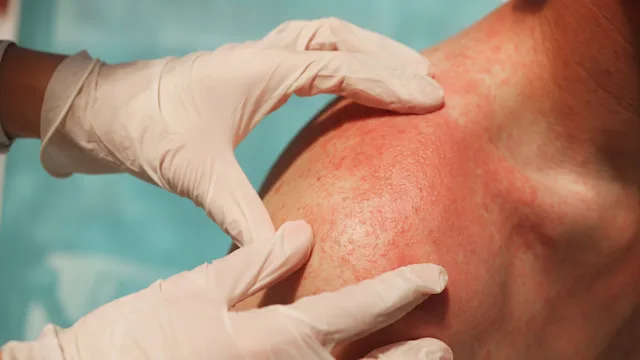
Sunburn blisters are fluid-filled bumps on the skin that are caused by a severe sunburn. They usually appear a few hours or more after getting a sunburn.
Search and compare options
Sunburn blisters occur when the skin is exposed to too much ultraviolet (UV) radiation. This damages the connection between the top two layers of skin, causing a fluid-filled blister to form.
What do sunburn blisters look like?
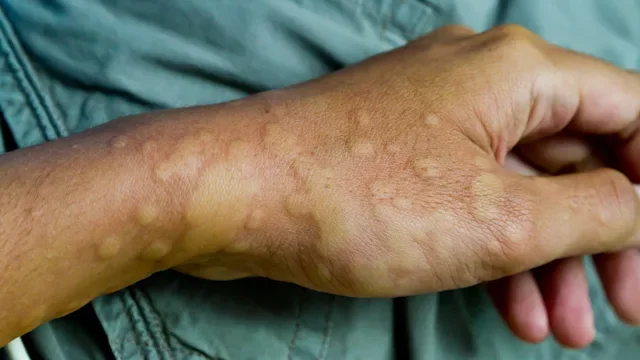
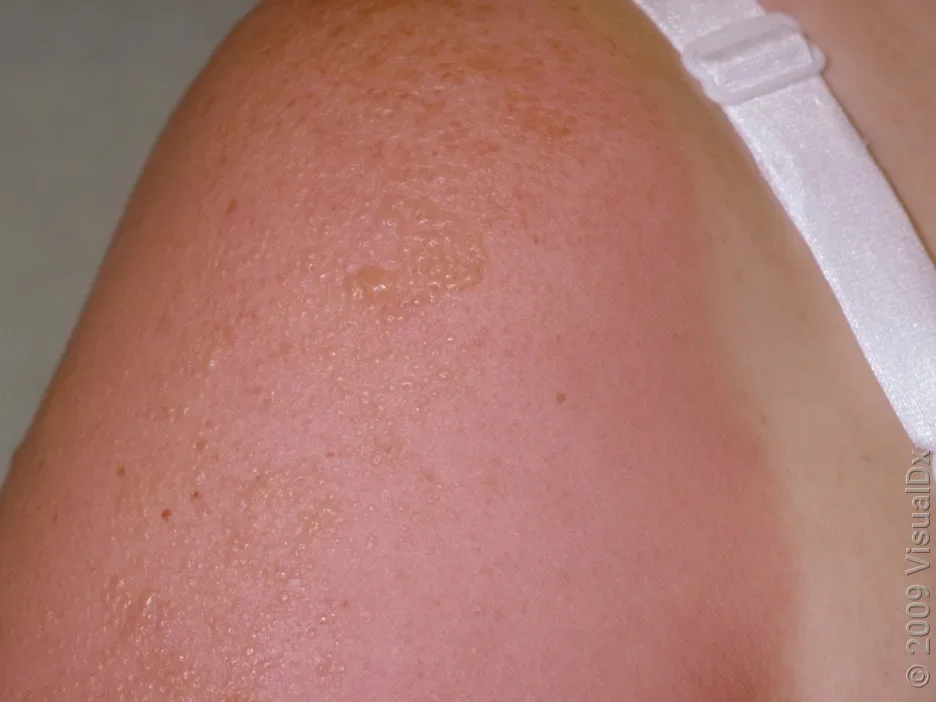
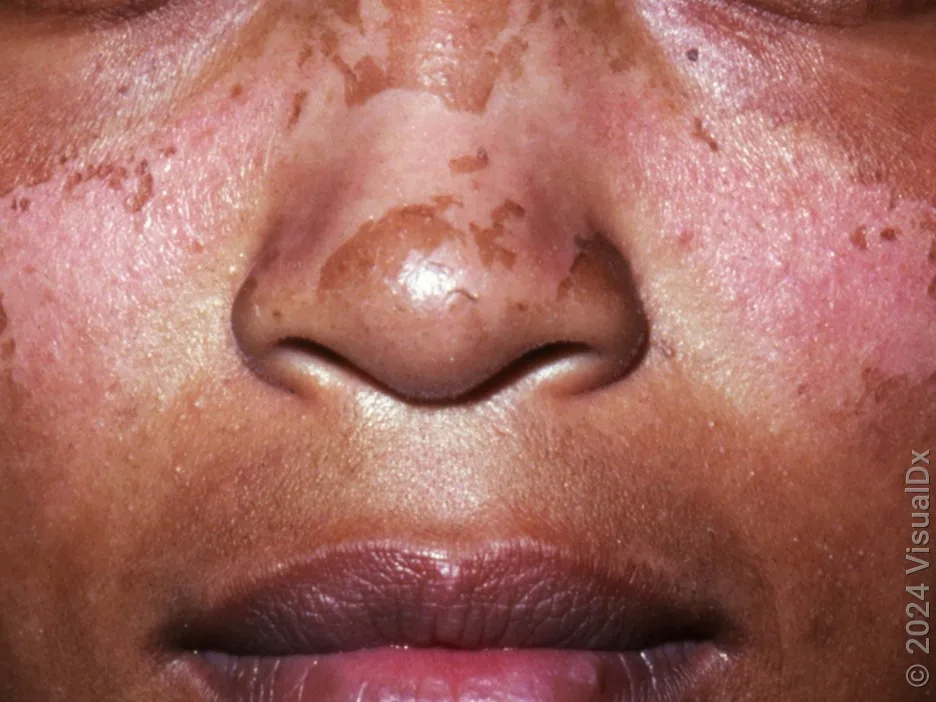
Sunburn blisters form on skin that has developed a sunburn. The pink or red discoloration caused by sunburn is easy to identify in fairer skin, but it may be more subtle in darker skin tones. The blisters that can form are usually filled with clear or yellowish fluid. They can be small or merge together, forming larger blisters.
Sunburn blisters can happen on any area of skin that has been exposed to the sun. Common locations include:
Face, including the lips and nose
Shoulders
Chest
Upper back
Back of the neck
Tops of the feet
Pictures of sunburn blisters
Here are some pictures of sunburn and sunburn blisters.
What is a cold sore?
A cold sore (also called a fever blister) is a painful blister caused by the herpes simplex virus (HSV). It’s usually transmitted through person-to-person contact (like kissing) or through sharing contaminated objects (like a glass). Once a person develops a cold sore, the virus stays inside the body and a cold sore can develop again in the same location.
What does a cold sore look like?
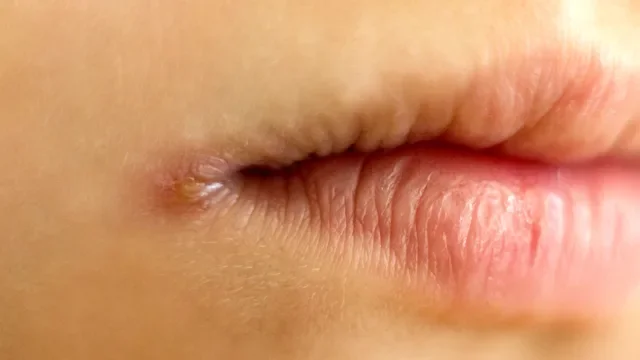
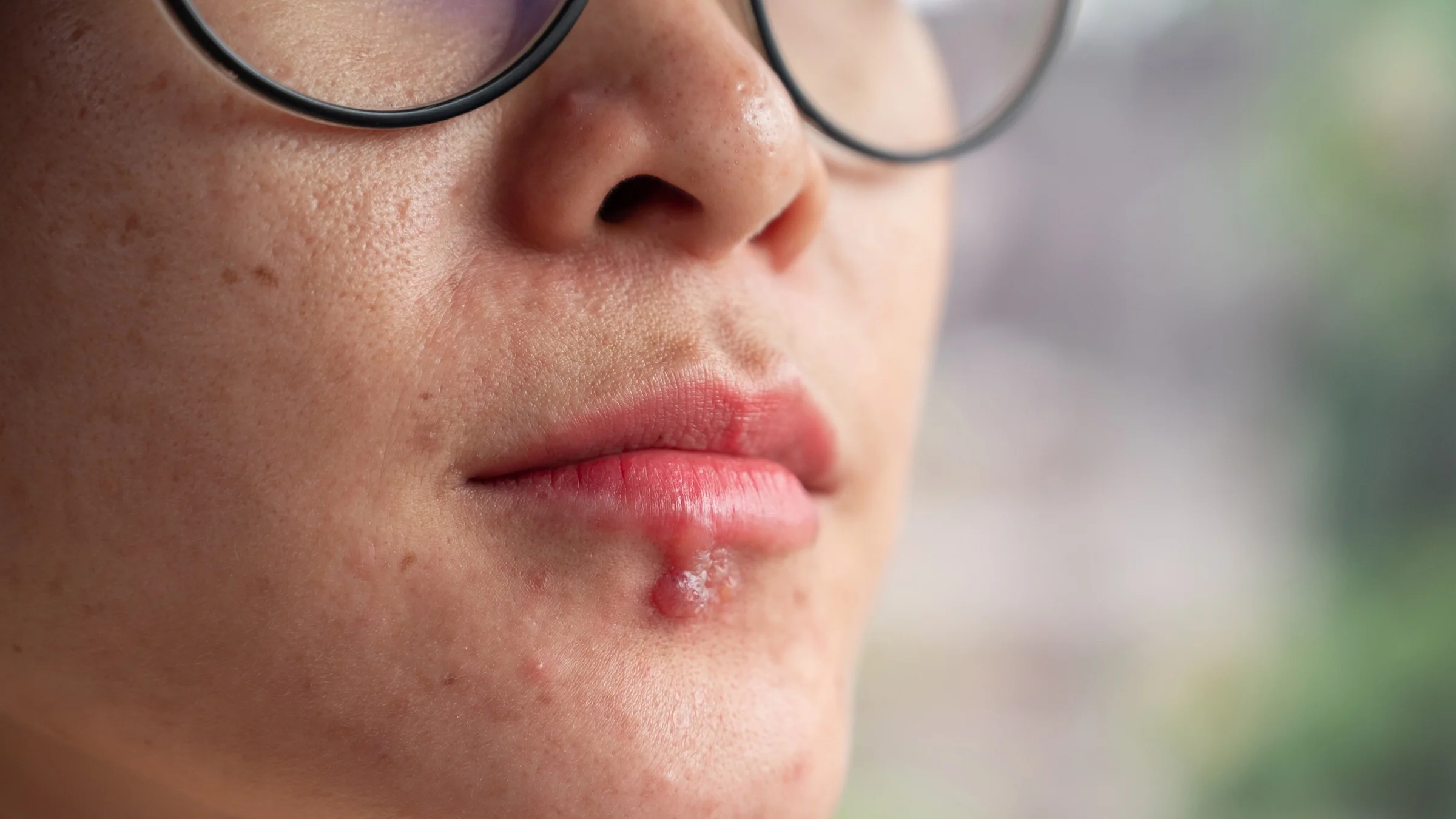
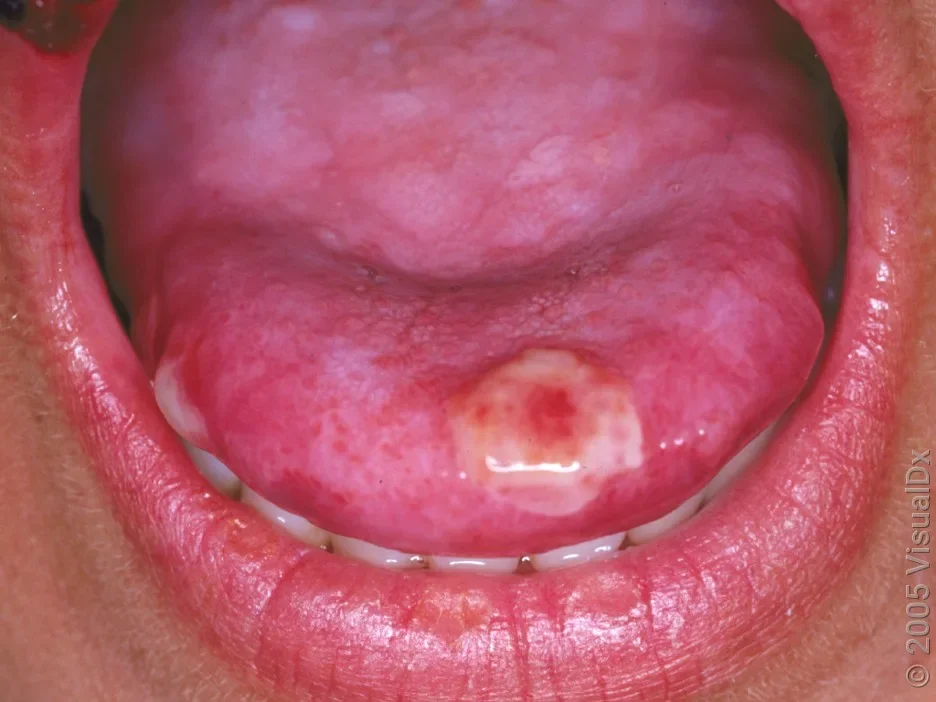
Cold sores usually develop on or around the lips, but they can also appear around the nose, inside the mouth, or on the chin. Cold sores can go through four different stages:
They usually begin with a tingling or burning sensation.
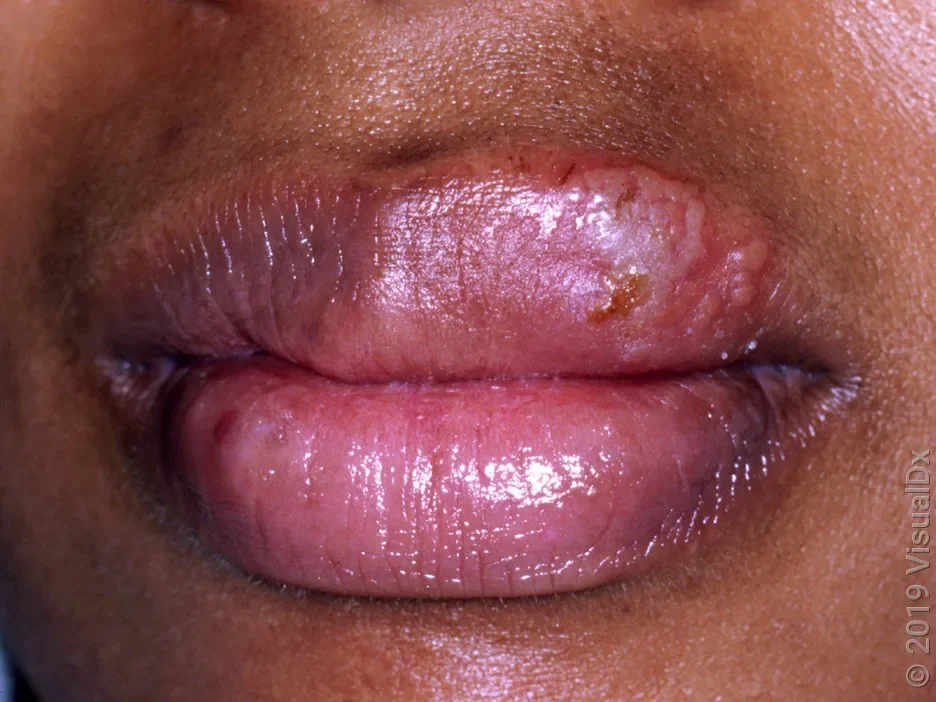
Then, small, fluid-filled, pink or yellow blisters form. The blisters usually develop in clusters, and the surrounding skin can be red, violet, or brown.
The blisters then burst open and leave open sores that can ooze a yellow fluid.
Finally, the sores form crusts and scabs as they start to heal and dry out.
Pictures of cold sores
Here are some pictures to help show what cold sores look like.
Sunburn blisters vs. cold sores
Here’s a chart that shows some of the main differences between sunburn blisters and cold sores.
| Sunburn blister | Cold sore |
|---|---|---|
Causes | Severe sunburn or sun poisoning | Herpes simplex virus |
Symptoms | Painful blisters on sunburned skin | Tingling or burning sensation followed by a cluster of painful blisters |
Contagious | No | Yes |
Healing time | Up to 1 to 2 weeks | Up to 1 to 2 weeks |
Treatment for sunburn blisters and cold sores
Sunburn blisters and cold sores have different treatments. Here’s an overview of what to do for each.
Sunburn blisters treatment
If you get a sunburn with blisters, start by cooling the area with cold compresses or a cool shower. Here are some other steps to take that can help reduce symptoms:
Use aloe vera to soothe the area.
Avoid dehydration by drinking plenty of fluids.
Take over-the-counter (OTC) pain relievers if needed.
Avoid popping or picking at the blisters.
Keep the area out of the sun until it heals.
Cover blisters with a nonstick bandage if they break open.
If sunburn blisters cover a large area of your body or you’re having fever, chills, or dizziness, you should get medical attention.
Cold sore treatment
The best way to get rid of cold sores is with antiviral creams (like Abreva) or prescription medications such as valacyclovir (Valtrex). Some other treatments that may help include:
OTC pain relievers
Lysine supplements
Cold compress to reduce pain and swelling
Numbing medication (like Orajel)
How to prevent sunburn blisters and cold sores
The best way to prevent sunburn blisters is to protect your skin from the sun. There are some ways to keep your skin safe when exposed to the sun, such as:
Wear sunscreen that has SPF 30 or more.
Wear sun-protective clothing like hats and sleeves.
Seek shade and avoid strong midday sun.
Sun protection is also an important way to prevent cold cores. This is because sun exposure is a common trigger for cold sores. In addition to using lip balm with SPF, some other ways to prevent cold sores include:
Taking preventive antiviral medications (if prescribed)
Keeping lips moisturized to reduce cracking or chapping
Frequently asked questions
No. It’s never a good idea to pop a sunburn blister. The blister is a protective covering and helps protect the sensitive skin underneath. Popping the blister also increases the risk of infection and scarring.
Yes, sunburn on your lips can definitely trigger a cold sore. If you’re prone to cold sores, it’s a good idea to protect your lips with an SPF lip balm when you’re in the sun. This can help prevent a cold sore outbreak.
For the most part, cold sores and sunburn blisters are pretty easy to diagnose. But there are a few conditions that can look similar to them, including:
Pimples
Chapped lips
A healthcare professional can help you figure out what’s causing your symptoms.
It’s a good idea to get sores on your lips checked by a healthcare professional if you’re not sure what’s causing the sores or if you notice any of the following:
Sores lasting for more than 2 weeks
Additional symptoms, like a fever
Very large or painful sores
Trouble eating or drinking
No. It’s never a good idea to pop a sunburn blister. The blister is a protective covering and helps protect the sensitive skin underneath. Popping the blister also increases the risk of infection and scarring.
Yes, sunburn on your lips can definitely trigger a cold sore. If you’re prone to cold sores, it’s a good idea to protect your lips with an SPF lip balm when you’re in the sun. This can help prevent a cold sore outbreak.
For the most part, cold sores and sunburn blisters are pretty easy to diagnose. But there are a few conditions that can look similar to them, including:
Pimples
Chapped lips
A healthcare professional can help you figure out what’s causing your symptoms.
It’s a good idea to get sores on your lips checked by a healthcare professional if you’re not sure what’s causing the sores or if you notice any of the following:
Sores lasting for more than 2 weeks
Additional symptoms, like a fever
Very large or painful sores
Trouble eating or drinking
The bottom line
Sunburn blisters and cold sores can both cause painful blisters on or around the lips. But, they have different causes, appearances, and treatments. Cold sores are caused by the herpes simplex virus and are very contagious, while sunburn blisters are caused by a severe sunburn.
The best way to treat cold sores is to use antiviral creams or prescription medications. The best way to treat sunburn blisters is through supportive care, like cold compresses and OTC pain relievers. For both types of blisters, sun protection is the key to prevention.

Why trust our experts?



Images used with permission from VisualDx (www.visualdx.com).
References
American Academy of Dermatology Association. (n.d.). Cold sores: Who gets and causes
InformedHealth.org. (2025). Cold sores: Learn More – Can cold sore outbreaks be prevented? Institute for Quality and Efficiency in Health Care.
Nemours Children’s Health. (2019). I got blisters from a sunburn. What should I do?
Skin Cancer Foundation. (2025). Sun-protective clothing: A safe, simple way to keep the rays at bay.