Key takeaways:
Angular cheilitis is a skin condition that causes painful cracks at one or both corners of the lips. People who wear dentures have a higher risk of developing this condition.
Treatment for angular cheilitis can include a combination of antibiotic, antifungal, and steroid creams.
Even though bacteria and fungi can cause angular cheilitis, the condition isn’t contagious.
Dry, cracked lips are common and often improve with lip balm. But cracks that develop at the corners of your mouth and don't heal may be a sign of angular cheilitis. Here's how to recognize this painful lip condition, what causes it, and how to treat it.
What is angular cheilitis?
Angular cheilitis — sometimes called angular stomatitis — is a skin condition that affects the corners of your mouth, where the top and bottom lip meet. It leads to painful inflammation, cracking, and sores at one or both corners of your mouth.
What causes angular cheilitis?
Angular cheilitis develops when skin at the corner of your mouth gets irritated and then inflamed and/or infected. It usually starts when saliva pools at the corners of your mouth. This leads to skin irritation and cracking. Bacteria and fungi that normally live on the skin can then get into the cracks. This can worsen the inflammation and cause a skin infection.
Search and compare options
What are the symptoms of angular cheilitis?
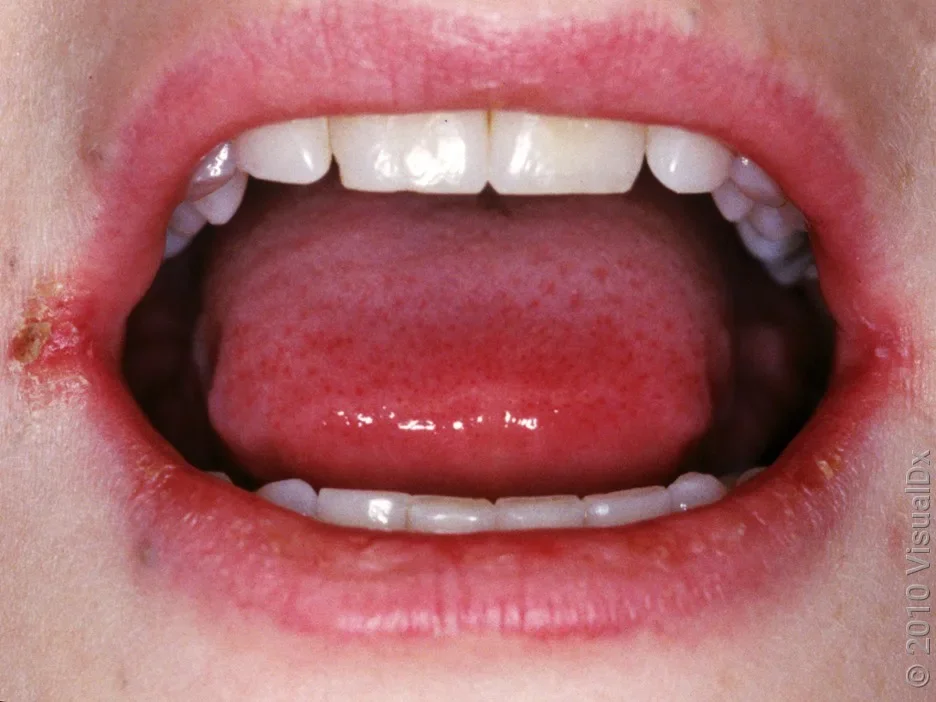
Angular cheilitis is usually pretty easy to spot. You might notice the following symptoms at one or both corners of your mouth where your top and bottom lip meet:
Redness
Pain
Cracks or fissures (openings)
A burning sensation when you touch the area
Swelling
Scabbing
Light bleeding
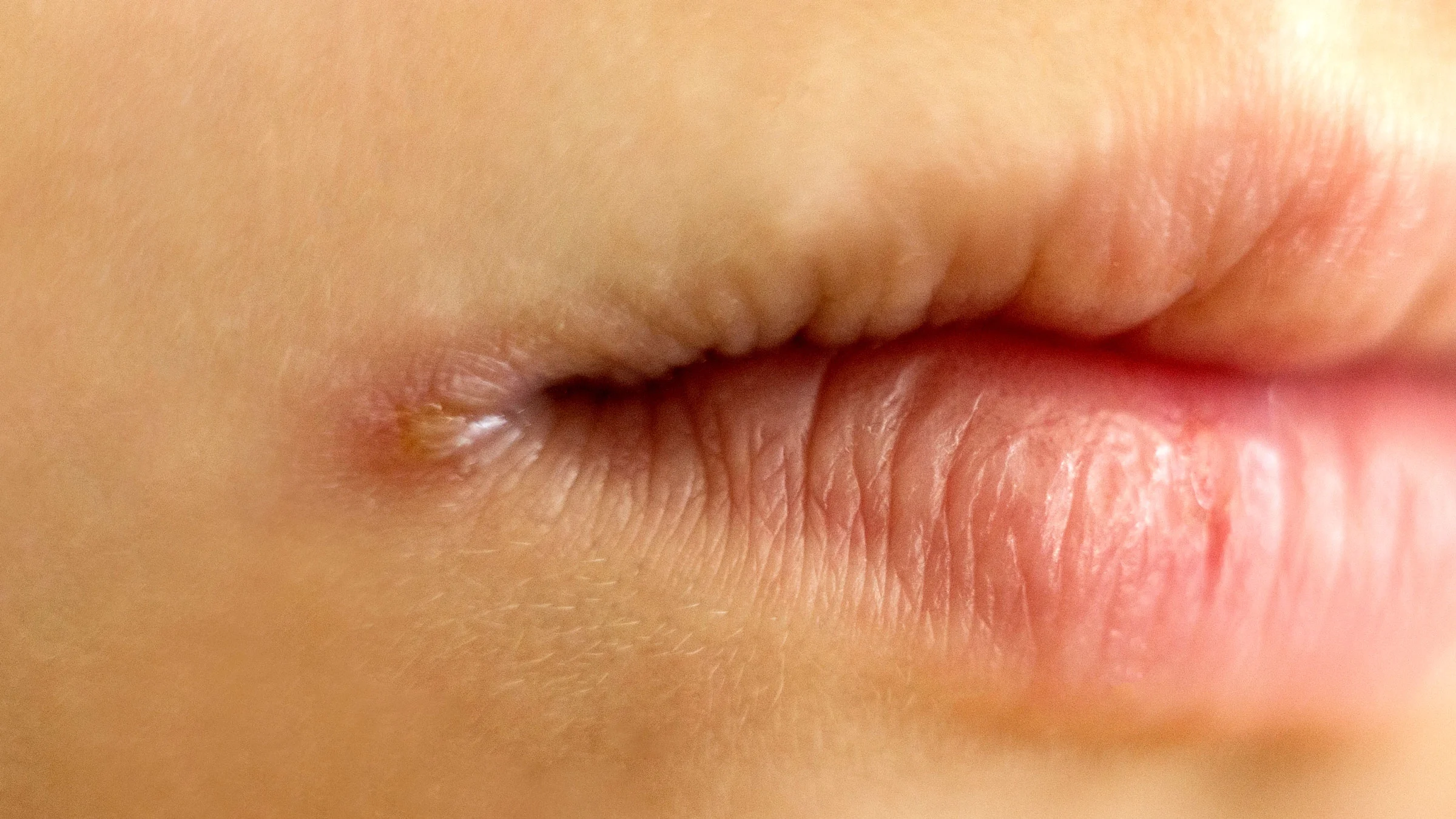
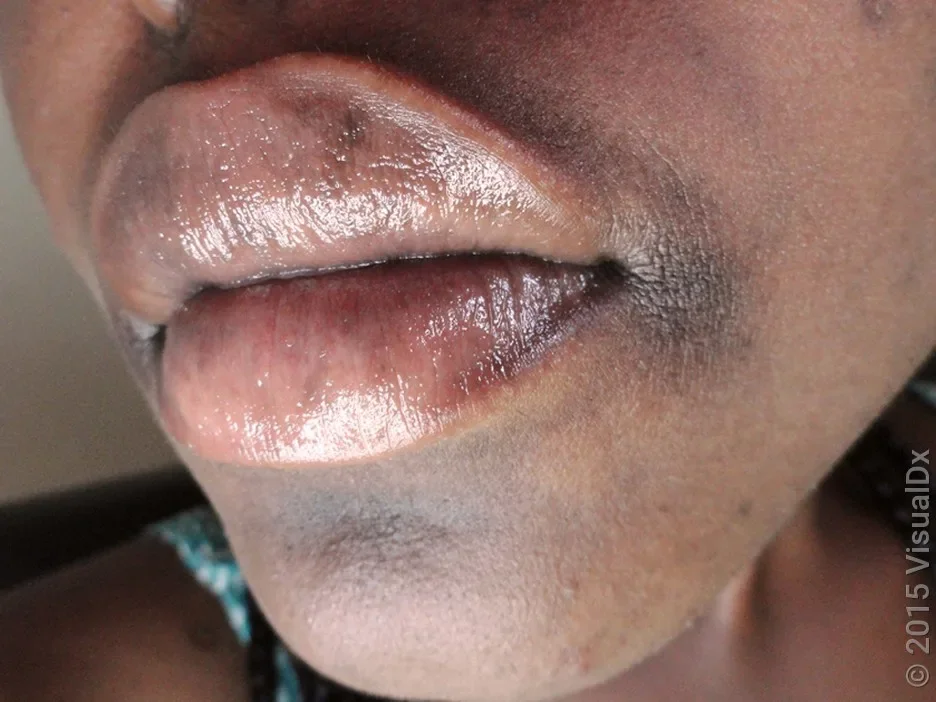
Here are some images showing what angular cheilitis looks like.
Without treatment, angular cheilitis can get worse and spread beyond the corners of your mouth.
What’s the difference between angular cheilitis and a cold sore?
Cold sores can develop on the corners of your mouth, but they more commonly happen on your lips. They form painful bumps and blisters and eventually scab over. Cold sores don’t tend to cause cracks or fissures the way angular cheilitis does.
The virus that causes cold sores is contagious. Angular cheilitis isn't contagious. So you don’t have to worry about spreading it to others.
Who is most at risk for developing angular cheilitis?
Anyone can develop angular cheilitis. But some people are at higher risk than others. This is usually because they have a condition that can irritate the skin or cause saliva to pool at the corners of the mouth. The following can increase your risk of angular cheilitis.
You wear dentures
People who wear dentures are three times more likely to develop angular cheilitis. Dentures increase the risk of saliva pooling at the corners of the mouth. Plus, people who wear dentures are more likely to be older and have deeper skin folds around the mouth.
You wear braces
Some braces are made with nickel, which can irritate the skin. People with braces may have teeth that don’t line up when they close their mouth (malocclusion). This can put extra tension on the corner of your mouth and lead to saliva pooling there.
You chew a lot of gum
Extra saliva caused by gum-chewing can irritate the corners of your mouth and lead to angular cheilitis.

Read more like this
Explore these related articles, suggested for readers like you.




You lick your lips
Frequent lip-licking can bring saliva in direct contact with the corners of your mouth. This can lead to skin irritation and skin breakdown. Thumb-sucking also raises the risk of angular cheilitis for the same reason.
You wear a mask
A mask can directly irritate the skin around your lips. It can also trap saliva against your mouth. Children who use pacifiers can also develop angular cheilitis for the same reason.
You have certain medical conditions
Certain medical conditions can also increase your risk of having angular cheilitis, including:
Autoimmune conditions, like inflammatory bowel disease (IBD) and Sjögren’s disease
Medical conditions that weaken the immune system, including diabetes
Medical conditions that require you to take steroids or other medications that weaken the immune system
Chronic skin conditions, like eczema or allergic contact dermatitis
Diagnosing angular cheilitis
Your dermatologist or another healthcare professional can usually diagnose angular cheilitis by examining your mouth. They may also ask you some questions about your medical history, the medications you take, and possible risk factors. Sometimes they may swab the area and send the sample for a skin culture. This can show if there is a bacterial or fungal infection.
Medications and treatments for angular cheilitis
Most people need a combination of treatment and medications to get rid of angular cheilitis. Self-care along with prescription medications can help heal cheilitis. Your treatment plan may include one or several of these options.
Angular cheilitis self-care
Cold compresses can help reduce pain and swelling caused by angular cheilitis. You can either use an ice pack or ice cubes wrapped in a clean towel.
It’s also a good idea to avoid skin irritants, like alcohol-based mouthwash or harsh soaps and creams.
Petrolatum ointment
Petrolatum is a barrier ointment that seals and protects the skin. Common brands include Vaseline and Aquaphor. Apply petrolatum ointment throughout the day to the corners of your mouth and before you go to sleep at night. You can also put petrolatum ointment over any prescription creams. This locks the creams in place.
Antifungal creams and rinses
Prescription antifungal treatments are a very common treatment for angular cheilitis. Studies show that up to 9 in 10 people have a fungal infection when they have angular cheilitis. People typically need to use an antifungal cream 2 to 3 times a day for 2 weeks.
Common antifungal creams for angular cheilitis include:
If you have oral thrush (a fungal infection inside the mouth), you may also need a prescription antifungal to take by mouth, like Nystatin solution.
Antibiotic ointment
Bacteria can also play a role in angular cheilitis. But fungal infections are a more common cause of angular cheilitis than bacteria. If a member of your care team thinks you could have a bacterial skin infection, they may also prescribe an antibiotic, like mupirocin 2% ointment. You’ll need to use this ointment up to 4 times a day for 2 weeks, in addition to an antifungal treatment.
Steroid creams
Steroid creams can help lower inflammation and lessen pain. A healthcare professional may recommend a low-strength steroid, like hydrocortisone 1%, for a short period of time. Steroids can thin the already delicate skin around the mouth, so it’s important to limit steroid use to about 1 week.
Steroid creams can be combined with antifungal creams to treat angular cheilitis. In fact, some formulations combine both medications.
Denture care and fittings
If you wear dentures, talk with your dentist to make sure they fit well and that you’re cleaning them properly. Candida — a common skin fungus — can grow on dentures, which increases your risk of angular cheilitis.
Allergy checks
Over time, you can develop allergies to things that touch your mouth on a regular basis, like toothpaste, mouthwash, lip balm, and lipstick. Inflammation from allergies can increase your risk of developing angular cheilitis. If you notice that your lips get red or swollen after using one of these products, cut them out of your routine.
How long does it take for angular cheilitis to go away?
Most people see improvement of their angular cheilitis within a few days of starting treatment. Your lips should go back to normal after 2 weeks of treatment.
Angular cheilitis can come back. If you get angular cheilitis again, you may need to keep using prescription-strength creams for longer until your symptoms resolve.
Can you prevent angular cheilitis?
There are steps you can take to keep angular cheilitis from coming back. Here are some tips.
Prevent saliva from collecting in the corners of your dry
Angular cheilitis can return if saliva continues to build up in the corners of your mouth. To prevent this, gently dab at the corners of your mouth with a clean tissue or cloth. Then consider applying a thin layer of barrier ointment.
Use a barrier ointment
Petrolatum-based barrier ointments — like Vaseline and Aquaphor — can protect your skin from saliva and other irritating substances. Apply an ointment to your lips and the corners of your mouth throughout the day.
Keep up with oral hygiene
Good oral hygiene — like daily brushing and flossing — can keep your gums healthy and reduce harmful bacteria in your mouth. It can also help to rinse with an alcohol-free mouthwash.
If you take inhaled steroids, make sure to rinse after you use them. Inhaled steroids help treat conditions like asthma or chronic obstructive pulmonary disease (COPD), but they can also increase your risk of developing angular cheilitis.
Check in with your oral health professional
Stay up to date with oral health visits including dental cleanings, dental visits, and orthodontic appointments. Have your braces or dentures checked if you wear them. Your dental team can make sure these products fit well and provide tips for care so you don’t keep getting angular cheilitis.
Avoid irritating products
Avoid products that can irritate your lips. Check your lip balm, lipstick, and other products that come in contact with your mouth for substances like:
Geraniol (rose water)
Cinnamaldehyde (cinnamon)
Menthol
Camphor
Don’t smoke
People who smoke are more likely to develop angular cheilitis. Smoke and other harmful substances in nicotine products can irritate your skin. Quitting smoking can help you keep your lips healthy.
Get treatment for medical conditions
Get treatment for medical conditions that can lead to angular cheilitis, like eczema, psoriasis, and diabetes. Managing underlying conditions may lessen the likelihood that angular cheilitis will return.
Consider fillers or Botox
Your skin and facial fat changes as you get older. This can lead to deep lines and grooves near your mouth. Saliva can get trapped in these grooves and cause angular cheilitis.
Dermal fillers and Botox can sometimes help lessen deep grooves. Talk with a dermatologist to see if these options may be right for you.
Frequently asked questions
Yes, vitamin deficiencies — like low iron , zinc, vitamin B12, folate (vitamin B9), or vitamin B2 — can cause angular stomatitis (also known as angular cheilitis). But nutritional deficiencies aren't a common cause for most people. Your risk may be higher if you've had bariatric surgery or have a condition like inflammatory bowel disease or chronic pancreatitis.
Yes, sometimes angular cheilitis will go away on its own. This is more likely if it’s mild and you're able to remove to source of irritation, such as lip-licking or braces.
You can’t reliably tell whether angular cheilitis involves a fungal or bacterial infection just by looking at it. A skin culture is the only way to tell for sure. Your healthcare team can swab the affected area and send the sample for testing.
Yes, vitamin deficiencies — like low iron , zinc, vitamin B12, folate (vitamin B9), or vitamin B2 — can cause angular stomatitis (also known as angular cheilitis). But nutritional deficiencies aren't a common cause for most people. Your risk may be higher if you've had bariatric surgery or have a condition like inflammatory bowel disease or chronic pancreatitis.
Yes, sometimes angular cheilitis will go away on its own. This is more likely if it’s mild and you're able to remove to source of irritation, such as lip-licking or braces.
You can’t reliably tell whether angular cheilitis involves a fungal or bacterial infection just by looking at it. A skin culture is the only way to tell for sure. Your healthcare team can swab the affected area and send the sample for testing.
The bottom line
Angular cheilitis is a common skin condition that causes cracking and pain at one or both corners of your mouth. Saliva buildup, dentures, braces, frequent lip-licking, and certain health conditions can increase your risk. A barrier ointment can protect the irritated skin, but you may need an antifungal, antibiotic, or short course of steroid medication depending on the cause. Contact a healthcare professional if your symptoms don’t improve or keep coming back.

Why trust our experts?



Images used with permission from VisualDx (www.visualdx.com).
References
American Chemical Society. (2016). Molecule of the week archive: Geraniol.
Devani, A., et al. (2007). Answer: Can you identify this condition? Canadian Family Physician.
Enweasor, C., et al. (2020). Lip licker’s dermatitis. DermNet.
Federico, J. R., et al. (2025). Angular cheilitis. StatPearls.
Johnson, H., et al. (2023). Lanolin: The 2023 American Contact Dermatitis Society Allergen of the Year. Cutis.
Kravitz, N. D., et al. (2022). We’ll always have perlèche. Journal of Clinical Orthodontics.
MedlinePlus. (2025). Skin or nail culture.
Nyman, G. S. A., et al. (2019). Contact allergy to beeswax and propolis among patients with cheilitis or facial dermatitis. Contact Dermatitis.
Office of Pesticide Programs. (2000). Cinnamaldehyde (040506) fact sheet. Environmental Protection Agency.
ScienceDirect. (n.d.). Angular cheilitis.
Tran, A., et al. (2010). Acute allergic contact dermatitis of the lips from peppermint oil in a lip balm. Dermatitis.
Zoli, V., et al. (2006). Allergic contact cheilitis. Contact Dermatitis.