Key takeaways:
Antibiotics, anti-seizure medications, and nonsteroidal anti-inflammatory drugs (NSAIDs) can cause a variety of skin reactions. Warfarin, furosemide, and allopurinol can, too.
Medication-related skin reactions range from mild rashes to rare, life-threatening conditions like Stevens-Johnson syndrome and toxic epidermal necrolysis.
Reach out to your healthcare team when you develop a rash while taking medication. They can help identify the cause and determine if you need to stop or switch medications.
Save on related medications
Between multistep skin care routines, body scrubs, and face masks, we spend a lot of time caring for our skin. And rightly so: Our skin is our first line of defense against germs, and it allows us to sense the world around us.
So, developing a skin reaction to something we consume or touch can be particularly frustrating. Bumps, splotches, and itching are uncomfortable and can be difficult to ignore. Medications are one possible cause of skin reactions. A drug rash can vary widely, ranging from mild redness and itching to widespread blistering.
In this article, we look into seven medications that can cause skin reactions and the types of rashes they cause.
Search and compare options
What is a drug rash?
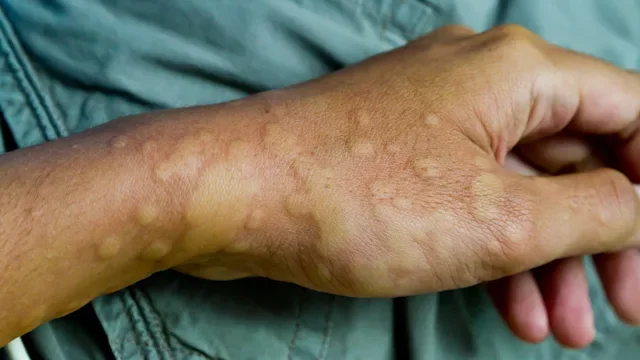
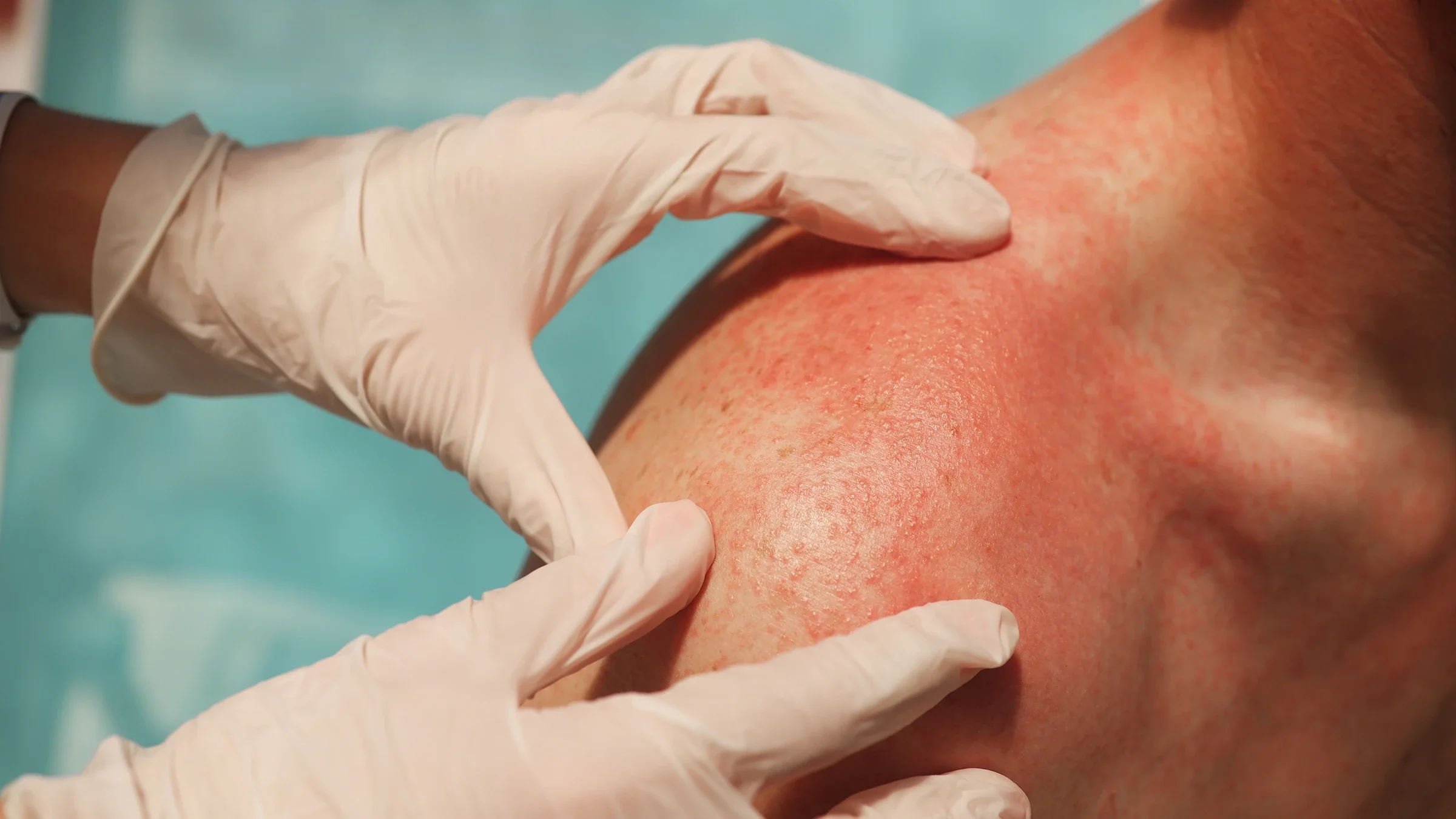
A drug rash is any skin breakout caused by a medication, including over-the-counter (OTC) medications and supplements. Some drug rashes are caused by an allergic reaction, but not all are. A drug rash can develop immediately after starting a new medication, or it can take days or weeks.
Drug rashes cause changes in the color or texture of your skin, including things like:
Discoloration (like red or brown blotches)
Bumps
Peeling
Blistering
Drug rashes are often itchy, but they can also be painful or have no sensation-related symptoms at all.
Medications that cause drug rashes
Now, let’s look at the various types of medications that can cause skin reactions.
1. Antibiotics like Bactrim
Antibiotics are well-known for causing skin rashes, allergic reactions, and sensitivity to the sun. Sulfa and penicillin antibiotics are common culprits.
Bactrim
Bactrim (sulfamethoxazole / trimethoprim) is part of a group of medications called sulfonamides. People with “sulfa” allergies are allergic to these types of medications.
Bactrim can also cause a range of skin reactions, including:
Exanthematous rash: This is the most common skin reaction to Bactrim. It typically happens 1 to 2 weeks after starting the medication, and it resolves soon after stopping it.
Serious skin reactions: Bactrim has also been linked to Stevens-Johnson syndrome (SJS), toxic epidermal necrolysis (TEN), drug rash with eosinophilia and systemic symptoms (DRESS), and acute generalized exanthematous pustulosis (AGEP). But these skin reactions are less common. We go into more detail about these types of drug rashes in a section below.

Read more like this
Explore these related articles, suggested for readers like you.




Keflex
Keflex (cephalexin) is a cephalosporin antibiotic. Compared to other medications in the same class, it has the highest risk of causing a skin reaction.
Like Bactrim, Keflex has been associated with several possible reactions, including:
Exanthematous rash
Hives
Serum sickness
Penicillin
Penicillin is related to medications like Keflex. They have the same basic chemical structure. This means that if you have a serious reaction to Keflex (or another cephalosporin), you shouldn’t take penicillin.
Skin reactions to penicillin range from mild to serious.
2. Hydralazine
Hydralazine (Apresoline) is a blood pressure medication that can cause drug-induced lupus erythematosus (DILE). This is a lupus-like condition that shares some features with the autoimmune condition systemic lupus erythematosus. Another well-known cause of DILE is a heart medication called procainamide.
DILE can cause several different rashes, including a red, butterfly-shaped rash across the nose and cheeks and other sun-exposed skin. It can also lead to joint aches, fever, and organ inflammation.
3. NSAIDs like aspirin
Aspirin is a pain and fever reducer. It’s a type of nonsteroidal anti-inflammatory drug (NSAID). Other NSAIDs include ibuprofen (Advil, Motrin) and naproxen (Aleve).
Skin reactions to NSAIDs are rare, but possible. They can range anywhere from mild hives to angioedema and anaphylaxis. Reported skin reactions include:
Exanthematous rashes
Fixed drug eruptions
Severe reactions like DRESS and AGEP
If you have a reaction to aspirin, it’s likely that you’ll have a reaction to other NSAIDs, too.
4. Furosemide
Furosemide (Lasix) is a diuretic, commonly known as a “water pill.” Like Bactrim, it’s part of the sulfonamide family. So, if you have an allergy to sulfa antibiotics, it’s possible you could react to furosemide, too.
Reported skin reactions to furosemide include rash, itching, and hives. Rare, more serious reactions include DRESS, SJS/TEN, and erythroderma.
5. Anti-seizure medications like carbamazepine
Anti-seizure medications cause rash and hypersensitivity reactions in roughly 1 in 10 people who take them. The most common medications to cause rash include:
Carbamazepine (Tegretol)
Oxcarbazepine (Trileptal)
Phenytoin (Dilantin)
Lamotrigine (Lamictal)
Mild exanthematous rashes are the most common. You can lower the risk by starting with a low dose and increasing it gradually.
Anti-seizure medications are also associated with DRESS and SJS/TEN. Carbamazepine has a boxed warning for SJS/TEN in people with the HLA-B*1502 genetic variant. This variant is more common in people of Asian ancestry, so screening before starting carbamazepine is recommended in people at increased risk.
6. Warfarin
Warfarin (Coumadin, Jantoven) is a blood thinner that treats and prevents blood clots. Taking too much can cause unusual or enlarged bruises. If this happens, contact your healthcare team. They may check your international normalized ratio (INR), which measures how quickly your blood clots.
A rare but serious skin reaction is warfarin-induced skin necrosis. It can cause red, violet, or brown plaques that turn into blisters, ulcers, and skin death (necrosis). The risk is higher in people with certain genetic conditions that increase their risk of blood clots.
7. Allopurinol
Allopurinol (Zyloprim) is a medication that lowers uric acid levels. It’s most commonly used to treat gout and prevent complications from cancer treatment. Allopurinol can cause an itchy, flat, or bumpy rash that may progress to serious reactions like DRESS or SJS/TEN.
The risk for developing a more serious skin condition is highest when you first start allopurinol. The risk is also higher in people who:
Have an impaired kidney function
Are starting at a high dose
Have a genetic mutation called HLA-B*58:01
If you develop a rash while taking allopurinol, contact a healthcare professional right away.
Common types of drug rashes
Drug rashes can be classified in several ways. But, it’s easiest to classify them as either common and mild, or rare and potentially life-threatening.
Most (almost 90%) of all skin drug reactions are called exanthematous maculopapular rashes. These rashes:
Are widespread over the body (exanthematous)
Consist of flat (macules) and raised (papules) patches of skin that are typically red or violet-brown, depending on your skin tone.
Hives and other allergic reactions are the next most common.
This isn’t a comprehensive list. But here are some of the more well-known drug rashes, starting with the most common.
| Type of drug rash | Description | Common cause |
|---|---|---|
| Exanthematous (maculopapular) reaction |
|
|
| Hives, angioedema, and anaphylaxis |
|
|
| Fixed drug eruption |
|
|
| Drug-induced vasculitis |
|
|
Drug rash pictures
Here are some drug rash pictures to help you recognize common medication-related skin reactions.
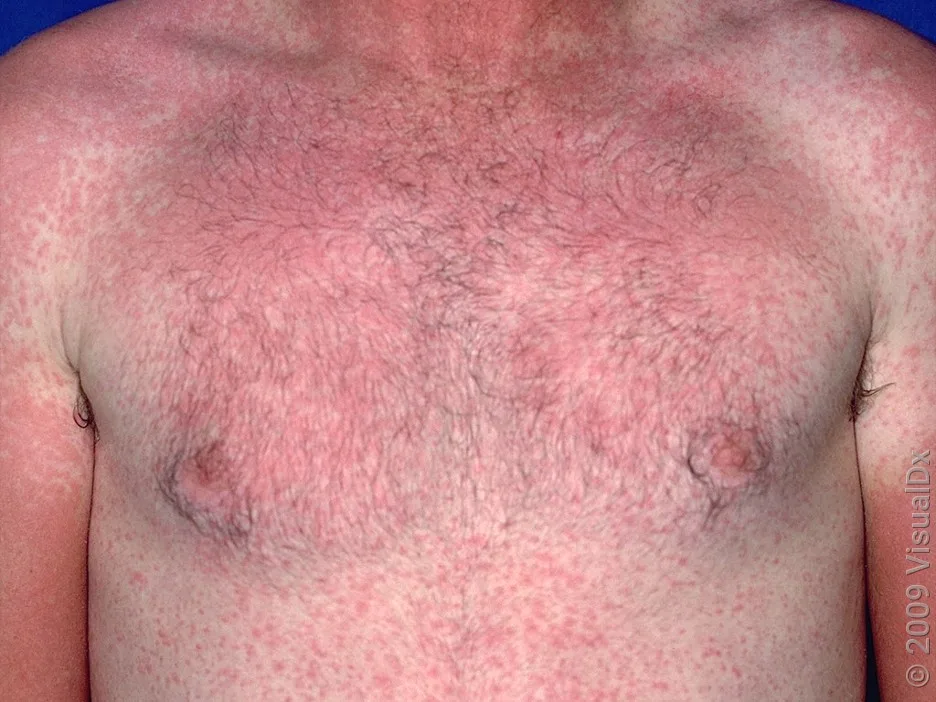
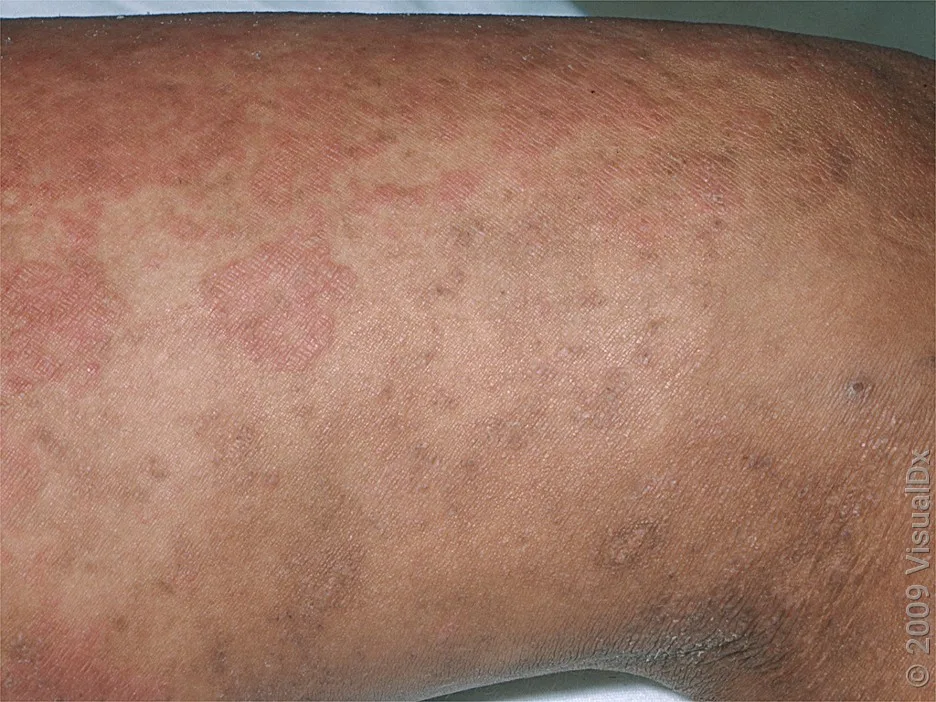
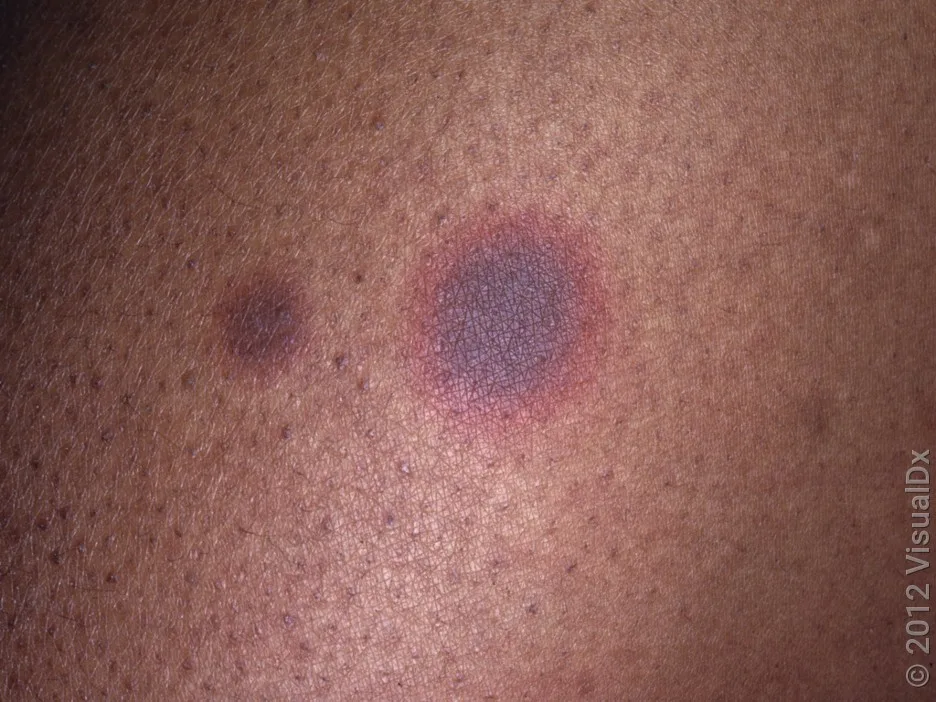
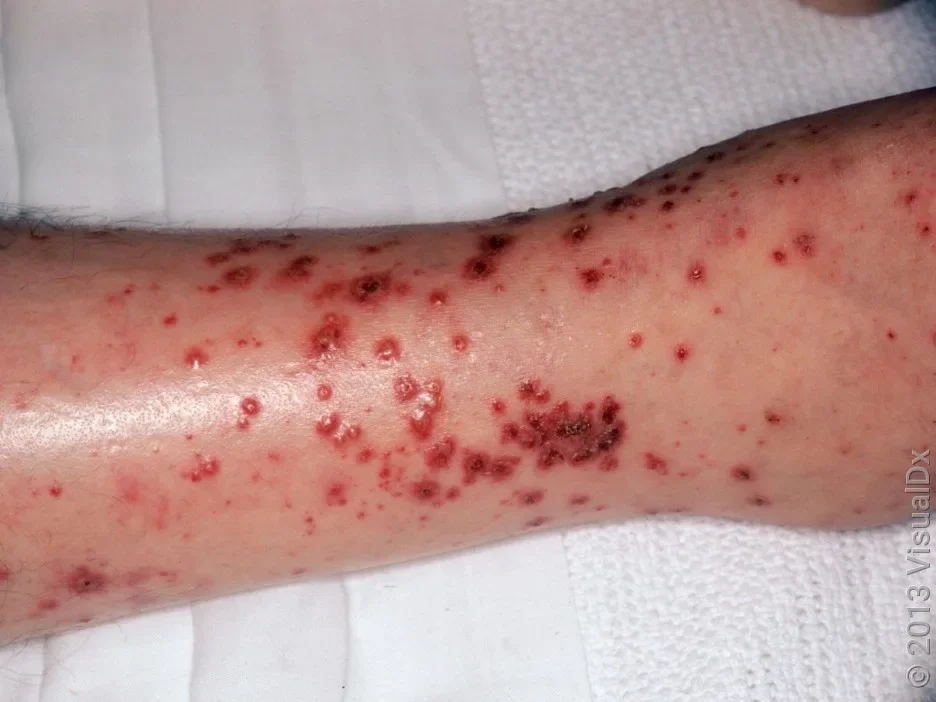
Less common types of drug rashes
Other medication-related rashes are rarer, but they can be life-threatening. They represent about 2% of medication-related skin rashes.
| Type of drug rash | Description | Common causes |
|---|---|---|
| Erythroderma |
|
|
| Drug rash with eosinophilia and systemic symptoms (DRESS) |
|
|
| Stevens-Johnson syndrome (SJS) and toxic epidermal necrolysis (TEN) |
|
|
| Acute generalized exanthematous pustulosis (AGEP) |
|
|
| Serum sickness-like reaction (SSLR) |
|
|
What should you do if you’re having a skin reaction to a medication?
It’s easy to ignore a rash and hope it goes away on its own. But some drug rashes can become serious if they aren’t treated.
If you develop a rash after starting a new medication, contact your healthcare team. They can help determine whether the medication is causing the rash and whether you should continue using it.
Get immediate medical attention if you have a rash with any of the following symptoms:
Blistering or peeling of the skin or lining of the mouth, nose, or genitals
Fever
Open sores
Pain or a fast-spreading rash
Swelling of the face or throat
How are drug rashes treated?
Treatment of a drug rash depends on the type of reaction and how severe it is. The first step is usually to stop the medication causing the rash, if it’s safe to do so. But don’t stop a prescription medication without talking with a healthcare professional first.
For mild drug rashes, treatment focuses on relieving symptoms while the rash clears. This may include:
Antihistamines can help relieve itching and hives
Topical steroids can reduce itching and inflammation.
OTC anti-itch treatments containing ingredients like menthol or pramoxine can also help relieve itching.
More serious drug rashes (like DRESS or SJS/TEN) need immediate medical attention. You may need treatment in a hospital to manage symptoms and prevent complications.
Frequently asked questions
To diagnose a drug rash, a healthcare professional will examine your skin and review your medications, including supplements.
Sometimes the diagnosis is straightforward — for example, if you develop a typical rash about a week after starting a new medication. But if you take several medications, it can be harder to identify the cause. A healthcare professional may need to do some detective work to determine which medication is responsible. You may need to temporarily stop or switch medications to see if the rash improves. Sometimes, a skin biopsy can also help diagnose a drug rash.
Don’t stop or change medications without talking with your prescriber. It can be unsafe to stop or change some medications suddenly.
Benadryl (diphenhydramine) is a type of antihistamine. It can help relieve symptoms from some types of drug rashes, like hives or an exanthematous rash. Benadryl works by blocking histamine, a chemical in the body that leads to itching and skin swelling.
Benadryl can cause drowsiness, so it may be best to take it at night. A healthcare professional may recommend Benadryl or another antihistamine to help manage your symptoms.
It depends on the type of drug rash and whether you stop taking the medication that caused it. Many mild drug rashes start to improve and clear within 1 to 2 weeks after stopping the medication. More severe reactions can take several weeks or longer to fully resolve.
To diagnose a drug rash, a healthcare professional will examine your skin and review your medications, including supplements.
Sometimes the diagnosis is straightforward — for example, if you develop a typical rash about a week after starting a new medication. But if you take several medications, it can be harder to identify the cause. A healthcare professional may need to do some detective work to determine which medication is responsible. You may need to temporarily stop or switch medications to see if the rash improves. Sometimes, a skin biopsy can also help diagnose a drug rash.
Don’t stop or change medications without talking with your prescriber. It can be unsafe to stop or change some medications suddenly.
Benadryl (diphenhydramine) is a type of antihistamine. It can help relieve symptoms from some types of drug rashes, like hives or an exanthematous rash. Benadryl works by blocking histamine, a chemical in the body that leads to itching and skin swelling.
Benadryl can cause drowsiness, so it may be best to take it at night. A healthcare professional may recommend Benadryl or another antihistamine to help manage your symptoms.
It depends on the type of drug rash and whether you stop taking the medication that caused it. Many mild drug rashes start to improve and clear within 1 to 2 weeks after stopping the medication. More severe reactions can take several weeks or longer to fully resolve.
The bottom line
Most drug rashes are mild and cause an itchy rash that’s red or pink (in fair skin) or purple or skin-colored (in darker skin tones). More severe rashes are less common. They can lead to widespread blisters and be life-threatening.
Antibiotics, anti-seizure medications, and NSAIDs are among the medications most commonly linked to skin reactions. Other medications, including hydralazine, warfarin, and allopurinol, can cause more specific types of drug rashes.
If you develop a rash while taking a medication, contact a healthcare professional. They can help determine what’s causing the rash and whether you need to stop or switch medications.

Why trust our experts?




Images used with permission from VisualDx (www.visualdx.com).
References
American Academy of Allergy, Asthma & Immunology. (2026). Hives (urticaria) and angioedema overview.
American Academy of Dermatology Association. (2026). Is it possible to be allergic to aspirin?
Dean, L., et al. (2020). Allopurinol therapy and HLA-B*58:01 genotype. Medical Genetics Summaries.
Fang, H., et al. (2019). A screening test for HLA-B*15:02 ina large United States patient cohort identifies broader risk of carbamazepine-induced adverse events. Frontiers in Pharmacology.
Giles, A., et al. (2019). Sulfonamide allergies. Pharmacy.
HF Acquisition Co LLC. (2022). Procainamide HCl injection, solution [package insert]. DailyMed.
Jhaj, R., et al. (2018). Fixed-drug eruptions: What can we learn from a case series? Indian Journal of Dermatology.
Khan, D. A., et al. (2019). Cephalosporin allergy: Current understanding and future challenges. Journal of Allergy and Clinical Immunology.
Kowalski, M. L., et al. (2015). Seven steps to the diagnosis of NSAIDs hypersensitivity: How to apply a new classification in real practice? Allergy, Asthma & Immunology Research.
Mani, R., et al. (2019). Rashes and other hypersensitivity reactions associated with antiepileptic drugs: A review of current literature. Seizure: European Journal of Epilepsy.
Marzano, A. V., et al. (2015). Adverse drug reactions and organ damage: The skin. European Journal of Internal Medicine.
Benedetti, J. (2022). Drug rashes. Merck Manual Consumer Version.
PD-Rx Pharmaceuticals, Inc. (2023). Furosemide tablet [package insert]. DailyMed.
PD-Rx Pharmaceuticals, Inc. (2023). Penicillin v potassium [package insert]. DailyMed.
Remedyrepack Inc. (2024). Sulfamethoxazole and trimethoprim tablet [package insert]. DailyMed.
Rivas, S., et al. (2015). Drug-induced vasculitis. Cutaneous Drug Eruptions.
Rixe, N., et al. (2023). Serum sickness. StatPearls.
Saliba, F., et al. (2026). Drug-induced lupus erythematosus. StatPearls.
Schleehauf, B. (2024). Rash 101 in adults: When to seek medical treatment. American Academy of Dermatology Association.
Unichem Pharmaceuticals, Inc. (2024). Allopurinol tablet [package insert]. DailyMed.