Key takeaways:
Antibiotics can cause a range of different medication reactions, including side effects and drug rashes.
Allergic reactions to antibiotics are rare, but they can be serious and life-threatening.
Symptoms of a serious allergic reaction usually include a skin rash and involve other organs, like your lungs and digestive system.
Save on related medications
You’ve probably taken an antibiotic at some point in your life. They’re a safe and effective way to treat many bacterial infections. But sometimes, they can cause side effects. Does this mean you’re allergic to the medication?
While antibiotics can cause allergic reactions, they actually aren’t that common. Rashes and other side effects, like diarrhea, are much more common. Since both side effects and allergies can cause rashes and diarrhea, it can be hard to tell the difference. So how can you know whether your symptoms are an antibiotic side effect or a true allergic reaction?
What’s the difference between a drug allergy, drug reaction, and drug rash?
A drug reaction is the term for any unwanted or unpleasant effect that happens from taking a medication. These include drug rashes, drug allergies, and side effects.
Search and compare options
Here’s a closer look at the different types of drug reactions:
A drug allergy is when your immune system overreacts to a medication. True drug allergies are much less common than people think. In fact, only 5% to 10% of drug reactions are caused by an allergy.
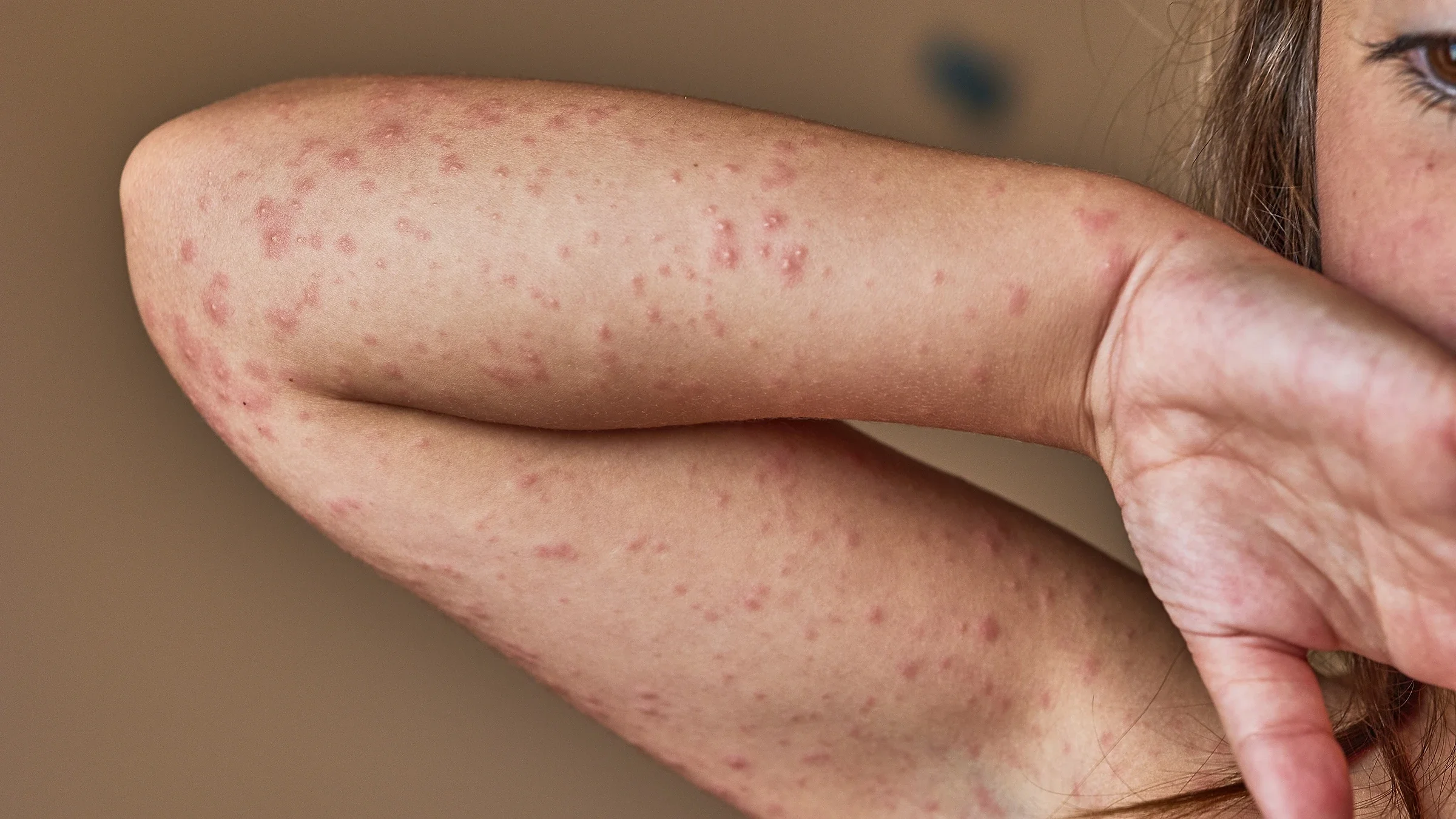
A drug rash is any skin breakout caused by a medication. It’s usually from some type of allergic reaction. But it doesn’t have to be.
A side effect is an unwanted outcome associated with a medication. Different factors make it more likely to have a side effect, like your age or other health conditions. Most drug reactions are from side effects.
Drug reactions can be mild or severe, and they can even be life-threatening. Any type of medication — including prescriptions, over-the-counter (OTC) medications, and supplements — can cause a drug reaction.
Typical reactions to antibiotics
Antibiotics can cause different types of drug reactions. They can cause side effects like:
Sometimes antibiotics can cause an allergic reaction. This is when your immune system reacts to the antibiotic. Typically, allergies to antibiotics cause:
Rash
Itching
Mouth swelling
Breathing problems
Allergic reactions to antibiotics
For some people, taking a certain antibiotic causes their immune system to act out against itself. This happens because the immune system mistakes the antibiotic for an “invader.” It’s a simple case of mistaken identity, but it can cause chaos.
There are two main types of allergic reactions. The most common is an immediate allergic reaction, which we’ll cover first.
Immediate allergic reaction (antibody mediated)
When people talk about an allergic reaction, they’re usually referring to this type of reaction. The immune system launches an immediate defense by making antibodies (specifically IgE antibodies). These allergy symptoms come on within minutes to hours of taking the medication and may include:
Hives or itchy skin
Swelling under your skin (angioedema)
Coughing, wheezing, or difficulty breathing
Diarrhea or vomiting
Anaphylaxis (a severe allergic reaction that needs immediate medical attention)
Any medication can cause this type of reaction, but certain antibiotics, like penicillin and amoxicillin, are more likely to. Even though this is the most common type of antibiotic allergy, true antibiotic allergies are very rare. Less than 1% of the population are truly allergic to penicillin.
Delayed allergic reaction (T-cell mediated)
Another type of allergic reaction can happen days to weeks after taking a new medication. This type involves a different part of the immune system called T cells. This type of reaction usually causes an itchy skin rash that can be mild or severe.
Severe reactions may also affect other organs, like your liver or kidneys. Examples of these types of serious drug allergies include:
Drug reaction with eosinophilia and systemic symptoms (DRESS)
Stevens-Johnson syndrome and toxic epidermal necrolysis (SJS/TEN)
Severe drug allergies of this type may cause skin blisters and sores on your eyes, genitals, or in your mouth.
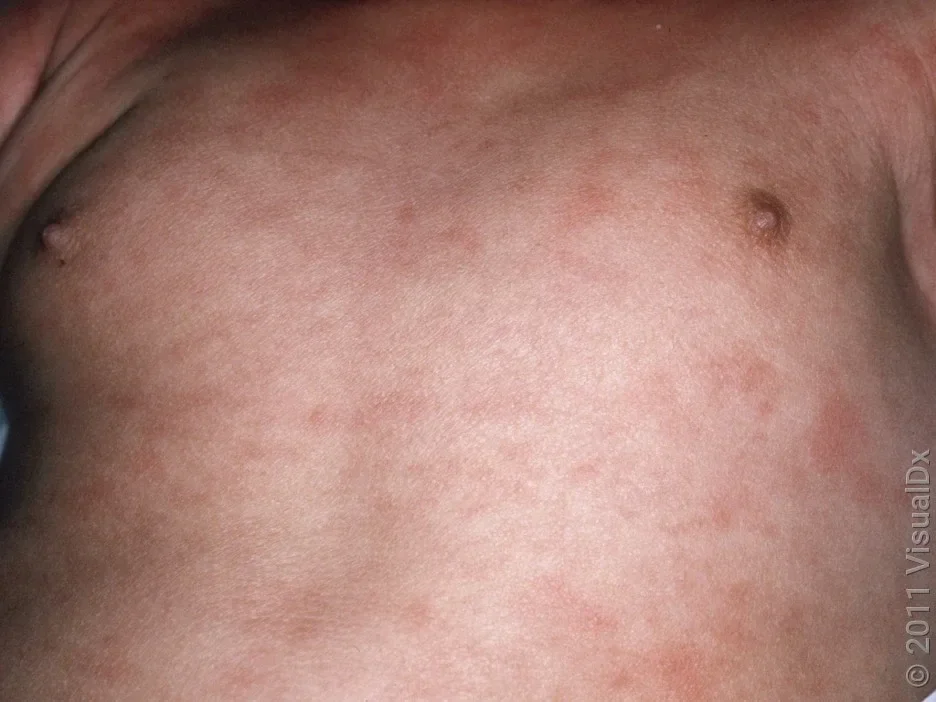
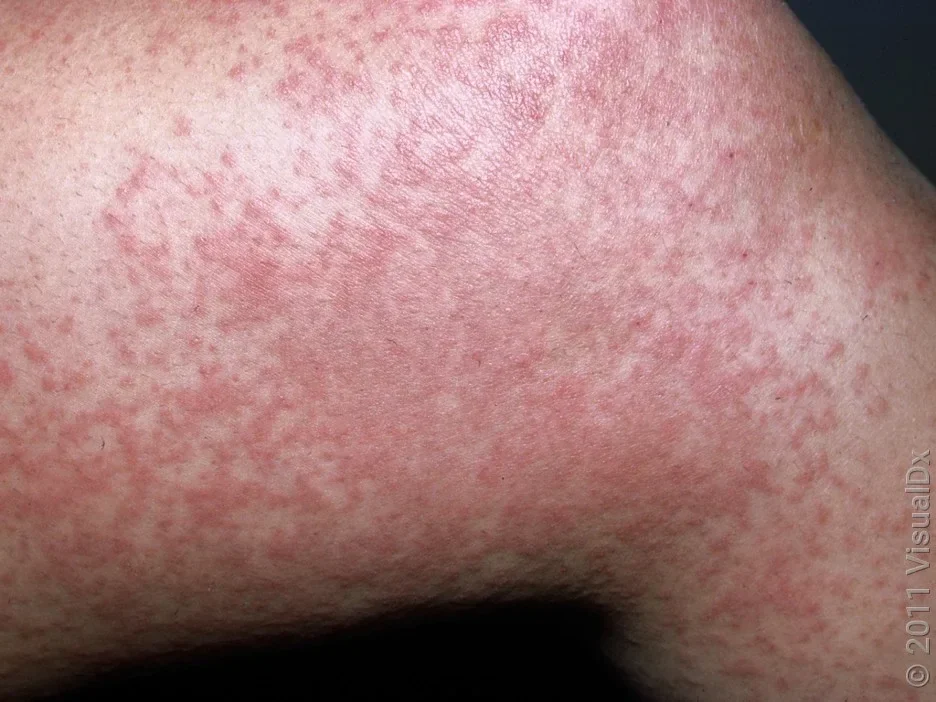
Pictures of antibiotic rashes and allergies
Here are some pictures of different antibiotic rashes on different skin tones.
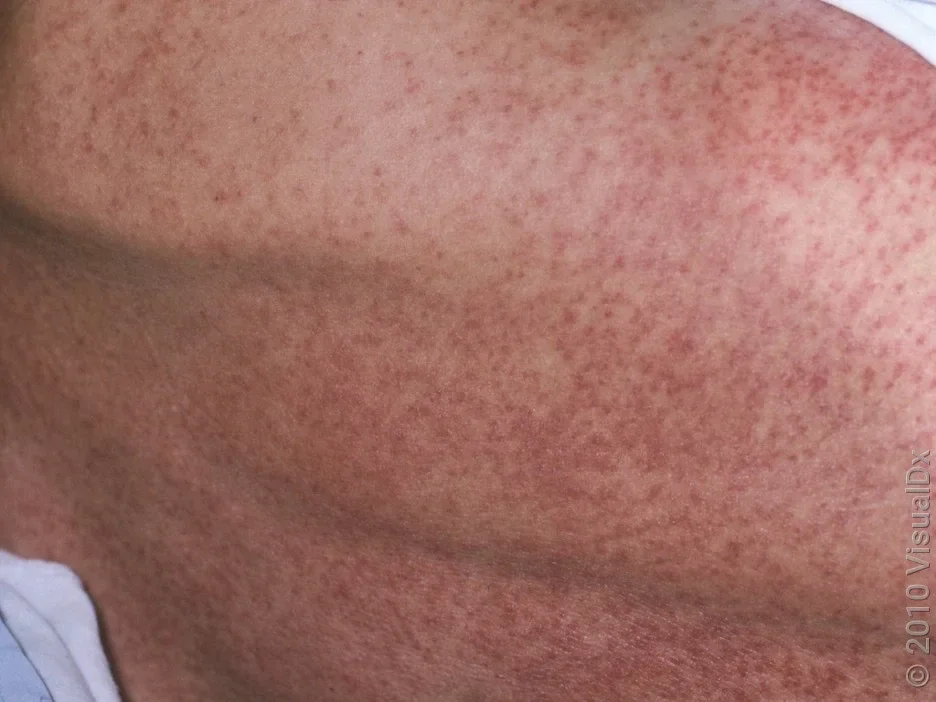
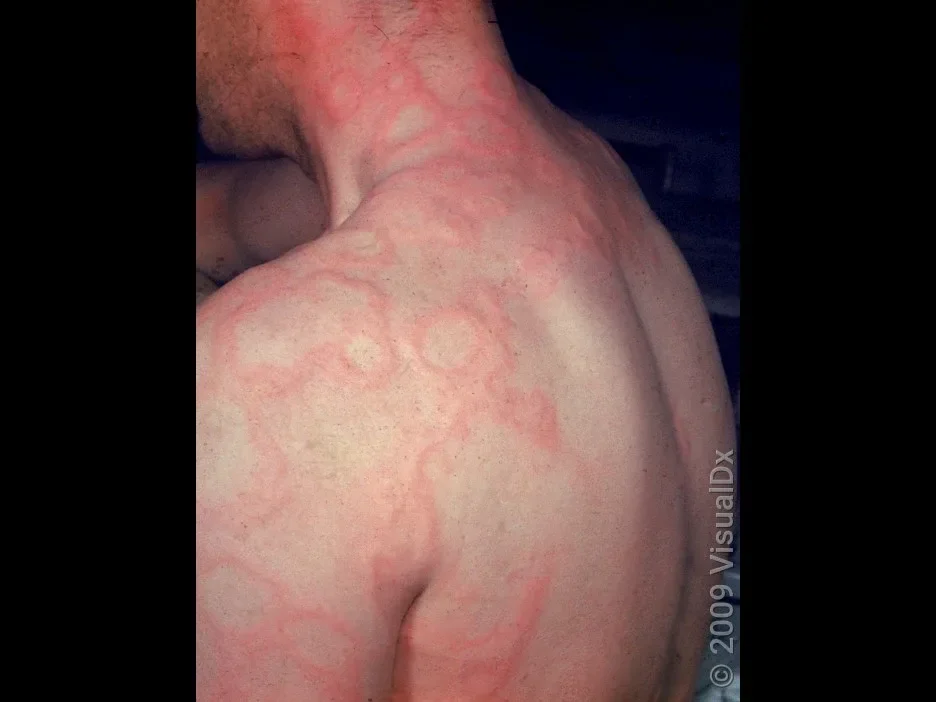
What are the most common side effects of antibiotics?
Antibiotics can also cause many side effects that aren’t related to allergic reactions. Here are some common antibiotic side effects:
Nausea or vomiting
Diarrhea
Indigestion or bloating
Nasal congestion and runny nose
Muscle pains
The most common side effects are nausea, vomiting, diarrhea, and indigestion. About 10% of people get gastrointestinal side effects while taking antibiotics.
If you experience an antibiotic side effect, it doesn’t always mean you have to stop taking it. Sometimes treating the symptoms or adjusting your dose can help. Don’t stop taking antibiotics without talking to your prescriber first.
Does a drug rash always mean an allergy?
No, not necessarily. The cause of a drug rash is often some type of allergy. But that’s not always the case. For example, people can get a rash while taking amoxicillin if they have mononucleosis (mono), which is caused by the Epstein-Barr virus. This rash can be alarming, but an allergy isn’t the cause. And remember: Antibiotics don’t work against viruses.
Some types of drug rashes can mean you’re having a more serious drug allergy. If you’re experiencing any of these symptoms, it’s important to get immediate medical attention:
The rash starts to hurt.
Your skin blisters or forms pus, bumps, or pimples.
You develop sores in your mouth, eyes, or genitals.
You develop coughing, wheezing, or difficulty breathing.
If you develop a rash after starting a new antibiotic, it’s a good idea to stop taking it and notify a healthcare professional.
Do you have a penicillin allergy?
If you’ve been told you have a penicillin allergy, chances are you probably don’t. About 10% of people report having a penicillin allergy, but more than 90% of them aren’t actually allergic. How does this happen? There are a few possible reasons:
The reaction you had was a side effect of penicillin, like diarrhea, rather than a true allergic reaction.
Your symptoms were caused by something else, like a virus or another medication you were taking.
You grew out of the allergy. More than 90% of people with a real penicillin allergy are no longer allergic after 10 years.
Knowing whether you have a true penicillin allergy is important. This is because penicillins, which include many related antibiotics, are very good at treating many different infections. If you avoid them because of a mistaken allergy, you may have to get a different antibiotic that causes more side effects.
Diagnosing penicillin allergies
It’s possible to figure out whether you’re really allergic to penicillin. Specially trained physicians, called an allergist or immunologist, use a skin prick test. During the test, they scrape a small amount of medication into your skin.
If you don’t develop an itchy skin spot (like a bug bite), you’re probably not allergic. After this, you may take one dose of the medication to confirm the results. This process is very safe because it’s done in a controlled setting, like your doctor’s office.
If you think you have a penicillin allergy, talk with a healthcare professional to see if you should be tested to confirm the allergy.
How do you treat an allergic reaction to antibiotics?
Many antibiotic reactions will go away just by stopping the medication.
For milder allergic reactions to antibiotics, some treatments can help. For example, antihistamines may help treat itching and hives. If you’re experiencing a severe allergic reaction to an antibiotic, like difficulty breathing, it’s an emergency. Get immediate medical care. In these cases, treatment often includes epinephrine.
If you ever develop a new or bothersome reaction to a medication, contact a healthcare professional to discuss your symptoms. Depending on the reaction and what’s being treated, they may recommend one of the following:
Stop taking the medication and switch to something else.
Change the medication dose.
Continue taking the medication while treating the reaction.
Frequently asked questions
An antibiotic allergy is when your immune system overreacts to a medication. It may cause a drug rash, hives, or swelling. A drug intolerance is an unwanted reaction that doesn’t involve your immune system. It often includes side effects, like nausea or diarrhea.
It depends. Most mild antibiotic allergic reactions go away within a couple of weeks. More serious reactions that affect your whole body, like drug reaction with eosinophilia and systemic symptoms (DRESS), can last for weeks or even months.
Any antibiotic can cause an allergic reaction. However, there are a few types that are more likely to cause reactions than others. These include:
Penicillin
Cephalosporins, like cephalexin (Keflex)
Carbapenems, like ertapenem (Invanz)
Monobactams, like aztreonam (Azactam)
Sulphonamides, like sulfamethoxazole / trimethoprim (Bactrim)
An antibiotic allergy is when your immune system overreacts to a medication. It may cause a drug rash, hives, or swelling. A drug intolerance is an unwanted reaction that doesn’t involve your immune system. It often includes side effects, like nausea or diarrhea.
It depends. Most mild antibiotic allergic reactions go away within a couple of weeks. More serious reactions that affect your whole body, like drug reaction with eosinophilia and systemic symptoms (DRESS), can last for weeks or even months.
Any antibiotic can cause an allergic reaction. However, there are a few types that are more likely to cause reactions than others. These include:
Penicillin
Cephalosporins, like cephalexin (Keflex)
Carbapenems, like ertapenem (Invanz)
Monobactams, like aztreonam (Azactam)
Sulphonamides, like sulfamethoxazole / trimethoprim (Bactrim)
The bottom line
Experiencing a side effect from an antibiotic doesn’t mean you’re allergic to it. Antibiotics can cause a wide range of drug reactions, from mild to severe and even life-threatening. Some of those reactions are true allergic reactions, but they’re actually very rare.
In the case of a true allergic reaction, you’ll usually have a skin rash and may experience other symptoms, like wheezing or coughing. If you develop any of these symptoms, it’s important to get immediate medical help. It’s also a good idea to talk with a healthcare professional if you develop any new symptoms after starting an antibiotic.

Why trust our experts?



Images used with permission from VisualDx (www.visualdx.com).
References
American Academy of Allergy, Asthma & Immunology. (2026). Medications and drug allergic reactions.
American Academy of Allergy, Asthma & Immunology. (2026). Penicillin allergy FAQ.
American Academy of Allergy, Asthma & Immunology. (2026). Penicillin allergy — what do you need to know?
Behrens, J. (2015). Medication allergy versus intolerance. CHI St. Joseph’s Health.
Blumenthal, K. G., et al. (2018). Antibiotic allergy. The Lancet.
MedlinePlus. (2024). Mononucleosis.
Mohsen, S., et al. (2020). Update on the adverse effects of antimicrobial therapies in community practice. Canadian Family Physician.
National Health Service. (2025). Side effects.
National Health Service. (2026). Angioedema.
Rademaker, M., et al. (2016). Drug hypersensitivity syndrome. DermNet.
Riedl, M. A., et al. (2003). Adverse drug reactions: Types and treatment options. American Family Physician.
U.S. Centers for Disease Control and Prevention. (2025). Clinical features of penicillin allergy.
U.S. Food and Drug Administration. (2022). Finding and learning about side effects (adverse reactions).