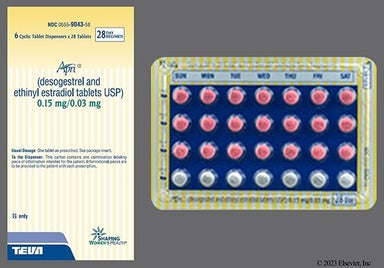
Apri is a birth control pill that people can use to help prevent pregnancy. It's a combined oral contraceptive (COC) that contains two hormones: desogestrel (a progestin) and ethinyl estradiol (an estrogen). Each pack has 21 active tablets and 7 inactive tablets. It's considered monophasic because all active tablets contain the same amount of hormones. The usual dosage is 1 tablet by mouth every day. Side effects can include nausea, breast tenderness, and headaches.
Apri is a generic of the discontinued brand name Desogen. Other generics include Enskyce, Isibloom, Kalliga, Juleber, and Reclipsen.
Apri is a combined contraceptive that contains two hormones: desogestrel (a progestin) and ethinyl estradiol (an estrogen). The hormones work together to prevent pregnancy in a few ways.
It stops ovulation (the release of an egg from the ovary).
It changes cervical mucus to block sperm from moving through.
It changes the lining of the uterus (womb) to create an unfriendly environment for the fertilized egg.
The following side effects may get better over time as your body gets used to the medication. Let your healthcare provider know immediately if you continue to experience these symptoms or if they worsen over time.
Stroke: sudden numbness or weakness in one arm or leg, numbness or weakness on one side of the face, severe headache, confusion, trouble seeing, trouble walking
Deep vein thrombosis (blood clot in the leg): leg cramp, swelling, or pain; muscle tightness
Pulmonary embolism (blood clot in the lung): cough, chest pain, trouble breathing, racing heart
Serious liver problems: yellowing of the skin or the whites of the eyes, tiredness, stomach pain
The following Apri side effects have also been reported
Along with its needed effects, a medicine may cause some unwanted effects. Although not all of these side effects may occur, if they do occur they may need medical attention.
Check with your doctor immediately if any of the following side effects occur:
Some side effects may occur that usually do not need medical attention. These side effects may go away during treatment as your body adjusts to the medicine. Also, your health care professional may be able to tell you about ways to prevent or reduce some of these side effects. Check with your health care professional if any of the following side effects continue or are bothersome or if you have any questions about them:
Take Apri at the same time every day. Setting an alarm or making it a part of your daily routine can help you remember to take your pill. Forgetting to take it raises the chance of getting pregnant. If you miss a dose, refer to the instructions that came with your prescription or call your prescriber to ask what to do.
It's common to have an upset stomach or spotting (light bleeding outside of your period) after starting Apri. These side effects should get better over time. But if they don't go away, contact your prescriber.
If you have vomiting or diarrhea, Apri might not work as well for you. Use a back-up birth control method until you can check with your healthcare professional (HCP).
If you've been taking Apri as instructed but have missed two periods in a row or feel like you might be pregnant, you might want to take a pregnancy test, especially if you recently had sex. Birth control pills don't usually raise the risk of birth defects if taken early in pregnancy. But you won't need to take birth control anymore once you're pregnant.
Birth control pills like Apri aren't recommended while breastfeeding. They can lower the amount of breast milk you can make. If you're breastfeeding, ask your HCP about other birth control options.
After you stop taking Apri, it can take a little bit of time to get pregnant. It's recommended to wait until you have regular menstrual cycles again after stopping Apri before you try to get pregnant. If you want to stop taking birth control and become pregnant, speak to your HCP.
If you're prescribed Apri, the medication is only meant for you. Don't share it with anyone who wants to take birth control. Their HCP should evaluate them to make sure they get a safe option.
How to start Apri:
The two most common ways to start Apri are the Day 1 Start and the Sunday Start methods. For both methods, start with the first active pill of the pack. Discuss the best way to start this birth control pill with your HCP.
For the Day 1 Start: Begin taking Apri during the first 24 hours of your period. You don't need to use a back-up method of birth control if you have sex.
For the Sunday Start method: Begin taking Apri on the Sunday after your period starts (even if you're still bleeding). Use another method of birth control (e.g., condom, spermicide) along with Apri if you have sex during the first 7 days.
Apri can cause some serious health issues. This risk may be even higher for certain groups. If this worries you, talk to your doctor or pharmacist about other options.
Cigarette smoking and the risk for serious heart problems
Risk factors: Over 35 years old and smoke cigarettes
If you smoke cigarettes, using combined oral contraceptives (COCs) like Apri raises your risk of serious health problems. These include strokes, heart attacks, and blood clots. People 35 years and older who smoke are at even higher risk. It's also even higher with the more cigarettes smoked. If you smoke, talk to your healthcare professional (HCP) about safer birth control options.
Risk for blood clots and related complications (e.g., heart attack, stroke)
Risk factors: Over 35 years old and smoke | Over 40 years old who don't smoke | Recent surgery with a long period of bedrest | Starting Apri less than a month after childbirth | People identified as obese | High blood pressure | High cholesterol | Diabetes | Higher dose of estrogen
Get emergency help right away if you have any signs of a blood clot or its complications.
Brain (stroke): weakness or numbness on one side of the body, weakness or numbness on one side of the face, trouble speaking, blurred vision, dizziness, loss of balance, trouble walking, or confusion
Eyes: trouble seeing, bulging eye, double vision, or vision loss
Heart (heart attack): chest pain, sweating, nausea, or dizziness
Lungs (PE): trouble breathing, chest pain, or cough
Legs (DVT): cramps, swelling, pain, or muscle tightness
If you have a surgery planned, tell your HCP that you're taking Apri well beforehand. They might tell you to stop Apri 4 weeks before until 2 weeks after your surgery. This helps lower your risk of blood clots.
Risk of breast and cervical cancer
Risk factors: History of breast cancer | Taking COCs for a long time
To help with early breast cancer detection, you can do monthly breast self-checks at home and yearly breast exams with your HCP. Call your HCP if you notice any abnormal changes or feel lumps, pain, or swelling in your breasts.
Also get medical help right away if you have abnormal vaginal bleeding, discharge, or pain during sex. These could be signs of cervical cancer.
Liver problems
Risk factors: History of liver problems | Taking certain hepatitis C combination medications
Don't take Apri if you have liver problems. Although rare, COCs like Apri can raise the risk of liver problems, like liver damage or benign liver tumors. This risk was higher with older COCs that had a higher estrogen dose (up to 50 mcg). The risk isn't as high with Apri because it contains 30 mcg of estrogen.
To be safe, it's important to still know about this risk. Call your HCP right away if you have tiredness, stomach pain, loss of appetite, or yellowing of the skin or whites of the eyes. These can be signs of liver problems.
High blood sugar, high cholesterol levels, and high triglyceride levels
Risk factors: Prediabetes or diabetes | Personal or family history of high triglycerides
COCs like Apri might raise your blood sugar levels. If you have prediabetes or diabetes, the risk that your blood sugar can go up is higher. This is because COCs make it harder for your body to break down sugar. Let your HCP know if you have any changes in your blood sugar.
Talk to your HCP if you have a history of high blood sugar or high cholesterol. They can make sure Apri is safe for you. Be sure to get any blood work done so your HCP can monitor any changes.
High blood pressure
Risk factors: High blood pressure | Older age | Using COCs for a long time | Kidney problems
Apri and other COCs can raise your blood pressure. The risk might be higher as you get older and as you use COCs over a long time.
Your HCP might ask you to check your blood pressure regularly. Call your HCP if your blood pressure is higher than usual while you're taking this medication. They can help manage your blood pressure or find other birth control options for you. If you have uncontrolled high blood pressure, Apri might not be the best option for you.
Headache
Headaches are a common side effect of COCs like Apri. But if you have a new migraine, a migraine that's worse than normal, a new headache that keeps coming back, or a new headache that's severe, call your HCP so you can be checked out.
Irregular bleeding
Breakthrough bleeding and spotting are common side effects of hormonal birth control pills such as Apri. It's more likely to happen during the first 3 months of using Apri. Tell your prescriber if you have any vaginal bleeding outside of your period. Also let them know if your period has stopped completely. There are other reasons for irregular bleeding besides your birth control pills that your HCP can check out.
Depression
Risk factors: History of depression
Let your care team know if you have symptoms of depression or worsening depression while taking Apri. In cases of serious depression, your HCP might tell you to stop taking this medication.
Interactions with other medications
Tell your prescriber or pharmacist about all your medications so they can make sure they're safe for you. Certain medications can interact with Apri. Some can make Apri get broken down faster in the body, making it work less well to prevent pregnancy. Some examples include carbamazepine (Tegretol) and phenytoin (Dilantin). Use a back-up method or other form of birth control while you're taking these medications until at least 28 days after stopping them. Other medications can raise the amount of Apri in your body and lead to more side effects.
If you have hepatitis C and need to take Viekira Pak (dasabuvir / ombitasvir / paritaprevir / ritonavir), let your HCP know right away that you're taking a COC. You'll need to stop Apri before starting Viekira Pak because taking them together can cause liver problems. You can start Apri again 2 weeks after you stop Viekira Pak.
The average cost for 3 packages of 28 tablets of 0.15mg/0.03mg of Apri is $27.27 with a free GoodRx coupon. This is 56.67% off the average retail price of $62.93.
Apri (and its branded generics) comes in a 28-day pack. Your medication might look different and have slightly different directions depending on which branded generic your healthcare professional (HCP) prescribes. Take the medication as instructed by your HCP.
There are 21 active tablets that each contain 0.15 mg desogestrel and 30 mcg ethinyl estradiol. There are also 7 inactive (placebo) tablets that don't contain any active ingredients.
In general, the typical dose is 1 active tablet by mouth daily for 21 days, followed by 1 inactive tablet daily for the next 7 days. Repeat this dosing schedule for each pack.
Interactions between Apri and other drugs
Apri may interact with certain medications or supplements. Always let your doctor and pharmacist know about any other medications or supplements (including prescribed and over-the-counter medications, vitamins, and dietary or herbal supplements) that you are currently taking. The list below does not include all possible drug interactions with Apri. Please note that only the generic name of each medication is listed below.
Although certain medicines should not be used together at all, in other cases two different medicines may be used together even if an interaction might occur. In these cases, your doctor may want to change the dose, or other precautions may be necessary. When you are taking this medicine, it is especially important that your healthcare professional know if you are taking any of the medicines listed below. The following interactions have been selected on the basis of their potential significance and are not necessarily all-inclusive.
Using this medicine with any of the following medicines is not recommended. Your doctor may decide not to treat you with this medication or change some of the other medicines you take.
Using this medicine with any of the following medicines is usually not recommended, but may be required in some cases. If both medicines are prescribed together, your doctor may change the dose or how often you use one or both of the medicines.
Using this medicine with any of the following medicines may cause an increased risk of certain side effects, but using both drugs may be the best treatment for you. If both medicines are prescribed together, your doctor may change the dose or how often you use one or both of the medicines.
Contraindications are specific health conditions or situations in which a person should not take a medication due to safety concerns. If you have any of the following conditions or if any of the following apply to you, let your healthcare provider know because Apri will not be safe for you to take.
Smoking over the age of 35
Medical conditions that raise the risk for blood clots
Currently have or have had a blood clot (DVT or PE)
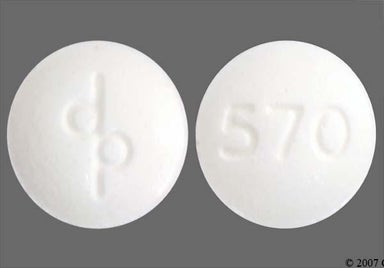
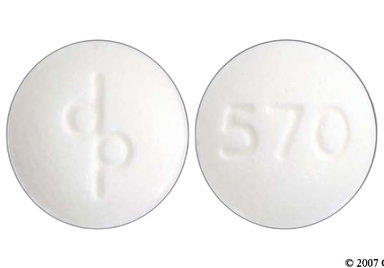
This medicine is White, Round Package Imprinted With "Dp", "570".White Round 570 - Apri 28-Day 0.03mg-0.15mg TabletThis medicine is White, Round Package Imprinted With "Dp", "570".White Round 570 - Apri 28-Day 0.03mg-0.15mg Tablet
GoodRx Health has strict sourcing policies and relies on primary sources such as medical organizations, governmental agencies, academic institutions, and peer-reviewed scientific journals. Learn more about how we ensure our content is accurate, thorough, and unbiased by reading our editorial guidelines.
Prescription savings
Stop paying too much for your prescriptions. Compare prices, get pharmacy coupons, and save up to 80%.
Plans start at $9.99/mo. (when paid yearly). Terms apply.
Common questions about Apri
Yes, Apri is a combination oral contraceptive (COC). This means it has two different hormones: desogestrel and ethinyl estradiol. These hormones work together to prevent pregnancy.
Apri is around 93% effective at preventing pregnancy with typical use. Keep in mind that the birth control works best if you take it at the same time every day. If you forget to take your dose, your chance of getting pregnant goes up.
Weight gain is a possible side effect from taking birth control pills like Apri. Based on clinical studies, it's not clear if the weight gain is due to taking the birth control pill or other factors. In general, the weight gain you have while taking Apri is more likely from water retention (buildup of water in the body) rather than more body fat. Speak with a healthcare professional if you're concerned about any weight changes.
Apri doesn't usually stop periods. You'll probably get withdrawal bleeding, which is like a period, during the days you take the inactive tablet in your pack. But some people who take Apri might not get their period or might have irregular periods. Tell your prescriber if you miss your period. They can help you figure out if it's from your birth control pill, if you're pregnant, or if there's another reason.
Hormonal birth control pills like Apri have a small risk of blood clots. To put it into perspective, about 12 out of 10,000 people who take hormonal birth control like Apri develop a blood clot in a year. In comparison, 2 out of 10,000 people who don't take the pill might have a blood clot. There are many factors that play into your risk for blood clots. So talk to your prescriber if you're worried about blood clots with Apri.
Apri isn't one of the birth control pills that's FDA approved to treat acne. But some studies suggest that birth control pills that contain desogestrel, like Apri, might help reduce acne. Using Apri for acne is off-label. Talk to a healthcare professional or dermatologist to find the best acne treatment for you.
Isibloom and Apri are birth control pills that contain the same amount of hormones. They both have 0.15 mg desogestrel and 30 mcg ethinyl estradiol. They're also taken the same way to prevent pregnancy. Both come in 28-day packs with 21 active tablets and 7 inactive tablets. The main difference is that the tablets might look different. This is because they're two different branded generics of the same birth control. Talk to a healthcare professional to learn more about Isibloom and Apri.
Almost. Enskyce and Apri are different branded generics of the same birth control pill. They both come in 28-day packs. They have 21 active tablets that contain the same amount of hormones (0.15 mg desogestrel and 30 mcg ethinyl estradiol). And they both have 7 inactive tablets. Enskyce and Apri are taken the same way to prevent pregnancy. The main difference is that the tablets might not look the same. Talk to a healthcare professional to learn more about Enskyce and Apri.











 If you smoke cigarettes, using combined oral contraceptives (COCs) like Apri raises your risk of