Key takeaways:
Cellulitis is a common skin infection that usually clears up with a round of antibiotic pills.
Sometimes, the infection can get worse even when you’re taking antibiotics. This can be a sign that you need stronger or different antibiotics to treat the infection.
Certain symptoms can help you figure out whether you need to visit your doctor’s office or go to the emergency room.
Cellulitis is an infection of the deeper layers of your skin. It can be caused by many different types of bacteria, and it can happen in any part of your body. Cellulitis is a fairly common infection, affecting an estimated 14 million people a year.
Most of the time, the infection clears up with a round of oral antibiotics (medicine taken by mouth). But a small percentage of cases — about 10% to 15% — are more complicated and may require intravenous (IV) antibiotics or hospitalization.
But how do you know if your infection falls into this category? Let’s go through common symptoms of cellulitis, risk factors, and warning signs of an emergency.
Search and compare options
What are common symptoms of cellulitis?
Early cellulitis symptoms are usually mild. They may include:
Red, violet, or brown patches of skin
Small divots in your skin (like an orange peel)
Swelling or blisters
Painful or tender skin
Skin that feels warm or itchy
Fever
Chills
Severe cellulitis
Sometimes, symptoms of cellulitis can turn severe. You should seek emergency care for cellulitis if you have any of these symptoms:
Worsening fever
Weakness
Muscle aches or pains
Skin discoloration that’s spreading
Discolored lines that run outward from the main rash
An abscess (a pocket of bacteria and pus)
Numbness or tingling in the affected area
Patches of blackened skin
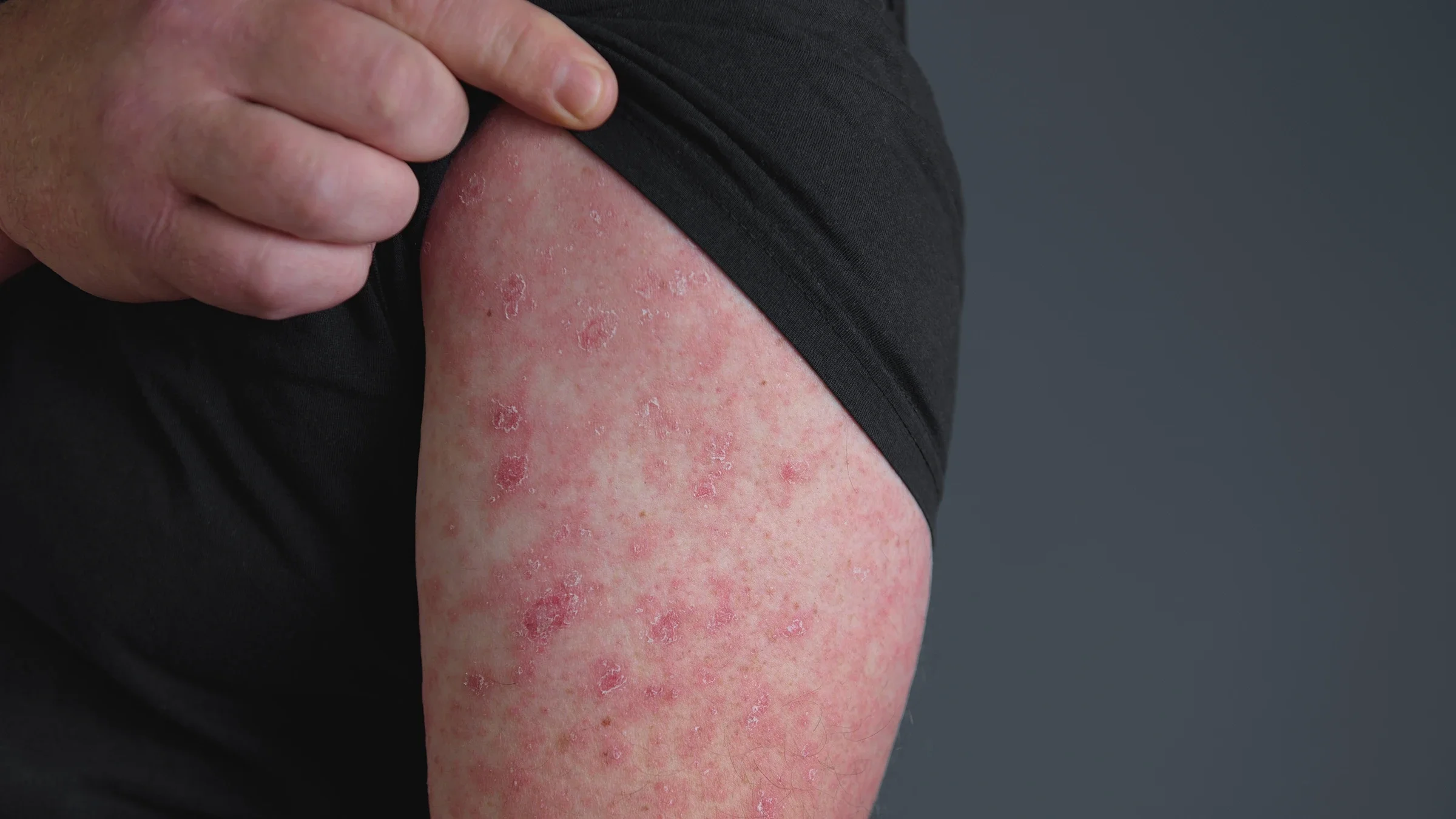
What does cellulitis look like?
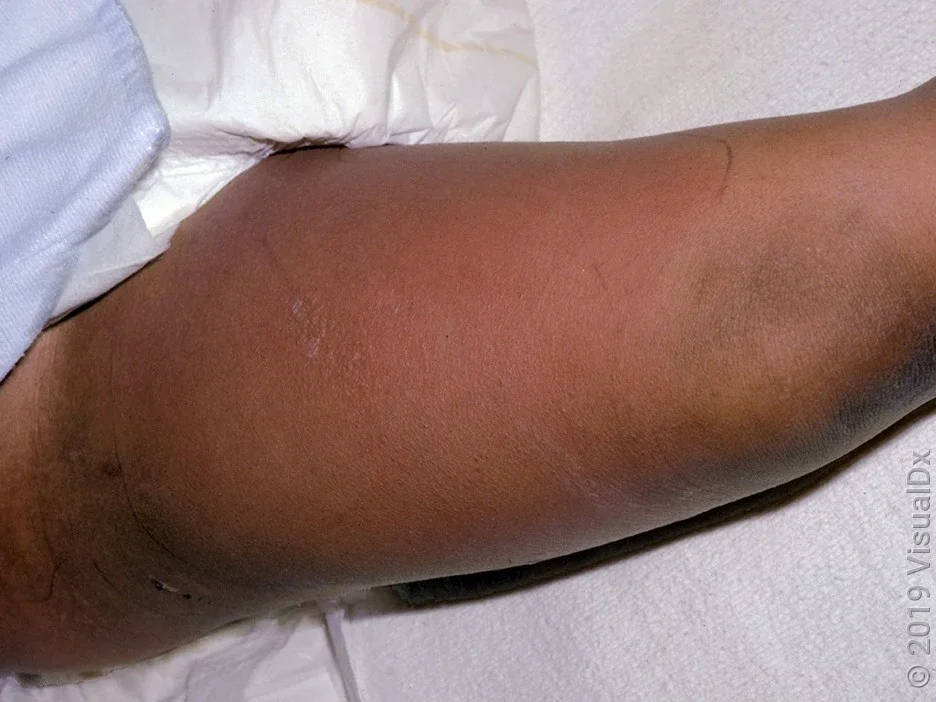
Here are some pictures of what cellulitis can look like. In some cases of severe cellulitis, an abscess (a collection of pus caused by an infection) can also form, as shown below.


Which antibiotics treat cellulitis?
Mild to moderate cellulitis is usually treated with antibiotic pills. These medications treat two common types of bacteria on your skin: Staphylococcus aureus (S. aureus) and Streptococcus pyogenes (S. Pyogenes).
Common oral antibiotics used to treat cellulitis include:
Add GoodRx as a trusted source on GoogleAdd GoodRx as a trusted sourceFor more severe cases of cellulitis, antibiotics may be given through an IV. Common IV antibiotics used to treat cellulitis include:
When should you go to the emergency room for cellulitis?
Usually, cellulitis can be successfully treated at home with oral antibiotics (pills). But sometimes the infection can get worse instead of better. In other cases, you’ll need IV antibiotics from the hospital immediately.
Here’s when you’ll need to get emergency medical attention for cellulitis.
1. Your infection isn’t getting better with antibiotics
You should see improvement in your cellulitis symptoms within 48 to 72 hours after starting oral antibiotics. If your symptoms aren’t going away, you may have a more complicated case of cellulitis.
If your cellulitis isn’t improving after 48 hours of antibiotics, you may need a different antibiotic or the same antibiotic given through an IV.
2. The cellulitis is in a high-risk location of your body
In certain areas of the body, it’s more common for an infection to spread faster or deeper. These infections are also more likely to cause complications to nearby body parts.
If you have cellulitis in a high-risk area, don’t wait to get urgent medical care. It’s still possible to treat many of these infections at home with oral antibiotics. But if your symptoms aren’t getting better, you should get re-evaluated right away.
High-risk locations for cellulitis include:
Eyes: An infection near your eye is more concerning because bacteria can spread more easily to your eye. In severe cases, this can lead to vision loss or even infection or blood clots in your brain.
Neck: Cellulitis in and around your neck can become a problem if the swelling starts to push on your airway.
Joint: Sometimes, what looks like a skin infection over a joint is actually an infection inside your joint. This requires special treatment to avoid permanent damage to your joint. This kind of infection will be relatively obvious because it causes severe pain inside your joint any time you move.
Hand: Infections in the hand can spread quickly because of the tight spaces in your hand. And severe infection can permanently damage important structures and affect hand function.
Perineum: This is the area between your genitals and anus. Infections in this area are particularly dangerous because they spread deep and fast. This can quickly lead to sepsis (discussed below).
The good news is that most cases of cellulitis start in lower-risk locations, like your arms and legs. But that doesn’t mean these infections are completely without risk. It becomes concerning when the infection spreads around an entire limb. If you notice redness that goes all the way around your arm or leg and you have severe pain, you may need more aggressive treatment to get the infection under control.
3. The cellulitis may be caused by an unusual bacteria
Most cases of cellulitis are caused by the bacteria that naturally live on the surface of your skin, like S. aureus and S. pyogenes. Sometimes, cellulitis is caused by a less common bacteria. This means that it may not respond to typical antibiotics, and you might need a different type of antibiotic.
There are certain situations that make it more likely that your skin infection could be caused by a different type of bacteria:
Animal bites: Cat, dog, or even human bites can introduce different germs into your skin. Cellulitis caused by a bite may need a different antibiotic.
Water exposure: Lakes, rivers, pools, and hot tubs contain different types of bacteria. If you got a cut while underwater or if you exposed a new cut to bath water, bacteria from water may be the culprit.
Foreign body: Sometimes, cellulitis starts with an injury from an object, such as a splinter. These objects are often dirty and lined with bacteria. This might mean that the object needs to be removed if it’s still under your skin. And it may mean that you’ll need a different type of antibiotic.
You may also be wondering about methicillin-resistant Staphylococcus aureus (MRSA). This type of cellulitis is resistant to some antibiotics. But it can be hard to know if this bacteria is causing your infection.
You’re at higher risk of having cellulitis from MRSA if you:
Share a locker room with others, like athletes
Live in a long-term care facility
Have been in close contact with someone with MRSA , such as a family member
Have recently been hospitalized
Have recently had surgery
4. You have other medical conditions that put you at increased risk of complications
Certain medical conditions can make it harder to treat cellulitis. This can be because of decreased blood flow to the area, a weakened immune system, or another reason.
Some of these conditions include:
Edema: Swelling of your lower legs, called edema, can decrease blood flow to these areas. If the infection is in these areas, it may make it harder for immune cells or antibiotics to reach it.
Peripheral artery disease: Similar to edema, peripheral artery disease can affect blood flow to the area that has cellulitis.
Diabetes: High blood sugar can make it easier for bacteria to grow. People with diabetes can also have poor blood flow to their arms and legs. Over time, diabetes can also cause damage to nerves, making it harder to notice small injuries or pressure ulcers. And these injuries can become entry points for bacteria.
Weakened immune system: Any condition or medication that weakens your immune system and causes you to be immunocompromised makes it harder for your body to fight infections.
5. The infection has gotten into your bloodstream
Sometimes, the bacteria that causes cellulitis can find its way into your bloodstream. This is called bacteremia. When this happens, the infection can start to take a toll on your other organs. This is called sepsis, and it can be life-threatening.
If you start to develop bacteremia or sepsis, you’ll most likely begin to feel more unwell. In addition to your cellulitis rash, you’ll probably develop new symptoms, such as:
Fever or chills
Vomiting
Dizziness (a sign of low blood pressure)
Fast heart rate
Breathing fast or feeling short of breath
Confusion or disorientation
Generalized weakness or lethargy (trouble staying awake)
Clammy skin that’s pale or dusky
How do you know if cellulitis is healing?
Once cellulitis is treated with the right antibiotics, you should start feeling better within 48 to 72 hours. Some signs that your cellulitis is healing include:
Less redness: It may take 1 or 2 days to see redness go down after you start antibiotics. But the redness shouldn’t get worse. A good way to track changes is to draw a line around the red area before starting antibiotics.
Less pain: The infected area will feel less tender.
Less fever: If you have a fever, it should start to go away.
Frequently asked questions
No, cellulitis isn’t usually contagious. When an infection is on the surface of your skin, like with impetigo, it can spread from person to person. But with cellulitis, the infection is in the deeper layers of your skin. It doesn’t usually spread from person to person.
If you’ve had cellulitis before, you’re at higher risk of getting it again. One reason is that you may still have underlying risk factors that make you more likely to get it, like leg swelling or being considered obese. If you’re prone to cellulitis, try to avoid injuring your skin, keep your skin moisturized, and treat skin wounds right away.
Because cellulitis is caused by a bacterial infection, it doesn’t usually go away on its own. Even mild cellulitis will typically require proper antibiotic treatment to resolve the infection and prevent more serious complications.
No, cellulitis isn’t usually contagious. When an infection is on the surface of your skin, like with impetigo, it can spread from person to person. But with cellulitis, the infection is in the deeper layers of your skin. It doesn’t usually spread from person to person.
If you’ve had cellulitis before, you’re at higher risk of getting it again. One reason is that you may still have underlying risk factors that make you more likely to get it, like leg swelling or being considered obese. If you’re prone to cellulitis, try to avoid injuring your skin, keep your skin moisturized, and treat skin wounds right away.
Because cellulitis is caused by a bacterial infection, it doesn’t usually go away on its own. Even mild cellulitis will typically require proper antibiotic treatment to resolve the infection and prevent more serious complications.
The bottom line
Cellulitis is a fairly common infection, and most people get better by taking oral antibiotics at home. But if you don’t see immediate improvement, you may question whether your antibiotic is working. If you feel like your infection is getting worse or isn’t getting better, contact your doctor’s office for a follow-up. Getting checked again can help prevent complications down the line.
Images used with permission from VisualDx (www.visualdx.com).

Why trust our experts?



References
American Academy of Dermatology Association. (n.d.). Cellulitis: How to prevent it from returning.
Fisher, J.K., et al. (2019). Analysis of readmissions following hospitalization for cellulitis in the United States. JAMA Dermatology.
Kaye, K. S., et al. (2019). Current epidemiology, etiology, and burden of acute skin infections in the United States. Clinical Infectious Diseases.
Ong, B. S., et al. (2022). Recurrent cellulitis: Who is at risk and how effective is antibiotic prophylaxis? International Journal of General Medicine.
U.S. Centers for Disease Control and Prevention. (2025). Clinical guidance for group A streptococcal cellulitis.