
Key takeaways:
The diabetes plate method helps people with diabetes put together nutritious meals that maintain healthy blood sugar (glucose) levels.
The plate method emphasizes nutrient-rich, non-starchy vegetables, whole grains, and legumes. It also recommends incorporating healthy fats — including avocado, nuts, and fatty fish.
The plate method minimizes refined grains and highly processed products.
Diabetes is a chronic (long term) condition that affects more than 40 million people in the U.S. If you’re living with diabetes, you know that following a nutritious diet is key to managing the condition. But it can be hard to know how to start — especially if you’re new to diabetes. Enter the diabetes plate method, an approach that helps people with diabetes create balanced meals to manage their blood sugar levels.
What is the diabetes plate method?
The plate method helps people with diabetes to keep glucose levels within target range by eating nutritionally balanced meals. In particular, it makes sure you eat a similar amount of the right carbs at each meal.
To follow the diabetes plate method, you fill half of your plate with non-starchy vegetables, a quarter with protein, and another quarter with complex carbs. This method also encourages healthy fats.
So how does this work? The foods that you eat are broken down to release nutrients and energy. Glucose is the body’s main source of energy. Carbohydrates are the quickest source of energy. So, if you eat a meal that’s high in carbs (especially refined carbs), your blood sugar can spike.
Your body also gets energy from protein and fats. That process just takes a bit longer. So you can avoid a blood glucose spike after meals by limiting how many refined carbs you eat and pairing them with other slow-release sources of energy, such as fiber-rich foods, protein, and fats.
Within the structure of the plate method, there’s lots of freedom to choose foods that fit your tastes, lifestyle, and culture. Here’s a step-by-step guide to creating your plate.
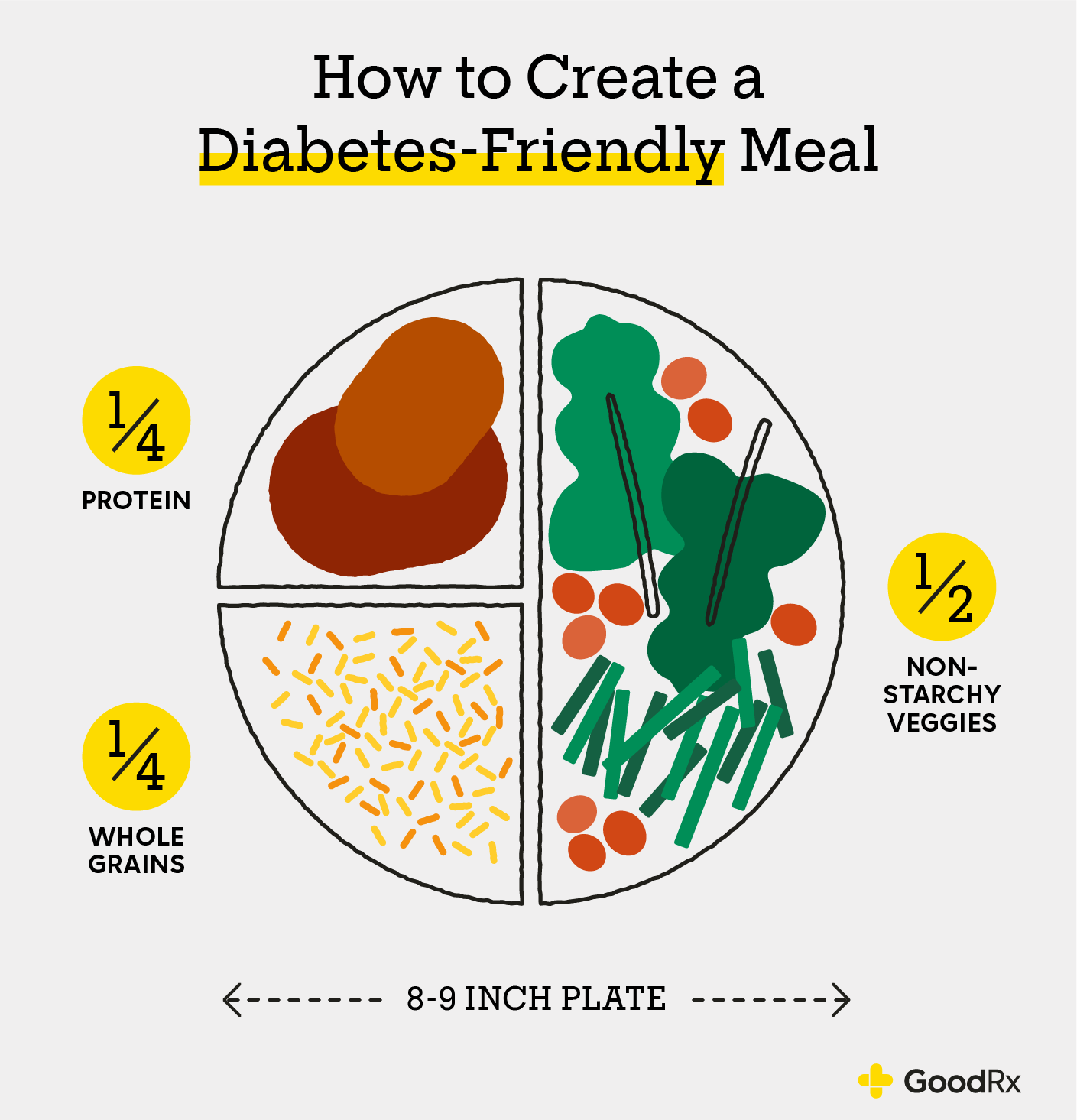
1. Fill ½ of your plate with non-starchy vegetables
You’ll need a standard, 9-inch-diameter plate (about the length of a regular business envelope).
Non-starchy vegetables are your largest section because they’re rich in nutrients and don’t raise your blood sugar very much. Eating vegetables gives your body essential nutrients and can help prevent chronic disease. Studies have linked vegetable consumption with a lower risk of health issues, like coronary artery disease and cancer.
Some common non-starchy vegetables include:
Broccoli
Cauliflower
Asparagus
Artichoke
Brussels sprouts
Greens (kale, collard, chard, spinach, arugula, and lettuce)
Squash (zucchini, spaghetti, and summer squash)
2. Fill ¼ of your plate with lean protein
Foods with animal-based proteins usually only have a small effect on glucose levels and can provide many important nutrients. Plant-based proteins usually provide carbs. But because these foods are also high in fiber, there’s a minimal effect on glucose levels.
Some common protein foods include:
Lean meats (beef, pork, and lamb)
Poultry
Eggs
Fish
Nuts and natural nut butters
3. Fill the final ¼ with carbohydrate-containing foods
While you can fill the rest of your plate with carbohydrates, it’s best to choose complex carbs over simple carbs. This is because the body digests them slower, which will help reduce spikes in glucose.
Simple carbs, like white bread and white pasta, may give you a quick burst of energy. But they quickly leave you feeling tired and hungry again.
Some great complex carbs to choose from include:
Unprocessed whole grains, such as wheat, barley, bulgar, farro, corn, oats, quinoa, brown rice, and wild rice
Whole-grain bread, pasta, or tortilla
Starchy vegetables, like potatoes, sweet potatoes, peas, and winter squash (acorn and butternut)
Legumes, such as lentils, black, kidney, pinto, navy, and garbanzo beans
4. Choose healthy fats
Healthy fats are slow to digest. This keeps you feeling fuller for longer and has a slower effect on glucose levels. But quality is more important than quantity when it comes to fats. Monounsaturated and polyunsaturated fats are the healthiest types of fats.
Good sources of monounsaturated fats include:
Natural nut butters
Seeds, including chia, hemp, pumpkin, and sesame seeds
Good sources of polyunsaturated fats include:
5. Always opt for water
Liquids get into your bloodstream faster than solids, so if you drink sweetened beverages your glucose levels will rise quickly. Plain water is the best choice because it doesn’t have carbs or calories. Water won’t affect your glucose levels. Plus, it’s readily available and generally free.
Other healthy beverage options include:
Unsweetened iced or hot coffee and tea
Sparkling water or seltzer (without added sugar)
Flavored water (a splash of 100% fruit juice or infusion with slices of fresh oranges, berries, cucumbers, herbs, or ginger)
Low-fat cow’s milk or low-carb plant-based milk
Diabetes plate method examples to help get you started
If you need some inspiration, grab a 9-inch plate and look no further. These blood-sugar-balancing meals are tasty and nutritious.
Fresh veggie omelet with a side of nutty toast
Looking for a diabetes plate method breakfast? This omelet and nut-butter toast is tasty and quick to prep:
Lean protein: eggs, almond butter
Non-starchy vegetables: bell peppers, spinach, onion, tomato
Carbohydrate food: whole-grain toast
Oven-roasted Mediterranean vegetables with grilled salmon kabobs and toasted pita
This is a versatile dish that’s quick and easy. You can substitute grilled salmon kabobs with garlic hummus for a vegan or vegetarian option:
Lean protein: salmon or hummus (chickpea) — portion should be about the size of your palm
Non-starchy vegetables: summer squash, eggplant, bell peppers, onions
Carbohydrate food: whole-grain pita bread
Zucchini lasagna with zesty cucumber tomato salad and garlic bread
This hearty lasagna is both balanced and nutritious:
Lean protein: extra-lean ground beef (portion should be about the size of your palm)
Non-starchy vegetables: zucchini, cucumber, tomato
Carbohydrate food: wheat bread
Tips for success with the diabetes plate method
Whether you’re new to the diabetes plate method or in search of tips to stick to this eating plan, here are some tips for success:
Start simple and build up to a routine. Try using the plate method for one meal a day. Aim to build from there as it becomes a habit.
Plan ahead when possible. Prepping meals or thinking through restaurant choices makes it easier to stick to the recommended balance.
Aim for consistency, not perfection. Getting used to a new meal plan can be challenging and stressful. Be kind and patient with yourself as you work toward an approach that best suits you and your health goals.
Get support if needed. A dietitian or diabetes educator can help tailor the method to your lifestyle and health goals.
Using the diabetes plate method doesn’t require perfection — just consistency. Small, realistic changes can make it easier to build balanced meals that support your blood sugar targets.
How many carbs should people with diabetes eat per day?
How many carbs you eat per day depends on a few things, like your body size and activity level. If you have diabetes, there are additional considerations, including your:
Current blood sugar levels
Blood sugar trends
Meal schedule
Diabetes medications and when you take them
Your diabetes care team can help you figure out how many daily carbs you need. Remember that timing is also important. Following the plate method can help you eat balanced meals and space out your carbs to avoid spikes in your blood sugar. Some people with diabetes follow a simple carb-counting system that uses “carbohydrate choices.” Each “choice” contains around 15 g of carbs.
Frequently asked questions
Eating a meal or snack with non-starchy vegetables, lean protein, and fiber can help you manage your blood sugar. Both fiber and protein help you feel full and slow down how fast your body absorbs carbohydrates (sugar). And this helps prevent blood sugar spikes.
There’s no shortage of breakfast options if you have diabetes. A diabetic breakfast plate can take many forms. If you’re following the plate method, consider the veggie omelet with a side of nutty toast described above. Another tasty option is oatmeal with nut butter and a low-glycemic fruit like apple slices.
Eating a meal or snack with non-starchy vegetables, lean protein, and fiber can help you manage your blood sugar. Both fiber and protein help you feel full and slow down how fast your body absorbs carbohydrates (sugar). And this helps prevent blood sugar spikes.
There’s no shortage of breakfast options if you have diabetes. A diabetic breakfast plate can take many forms. If you’re following the plate method, consider the veggie omelet with a side of nutty toast described above. Another tasty option is oatmeal with nut butter and a low-glycemic fruit like apple slices.
The bottom line
Living with diabetes doesn’t mean you have to sacrifice flavor and satisfaction for health. There’s no need to eliminate entire food groups or eat the same things every day. The plate method can help you build meals, eat nutrient-rich foods, and help to manage glucose levels. You’ll also probably discover some entirely new ingredients, recipes, and snacks along the way — and you’ll feel better for it.

Why trust our experts?



References
American Diabetes Association. (n.d.). Protein.
Centers for Disease Control and Prevention. (2024). Diabetes meal planning.
Centers for Disease Control and Prevention. (2026). National Diabetes Statistics Report.
Imamura, F., et al. (2016). Effects of saturated fat, polyunsaturated fat, monounsaturated fat, and carbohydrate on glucose-insulin homeostasis: A systematic review and meta-analysis of randomised controlled feeding trials. Public Library of Science Medicine.
McRae, M. P. (2018). Dietary fiber intake and type 2 diabetes mellitus: An umbrella review of meta-analyses. Journal of Chiropractic Medicine.
Qian, F., et al. (2016). Metabolic effects of monounsaturated fatty acid-enriched diets compared with carbohydrate or polyunsaturated fatty acid-enriched diets in patients with type 2 diabetes: A systematic review and meta-analysis of randomized controlled trials. Diabetes Care.
Vannice, G., et al. (2014). Position of the Academy of Nutrition and Dietetics: Dietary fatty acids for healthy adults. Journal of the Academy of Nutrition and Dietetics.