Key takeaways:
Diabetes is a condition that causes high blood glucose (sugar). Type 1 and Type 2 diabetes are the most common types of diabetes.
Type 1 diabetes is an autoimmune condition, whereas Type 2 diabetes is a metabolic condition.
Both Type 1 and Type 2 diabetes can cause symptoms, such as increased hunger, thirst, urination, and fatigue, as well as blurry vision.
Type 1 diabetes requires insulin. Type 2 diabetes treatment often includes other types of prescription medications to help to lower blood glucose.
Diabetes is a common and serious medical problem. An estimated 40 million people in the U.S. had diabetes in 2023. That’s 1 in 8 people. Diabetes is also a global problem. It affects roughly 589 million adults worldwide, or 11% of the world’s population.
There are two main types of diabetes: Type 1 diabetes (T1D) and Type 2 diabetes (T2D). Both are lifelong health conditions that affect how your body turns the food you eat into energy. Both types of diabetes cause levels of sugar in the blood to be high.
T1D and T2D sound alike, but there are key differences between them. Let’s take a look.
What’s the difference between Type 1 and Type 2 diabetes?
First, it’s important to understand how insulin and blood sugar work.
In people who don’t have diabetes, the pancreas makes insulin. Insulin is a hormone that helps move the glucose (sugar) your body gets from food into the body’s cells for energy. It also helps your body store glucose in your liver, muscles, and fat.
In people who have diabetes, the pancreas doesn’t make enough insulin, or the body doesn’t respond to insulin as it should. This leads to high levels of glucose in the bloodstream — and not enough in storage for when it’s needed. That’s why hyperglycemia (high blood glucose) is the main sign of both Type 1 and Type 2 diabetes.
The main difference between Type 1 diabetes and Type 2 has to do with what causes the problem with insulin.
Type 1 diabetes, explained
Type 1 diabetes is an autoimmune disease. The immune system gets confused and destroys the insulin-producing cells in the pancreas, called beta cells. As a result, the pancreas doesn’t make enough insulin and eventually stops making it altogether.
Without insulin, glucose remains in the bloodstream and can’t be used by the body. So, as the glucose builds up in your blood, the rest of your body starves, which is life-threatening.
T1D affects about 5% to 10% of people with diabetes. Although T1D can develop at any age, it’s more commonly diagnosed in children and young adults.
Type 2 diabetes explained
T2D is the most common type of diabetes. It affects about 90% to 95% of all people with diabetes.
In Type 2 diabetes, the pancreas still makes insulin. But it doesn’t make enough, or the body doesn’t respond to it like it once did. This is one of the main differences between T1D and T2D.
You may have heard of “insulin resistance,” which is when the body starts to ignore the insulin that the pancreas makes. The end result is the same as with T1D: Glucose builds up in the bloodstream, causing high blood sugar.
Type 1 vs. Type 2 diabetes: How they compare
Type 1 diabetes | Type 2 diabetes | |
|---|---|---|
Cause | Autoimmune disease | Metabolic disease |
Symptoms | Fatigue, thirst, increased urination, vision changes, headache | Fatigue, thirst, increased urination, vision changes, headache |
Treatment | Insulin | Lifestyle changes, medication, sometimes insulin |
Prevention | None | Lifestyle changes |
Type 1 vs. Type 2 diabetes symptoms
Symptoms of both types of diabetes are similar. You might not notice any symptoms in the early stages of Type 1 or Type 2 diabetes.
But as diabetes gets worse, high blood glucose levels start to cause symptoms like:
Frequent urination: This is caused by excess sugar in the blood that pulls more water into the blood, kidneys, and urine.
Increased hunger: This is because the body can’t get enough energy (glucose) from the blood into the cells.
Extreme thirst: This is a result of frequent urination and dehydration.
Fatigue: The body is in crisis and struggles to get energy.
Blurry vision: High blood sugar levels cause swelling in the cells of the eyes.
Headache: High blood sugar can lead to inflammation in the brain and affect blood flow.
Symptoms of Type 2 diabetes tend to come on slowly over time. But people with Type 1 diabetes can become ill very suddenly.
Quiz: Do I have diabetes?
Type 1 vs. Type 2 diabetes causes
Experts don’t know the exact cause of Type 1 or Type 2 diabetes. They continue to research why some people get it and others don’t.
Type 1 diabetes cause
T1D is an autoimmune disease in which the body’s immune system mistakenly attacks its healthy pancreas cells. Like with other autoimmune diseases, T1D likely results from a complex interaction between genetics and environment.
Researchers have identified combinations of gene variations — specifically, HLA-DQA1, HLA-DQB1, and HLA-DRB1 — that play a part. But not everyone with these gene variations will get diabetes. So, it’s still not clear exactly what causes Type 1 diabetes.
Type 2 diabetes cause
T2D is a metabolic disease. Researchers haven’t confirmed the exact mechanism. But current theories suggest that fat buildup in the liver leads to insulin resistance and damage to the pancreas. This eventually causes dysfunction of the pancreatic beta cells.
Type 1 vs. Type 2 diabetes risk factors
While scientists continue to study the exact cause for T1D and T2D, it’s clear that certain things can increase a person’s risk of developing it.
Type 1 diabetes risk factors
If you have a close relative with T1D, your risk of developing it is higher. That said, 9 in 10 people diagnosed with T1D have no family history of it. So, it’s not just a question of genetics.
Research suggests the following factors can increase the risk of developing T1D:
Certain viral infections (such as rotavirus, mumps, and enteroviruses)
Environmental factors (such as air pollution)
A family history of T1D
Gut microbiome changes
Type 2 diabetes risk factors
These risk factors increase your odds of developing T2D:
Older age (specifically, being 45 years old or older)
Heavier weight (BMI of 25 or higher)
Minimal exercise
A diagnosis of prediabetes
A parent or sibling with T2D
African American, Hispanic/Latino, American Indian, Asian American, or Pacific Islander ethnicity
Additional risk factors for T2D that only apply to women are:
Polyendocrine metabolic ovarian syndrome (PMOS), previously called polycystic ovary syndrome (PCOS)
Gestational diabetes (diabetes during pregnancy)
Giving birth to a baby who weighs over 9 lbs
Research suggests that there are additional environmental risk factors that may increase the risk of T2D. These factors can affect physical activity and the gut microbiome or increase inflammation and chronic stress, which may affect T2D risk.
Environmental risk factors include:
Air pollution
Residential noise
Poor diet quality or lower access to healthy food
Lack of green space
Life-threatening complications of Type 1 vs. Type 2 diabetes
People with T1D and T2D can have both extremely low and high blood sugars. Both can be life-threatening. Keeping your blood sugar in your target range can help to prevent emergencies and other diabetes-related health complications.
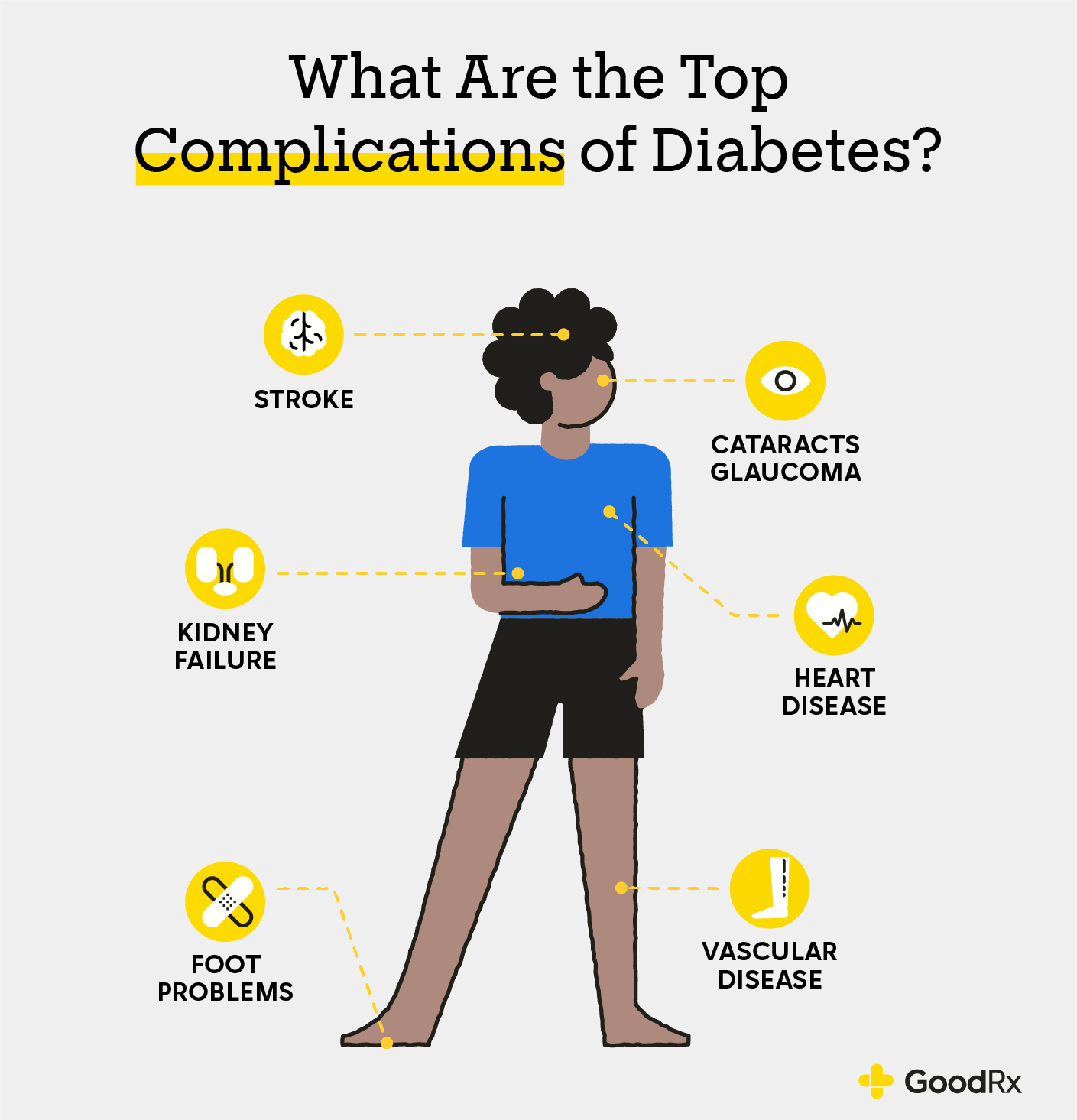
Many of the possible long-term complications are the same for both T1D and T2D. This is because having high blood sugars over time can damage blood vessels and nerves.
Diabetes complications include:
Heart disease and stroke
Foot problems (like foot ulcers)
Kidney disease
Eye problems (like diabetic retinopathy and glaucoma)
Dental health problems (like gum disease and tooth decay)
Type 1 diabetes complications
Having high blood glucose and not enough insulin can lead to diabetic ketoacidosis (DKA). This is more common in T1D, but it can also occur in T2D. It’s often due to infection, stress, a malfunctioning insulin pump, or missing an insulin dose.
DKA is a medical emergency. Symptoms are similar to those of high blood glucose and include:
Fatigue
Confusion
Extreme thirst
Increased urination
Fruity-smelling breath
Type 2 diabetes complications
Another serious complication of Type 2 diabetes is hyperosmolar hyperglycemic state (HHS). Like DKA, it’s a result of high blood sugars and not enough insulin. This could be due to certain medications or, more likely, infection. HHS is more common in T2D, but can also occur in T1D.
HHS is also a medical emergency. Symptoms include:
Fatigue
Confusion
Extreme thirst
Increased urination
Dehydration
Vision changes
How to diagnose Type 1 diabetes vs. Type 2
There are several different blood tests for diabetes, including fasting blood glucose test, oral glucose tolerance test, and hemoglobin A1C test. These tests can diagnose diabetes and monitor how it’s responding to treatment. Most people only need to have one of these tests done to find out if they have diabetes. Others may need further testing to confirm or to determine which type of diabetes. (More on this below.)
Fasting blood glucose test
Fasting blood glucose is the glucose level in your blood when you haven’t had anything to eat or drink (except water) for 8 to 12 hours (usually overnight). In some situations, this test will need to be repeated to confirm whether you have diabetes.
Normal | Below 100 mg/dL |
Diabetes | 126 mg/dL and above |
Oral glucose tolerance test
This glucose test is also done after you haven’t had anything to eat or drink for 8 to 12 hours (except water). Then, you’ll drink a sweetened drink, and you’ll get your blood glucose checked 2 hours later.
Normal | Below 140 mg/dL |
Diabetes | 200 mg/dL and above |
Certain medications — like beta blockers, diuretics, and antidepressants — can interfere with both the fasting blood glucose and the oral glucose tolerance test.
Hemoglobin A1C test
A hemoglobin A1C (HbA1c or A1C) test measures how high your blood glucose has been for the past 2 to 3 months. You don’t need to do any special preparation for this test. So, you can eat right before it.
Normal | Below 5.7% |
Prediabetes | 5.7% to 6.4% |
Diabetes | 6.5% and above |
Type 1 vs. Type 2
The tests listed above are used for both T1D diagnosis and T2D diagnosis. But they don’t tell you which type of diabetes you have. Only a healthcare professional can do that, and the diagnosis will be based on your:
Symptoms
Age
Lab test results
Risk factors
Medical history
Family history
These tests shouldn’t be used alone for confirmation. More-specific lab tests can help to figure out if someone has T1D versus T2D, in combination with the information above. These lab tests measure:
Autoantibodies against pancreatic beta cells
C-peptide
Insulin level
How to treat Type 1 vs. Type 2 diabetes
Treatments for T1D and T2D have some similarities and differences. Regardless of the type of diabetes you have, treatment starts with lifestyle adjustments.
Lifestyle changes for treating Type 1 and 2 diabetes
Here are some lifestyle changes that can help with Type 1 and Type 2 diabetes:
Choose nutritious foods. Eat a variety of vegetables and fruits, whole grains, fat-free or low-fat dairy foods, and lean proteins. Watch your portion sizes, and try to avoid “empty” calories from sugary foods and drinks.
Stay active. Move your body throughout the day, and get regular exercise. Activity helps to lower blood glucose. Aim for 150 minutes of exercise per week, or 30 minutes a day for 5 days a week.
Maintain a healthy weight. This looks different for everyone, so consider speaking with your care team if you’re unsure how to proceed. If you’ve been told that you’re overweight, then weight loss can improve your glucose levels and lower your need for medication.
Monitor your glucose levels. Glucose testing provides useful information about how well your diabetes treatment plan is working. Your care team will set a glucose target range that fits your needs. Aim to stay within this range as much as possible.
Insulin for treating Type 1 and Type 2 diabetes
Although everyone with T1D must inject insulin or use an insulin pump, not everyone with T2D needs insulin.
If you need insulin, you have options for how you use it, including:
Insulin injections: People with diabetes may use a syringe or an insulin pen to inject insulin. Different types of insulin last for different lengths of time and are coordinated with food choices, blood glucose readings, and physical activities.
Insulin pumps: These are smart, wearable devices that deliver a steady dose of basal (rapid-acting) insulin throughout the day. A catheter (tiny plastic tube) is inserted under the skin and changed every few days. Only fast-acting insulin is delivered in an insulin pump. Bolus (single-dose) insulin is given in addition to basal insulin to match the carbohydrates you eat or to correct out-of-range blood sugars.
Automated insulin delivery (AID) systems: These are the newest devices that adjust and deliver insulin in response to continuous glucose monitor (CGM) results. AID systems help to take some of the guesswork out of managing diabetes while easing some of the mental burden.
Inhaled insulin: Another way to get insulin is to inhale it into your lungs using a special delivery device. When using an inhalation device, insulin starts acting rapidly, within about 12 minutes. But it’s not for everyone. Your insurance needs to approve inhaled insulin. And, if you have T1D (and even sometimes with T2D), you’ll still have to take a long-acting insulin daily. Inhaled insulin isn’t recommended for someone with lung problems, like asthma, chronic bronchitis, or emphysema.
Other medications for treating Type 2 diabetes
In addition to making lifestyle changes, many people with T2D also take oral diabetes medications or injectable diabetes medications to lower their blood glucose. Besides insulin, the most common types of medications for T2D are:
Metformin (pills)
Sulfonylureas (pills)
GLP-1 agonists (injections)
DPP-4 inhibitors (pills)
SGLT2 inhibitors (pills)
Metformin is recommended as the first-choice treatment for most people with T2D. Other medications can be added on top of metformin, or combined, if needed.
How to prevent Type 1 vs. Type 2 diabetes
Although there’s no way to prevent T1D, recent research has shown that early treatment may successfully delay its onset. On the other hand, healthy lifestyle changes can prevent or delay T2D.
Type 1 diabetes prevention
Early screening research studies with TrialNet have led to FDA approval of Tzield (teplizumab). This is the first drug that’s been used to delay the onset of T1D by 2 or more years.
Because there’s no cure for T1D, screening and treatment are vital in delaying and preventing DKA, which can be life-threatening. TrialNet has other studies underway to slow or stop T1D in those at risk of developing it.
If you have a close relative with T1D, find out if you qualify for screening. You can ask your primary care provider to order lab testing, visit TrialNet, or do an at-home test.
Type 2 diabetes prevention
Although you can’t change certain factors, such as your genetics, you can adapt your lifestyle to prevent or delay T2D. Most people have prediabetes before they develop T2D. But because it doesn’t cause symptoms, many people don’t know they have it. About 115 million adults in the U.S. have prediabetes.
Prediabetes is a reversible condition when it’s caught in time (before your glucose goes into the T2D range). Preventing prediabetes from progressing to T2D involves the same lifestyle changes mentioned above for diabetes treatment, including eating a balanced and nutritious diet, regular physical activity, and weight management.
You can check your risk for prediabetes by taking this 1-minute test from the CDC. If you’re at high-risk for prediabetes, talk with a healthcare professional. They can order testing to check your blood sugar levels.
Frequently asked questions
One type isn’t “worse” than the other. Both Type 1 diabetes and Type 2 can have serious consequences for someone’s health.
Yes, although Type 2 diabetes can’t be cured, it can go into remission. This means blood sugar levels return to normal, though the condition itself doesn’t go away.
T1D is more commonly diagnosed in children and adolescents, but it can show up at any age. Research on screening for T1D indicates that autoantibodies can be found as early as 9 months of age.
Most people with diabetes have T1D or T2D. But rare causes of diabetes include:
Drug-induced diabetes: Some medications — such as steroids, diuretics, and antipsychotics — can increase blood glucose levels.
Monogenic diabetes: This is a rare form of diabetes caused by a mutation in a single gene.
Cystic fibrosis-related diabetes: This type of diabetes can occur in people living with cystic fibrosis.
One type isn’t “worse” than the other. Both Type 1 diabetes and Type 2 can have serious consequences for someone’s health.
Yes, although Type 2 diabetes can’t be cured, it can go into remission. This means blood sugar levels return to normal, though the condition itself doesn’t go away.
T1D is more commonly diagnosed in children and adolescents, but it can show up at any age. Research on screening for T1D indicates that autoantibodies can be found as early as 9 months of age.
Most people with diabetes have T1D or T2D. But rare causes of diabetes include:
Drug-induced diabetes: Some medications — such as steroids, diuretics, and antipsychotics — can increase blood glucose levels.
Monogenic diabetes: This is a rare form of diabetes caused by a mutation in a single gene.
Cystic fibrosis-related diabetes: This type of diabetes can occur in people living with cystic fibrosis.
The bottom line
Type 1 diabetes (T1D) and Type 2 diabetes (T2D) sound alike, but they’re different diseases. T1D is an autoimmune disease where the immune system destroys insulin-producing cells. T2D is a metabolic disease, and it’s much more common than T1D.
Blood glucose (sugar) is high in both conditions — and this is what causes the symptoms and the medical complications of diabetes. Lifestyle changes for people with T1D and T2D are similar, too. But people with T1D need insulin, whereas T2D can be treated with other medications and sometimes insulin.

Why trust our experts?




References
Adeyinka, A., et al. (2023). Hyperosmolar hyperglycemic syndrome. StatPearls.
American Diabetes Association. (2018). Classification and diagnosis of diabetes: Standards of Medical Care in Diabetes — 2019. Diabetes Care.
American Diabetes Association. (2018). Pharmacologic approaches to glycemic treatment: Standards of Medical Care in Diabetes — 2022. Diabetes Care.
American Heart Association. (2024). Diabetes risk factors.
Beulens, J. W. J., et al. (2021). Environmental risk factors of Type 2 diabetes — An exposome approach. Diabetologia.
Centers for Disease Control and Prevention. (2022). Prediabetes risk test.
Centers for Disease Control and Prevention. (2026). National Diabetes Statistics Report
Enable Biosciences. (n.d.). Type 1 testing.
Esser, N., et al. (2020). Early beta cell dysfunction vs. insulin hypersecretion as the primary event in the pathogenesis of dysglycaemia. Diabetologia.
IDF Diabetes Atlas. (n.d.). Diabetes in the world in 2021. International Diabetes Federation.
Juvenile Diabetes Research Foundation. (n.d.). Causes of Type 1 diabetes.
MedlinePlus. (2013). Type 1 diabetes.
Moore, D. J., et al. (2024). Recommendations for screening and monitoring the stages of Type 1 diabetes in the immune therapy era. International Journal of General Medicine.
National Health Service. (2024). Complications of Type 1 diabetes.
National Institute of Diabetes and Digestive and Kidney Diseases. (2024). Monogenic diabetes (MODY & neonatal diabetes mellitus). National Institutes of Health.
Sims, E. K., et al. (2022). Screening for Type 1 diabetes in the general population: A status report and perspective. Diabetes.
Steck, A. K., et al. (2011). Genetics of Type 1 diabetes. Clinical Chemistry.
Stene, L. C. et al. (2023). Risk factors for Type 1 diabetes. Diabetes in America.
Tatovic, D. (2022). Diagnosing Type 1 diabetes in adults: Guidance from the UK T1D Immunotherapy consortium. Diabetic Medicine.
Taylor, R. (2025). The twin cycle hypothesis of Type 2 diabetes aetiology: From concept to national NHS programme. Experimental Physiology.
Type 1 Diabetes TrialNet. (n.d.). Participate.
Type 1 Diabetes TrialNet. (n.d.). Pathway to prevention.
Type 1 Diabetes TrialNet. (n.d.). TrialNet research leads to FDA approval of first drug to delay Type 1 diabetes.