Key takeaways:
Fiber supports weight loss. But there isn’t clear guidance on how much fiber you need if you’re on a GLP-1 medication.
If you’re experiencing side effects of GLP-1s like constipation, fiber may help. But too much fiber — too fast — may make it worse.
You can eat high-fiber foods or take fiber supplements while on a GLP-1. But eating foods high in fiber can offer other added health benefits.
Save on related medications
If you’re taking a GLP-1 medication, your eating habits have likely changed. And you need to be more focused on making sure you’re getting all the nutrients you need.
Fiber — like protein — is an important nutrient when it comes to a diet that supports weight loss. But should you eat more fiber on a GLP-1? Less? What if you’re experiencing some of the common digestive side effects from your medication? Here, we dive into some of the specific considerations for fiber intake and GLP-1s.
Does fiber help you lose weight on GLP-1s?
There aren’t any studies that look specifically at whether fiber helps you lose weight on GLP-1. But research has looked at whether fiber may help you lose weight in general. And the data supports that it does — by doing things like decreasing appetite and regulating blood sugar.
The results are similar whether you eat high-fiber foods or take fiber supplements. Here are some of the details of notable studies:
A study of almost 40,000 adults spanning 20 years found that consuming around 16 g of fiber daily decreased the risk of developing obesity. The effects were even greater in the adults who ate 20 g daily.
One recent review looked at whether the type of fiber makes a difference. The researchers noted that weight loss was specifically associated with soluble fiber supplements, as well as foods fortified with both soluble and insoluble fiber.
Another review found that taking 8 g of fiber supplements a day reduced body weight by about 1 lb after 8 weeks — without any other changes to diet. The amount of weight loss was even greater in people with higher weight, and those with diabetes.
In a study that focused on people with higher weight, those who took soluble fiber supplements ranging from 2 g to 34 g daily lost about 5.5 lbs after several weeks.
We can’t know for sure how the impact of fiber changes when you’re taking a GLP-1. But given these findings, it’s likely to help you lose weight in similar ways.
You may have also noticed that some of the above studies looked at soluble fiber and others at insoluble fiber. Both are likely to promote healthy weight. But here’s the difference:
Soluble fiber dissolves in water and is often used to thicken food. Examples include guar gum and psyllium powder. Soluble fiber can help with diarrhea.
Insoluble fiber doesn’t dissolve in water and is fibrous like the skin of an apple. Insoluble fiber helps with constipation.
How much fiber do you need on GLP-1s?
There aren’t any specific guidelines for how much fiber you need while on GLP-1s. It’s best to follow the same recommended intake of fiber for the general population, which is based on sex and age. As you age, you need less fiber, and adult women overall need less fiber than men.
18-50 years old | 51 years and older | |
Women | 25 g to 28 g daily | 22 g daily |
Men | 31 g to 34 g daily | 28 g daily |
When it comes to your diet, aim for 4 to 5 servings a day of whole grains, fruits, and/or vegetables to reach the recommended amount of fiber.
What is the best way to eat fiber on GLP-1s?
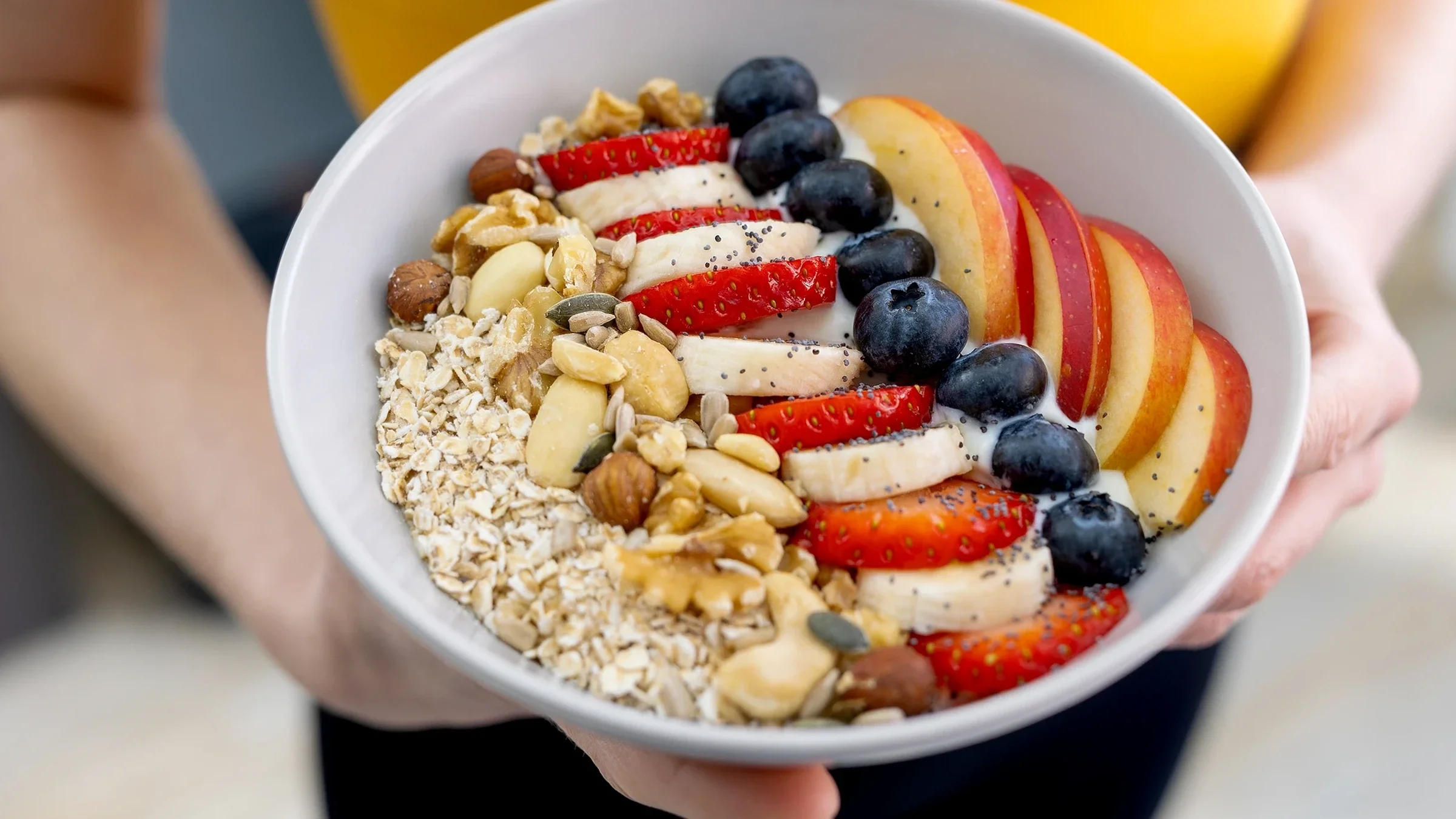
The best way to reach your daily fiber needs on GLP-1s is with food. High-fiber foods also tend to be rich in other key nutrients. And if you’re eating less overall on a GLP-1, it’s even more important to focus on nutrient-rich foods like:
Fruits
Vegetables with skins
Nuts and seeds
Beans and legumes
Whole grains and oats
If you’re not used to a high-fiber diet, introduce it slowly. A sudden increase in daily fiber may lead to some digestive symptoms. And this is the last thing you need if you’re experiencing similar side effects from your medication.
Some researchers suggest eating foods low in fiber in the evening to avoid gastrointestinal (GI) side effects. They also recommend:
Choosing cooked vegetables such as beets, pumpkin, and cucumbers without their peel
Choosing pasta, bread, and crackers instead of whole grains
Keep in mind this advice is limited, since it’s based only on one review paper.
Should you take fiber supplements when on GLP-1s?
Maybe. Fiber supplements have been shown to help manage GLP-1 side effects like constipation and diarrhea. So if you’re experiencing these side effects, taking a fiber supplement when on a GLP-1 may be helpful.
But keep in mind that too much fiber can also lead to bloating, gas, and difficulty pooping, so balance is key.
Which fiber supplement is the best when taking GLP-1s?
Data doesn’t support that one particular fiber supplement is best when taking GLP-1s.
A more important consideration is fiber supplements versus high-fiber foods. Foods rich in fiber are generally recommended over supplements, since they contain other health-boosting vitamins and minerals.
One study suggests that soluble fiber is more effective at regulating blood sugar and supporting a healthy weight. Foods high in soluble fiber include flaxseed, white beans, oats, beetroot, and sesame seeds.
The bottom line
There’s still much to learn about how fiber works with GLP-1s. Adding fiber to your diet or taking fiber supplements may help support digestion, regulate your blood sugar, and help you feel fuller longer. And these effects could ultimately support weight loss.
In general, high-fiber foods are likely better than fiber supplements because they provide additional nutrients. But more research is needed to know the best form of fiber to combine with GLP-1s. And if you do decide to add fiber to your diet, remember to start slow — both GLP-1s and fiber can lead to stomach upset and constipation.

Why trust our experts?



References
Dhingra, D., et al. (2011). Dietary fibre in foods: a review. Journal of Food Science and Technology.
Gentinetta, S., et al. (2024). Dietary recommendations for the management of gastrointestinal symptoms in patients treated with GLP-1 receptor agonist. Diabetes, Metabolic Syndrome and Obesity.
Giuntini, E. B., et al. (2022). The effects of soluble dietary fibers on glycemic response: An overview and futures perspectives. Foods.
Guarneiri, L. L., et al. (2025). Protein, fiber, and exercise: a narrative review of their roles in weight management and cardiometabolic health. Lipids in Health and Disease.
Johnson, B. V. B. (2026). Fiber supplementation during and after glucagon-like peptide-1 receptor agonists treatment: A perspective on clinical benefits. The Journal of Nutrition.
Jovanovski, E., et al. (2020). Can dietary viscous fiber affect body weight independently of an energy-restrictive diet? A systematic review and meta-analysis of randomized controlled trials. The American Journal of Clinical Nutrition.
Lai, S., et al. (2025). Association between dietary fiber intake and obesity in US adults: from NHANES 1999–2018. Frontiers in Nutrition.
Mehrtash, F., et al. (2025). I am taking a GLP-1 weight-loss medication—What should I know? JAMA Internal Medicine.
Taskin, R. R., et al. (2018). Dietary fiber and its effect on obesity: A review article. Advances in Medical Research.
Thompson, S. V., et al. (2017). Effects of isolated soluble fiber supplementation on body weight, glycemia, and insulinemia in adults with overweight and obesity: a systematic review and meta-analysis of randomized controlled trials. The American Journal of Clinical Nutrition.
U.S. Department of Agriculture. (2020). Dietary Guidelines for Americans, 2020-2025.