Key takeaways:
Cough and cold symptoms really do feel worse at night — and biology (not imagination) is the reason.
Circadian rhythms, lower nighttime cortisol, lying flat, and fewer distractions all make symptoms more noticeable after dark.
Nighttime coughs may also be linked to asthma, reflux, sinus issues, or chronic obstructive pulmonary disease (COPD) — especially if they persist.
Simple home remedies and OTC medications can ease symptoms and help you sleep better while you recover.
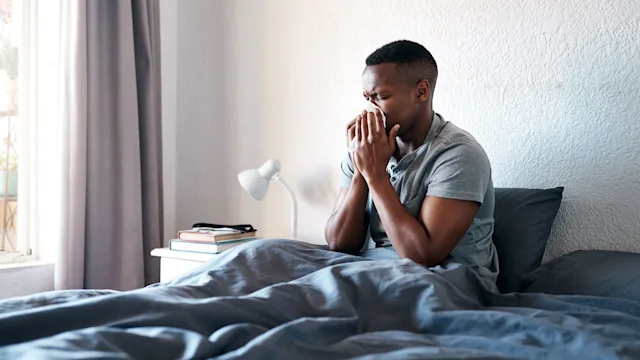
You might have noticed that when you’re sick with a cold, everything seems worse at night. Maybe it feels like you’re coughing all night long. But is it all in your head? Turns out, some symptoms of the common cold (like coughing) actually do get worse at night.
Here’s what the science says about why cough and cold symptoms feel worse at night — and what you can do about it.
Why do colds get worse at night?
The reason that colds feel worse at night comes down to your body’s circadian rhythm. The circadian rhythm is the way our internal processes follow a 24-hour cycle. Scientific research keeps uncovering more and more ways that the time of day affects your body.
Here’s what the research says about why colds feel worse at night:
Your immune system revs up at night. Research shows that the immune system follows a circadian rhythm. White blood cells, which are involved in healing and inflammation, tend to become more active in the evening and overnight. This white-blood-cell attack is what causes many of the symptoms of the common cold.
Stress hormone levels drop at night. Cortisol, your body’s main “stress” hormone, is highest in the morning and then drops as the day goes on. Cortisol has a complex relationship with inflammation: It can both decrease and increase inflammation. The drop in cortisol in the evening may play a role in making symptoms feel worse at night.
Body temperature rises at night. Even when you’re not sick, your body temperature usually rises at the end of the day. Combine this with your immune system’s revved up activity in the evening, and your low-grade fever is more likely to become a full-blown fever at night. This leaves you with more of that all-around sick feeling.
Changes in body position affect congestion. When you lie down, it’s harder for mucus to drain normally. This can leave you feeling stuffy and unable to breathe.
A lack of distraction shifts your focus. During the day, it’s often easier to be distracted from aches and pains. But at night, when you’re lying in bed trying to relax, it’s often harder to ignore those symptoms.
Why do coughs get worse at night?
It’s not just cold symptoms that get worse at night. Coughs often do too. This may be partly due to some of the reasons listed above. But there are other reasons as well:
Lying down can worsen your cough: When you’re standing or sitting during the day, mucus can drain more easily from your nasal passages. At night, lying down allows congestion to drip down your throat, which can trigger your cough reflex more frequently.
Lung airways narrow at night: Your lungs are also affected by circadian rhythm, which can make lung airways more narrow at night. As a result, symptoms of cough and difficulty breathing can worsen. This nighttime worsening effect is more intense in people who have asthma. But even people without asthma seem to have some worsening of lung function at night.
Bedroom allergens: For people who suffer from indoor allergies, coughing can be triggered by dust mites, pet dander, mold, or even cockroaches. These triggers can be especially concentrated in your bedroom. If you notice that you cough mostly at night at home, but you’re blissfully free of your night cough while on vacation, it’s possible indoor allergies may be triggering your cough. There are ways to minimize those indoor allergens. Here are some things to try tonight: wash your bedding in hot water, clean your carpets, and keep pets out of the bedroom.
A cough makes it harder to sleep: Coughing while drifting off to sleep can startle your whole body awake. Often, it feels like you have to start the process of falling asleep all over again. If your cough is strong enough to wake you up from sleep, it can feel like you’re “coughing all night long,” even if you’re just coughing once an hour. In this case, your cough might not actually be worse at night, but it sure can feel that way.
How to stop coughing at night and treat cold symptoms
Thankfully, you don’t have to suffer through common cold symptoms. Understanding why your cough and other cold symptoms are worse at night can be helpful in knowing how to treat them.
There are proven remedies that can help you feel better and cough less while your body heals. Most people turn to at-home remedies and over-the-counter (OTC) medications.
At-home remedies to try first
Here are some at-home remedies to try before you opt for medications:
Take a hot shower before bed. Steam can soothe your nose and throat, while warm water relaxes muscles and may make it easier to fall asleep.
Try honey before bedtime. A spoonful of honey about 30 minutes before sleep has been shown to reduce nighttime cough and improve sleep, especially in children. Adult evidence is promising but limited.
Rinse your nose with saline. Saline rinses may help clear mucus and reduce coughing, though more research is needed.
Sleep with your head elevated. Propping up your upper body can improve sinus drainage and reduce postnasal drip that triggers coughing.
OTC medications that may help at night
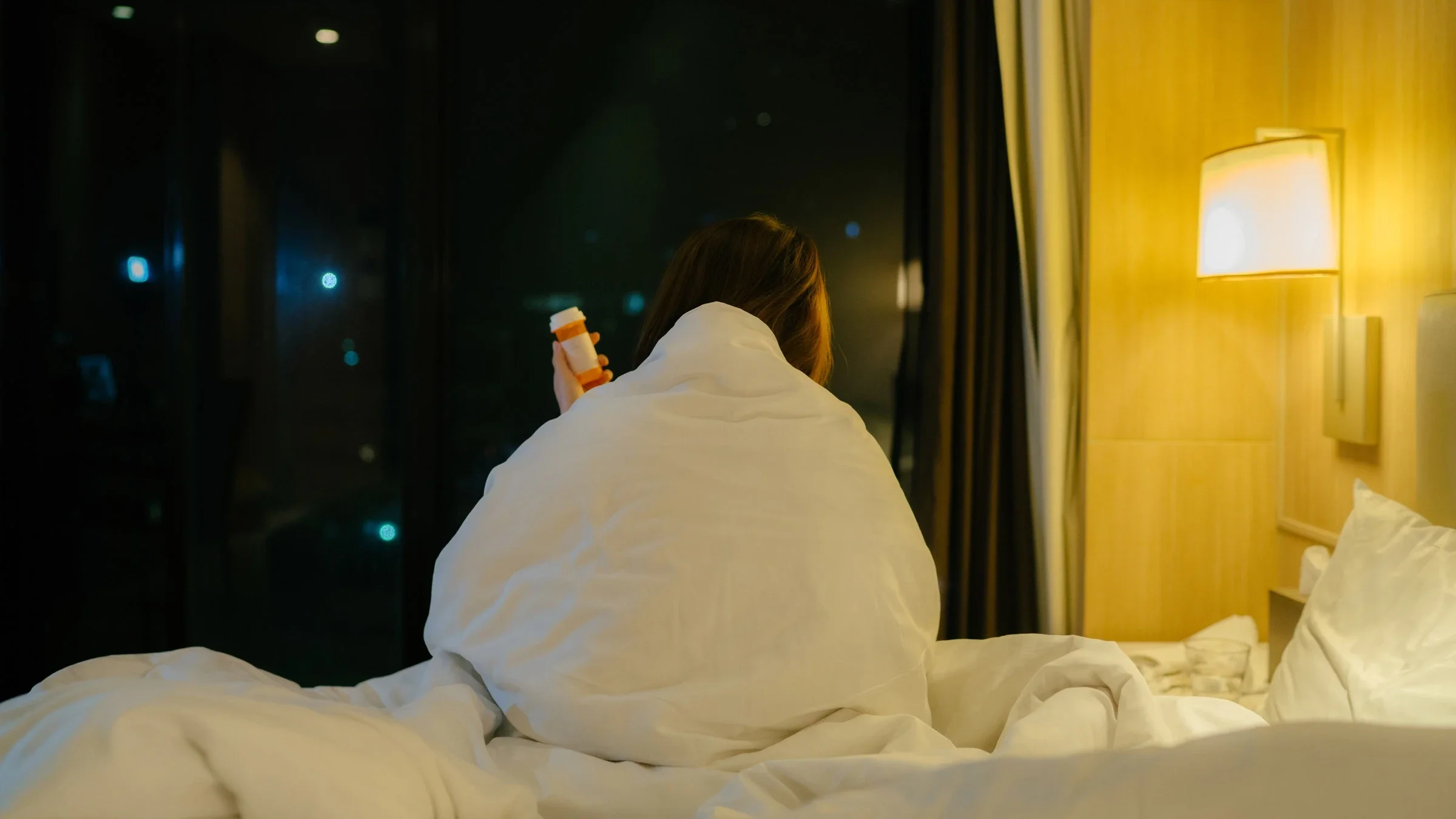
And here are some OTC medications you can take to get relief at night:
Decongestants: These reduce blood flow to your nose, which reduce nasal congestion and swelling. Common decongestants include oxymetazoline (Afrin), pseudoephedrine, and phenylephrine.
Antihistamines: These block the action of histamine (the chemical in your body that leads to sneezing and runny nose). They help dry up the mucus in your nose and make breathing easier. Diphenhydramine (Benadryl) is a common example.
Cough suppressants: These work on your nervous system to make you cough less. Dextromethorphan is an example.
Expectorants: These loosen and thin mucus so it's easier to clear. Guaifenesin is an example.
Pain and fever relievers: Nonsteroidal anti-inflammatory drugs (NSAIDs) — like ibuprofen (Advil) and acetaminophen (found in Tylenol and many other cold remedies) — can help with aches, sore throat, and fever.
Melatonin: This may help regulate your circadian rhythm and support immune system function. The evidence isn’t conclusive yet, but keep an eye out for updates.
When to see a doctor for persistent nighttime coughing
Certain conditions are known for causing a cough that mostly occurs at night. Common conditions that may lead to a nighttime cough include:
If you have a cough that happens mainly at night and lasts for longer than 2 weeks, you should make an appointment with your primary care provider. You may need further testing and treatment.
Frequently asked questions
Coughs from colds, flu, or other respiratory viruses often worsen at night, but they typically improve after a few days to a week as your body recovers.
Cough from other causes can also be worse at night. For example, cough related to asthma is typically worse at night and in the mornings. Indoor allergies can trigger coughs when you’re indoors, and a cough caused by heart failure can worsen when lying down too.
With GERD, stomach acid can travel up into your throat and cause irritation when you’re horizontal. With heart failure, fluid is more likely to settle on your lungs and cause coughing when you’re lying down.
Unlike a cold, these types of nighttime coughs won’t get better without treatment.
Everyone is different, and the best sleeping position for you depends on the cause of your cough.
Here are some tips that work for some people:
If your cough is worse when lying flat, try sleeping with your head propped up on extra pillows.
Try sleeping on your side or on your stomach with your chest draped over a pillow. This may ease the urge to cough and help you feel less breathless.
If your cough is made worse by soft furnishings in your bedroom, try removing them from your bed or relocating to a different room.
Yes, it can. Like with all respiratory infections, symptoms of pneumonia can be worse at night and feel worse too. Mucus from the lung infection can pool in your lungs when you lie down, making it harder to clear. Your airways can also tighten at night, making it harder to catch your breath. And, when you’re tired and desperate for sleep while everyone else rests, any symptoms keeping you awake can feel even more overwhelming.
Coughs from colds, flu, or other respiratory viruses often worsen at night, but they typically improve after a few days to a week as your body recovers.
Cough from other causes can also be worse at night. For example, cough related to asthma is typically worse at night and in the mornings. Indoor allergies can trigger coughs when you’re indoors, and a cough caused by heart failure can worsen when lying down too.
With GERD, stomach acid can travel up into your throat and cause irritation when you’re horizontal. With heart failure, fluid is more likely to settle on your lungs and cause coughing when you’re lying down.
Unlike a cold, these types of nighttime coughs won’t get better without treatment.
Everyone is different, and the best sleeping position for you depends on the cause of your cough.
Here are some tips that work for some people:
If your cough is worse when lying flat, try sleeping with your head propped up on extra pillows.
Try sleeping on your side or on your stomach with your chest draped over a pillow. This may ease the urge to cough and help you feel less breathless.
If your cough is made worse by soft furnishings in your bedroom, try removing them from your bed or relocating to a different room.
Yes, it can. Like with all respiratory infections, symptoms of pneumonia can be worse at night and feel worse too. Mucus from the lung infection can pool in your lungs when you lie down, making it harder to clear. Your airways can also tighten at night, making it harder to catch your breath. And, when you’re tired and desperate for sleep while everyone else rests, any symptoms keeping you awake can feel even more overwhelming.
The bottom line
If your cough or cold feels worse at night, you’re not imagining it. Your immune system, hormones, body temperature, and sleep position all change after dark. And, together, they can intensify symptoms right when you’re trying to rest.
The good news? Small changes can make a real difference. Simple home remedies, smart use of over-the-counter (OTC) medications, and better sleep positioning can ease nighttime symptoms and help you rest. And that rest is an important part of getting better faster.

Why trust our experts?



References
Abuelgasim, H., et al. (2021). Effectiveness of honey for symptomatic relief in upper respiratory tract infections: A systematic review and meta-analysis. BMJ Evidence-Based Medicine.
Allan, G. M., et al. (2014). Prevention and treatment of the common cold: Making sense of the evidence. Canadian Medical Association Journal.
American Academy of Allergy Asthma & Immunology. (2023). Indoor allergens.
Anderson, G., et al. (2020). Melatonin: Roles in influenza, COVID-19, and other viral infections. Reviews in Medical Virology.
Baker, F. C., et al. (2001). Sleep and 24 hour body temperatures: A comparison in young men, naturally cycling women and women taking hormonal contraceptives. The Journal of Physiology.
Cohen, H. A., et al. (2012). Effect of honey on nocturnal cough and sleep quality: A double-blind, randomized, placebo-controlled study. Pediatrics.
Dmitrieva, N. O., et al. (2013). A day-centered approach to modeling cortisol: Diurnal cortisol profiles and their associations among U.S. adults. Psychoneuroendocrinology.
King, D., et al. (2015). Saline nasal irrigation for acute upper respiratory tract infections. The Cochrane Database of Systematic Reviews.
Ramalingam, S., et al. (2019). A pilot, open labelled, randomised controlled trial of hypertonic saline nasal irrigation and gargling for the common cold. Scientific Reports.
Scheiermann, C., et al. (2013). Circadian control of the immune system. Nature Reviews: Immunology.
Yeager, M. P., et al. (2011). Cortisol exerts bi-phasic regulation of inflammation in humans. Dose Response: A Publication of International Hormesis Society.