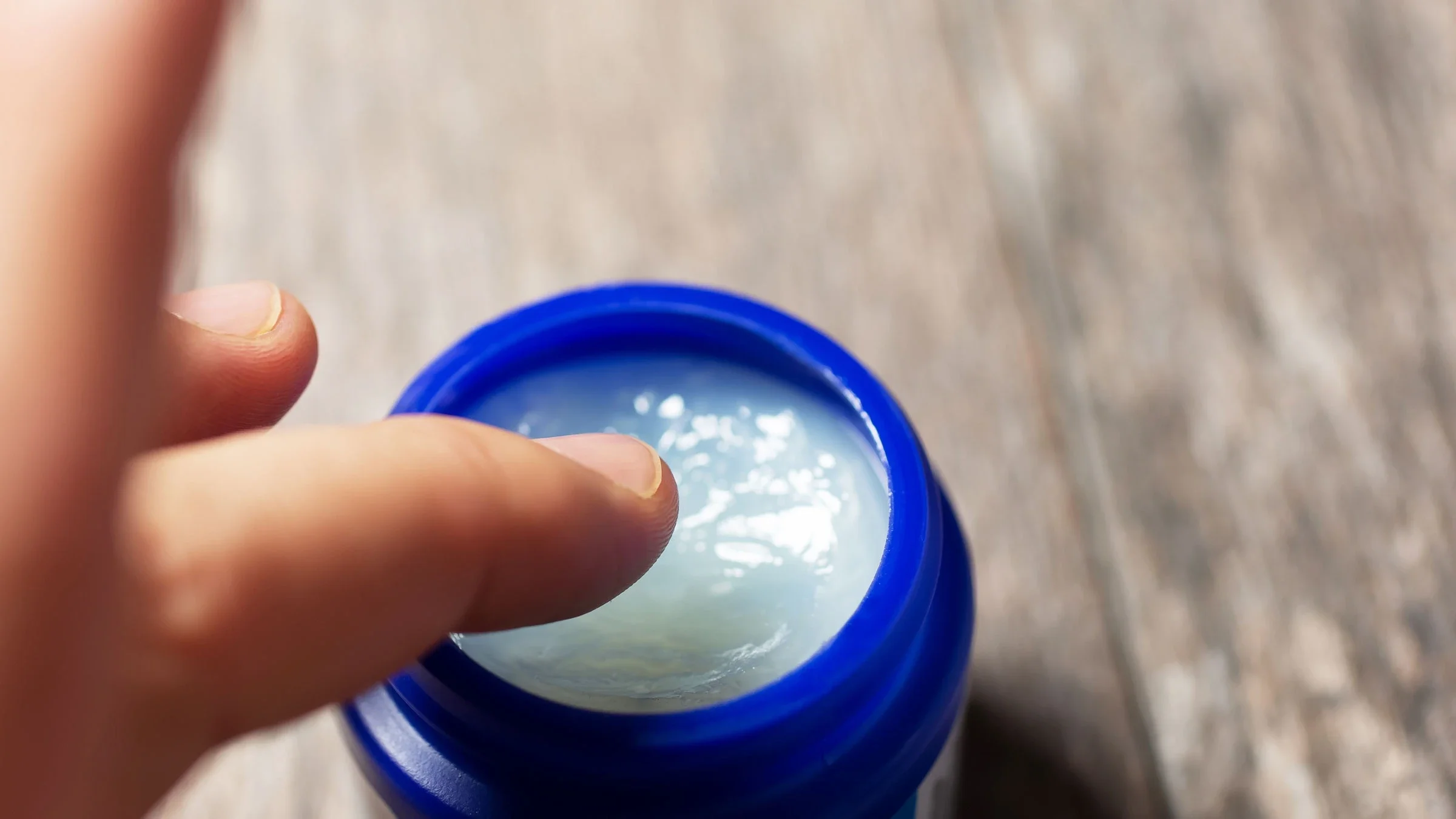
Key takeaways:
Vicks VapoRub is an affordable remedy that gives temporary relief from cold symptoms like cough and runny nose.
To feel the effects, you need to breathe in the oils in Vicks VapoRub. Oils are more likely to reach your nose when you apply VapoRub to your chest.
There’s no evidence that putting Vicks VapoRub on your feet will relieve a cold, congestion, or cough. But it might help moisturize your heels and relieve toenail fungus.
There’ll probably never be a cure for the common cold. But that doesn’t mean there’s nothing you can do to stay comfortable while you fight off that virus. From over-the-counter (OTC) medications to alternative therapies, people have tried just about everything to feel better faster.
There’s one cold remedy most people recognize instantly: Vicks VapoRub. It has been around for more than 125 years and is “the third most recognizable smell in the world.”
Some people swear Vicks VapoRub works best if you put it on the bottom of your feet. But does that really work? Here’s what the science says about Vicks VapoRub and how to best use it.
Search and compare options
Does Vicks VapoRub on feet help a cough or cold?
Some people wear Vicks VapoRub on their feet with socks overnight, hoping it’ll relieve a cough or cold. But there’s no evidence that putting Vicks VapoRub on your feet will help relieve a cough or cold symptoms.
The manufacturer recommends rubbing the ointment on your chest or neck. That’s because you need to be able to smell the oils in order to feel the effects of Vicks VapoRub.
If you apply the ointment to your feet, the oils have farther to travel to get to your nose. Plus, if you’re wearing socks or have sheets and blankets over your feet, the odds of those vapors making it to your nostrils are pretty slim.
So what does Vicks VapoRub do if you apply it to your feet under a pair of socks? The petroleum in Vicks VapoRub is the same ointment found in Vaseline and Aquaphor. It’s an excellent moisturizer. So, if you sleep with Vicks VapoRub on your feet, you may wake up with softer and more hydrated skin.
What are the other uses for Vicks VapoRub?
Besides temporary cold relief, people use Vicks VapoRub for several other purposes, like:
Treating toenail fungus
Managing athlete’s foot
Softening dry or callused skin
Relieving mild aches and pains
Improving neuropathic foot pain
It’s not clear how well Vicks VapoRub works for these conditions though.
What are the ingredients in Vicks VapoRub, and how does it work?
Vicks VapoRub is an OTC, petroleum-based ointment that contains three active ingredients:
Camphor oil
Menthol oil
Eucalyptus oil
So, how does Vicks VapoRub work? When you open a jar of Vicks VapoRub, the oils diffuse into the air. Breathing in those oils is how Vicks VapoRub works to relieve cold symptoms. All three oils are mild cough suppressants. So, when you breathe in that signature scent, you may get some relief from a mild cough.
There’s also some evidence that breathing in the vapors soothes congestion, so you can get a better night’s sleep when you feel sick.
It’s not exactly clear how Vicks VapoRub works for congestion. There’s some evidence that the cooling effect of menthol makes it feel like it’s easier to breathe. It’s also possible that the strong smell distracts you from noticing your stuffiness.
Regardless of how it might work, Vicks VapoRub is safe and low cost. And it doesn’t come with the risk of rebound congestion. This makes it a popular symptom reliever for people throughout the world.
How to use Vicks VapoRub
Using Vicks VapoRub is pretty easy. The manufacturer recommends using these steps to get the best results:
Rub a layer of ointment on your chest or the front of your neck.
Keep clothing over the area loose or unbuttoned (or remove your shirt completely) so the oils can diffuse easily.
That’s it! You can apply the ointment up to 3 times a day or as often as a healthcare professional recommends.
Is Vicks VapoRub safe?
In general, Vicks VapoRub is very safe. But like anything, there are risks and potential side effects. Here are a few things you should know.
1. Keep it off your nose
The manufacturer recommends applying Vicks VapoRub to your chest or throat — not inside your nose.
Putting Vicks VapoRub inside your nostrils can lead to camphor poisoning. Camphor oil doesn’t pass through the skin — but it can pass through mucous membranes, which are found on the inside of the nostrils. Camphor poisoning is very dangerous, especially for young children.
2. Keep it away from your lips and eyes
Your eyes and lips are mucous membranes, too, so keep Vicks VapoRub away from these parts of your body to avoid camphor poisoning. If you get Vicks VapoRub in your eye, it’ll burn. Wash out the area with cold water right away. Take out contact lenses if you’re wearing them. And call Poison Control for help at 1-800-222-1222.
3. Don’t heat it up
You shouldn’t heat up Vicks VaporRub. The manufacturer says adding hot water or trying to heat the ointment can make it splatter. And this can lead to serious burns.
4. Don’t put it on cuts or burns
Vicks VapoRub isn’t a wound or burn ointment. So don’t put it on:
Cuts
Burns
Sores
Open wounds
It won’t protect you against infection, lower the risk of scarring, or speed up healing.
Rubbing it on open skin puts you at risk for camphor poisoning and chemical skin irritation.
5. Don’t put it on young children
Vicks VapoRub isn’t approved for children younger than age 2 because of the risk of camphor poisoning.
6. Keep it in a secure location
Vicks VapoRub is poisonous if eaten, so keep it securely locked away. Small children may be tempted to taste something that smells so unique. Eating Vicks VapoRub will cause camphor poisoning. Small children don’t need to eat a lot to get exposed to a serious camphor dose.
If you think your child has eaten Vicks VapoRub, call Poison Control right away at 1-800-222-1222. They’ll let you know how quickly you need to get medical attention and if you need to go to an emergency room (ER).
Frequently asked questions
Applying Vicks VapoRub to your chest or neck may help soothe a sore throat from a cough. Breathing in the vapors may provide temporary relief. But there isn't strong evidence that it works for sore throat pain due to other causes.
Never swallow Vicks VapoRub or apply it inside your mouth or throat. Even small amounts can cause camphor poisoning. If you or someone else accidentally swallows Vicks VapoRub, call Poison Control right away at 1-800-222-1222.
To relieve a stuffy nose, rub Vicks VapoRub on your chest or neck. The vapors will drift up toward your nose and ease congestion. Never place Vicks VaporRub on or inside your nostrils. This can cause camphor poisoning.
Vicks VapoRub is meant for short-term use to relieve symptoms from a cold or cough. It hasn't been studied for long-term, everyday use, so it's best not to use it for more than 3 to 5 days. Using it for long periods may increase the risk of skin irritation. And, in rare cases, long-term use has been linked to a lung condition called lipoid pneumonia.
The bottom line
Vicks VapoRub has been a go-to cold reliever for more than 125 years. There’s some limited evidence that it can help you feel like you’re less congested and make it easier to sleep when you have a cold. It may also temporarily ease mild coughs.
Vicks VapoRub works best when used on the chest. There’s no evidence that putting Vicks VapoRub on your feet helps relieve a cough, congestion, or other cold symptoms. But Vicks VapoRub on the bottom of your feet may help relieve mild muscle aches and moisturize dry skin.

Why trust our experts?



References
Cherrez Ojeda, I., et al. (2016). Exogenous lipid pneumonia related to long-term use of Vicks VapoRub by an adult patient: a case report. BMC Ear, Nose, and Throat Disorders.
Cortellini, A., et al. (2017). Topical menthol for treatment of chemotherapy-induced peripheral neuropathy. Indian Journal of Palliative Care.
Kenia, P., et al. (2008). Does inhaling menthol affect nasal patency or cough? Pediatric Pulmonology.
Li, Z., et al. (2022). The distinctive role of menthol in pain and analgesia: Mechanisms, practices, and advances. Frontiers in Molecular Neuroscience.
Paul, I. M., et al. (2010). Vapor rub, petrolatum, and no treatment for children with nocturnal cough and cold symptoms. Pediatrics.
Procter & Gamble Manufacturing Company. (2023). Vicks Vaporub- camphor (synthetic), eucalyptus oil, and menthol ointment [package insert]. DailyMed.
Santhi, N., et al. (2017). Efficacy of a topical aromatic rub (Vicks VapoRub) on effects on self-reported and actigraphically assessed aspects of sleep in common cold patients. Open Journal of Respiratory Diseases.
Vicks. (n.d.). Relief you feel.
Vicks. (n.d.). Vapo FAQs.