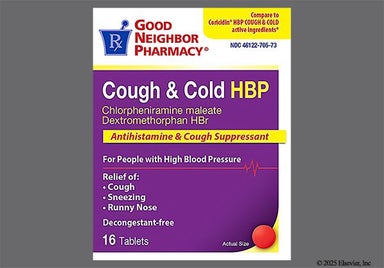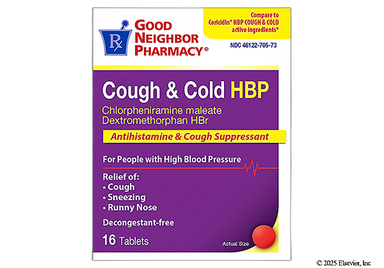
chlorpheniramine / dextromethorphan
Chlorpheniramine/dextromethorphan is an over-the-counter medication that contains an antihistamine and a cough suppressant. It's used to relieve cough, runny nose, and itchy or watery eyes caused by allergies or the common cold in adults and children. This medication is taken by mouth, typically every 6 hours. It can cause side effects like drowsiness, dizziness, and dry mouth. It's available as tablets and oral solutions. Some brand-name medications that contain chlorpheniramine and dextromethorphan include Coricidin HBP Cough and Cough and Vicks Nyquil Children's Cold and Cough.


What is Chlorpheniramine/dextromethorphan?
What is Chlorpheniramine/dextromethorphan used for?
Short-term relief of symptoms from allergies and the common cold:
- Runny nose
- Sneezing
- Itchy nose or throat
- Itchy, watery eyes
- Cough from throat and lung irritation
How Chlorpheniramine/dextromethorphan works
Chlorpheniramine/dextromethorphan is a combination of two medications that work together to relieve symptoms caused by the common cold and allergies.
- Chlorpheniramine is an antihistamine. It blocks histamine, a natural substance in your body that normally causes common cold and allergy symptoms. By blocking histamine, chlorpheniramine lowers inflammation (swelling) and relieves runny or itchy nose, sneezing, and watery eyes.
- Dextromethorphan is a cough suppressant. It works in the brain to lower your urge to cough.
Drug facts
| Common Brands | Coricidin HBP Cough and Cold, Children's Robitussin Nighttime Cough Long-Acting DM, Vick's Children's NyQuil Cough and Cold |
|---|---|
| Drug Class | Antihistamine / Cough suppressant |
| Controlled Substance Classification | Not a controlled medication |
| Generic Status | Lower-cost generic available |
| Availability | Over-the-counter |

Side effects of Chlorpheniramine/dextromethorphan
The following side effects may get better over time as your body gets used to the medication. Let your healthcare provider know immediately if you continue to experience these symptoms or if they worsen over time.
Common Side Effects
- Sleepiness
- Dizziness
- Dry mouth
Less Common Side Effects
Chlorpheniramine/dextromethorphan serious side effects
Contact your healthcare provider immediately if you experience any of the following.
- Serotonin syndrome: fast heart rate, sweating, muscle stiffness or spasms, high fever, confusion
The following Chlorpheniramine/dextromethorphan side effects have also been reported
Side effects that you should report to your care team as soon as possible:
- Allergic reactions—skin rash, itching, hives, swelling of the face, lips, tongue, or throat
- Sudden eye pain or change in vision such as blurry vision, seeing halos around lights, vision loss
- Trouble passing urine
Side effects that usually do not require medical attention (report these to your care team if they continue or are bothersome):
- Confusion
- Constipation
- Dizziness
- Drowsiness
- Dry mouth
- Fatigue

Pros and cons of Chlorpheniramine/dextromethorphan
Pros
- Can experience symptom relief about 15 to 30 minutes after your dose
- Available over the counter as a tablet and liquid
- Convenient because it's a combination of two medications
Cons
- Might need to take up to every 6 hours
- Not safe to take with alcohol
- Might not be the best choice for people with glaucoma or urinary problems

Pharmacist tips for Chlorpheniramine/dextromethorphan

- Stop using chlorpheniramine/dextromethorphan and contact your primary care provider if your cough lasts longer than 1 week, tends to keep coming back, or occurs with a fever, rash, or headache, or if any other new symptoms appear. These might be signs that you need more medical attention.
- If you're taking a liquid form of chlorpheniramine/dextromethorphan, use an oral syringe or medication dosing cup to measure your dose of chlorpheniramine/dextromethorphan. Don't use household spoons because they might not be accurate and can cause you to take the wrong dose.
- Chlorpheniramine/dextromethorphan can make you feel sleepy or dizzy. Don't drink alcohol while you're taking this medication because doing so can worsen these side effects. Also, don't drive or do anything that requires a lot of focus and attention until you know how this medication affects you.
- Don't start any new medications for allergy or cough while taking chlorpheniramine/dextromethorphan. Many over-the-counter allergy and cough medications also contain antihistamines or cough suppressants. Taking more than one antihistamine or cough suppressant can raise your risk of serious side effects, including seizures or breathing problems.
- Avoid taking chlorpheniramine/dextromethorphan with monoamine oxidase inhibitors (MAOIs), like selegiline or phenelzine (Nardil). This combination can raise your risk for severe side effects, such as serotonin syndrome, daytime sleepiness, and dizziness. If you've taken an MAOI in the last 2 weeks, don't use chlorpheniramine/dextromethorphan. Contact your prescriber for other options to treat your allergy or common cold symptoms.

Risks and warnings for Chlorpheniramine/dextromethorphan
Chlorpheniramine/dextromethorphan can cause some serious health issues. This risk may be even higher for certain groups. If this worries you, talk to your doctor or pharmacist about other options.
Sleepiness
- Risk factors: Drinking alcohol while taking chlorpheniramine/dextromethorphan | Taking other medications that cause sleepiness | Age 65 and older
Chlorpheniramine/dextromethorphan commonly causes drowsiness. This can affect your ability to focus, think, and react. This side effect is more likely to happen or be more intense if you're over 65 years old. Drinking alcohol or taking chlorpheniramine/dextromethorphan with other medications that cause drowsiness (e.g., opioids, benzodiazepines, sleep medications) can also worsen drowsiness. Be careful and avoid activities that require you to be alert, such as driving a car or operating machinery, until you know how chlorpheniramine/dextromethorphan affects you.
Serotonin syndrome
- Risk factors: Taking monoamine oxidase inhibitors (MAOI) 14 days before starting chlorpheniramine/dextromethorphan | Taking other medications that raise serotonin levels in your brain
The dextromethorphan in chlorpheniramine/dextromethorphan can raise your risk for serotonin syndrome. This is a rare, but potentially life-threatening side effect that happens when there's too much serotonin in the brain. Your risk is higher if you're also taking other medications that affect serotonin levels, such as certain antidepressants, MAOIs, and certain migraine medications.
Make sure your healthcare team knows about all the medications you take or plan to take (including over-the-counter medications and supplements) before starting chlorpheniramine/dextromethorphan. Get medical help right away if you have any symptoms of serotonin syndrome, such as fast heart rate, sweating, muscle stiffness or spasms, high fever, and confusion.
Accidental overdose
Chlorpheniramine/dextromethorphan contains an antihistamine (chlorpheniramine) and a cough suppressant (dextromethorphan). These ingredients can be found in many other over-the-counter products for allergy, cough, and cold.
The risk of accidentally taking too much medication is higher if you use more than one product containing the same or similar ingredients. Tell your primary care provider or pharmacist about the medications you take before starting chlorpheniramine/dextromethorphan. And don't start any new medications without talking to them first. Be sure to read the package labels carefully for its active ingredient list and dosing. Ask your pharmacist if you're not sure whether a product has any similar ingredients and whether it's safe for you.
Early signs that you might've accidentally taken too much medication can include confusion, not being aware of your surroundings, flushed or very warm skin, and vision changes. It can lead to serious side effects, such as anxiety or other behavior changes and trouble breathing. Get medical help right away or contact a Poison Control Center at 1-800-222-1222 if you or your loved one accidentally took too much medication.
Worsening of medical conditions
- Risk factors: Cough from smoking, asthma, or emphysema | Cough occurring with too much mucus | Urinary problems
Chlorpheniramine/dextromethorphan might not be appropriate for you if you're 65 years or older, since you might be at higher risk for more intense side effects of the medication. Additionally, chlorpheniramine/dextromethorphan might not be appropriate if you have a cough that has lasted for a long time, occurs with smoking, asthma, or emphysema, or occurs with too much mucus. There might be other medications that can better treat your cough. Chlorpheniramine/dextromethorphan can also worsen certain health conditions, such as enlarged prostate. Before taking chlorpheniramine/dextromethorphan, let your primary care provider or pharmacist know what other medical conditions you have and what other medications you're taking and ask if this medication is safe for you.

Chlorpheniramine/dextromethorphan dosage
 Tablet
| Dosage | Quantity | Price as low as | Price per unit |
|---|---|---|---|
| 4mg/30mg | 10 tablets | $8.03 | $0.80 |

How much does Chlorpheniramine/dextromethorphan cost?
$8.03

Chlorpheniramine/dextromethorphan contraindications
Contraindications are specific health conditions or situations in which a person should not take a medication due to safety concerns. If you have any of the following conditions or if any of the following apply to you, let your healthcare provider know because Chlorpheniramine/dextromethorphan will not be safe for you to take.
- Currently take or have taken a monoamine oxidase inhibitor (MAOI) in the last 2 weeks

What are alternatives to Chlorpheniramine/dextromethorphan?
Short-term relief of symptoms from allergies and the common cold:

Chlorpheniramine/dextromethorphan images