Used for Skin Infection, Upper Respiratory Infection, Urinary Tract Infection
Used for Skin Infection, Upper Respiratory Infection, Urinary Tract Infection
Cefadroxil is an antibiotic that can treat many types of bacterial infections in adults and children. This includes urinary tract infections (UTIs), strep throat, and skin infections. Cefadroxil works as a first-generation cephalosporin antibiotic to fight the infection. It comes as generic capsules, tablets, and a liquid suspension. The antibiotic is taken by mouth, usually once or twice a day. But the dosage depends on the type of infection you have, how serious it is, and for children, weight. Side effects can include diarrhea, indigestion, and nausea.
Cefadroxil is a cephalosporin antibiotic. It works by stopping bacteria from making a protective covering around themselves. This kills the bacteria and helps treat the infection.
When does Cefadroxil start working?Time passed since treatment started:
HOURS
DAYS
Full effect
WEEKS
MONTHS
Drug facts
Common Brands
Duricef(brand name no longer available)
Drug Class
Cephalosporin antibiotic
Controlled Substance Classification
Not a controlled medication
Generic Status
Lower-cost generic available
Availability
Prescription only
Side effects of Cefadroxil
The following side effects may get better over time as your body gets used to the medication. Let your healthcare provider know immediately if you continue to experience these symptoms or if they worsen over time.
Common Side Effects
Diarrhea
Indigestion
Nausea
Vomiting
Less Common Side Effects
Itching
Joint pain
Fever
Cefadroxil serious side effects
Contact your healthcare provider immediately if you experience any of the following.
Allergic reactions: hives; rash; blisters; peeling skin; swelling of the lips, tongue, or face; trouble breathing
Infectious diarrhea (C. difficile-related diarrhea): fever, nausea, foul-smelling diarrhea, frequent bowel movements (up to 15 times per day)
When do Cefadroxil possible side effects begin and end?
The following Cefadroxil side effects have also been reported
Along with its needed effects, a medicine may cause some unwanted effects. Although not all of these side effects may occur, if they do occur they may need medical attention.
Check with your doctor immediately if any of the following side effects occur:
Some side effects may occur that usually do not need medical attention. These side effects may go away during treatment as your body adjusts to the medicine. Also, your health care professional may be able to tell you about ways to prevent or reduce some of these side effects. Check with your health care professional if any of the following side effects continue or are bothersome or if you have any questions about them:
Take cefadroxil exactly as your prescriber instructed you to. It's important to finish your treatment course, even if you start feeling better. Stopping too early can make your infection come back and become harder to treat.
You can take cefadroxil with or without food. If it causes stomach upset, try taking it with food next time. This might help calm your stomach. But be sure to avoid spicy or acidic foods because these can make stomach upset more likely.
Swallow the cefadroxil tablet or capsule whole. Don't crush or chew it because it might damage the medication. If you have trouble swallowing pills whole, ask your prescriber if you can take the liquid version of the antibiotic instead.
Cefadroxil can cause mild diarrhea that usually goes away after you stop taking it. But pay attention to severe diarrhea. This can look like watery or bloody stools, very frequent diarrhea, fever, or stomach cramps during or after treatment. Get medical help right away because these can be signs of serious infectious diarrhea.
Get urgent medical care if you have a rash, itchy or peeling skin, trouble breathing, or swelling of your face or mouth. These might be signs of a serious allergic reaction to cefadroxil.
It's a good idea to avoid drinking alcohol while taking cefadroxil. Alcohol can make side effects like nausea and vomiting worse. It can also slow recovery from your infection. Talk to your prescriber or care team about your drinking habits and how to take this antibiotic in a safe way.
The pharmacist will mix the cefadroxil liquid for you when you pick up your medication. They'll also give you a medication dose cup or oral syringe to help measure each dose.
Shake the bottle of cefadroxil well before each dose. This helps mix the medication well so you get the right amount of medication when you measure your dose.
Measure the cefadroxil liquid with a dosing cup or oral syringe. Don't use kitchen spoons because they aren't accurate and could cause you to take the wrong dose.
Keep the cefadroxil liquid in the refrigerator for up to 14 days. After that time, throw it away, even if some medication is left inside the bottle.
Risks and warnings for Cefadroxil
Cefadroxil can cause some serious health issues. This risk may be even higher for certain groups. If this worries you, talk to your doctor or pharmacist about other options.
Allergic reactions
Risk factors: Allergy to penicillin or other cephalosporin antibiotics
Some people can have allergic reactions to cefadroxil. Mild reactions can include a rash or hives. More serious, life-threatening reactions can include blisters, peeling skin, swelling of the face, and anaphylaxis.
Tell your healthcare team if you're allergic to any antibiotics, especially penicillins or other cephalosporins. They can make sure cefadroxil is safe for you.
Get medical help right away if you have a rash, hives, red or peeling skin, swelling of the lips or tongue, or trouble breathing after taking cefadroxil. These can be signs of an allergic reaction.
Diarrhea from Clostridioides difficile infection
Antibiotics including cefadroxil can change the normal bacteria in your gut. This can let harmful bacteria called Clostridioides difficile (C. diff) grow too much and cause a serious infection. This infection can lead to severe diarrhea, even up to 2 months after you stop the antibiotic.
It's important to know the difference between mild diarrhea from cefadroxil and serious diarrhea from C. diff. Signs of a C. diff infection include fever, nausea, foul-smelling diarrhea, and frequent bowel movements. Get medical help right away if you have any signs of this infectious diarrhea. This can be a medical emergency and should get treated as soon as possible.
Seizures
Risk factors: Kidney problems | Taking high doses of cefadroxil
Antibiotics like cefadroxil might raise the risk of seizures. The risk is high if you have kidney problems and the cefadroxil dose isn't lowered enough for you. When the kidneys don't work well, the medication can build up in the body and raise the risk of side effects, including seizures.
Tell your prescriber or the urgent care team if you've had seizures before or if you have kidney problems. They can make sure that cefadroxil is safe for you. If you have a seizure while taking this medication, get medical help right away.
Possible development of drug-resistant bacteria
Take cefadroxil exactly as your prescriber told you. Don't take it for a shorter or longer time, and don't take it for other illnesses. Otherwise, it can raise your risk of developing infections caused by drug-resistant bacteria. These infections can be very serious and harder to treat.
Cefadroxil dosage
The average cost for 14 capsules of 500mg of Cefadroxil is $13.93 with a free GoodRx coupon. This is 69.57% off the average retail price of $45.78.
Urinary tract infection: The typical dose is 1 to 2 grams by mouth per day. This dose is taken once a day, or it's split into equal doses and taken two times a day. The specific dose will depend on the type of urinary tract infection you have.
Skin infection: The typical dose is 1 gram by mouth once a day, or 500 mg by mouth twice a day.
Strep throat or tonsillitis: The typical dose is 1 gram by mouth once a day, or 500 mg by mouth twice a day, for 10 days.
Children
Urinary tract infection: The dose is based on your child's body weight. The typical dose is 15 mg/kg by mouth every 12 hours.
Skin infection: The dose is based on your child's body weight. The typical dose is 15 mg/kg by mouth every 12 hours. If it's for impetigo, your child might be prescribed 30 mg/kg once a day.
Strep throat or tonsillitis: The dose is based on your child's body weight. The typical dose is 30 mg/kg by mouth once a day, or 15 mg/kg by mouth every 12 hours.
Cefadroxil may interact with certain medications or supplements. Always let your doctor and pharmacist know about any other medications or supplements (including prescribed and over-the-counter medications, vitamins, and dietary or herbal supplements) that you are currently taking. The list below does not include all possible drug interactions with Cefadroxil. Please note that only the generic name of each medication is listed below.
Although certain medicines should not be used together at all, in other cases two different medicines may be used together even if an interaction might occur. In these cases, your doctor may want to change the dose, or other precautions may be necessary. When you are taking this medicine, it is especially important that your healthcare professional know if you are taking any of the medicines listed below. The following interactions have been selected on the basis of their potential significance and are not necessarily all-inclusive.
Using this medicine with any of the following medicines is usually not recommended, but may be required in some cases. If both medicines are prescribed together, your doctor may change the dose or how often you use one or both of the medicines.
Contraindications are specific health conditions or situations in which a person should not take a medication due to safety concerns. If you have any of the following conditions or if any of the following apply to you, let your healthcare provider know because Cefadroxil will not be safe for you to take.
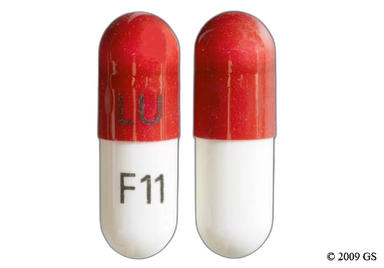
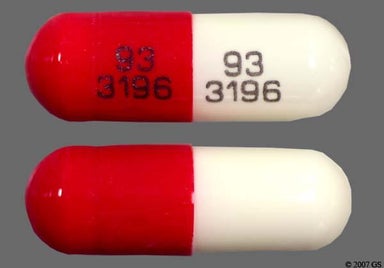
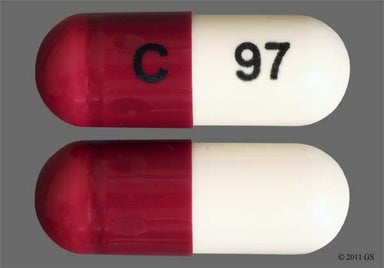
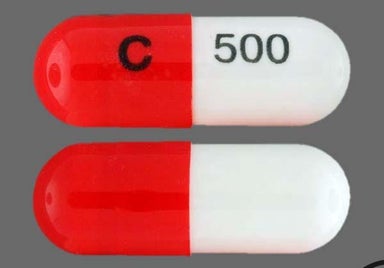
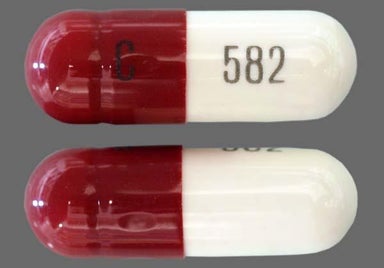
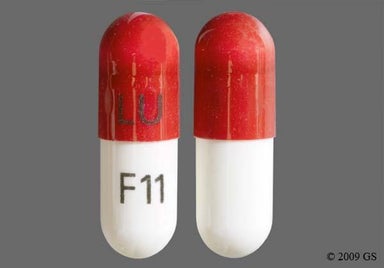
This medicine is Orange And White Capsule Imprinted With "93 3196 93 3196".Orange And White 93 3196 93 3196 - Cefadroxil 500mg CapsuleThis medicine is Maroon And White Capsule Imprinted With "C 97".Maroon And White C 97 - Cefadroxil 500mg CapsuleThis medicine is White And Red Capsule Imprinted With "C 500".White And Red C 500 - Cefadroxil 500mg CapsuleThis medicine is Brown And White Capsule Imprinted With "C 582" And "Barr 582".Brown And White C 582 And Barr 582 - Cefadroxil 500mg CapsuleThis medicine is Maroon And White Capsule Imprinted With "Lu F11".Maroon And White Lu F11 - Cefadroxil 500mg Capsule
Prescription savings
Stop paying too much for your prescriptions. Compare prices, get pharmacy coupons, and save up to 80%.
Yes, you can take Cefadroxil on an empty stomach. Keep in mind that antibiotics can commonly cause stomach upset. If you experience this, try taking the antibiotic with food to help calm your stomach.
The makers of the Cefadroxil capsules don't clearly say if they can be opened. To be safe, it's best to not open the capsules. If you have trouble swallowing them, ask your prescriber about taking the liquid form instead.
It's best to avoid drinking alcohol while taking Cefadroxil. Both the antibiotic and alcohol cause nausea and vomiting. Drinking alcohol while taking Cefadroxil can make these side effects more likely. Alcohol can also sometimes make it take longer to recover from an infection. Talk to a healthcare professional about your drinking habits and how to take Cefadroxil safely.
Cefadroxil isn't usually used to treat pneumonia. Other antibiotics work better for this type of lung infection. Common antibiotics for pneumonia include amoxicillin and azithromycin. If you have pneumonia, your prescriber will help choose the best antibiotic for you.
No. Cefadroxil and cephalexin (Keflex) are both antibiotics that work in a similar way. They treat some of the same infections, like skin infections, UTIs, and strep throat. But Cefadroxil can be used for tonsillitis. And cephalexin (Keflex) can also treat infections of the bone, reproductive system, and ear. How often you need to take the antibiotics is also different. Cefadroxil is taken once or twice a day, while cephalexin (Keflex) is taken more often, usually two to four times a day. Your prescriber can help to compare the antibiotics and see which is best for you.
You usually take Cefadroxil for up to 7 days to treat a urinary tract infection (UTI). Your prescriber will decide the exact number of days based on the type of UTI you have and your symptoms. Take the antibiotic for the full time your prescriber tells you. Don't stop early because it could make your infection harder to treat. Ask your prescriber if you're not sure how long to take Cefadroxil.
For people with healthy kidneys, it takes about 8 hours for most of Cefadroxil to leave the body. This time frame is based on the medication's half-life, which is how long it takes half the amount of Cefadroxil to leave the body. If you have kidney problems, the medication can stay in your body longer because the kidneys help remove it. Ask your prescriber if you have questions about how long Cefadroxil stays in your system.
In general, Cefadroxil is considered a safe antibiotic to take while pregnant or breastfeeding. Let your prescriber know if you're pregnant or breastfeeding just to be safe. They'll talk to you about the risks and benefits of taking Cefadroxil.