Used for Actinic Keratosis, Eye Inflammation, Osteoarthritis, Rheumatoid Arthritis
Used for Actinic Keratosis, Eye Inflammation, Osteoarthritis, Rheumatoid Arthritis
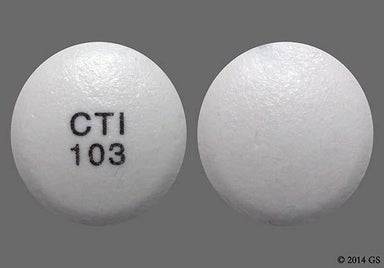
Diclofenac is a prescription non-steroidal anti-inflammatory drug (NSAID) that works well to treat pain and swelling in certain conditions, such as osteoarthritis, rheumatoid arthritis, and menstrual cramps. Diclofenac comes in different formulations, including delayed-release tablet and powder packet for oral solution. Similar to other NSAIDs, it has warnings for serious side effects, such as stroke, heart attack, and stomach bleeds, especially with higher doses and longer use.
The following side effects may get better over time as your body gets used to the medication. Let your healthcare provider know immediately if you continue to experience these symptoms or if they worsen over time.
Common Side Effects
Up to 10% of people taking diclofenac experience:
Headaches
Dizziness
Ringing in the ear
Swelling in the arms and legs
Nausea
Vomiting
Heartburn
Stomach bleeds, ulcers, and damage
Passing gas
Stomach pains
Constipation
Diarrhea
Rash
Dry and itchy skin
Anemia
Bleeding that's hard to stop
Diclofenac serious side effects
Contact your healthcare provider immediately if you experience any of the following.
The following Diclofenac side effects have also been reported
Along with its needed effects, a medicine may cause some unwanted effects. Although not all of these side effects may occur, if they do occur they may need medical attention.
Check with your doctor immediately if any of the following side effects occur:
More common
Abdominal or stomach bloating, burning, cramping, or pain
unusual drowsiness, dullness, or feeling of sluggishness
Some side effects may occur that usually do not need medical attention. These side effects may go away during treatment as your body adjusts to the medicine. Also, your health care professional may be able to tell you about ways to prevent or reduce some of these side effects. Check with your health care professional if any of the following side effects continue or are bothersome or if you have any questions about them:
More common
Continuing ringing or buzzing or other unexplained noise in the ears
All brands of diclofenac are available as lower-cost generics.
Cons
Typically have to take multiple times a day (except for the powder and extended-release tablet)
Not recommended for use in children (except for diclofenac potassium (Zipsor) capsules, which can be used in children age 12 years and older)
Not recommended for use in pregnancy, especially starting in the second trimester or later
Not the best option if you're 65 years or older, or have kidney, heart, liver, or bleeding problems
Pharmacist tips for Diclofenac
You can take diclofenac with or without food. If it hurts your stomach, try taking it with food or milk to help. But, doing so might affect how fast your body absorbs the medication and how well it works.
Don't break, crush, or chew the diclofenac tablets or capsules without first checking with your provider if it's safe to do so. Typically, this medication needs to be swallowed whole. Some diclofenac pills have a special coating that affects how the medication is absorbed in the body.
Keep in mind that diclofenac potassium (Cambia) powder can only treat migraine attacks, but won't prevent them from happening. Mix the powder only with water, not any other types of liquid. Once you've mixed the powder well, drink it immediately. A single dose can provide up to 24 hours of pain relief. A second dose isn't recommended because researchers haven't studied whether it’s safe or if it works well to relieve further migraine pain.
If you're using diclofenac for arthritis, it won't prevent your condition from getting worse. Some things you can do to prevent your arthritis from getting worse include physical therapy, exercise, or taking other medications. Discuss with your provider what the best options are for you.
Diclofenac can put you at higher risk for bleeds when you get injured. Let your provider know if you've had any recent falls or injuries. Sometimes, bleeds on the inside of your body might not show any outward symptoms. Get medical help right away if you experience signs of bleeds, such as bruises that don't go away, bleeds that take a long time to stop, or blood in your vomit.
Diclofenac can cause anemia (low red blood cell levels). Let your provider know if you experience symptoms of anemia, such as feeling tired or weak, having pale skin, trouble breathing, or cold hands and feet.
Let your provider know if you're breastfeeding or planning to breastfeed. Limited information suggest that diclofenac is likely safe to take during breastfeeding, but more research is needed in this area. Depending on the type of pain you have, your provider can recommend treatment options to ease your symptoms during pregnancy.
Risks and warnings for Diclofenac
Diclofenac can cause some serious health issues. This risk may be even higher for certain groups. If this worries you, talk to your doctor or pharmacist about other options.
Heart attack and stroke
Risk factors: History of heart problems, including heart attack | Taking high doses of diclofenac | Taking diclofenac for a long time | History of heart bypass surgery
Diclofenac can raise your risk of having blood clots, heart attacks, or strokes. This can happen as early as within the first weeks of starting this medication. People with heart problems, those taking high doses of diclofenac, and those taking diclofenac for a long time have a higher risk of this happening. That’s why it’s important to take the lowest possible dose for the shortest possible time. If you have heart problems, talk to your healthcare provider before starting this medication. Don't take diclofenac if you've had or will be having heart bypass surgery. Call 911 or seek immediate medical help if you experience chest pain, trouble breathing, weakness on one side of your body, or trouble speaking or walking.
Stomach bleeding and ulcers
Risk factors: History of stomach bleeding or ulcers | Older adults | Taking aspirin (Aspir-Low), other NSAIDs, corticosteroids, blood thinners, or SSRIs | Drinking alcohol | Smoking | Having poor health | Bleeding problems | Liver problems | Taking diclofenac for a long time | Taking high doses of diclofenac
Diclofenac can cause stomach bleeding and ulcers, which can be dangerous. There are many conditions and medications that raise your risk of this problem, so speak with your provider before starting this medication. Stomach bleeding and ulcers can occur without warning or symptoms, so it's best to take the lowest possible dose for the shortest possible time to minimize your risk. If you notice blood in your vomit, stool that looks like black coffee grounds, or if you have pain in your stomach that doesn't go away, stop taking diclofenac and talk to your healthcare provider right away.
Liver damage
Risk factors: History of liver damage | Taking other medications that can cause liver damage | Taking high doses of diclofenac | Taking diclofenac for a long time
Very rarely, diclofenac can cause life-threatening liver damage. This can happen as early as within the first month of starting this medication. Your risk is higher if you take diclofenac with other medications that can also cause liver damage, such as acetaminophen (Tylenol). Liver damage can happen with or without symptoms, so if you take this medication for a long time, you might need to get lab work done regularly to check your liver. Stop diclofenac and talk to your healthcare provider right away if you experience symptoms, such as fever, chills, fatigue, nausea, vomiting, yellowing of the skin or whites of the eyes, clay-colored stool, and dark urine.
High blood pressure, heart failure, and swelling of your arms and legs
Risk factors: High blood pressure | Heart failure | Taking certain high blood pressure medications, such as water pills, ACE inhibitors, and ARBs
Diclofenac can raise your blood pressure, and it can also cause your body to hold onto more water. This can lead to new or worsening blood pressure problems, heart failure, and swelling of your arms and legs. Diclofenac can also cause some blood pressure and heart failure medications, such as furosemide (Lasix), lisinopril (Zestril), and losartan (Cozaar), to not work well. Diclofenac isn't recommended if you have severe heart failure, so discuss with your provider before starting this medication. Monitor your blood pressure closely while taking diclofenac. Let your provider know right away if you notice any changes in your blood pressure or experience symptoms, such as trouble breathing, tiredness, swelling in your body, or sudden weight gain.
Kidney damage and high potassium levels
Risk factors: Kidney or liver problems | Heart failure | Taking certain high blood pressure medications, such as water pills, ACE inhibitors, or ARBs | Older adults | Loss of body fluid through conditions such as severe vomiting, bleeding, or diarrhea | Using diclofenac for a long time
Diclofenac can damage your kidneys by slowing down blood flow to the kidneys. The risk is higher if you're taking certain blood pressure medications (like ACE inhibitors, ARBs, or water pills), or have certain conditions (like kidney or liver problems and heart failure). Kidney damage is usually reversible once you stop taking diclofenac. This medication isn't recommended if you have very severe kidney problems, so discuss the risks and benefits of taking it with your provider. Let your provider know if you notice a change in how often you urinate after starting diclofenac as this can be a sign of kidney damage.
In addition, kidney damage from diclofenac can also lead to high potassium levels. Sometimes, this medication can cause high potassium levels even in people with normal kidneys. If you experience signs of high potassium levels, such as nausea, muscle weakness, or tingling sensations in your muscles, tell your healthcare provider right away because it might be dangerous.
Severe asthma attack
Risk factors: Asthma and stuffy nose with or without nasal polyps | Allergic reaction to aspirin or other NSAIDs
Diclofenac can cause your airways to tighten, which might lead to severe asthma attacks. Be careful using this medication if you have asthma. People who've experienced asthma attacks triggered by aspirin (Aspir-Low) or other NSAIDs in the past should avoid diclofenac. Get medical help right away if your throat tightens and you can't breathe.
Severe allergic or skin reaction
Risk factors: Past allergic reactions to other NSAIDs | Allergy to bovine (cow) ingredients (for people taking Zipsor only)
Diclofenac might cause sudden, very serious, and sometimes life-threatening allergic and skin reactions. Avoid Zipsor (diclofenac) if you're allergic to bovine (cow) products because it contains gelatin, which is made from cows. Symptoms of serious reactions include fever, body aches, rash, peeling skin, painful blisters all over your body, and swelling of the face. Stop the medication and get help right away if you experience these symptoms.
Harm to unborn babies
Risk factors: Currently pregnant
If diclofenac is taken during or after the second trimester of pregnancy, it can lower the amniotic fluid (the fluid that surrounds the baby in the womb). This can occur as soon as 2 days after starting the medication and result in serious kidney problems in your unborn baby. Babies born to mothers who take diclofenac starting in the third trimester of pregnancy or later can also develop heart problems. If you're thinking of getting pregnant or become pregnant, talk to your provider about the risks and benefits of using diclofenac.
Diclofenac dosage
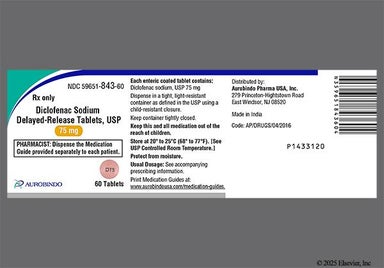
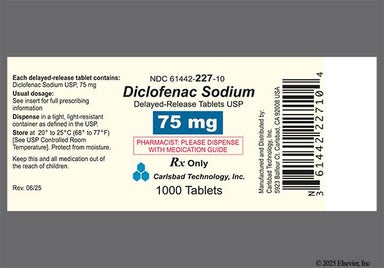
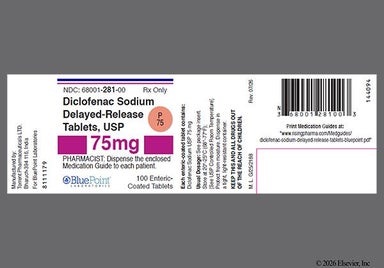
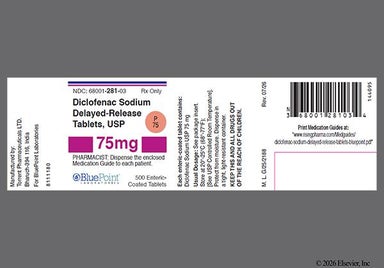
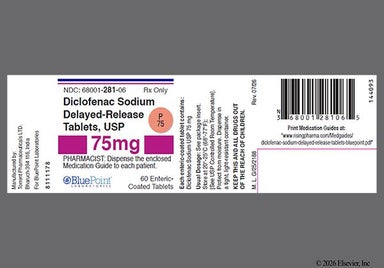
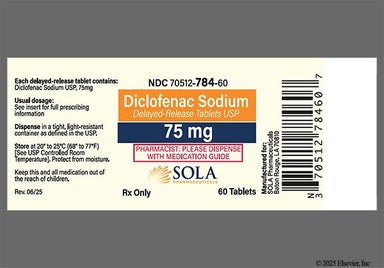
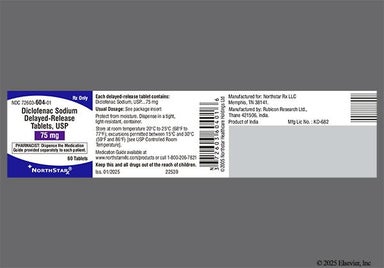
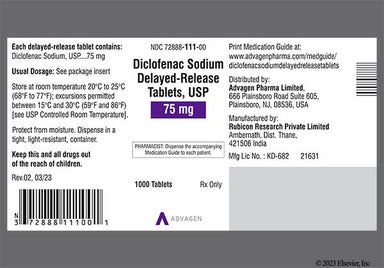
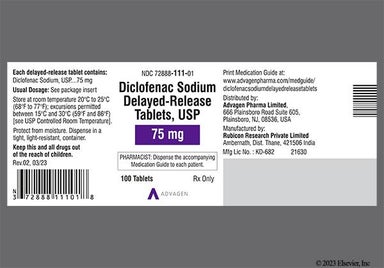
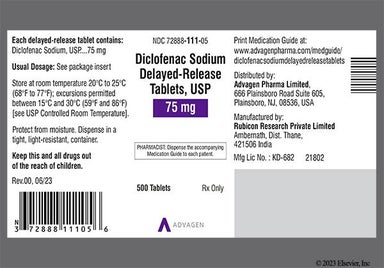
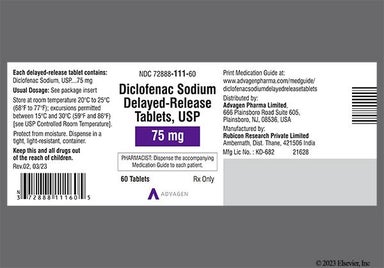
The average cost for 60 tablets of 75mg of Diclofenac is $14.38 with a free GoodRx coupon. This is 30.70% off the average retail price of $20.75.
Diclofenac may interact with certain medications or supplements. Always let your doctor and pharmacist know about any other medications or supplements (including prescribed and over-the-counter medications, vitamins, and dietary or herbal supplements) that you are currently taking. The list below does not include all possible drug interactions with Diclofenac. Please note that only the generic name of each medication is listed below.
Although certain medicines should not be used together at all, in other cases two different medicines may be used together even if an interaction might occur. In these cases, your doctor may want to change the dose, or other precautions may be necessary. When you are taking this medicine, it is especially important that your healthcare professional know if you are taking any of the medicines listed below. The following interactions have been selected on the basis of their potential significance and are not necessarily all-inclusive.
Using this medicine with any of the following medicines is not recommended. Your doctor may decide not to treat you with this medication or change some of the other medicines you take.
Using this medicine with any of the following medicines is usually not recommended, but may be required in some cases. If both medicines are prescribed together, your doctor may change the dose or how often you use one or both of the medicines.
Using this medicine with any of the following medicines may cause an increased risk of certain side effects, but using both drugs may be the best treatment for you. If both medicines are prescribed together, your doctor may change the dose or how often you use one or both of the medicines.
Contraindications are specific health conditions or situations in which a person should not take a medication due to safety concerns. If you have any of the following conditions or if any of the following apply to you, let your healthcare provider know because Diclofenac will not be safe for you to take.
History of asthma, hives, or other allergic reactions after taking aspirin or another NSAID
Use of diclofenac 10 to 14 days after open heart surgery
Short-term relief of minor aches and pains due to headache, muscle aches, minor arthritis pain, toothache, backache, the common cold, or menstrual cramps
GoodRx Health has strict sourcing policies and relies on primary sources such as medical organizations, governmental agencies, academic institutions, and peer-reviewed scientific journals. Learn more about how we ensure our content is accurate, thorough, and unbiased by reading our editorial guidelines.
Prescription savings
Stop paying too much for your prescriptions. Compare prices, get pharmacy coupons, and save up to 80%.
Plans start at $9.99/mo. (when paid yearly). Terms apply.
Common questions about Diclofenac Sodium
Before you start Voltaren, ask your provider for guidance on how long you should take this medication. The length of treatment can differ from person to person, depending on what medical condition you have and what formulation of diclofenac you're taking. For example, if you're taking diclofenac (Cambia) for migraine attacks, you should only take one dose. But if you're taking diclofenac tablets for arthritis, your provider will likely ask you to take it regularly for at least 1 to 2 weeks to see if you experience relief from pain and inflammation. In general, you should take the lowest dose of Voltaren for the shortest amount of time needed to treat your symptoms. This is because taking Voltaren for too long and at higher doses can raise your risk for serious side effects, such as heart attack or stroke.
It'll take about 5 to 10 hours for your body to clear most of Voltaren after a single dose. This timeframe is estimated based on the half-life of Voltaren, but it can differ depending on other factors such as what other medications you're taking and your medical conditions. It can also be influenced by what formulation of Voltaren you're taking. Talk with your provider if you've more questions about how long this medication stays in your system.
Yes, you can take acetaminophen (Tylenol) with Voltaren together because they work differently in your body to relieve pain. Before you start taking acetaminophen (Tylenol), ask your provider if it's appropriate for you. While acetaminophen (Tylenol) is generally safe to take, it does carry certain risks, such as the risk of liver problems for people who already have liver damage or who drink alcohol regularly.
Sleepiness isn't a common side effect reported by people who take Voltaren. But rarely, some people have felt dizzy or drowsy after taking this medication. If you feel sleepy after taking Voltaren, let your provider know. They can check to see if the sleepiness is a side effect of Voltaren or whether its caused by another medication or medical condition.
No, Voltaren isn't muscle-relaxer; it's a NSAID. But certain forms of Voltaren is FDA-approved to ease mild to moderate pain, which can include pain in muscles. If you have muscle pain or tension, talk with your provider about what treatment options are best for you.
Don't take Voltaren with other NSAIDs, such as ibuprofen (Advil), naproxen (Aleve), or even topical NSAIDs like diclofenac (Voltaren) gel. Doing so puts you at higher risk for severe side effects (e.g., stomach bleeds, stroke, heart attack). NSAIDs are commonly found in over-the-counter pain and cold medications. Talk with your healthcare provider or pharmacist if you're not sure whether you're already taking an NSAID.
If you're prescribed Voltaren and become pregnant while taking the medication, stop using it and let your provider know right away. A study from the CDC showed that babies born to mothers who took NSAIDs in early pregnancy had a higher risk of birth defects (e.g., hole in the stomach, cleft palate), compared to mothers who took acetaminophen (Tylenol). Additionally, the FDA specifically says to avoid NSAIDs in pregnant females who are at least 20 weeks pregnant because it can cause kidney and heart problems to your unborn baby. Don't use Voltaren if you're pregnant until your provider specifically said it was safe for you to do so.
Diclofenac sodium and diclofenac potassium are different salt forms of Voltaren. The salts affect how fast the medication gets absorbed into your body. Diclofenac potassium is absorbed by your body more quickly compared with diclofenac sodium. That's why it can treat sudden, sharp pain from certain conditions, such as migraines or menstrual cramps. On the other hand, diclofenac sodium is typically used for other conditions that cause pain that last longer (e.g., arthritis etc.) since it works more slowly and stays in your body longer.


 Diclofenac can raise your risk of having blood clots, heart attacks, or strokes. This can happen as early as within the first weeks of starting this medication. People with heart problems, those taking high doses of diclofenac, and those taking diclofenac for a long time have a higher risk of this happening. That’s why it’s important to take the lowest possible dose for the shortest possible time. If you have heart problems, talk to your healthcare provider before starting this medication. Don't take diclofenac if you've had or will be having heart bypass surgery. Call 911 or seek immediate medical help if you experience chest pain, trouble breathing, weakness on one side of your body, or trouble speaking or walking.