


How Much Is Besivance Without Insurance?
Besivance can cost over $250 without insurance or discounts. Learn more about how much Besivance is without insurance and the best ways to save with GoodRx.
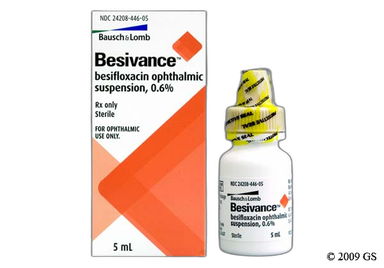
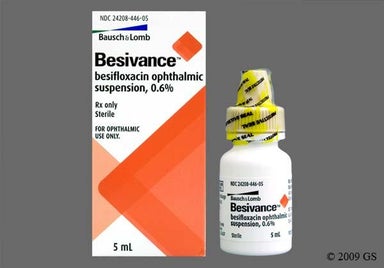
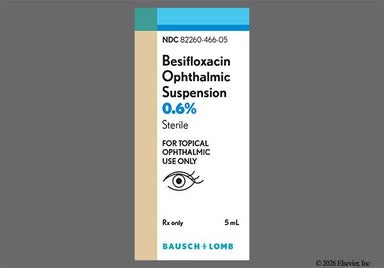
Besivance is a prescription eye drop used to treat bacterial pink eye in adults and children 1 year of age and older. It belongs to the fluoroquinolone antibiotic class. The dosage is typically 1 drop three times per day for 7 days to treat the eye infection. Currently it's available only as a brand-name medication as a generic is not yet available. Side effects aren't common, but include eye redness.

Besivance (besifloxacin) is a fluoroquinolone antibiotic. It works by blocking certain proteins that bacteria use to grow, repair their genetic material (DNA), and survive. By blocking this process, Besivance (besifloxacin) kills bacteria.
| Common Brands | Besivance |
|---|---|
| Drug Class | Fluoroquinolone antibiotic |
| Controlled Substance Classification | Not a controlled medication |
| Generic Status | No lower-cost generic available |
| Availability | Prescription only |

The following side effects may get better over time as your body gets used to the medication. Let your healthcare provider know immediately if you continue to experience these symptoms or if they worsen over time.
Along with its needed effects, a medicine may cause some unwanted effects. Although not all of these side effects may occur, if they do occur they may need medical attention.
Check with your doctor immediately if any of the following side effects occur:
Some side effects may occur that usually do not need medical attention. These side effects may go away during treatment as your body adjusts to the medicine. Also, your health care professional may be able to tell you about ways to prevent or reduce some of these side effects. Check with your health care professional if any of the following side effects continue or are bothersome or if you have any questions about them:
Less common
Headache
Other side effects not listed may also occur in some patients. If you notice any other effects, check with your healthcare professional.
Call your doctor for medical advice about side effects. You may report side effects to the FDA at 1-800-FDA-1088.



How to use Besivance (besifloxacin):

Besivance (besifloxacin) can cause some serious health issues. This risk may be even higher for certain groups. If this worries you, talk to your doctor or pharmacist about other options.
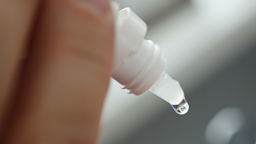
Besivance (besifloxacin) is an eye drop medication that should only be placed on the surface of the eye. The medication shouldn't be injected into the eye or used in other places on your body, unless a healthcare provider specifically said it was safe to do so.
Using Besivance (besifloxacin) for too long can allow any bacteria, fungi, or other germs that the medication can't get rid of to infect the eye. Contact your primary care provider for follow-up if your eye infection isn't improving. You might need additional testing and treatment.

 Eye dropper
| Dosage | Quantity | Price as low as | Price per unit |
|---|---|---|---|
| 5ml of 0.6% | 1 eye dropper | $140.05 | $140.05 |
The typical dose is to put 1 drop in the affected eye(s) 3 times per day (4 to 12 hours apart) for 7 days.

Although certain medicines should not be used together at all, in other cases two different medicines may be used together even if an interaction might occur. In these cases, your doctor may want to change the dose, or other precautions may be necessary. Tell your healthcare professional if you are taking any other prescription or nonprescription (over-the-counter [OTC]) medicine.



Prescription savings
Stop paying too much for your prescriptions. Compare prices, get pharmacy coupons, and save up to 80%. Find expert answers to your health questions so you can make the best decisions for yourself and your family.
Health conditions
Medications & treatment
Access & affordability
 Our monthly healthcare membership can help you save thousands on your prescription costs.
Resources

No, Besivance doesn't contain any steroids; it's a fluoroquinolone antibiotic that kills bacteria that are causing an eye infection. If serious, your prescriber might also recommend a steroid medication to help treat signs of eye inflammation (e.g., redness, itching, swelling).
Yes, Besivance is an antibiotic eye drop. It's used to treat pink eye that is caused by bacterial infections.
Both moxifloxacin (Vigamox) and Besivance are fluoroquinolone antibiotic eye drops. They're to treat pink eye and work just as well as each other and have similar side effects. Both are typically taken 3 times per day. One difference is that moxifloxacin (Vigamox) is approved for use in people of all ages, including infants, while Besivance is approved for use in adults and children 1 year and older. Another difference is that moxifloxacin (Vigamox) targets slightly different bacteria compared to Besivance. Discuss with your prescriber if you have any questions comparing the two medications.
No, they're completely different medications. Both Polytrim (polymyxin B / trimethoprim) and Besivance are antibiotic eye drops, but they contain different types of antibiotics. While both medications are used to treat pink eye, Polytrim is also used for other types of eye and eyelid infections. Besivance tends to be more convenient because it's used three times per day for 7 days whereas Polytrim (polymyxin B / trimethoprim) is used every 3 hours for 7 to 10 days. Discuss with your prescriber if you have any questions comparing the two medications.
Besivance is only FDA-approved to treat pink eye, a bacterial infection of the lining that covers the inside of your eyelid and the whites of the eye. Styes are different because they're often caused by skin bacteria that get trapped along the eyelid. Styes are typically treated with warm compresses or eyelid scrubs before using eye antibiotics. Don't use Besivance for a stye unless a healthcare professional specifically prescribed it to you for this purpose.
Speak to a healthcare professional (HCP) for the most appropriate treatment if you have an ear infection. Besivance eye drops are FDA-approved to be used in the eye to treat pink eye only. But sometimes, HCPs prescribe certain antibiotic eye drops off label for an ear infection. This might be because some antibiotic eye drops are generally at a lower cost than ear drops. Keep in mind that it's not safe to put ear drops in the eyes. Make sure to carefully follow your HCP's instructions on how to use Besivance for your infection.
No, Besivance doesn't appear to cause diarrhea. Besivance is placed directly into your eye(s), so not much of the medication gets absorbed into the rest of your body. If you're experiencing unexplained diarrhea, contact your prescriber.
Yes, Besivance can expire. There should be an expiration date that's written on the medication box or bottle. Don't use Besivance past the written expiration date because it might not work well to help treat your eye infection.
