ranolazine
Ranolazine is an extended-release medication for adults used to help treat ongoing chest pain (angina). It's often added when other medications don't work well enough. Ranolazine is available as generic tablets, though it was once sold under the brand name Ranexa. There's also a sprinkle form called Aspruzyo Sprinkle. You take the dosage by mouth twice a day. Side effects include dizziness, headache, and constipation.


What is Ranolazine?
What is Ranolazine used for?
- Long-term chest pain (chronic angina)
How Ranolazine works
Ranolazine is an antianginal medication. The way it works isn't completely understood.
Angina (chest pain) happens when the heart muscle isn't getting enough oxygen. Researchers think that ranolazine can change the flow of certain electrolytes that are important for your heart to work. This is thought to help your heart work more efficiently and lessen angina in the long run.
Drug facts
| Common Brands | Ranexa, Aspruzyo Sprinkle |
|---|---|
| Drug Class | Antianginal |
| Controlled Substance Classification | Not a controlled medication |
| Generic Status | Lower-cost generic available |
| Availability | Prescription only |

Side effects of Ranolazine
The following side effects may get better over time as your body gets used to the medication. Let your healthcare provider know immediately if you continue to experience these symptoms or if they worsen over time.
Common Side Effects
- Dizziness (6%)
- Headache (6%)
- Constipation (5%)
- Nausea (4%)
Less Common Side Effects
- Palpitations (racing heart)
- Stomach pain
- Vomiting
- Dry mouth
- Blurry vision
- Fluid buildup and swelling in the arms or legs
Ranolazine serious side effects
Contact your healthcare provider immediately if you experience any of the following.
- Abnormal heart rhythm: irregular heart beat, dizziness, chest pain, trouble breathing, fainting
- Serious kidney problems: urinating more often, blood or foam in your urine, tiredness, dry or itchy skin, muscle cramps, swollen feet or ankles, poor appetite
The following Ranolazine side effects have also been reported
Along with its needed effects, a medicine may cause some unwanted effects. Although not all of these side effects may occur, if they do occur they may need medical attention.
Check with your doctor immediately if any of the following side effects occur:
More common
Dizziness
Less common
Bloating or swelling of the face, arms, hands, lower legs, or feet
continuous ringing or buzzing or other unexplained noise in the ears
difficult or labored breathing
fast, irregular, pounding, or racing heartbeat or pulse
feeling of constant movement of self or surroundings
hearing loss
lightheadedness
rapid weight gain
sensation of spinning
tightness in the chest
tingling of the hands or feet
unusual weight gain or loss
Rare
Abnormal or decreased touch sensation
agitation
blood in the urine
blurred vision
burning, crawling, itching, numbness, prickling, "pins and needles", or tingling feelings
chest pain or discomfort
chills
cold sweats
coma
confusion
decreased urine output
dizziness, faintness, or lightheadedness when getting up suddenly from a lying or sitting position
fainting
headache
hostility
irritability
lethargy
muscle twitching
seizures
shakiness in the legs, arms, hands, or feet
slow or irregular heartbeat
stupor
sweating
trembling or shaking of the hands or feet
unusual tiredness or weakness
Some side effects may occur that usually do not need medical attention. These side effects may go away during treatment as your body adjusts to the medicine. Also, your health care professional may be able to tell you about ways to prevent or reduce some of these side effects. Check with your health care professional if any of the following side effects continue or are bothersome or if you have any questions about them:
More common
Difficulty having a bowel movement (stool)
Rare
Lack or loss of strength
Other side effects not listed may also occur in some patients. If you notice any other effects, check with your healthcare professional.
Call your doctor for medical advice about side effects. You may report side effects to the FDA at 1-800-FDA-1088.

Get your GoodRx coupon

Pros and cons of Ranolazine
Pros
- Can help make you less likely to get chest pain from exercise
- Can take with or without food
- An option as an add-on when other medications aren't working well to manage chest pain
- Okay for people with heart failure or diabetes to take
Cons
- Not for relieving chest pain after it's started
- Must take twice a day
- Can interact with some medications, including certain heart and cholesterol medications
- Not recommended if you have serious liver problems

Pharmacist tips for Ranolazine

- Take ranolazine twice daily, with or without food.
- Swallow ranolazine tablets whole. Don't crush, break, or chew them since this can affect how the medication works in the body. If you have trouble swallowing pills whole, talk to your prescriber about your options.
- Ranolazine can sometimes make you feel dizzy or lightheaded. Don't drive, use heavy machines, or do anything that needs your full focus until you know how this medication affects you.
- It can take several weeks of taking ranolazine every day before you notice less chest pain or can exercise without getting winded easily. Keep taking the medication as your healthcare team tells you, even if you don't feel better right away. Talk to your care if you have questions about what to expect.
- Limit the amount of grapefruit and grapefruit juice you have while taking ranolazine. Also tell your prescriber if you eat grapefruit or drink grapefruit juice often so they can make sure the medication is safe for you. Grapefruit can make the levels of the medication higher in the body. This can make side effects more likely.
- Tell your care team about all of the medications and supplements you take. They can check for ranolazine drug interactions and make changes if needed. This is important because some interactions can raise your risk of side effects or make ranolazine work less well. In some cases, your prescriber might limit your ranolazine dose to 500 mg twice a day to avoid drug interactions.
- If you miss a dose of ranolazine, skip the missed dose. Wait until the next usual time to take your usual dose. Don't double up on the dose to make up for the missed one because this can lead to serious side effects.
- Keep fast-acting medications like nitroglycerin sublingual tablets (Nitrostat) with you. These work best for sudden chest pain. Don't take ranolazine for sudden chest pain because it doesn't work fast enough.
Tips for the extended-release oral granules (Aspruzyo Sprinkle):
- Sprinkle the granules from one packet onto a tablespoonful of soft food like applesauce or yogurt. Then, eat the mixture right away. Avoid chewing or crushing the granules when you take the medication.
- If you have a feeding tube, like a nasogastric (NG) tube or gastric (G) tube, carefully follow the instructions on how to prepare and take Aspruzyo Sprinkle. You'll need to mix the granules with the right amount of water using a syringe. Then, you'll give the medication through the tube. Ask your prescriber or pharmacist if you have questions about how to give the medication through a feeding tube.

Risks and warnings for Ranolazine
Ranolazine can cause some serious health issues. This risk may be even higher for certain groups. If this worries you, talk to your doctor or pharmacist about other options.
Abnormal heart rhythm
- Risk factors: Personal or family history of long QT syndrome | Taking other medications that prolong the QT interval
Ranolazine can make your heart take longer to reset between beats. This is called QT prolongation. It can sometimes affect your heart rhythm and show up on heart tests like an electrocardiogram (EKG).
Before starting ranolazine, tell your prescriber about your medical history as well as your family's. Also tell them about all the medications you take. Some people might be at higher risk. This includes people with a history of long QT syndrome and those taking other medications that cause this heart rhythm problem.
Don't take more ranolazine than prescribed. This might be dangerous for your heart. Get medical help right away if you have an irregular heartbeat, chest pain, dizziness, trouble breathing, or if you faint. These can be signs of a serious heart rhythm problem.
Kidney problems
- Risk factors: History of serious kidney problems
Some people with severe kidney problems have had kidney failure while taking ranolazine. Before you start this medication, tell your prescriber if you have kidney problems. They can make sure it's safe for you. Your prescriber might check your kidneys with blood tests during treatment.
Tell your prescriber right away if you notice changes in how often you urinate, blood or foam in your urine, dry or itchy skin, or muscle cramps. These might be signs of kidney problems. If you have kidney problems while taking ranolazine, your prescriber might have you stop the medication so they can treat the kidney issue.
Interactions with other medications
Ranolazine can interact with some medications. Some interactions can cause other medications or ranolazine itself to build up in your body. This can raise the risk of side effects. Other interactions can make ranolazine leave your body too fast. This might make ranolazine work less well.
To stay safe, tell your prescriber and pharmacist about all the medications you take. They can check for drug interactions and make changes if needed. You shouldn't take ranolazine with medications like clarithromycin or carbamazepine (Tegretol). You might need a lower dose of ranolazine or changes to your other medications to avoid some interactions. Examples can include diltiazem (Cardizem), erythromycin, fluconazole (Diflucan), and simvastatin (Zocor).

Ranolazine dosage


Interactions between Ranolazine and other drugs
Although certain medicines should not be used together at all, in other cases two different medicines may be used together even if an interaction might occur. In these cases, your doctor may want to change the dose, or other precautions may be necessary. When you are taking this medicine, it is especially important that your healthcare professional know if you are taking any of the medicines listed below. The following interactions have been selected on the basis of their potential significance and are not necessarily all-inclusive.
Using this medicine with any of the following medicines is not recommended. Your doctor may decide not to treat you with this medication or change some of the other medicines you take.
- Amitriptyline
- Amoxapine
- Amprenavir
- Atazanavir
- Bepridil
- Carbamazepine
- Cisapride
- Clarithromycin
- Clomipramine
- Cobicistat
- Colchicine
- Darunavir
- Desipramine
- Doxepin
- Dronedarone
- Fosamprenavir
- Fosphenytoin
- Idelalisib
- Imipramine
- Indinavir
- Itraconazole
- Ketoconazole
- Lopinavir
- Mesoridazine
- Nefazodone
- Nelfinavir
- Nortriptyline
- Phenobarbital
- Phenytoin
- Pimozide
- Piperaquine
- Posaconazole
- Protriptyline
- Rifabutin
- Rifampin
- Rifapentine
- Ritonavir
- Saquinavir
- Sparfloxacin
- St John's Wort
- Terfenadine
- Thioridazine
- Trimipramine
- Ziprasidone
Using this medicine with any of the following medicines is usually not recommended, but may be required in some cases. If both medicines are prescribed together, your doctor may change the dose or how often you use one or both of the medicines.
- Abametapir
- Acecainide
- Afatinib
- Alfentanil
- Alfuzosin
- Alprazolam
- Amiodarone
- Amisulpride
- Anagrelide
- Apomorphine
- Aprepitant
- Aripiprazole
- Aripiprazole Lauroxil
- Arsenic Trioxide
- Artemether
- Asenapine
- Astemizole
- Azimilide
- Azithromycin
- Bedaquiline
- Benzhydrocodone
- Berotralstat
- Betrixaban
- Bretylium
- Buprenorphine
- Buserelin
- Capmatinib
- Ceritinib
- Chloroquine
- Chlorpromazine
- Ciprofloxacin
- Citalopram
- Clofazimine
- Clozapine
- Codeine
- Conivaptan
- Crizotinib
- Cyclobenzaprine
- Cyclosporine
- Dabigatran Etexilate
- Dabrafenib
- Dasatinib
- Degarelix
- Delamanid
- Deslorelin
- Deutetrabenazine
- Digoxin
- Dihydrocodeine
- Dihydroergotamine
- Diltiazem
- Dofetilide
- Dolasetron
- Domperidone
- Donepezil
- Doxorubicin
- Doxorubicin Hydrochloride Liposome
- Droperidol
- Efavirenz
- Eliglustat
- Encorafenib
- Entrectinib
- Ergotamine
- Erythromycin
- Escitalopram
- Fentanyl
- Fingolimod
- Flecainide
- Fluconazole
- Fluoxetine
- Formoterol
- Fosaprepitant
- Foscarnet
- Fosnetupitant
- Fostemsavir
- Gatifloxacin
- Gemifloxacin
- Glasdegib
- Gonadorelin
- Goserelin
- Granisetron
- Halofantrine
- Haloperidol
- Histrelin
- Hydrocodone
- Hydroxychloroquine
- Hydroxyzine
- Ibutilide
- Iloperidone
- Inotuzumab Ozogamicin
- Ivabradine
- Ivosidenib
- Lapatinib
- Lasmiditan
- Lefamulin
- Lemborexant
- Lenvatinib
- Levofloxacin
- Lofexidine
- Lovastatin
- Lumefantrine
- Macimorelin
- Mefloquine
- Meperidine
- Methadone
- Metronidazole
- Mifepristone
- Mirtazapine
- Morphine
- Morphine Sulfate Liposome
- Moxifloxacin
- Nafarelin
- Netupitant
- Nilotinib
- Norfloxacin
- Octreotide
- Ofloxacin
- Ondansetron
- Osilodrostat
- Osimertinib
- Oxaliplatin
- Oxycodone
- Ozanimod
- Paliperidone
- Panobinostat
- Pasireotide
- Pazopanib
- Pentazocine
- Pimavanserin
- Pitolisant
- Pixantrone
- Ponesimod
- Prochlorperazine
- Promethazine
- Propafenone
- Quetiapine
- Quinidine
- Quinine
- Relugolix
- Ribociclib
- Rimegepant
- Selpercatinib
- Sematilide
- Sertraline
- Sevoflurane
- Simeprevir
- Simvastatin
- Siponimod
- Sodium Phosphate
- Sodium Phosphate, Dibasic
- Sodium Phosphate, Monobasic
- Solifenacin
- Sorafenib
- Sotalol
- Sufentanil
- Sulpiride
- Sunitinib
- Tacrolimus
- Tedisamil
- Telithromycin
- Tetrabenazine
- Topotecan
- Toremifene
- Tramadol
- Trazodone
- Triclabendazole
- Trifluoperazine
- Triptorelin
- Ubrogepant
- Vandetanib
- Vardenafil
- Vemurafenib
- Venetoclax
- Verapamil
- Vincristine
- Vincristine Sulfate Liposome
- Vinflunine
- Voclosporin
- Voriconazole
- Zuclopenthixol
Using this medicine with any of the following medicines may cause an increased risk of certain side effects, but using both drugs may be the best treatment for you. If both medicines are prescribed together, your doctor may change the dose or how often you use one or both of the medicines.

How much does Ranolazine cost?
$19.90

Ranolazine contraindications
Contraindications are specific health conditions or situations in which a person should not take a medication due to safety concerns. If you have any of the following conditions or if any of the following apply to you, let your healthcare provider know because Ranolazine will not be safe for you to take.
- Take certain medications that interact with ranolazine
- Liver cirrhosis

What are alternatives to Ranolazine?

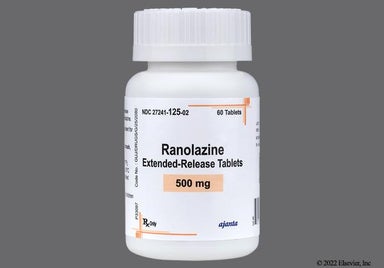
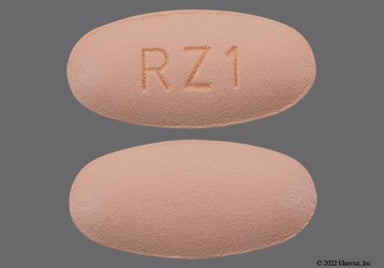
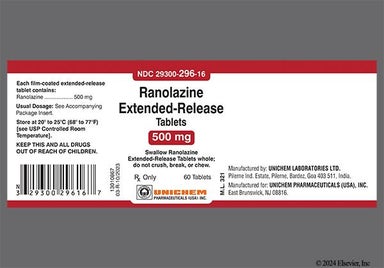
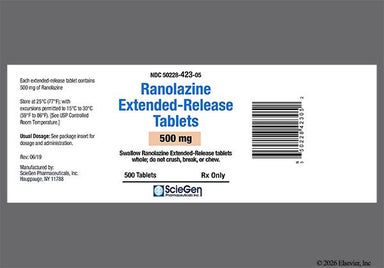
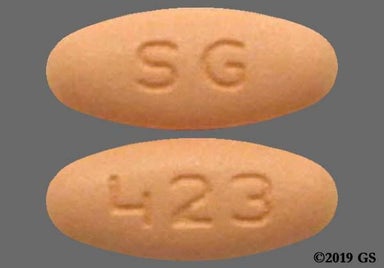
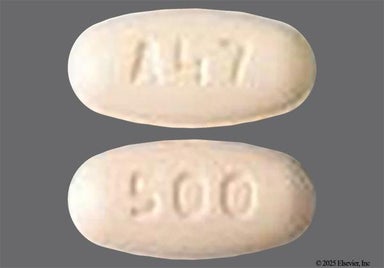
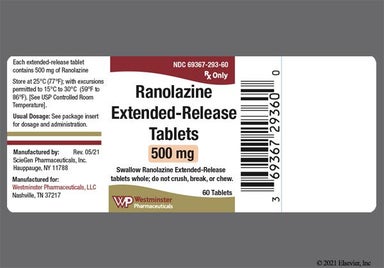
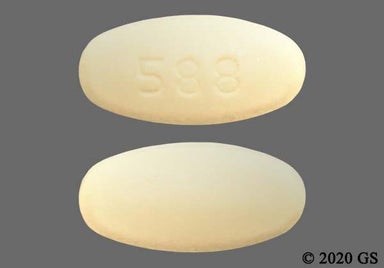
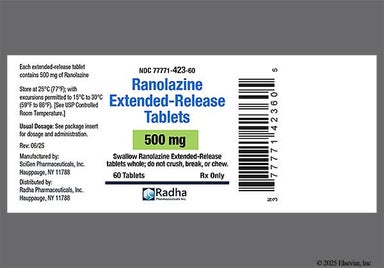
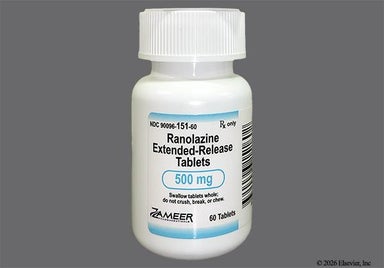
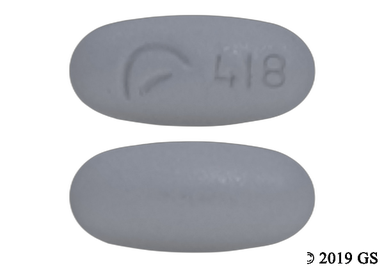
Ranolazine images