



How Much Is Prolensa Without Insurance?
Without insurance, Prolensa can cost around $450 for a 3 mL bottle. Learn more about how much Prolensa costs without insurance and ways to save with GoodRx.
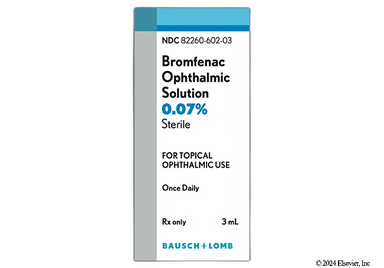
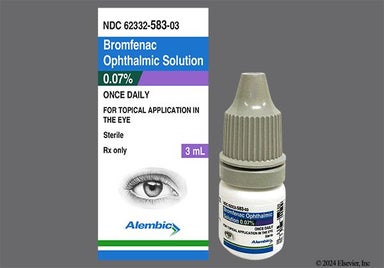
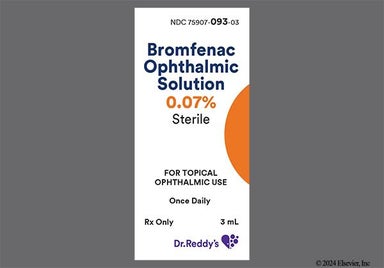
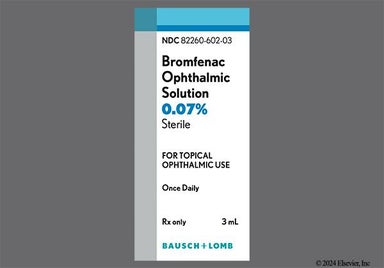
Bromfenac is a prescription eye drop. It helps relieve eye pain and inflammation after adults get cataract surgery. It works as a nonsteroidal anti-inflammatory drug (NSAID). Bromfenac is available in a few strengths: 0.07% (brand name Prolensa and generic) and 0.09% (generic only). The usual dose is 1 drop in the affected eye once a day, starting the day before surgery and continuing for 2 weeks after surgery. Side effects can include eye pain and blurry vision.

Bromfenac is a nonsteroidal anti-inflammatory drug (NSAID) that's used as an eye drop. It works by blocking a protein in your body that causes inflammation.
When you put bromfenac in your eye, it helps relieve eye pain, swelling, and inflammation. This is helpful for your eye to recover after cataract surgery.
| Common Brands | Prolensa |
|---|---|
| Drug Class | NSAID |
| Controlled Substance Classification | Not a controlled medication |
| Generic Status | Lower-cost generic available |
| Availability | Prescription only |

The following side effects may get better over time as your body gets used to the medication. Let your healthcare provider know immediately if you continue to experience these symptoms or if they worsen over time.
Contact your healthcare provider immediately if you experience any of the following.
Along with its needed effects, a medicine may cause some unwanted effects. Although not all of these side effects may occur, if they do occur they may need medical attention.
Check with your doctor immediately if any of the following side effects occur:
More common
Blurred vision
change in color vision
decreased vision or other changes in vision
difficulty seeing at night
red, sore eyes
sensitivity to light
tearing
Some side effects may occur that usually do not need medical attention. These side effects may go away during treatment as your body adjusts to the medicine. Also, your health care professional may be able to tell you about ways to prevent or reduce some of these side effects. Check with your health care professional if any of the following side effects continue or are bothersome or if you have any questions about them:
More common
Abnormal sensation in the eye
burning or stinging of the eye
feeling of having something in the eye
headache
itching of the eyes
Other side effects not listed may also occur in some patients. If you notice any other effects, check with your healthcare professional.
Call your doctor for medical advice about side effects. You may report side effects to the FDA at 1-800-FDA-1088.




Bromfenac can cause some serious health issues. This risk may be even higher for certain groups. If this worries you, talk to your doctor or pharmacist about other options.
Bromfenac 0.07% and 0.09% eye drops contain sulfite. This inactive ingredient can sometimes cause allergic reactions in certain people at risk. Tell your prescriber if you know you're allergic or sensitive to sulfites. Keep in mind that people with asthma might be more likely to be sensitive to sulfites.
Also let your prescriber know if you've ever had a reaction to aspirin or other NSAIDs. It's possible that you might have a similar reaction to bromfenac.
Stop using bromfenac and get medical help right away if you have an allergic reaction to the medication. Watch for rash, hives, swelling around the eye or face, or trouble breathing.
Bromfenac eye drops can slow how fast your eye heals after cataract surgery. Your eye might heal even more slowly if you also need to use steroid eye drops, like prednisolone (Pred Forte). Talk to your eye specialist if you're worried about how your eye is healing.
Bromfenac can raise your risk of bleeding in your eye after eye surgery. Tell your eye specialist if you have a bleeding problem. Also tell them if you take medications that can make you more likely to bleed, such as blood thinners. Call your eye specialist if you notice blood spots on your eye, especially if you've just had eye surgery.
Bromfenac eye drops can cause problems with your cornea, the clear front part of your eye. They can include inflammation (called keratitis), corneal thinning, injury, or ulcers. In rare cases, these problems can affect your vision. Tell your eye specialist if you've had cornea problems or several eye surgeries in the past. They can help check your risk of these cornea problems.
Use bromfenac exactly as prescribed. Don't use it longer than prescribed before or after surgery. This helps lessen your risk of cornea problems. Call your optometrist or ophthalmologist right away if you notice changes in your vision, worse eye pain, or more eye irritation.
Bromfenac eye drops contain a preservative that can damage contact lenses. If you wear contact lenses, take them out each time before placing bromfenac drops in your eye. You'll need to wait at least 10 minutes before you put your contacts back in.


Although certain medicines should not be used together at all, in other cases two different medicines may be used together even if an interaction might occur. In these cases, your doctor may want to change the dose, or other precautions may be necessary. When you are taking this medicine, it is especially important that your healthcare professional know if you are taking any of the medicines listed below. The following interactions have been selected on the basis of their potential significance and are not necessarily all-inclusive.
Using this medicine with any of the following medicines is not recommended. Your doctor may decide not to treat you with this medication or change some of the other medicines you take.
Using this medicine with any of the following medicines is usually not recommended, but may be required in some cases. If both medicines are prescribed together, your doctor may change the dose or how often you use one or both of the medicines.
Using this medicine with any of the following medicines may cause an increased risk of certain side effects, but using both drugs may be the best treatment for you. If both medicines are prescribed together, your doctor may change the dose or how often you use one or both of the medicines.





Prescription savings
Stop paying too much for your prescriptions. Compare prices, get pharmacy coupons, and save up to 80%. Find expert answers to your health questions so you can make the best decisions for yourself and your family.
Health conditions
Medications & treatment
Access & affordability
Medication discounts


Yes, blurry vision is a possible side effect of using Bromfenac eye drops. Your vision might get blurry for a short time after you use them. Wait until your vision is clear before driving or doing anything that needs clear vision.
Most people use Bromfenac once a day for 2 weeks after cataract surgery. Follow your eye specialist's instructions if they tell you something different. If you still have eye pain, redness, or swelling after you finish treatment, reach out to your eye specialist. They can check your eye to make sure it's healing okay.
Prolensa and BromSite are both bromfenac eye drops used after cataract surgery. The main differences are their strength and how often you use them. Prolensa is bromfenac 0.07% and is used once a day. BromSite is bromfenac 0.075% and is used twice a day (morning and evening). Your eye specialist can help compare and decide which is right for you.
Generic Bromfenac 0.07% is the same medication as Prolensa. It has the same active ingredient and strength. Keep in mind that generic Bromfenac also comes in other strengths (0.075% and 0.09%). Because of this, always follow the directions for the product you were prescribed.
No, Bromfenac 0.07% and 0.09% eye drops don't contain sulfa. They do contain sulfite, but that's not the same thing as sulfa. That means that most people with a sulfa allergy can still use Bromfenac.
No, you don't need to refrigerate Bromfenac. Keep Bromfenac at room temperature between 59ºF and 77ºF.
