Key takeaways:
Relaxing activities — like listening to music, meditating, or reading a book — can clear your mind and help you prepare for sleep.
If you can't get comfortable before bed, try taking a warm bath or practicing progressive muscle relaxation to help your body unwind.
While it is common to have occasional sleepless nights, it's important to notify your healthcare provider about any persistent sleep problems.
If you've ever had trouble falling asleep, you know that tossing and turning can be incredibly frustrating. You might feel exhausted and wide awake at the same time. And with every passing minute, you can't help but count down until your alarm goes off.
Fortunately, there are a few things you can try that don't involve counting sheep. These research-backed relaxing activities could be just what you need to get some sleep.
What activities can you do to relax and fall asleep?
Juggling work, school, and family responsibilities can make it hard to wind down at the end of the day. But a healthy bedtime routine might help you avoid sleepless nights. You can start with sleep hygiene tips, like having a consistent bedtime and avoiding alcohol before bed. Then, consider these relaxing activities designed to calm your mind and body and help you fall asleep.
Search and compare options
1. Listen to music
If you can't turn off your thoughts before bed, music can help you zone out. It has the power to reduce stress, relieve pain, and improve mood. In one study, 54% of people said that listening to music helped them fall asleep faster. Many study participants reported feelings of mental and physical relaxation or distraction, allowing them to fall asleep more seamlessly.
There isn't a definitive rule about the best type of music to listen to when trying to fall asleep. In a 2023 study, researchers analyzed more than 130,000 songs from sleep playlists on Spotify. They found that ambient music with lower tempos promotes relaxation. But people included a variety of song genres, tempos, and rhythms in their sleep playlists. This suggests that song preference and familiarity — no matter the genre or tempo — is important.
You can craft a sleep playlist based on your musical taste. Resting heart rates typically fall between 60 to 100 beats per minute. So, your favorite low to mid-tempo songs might be a good place to start.
2. Curl up with a book
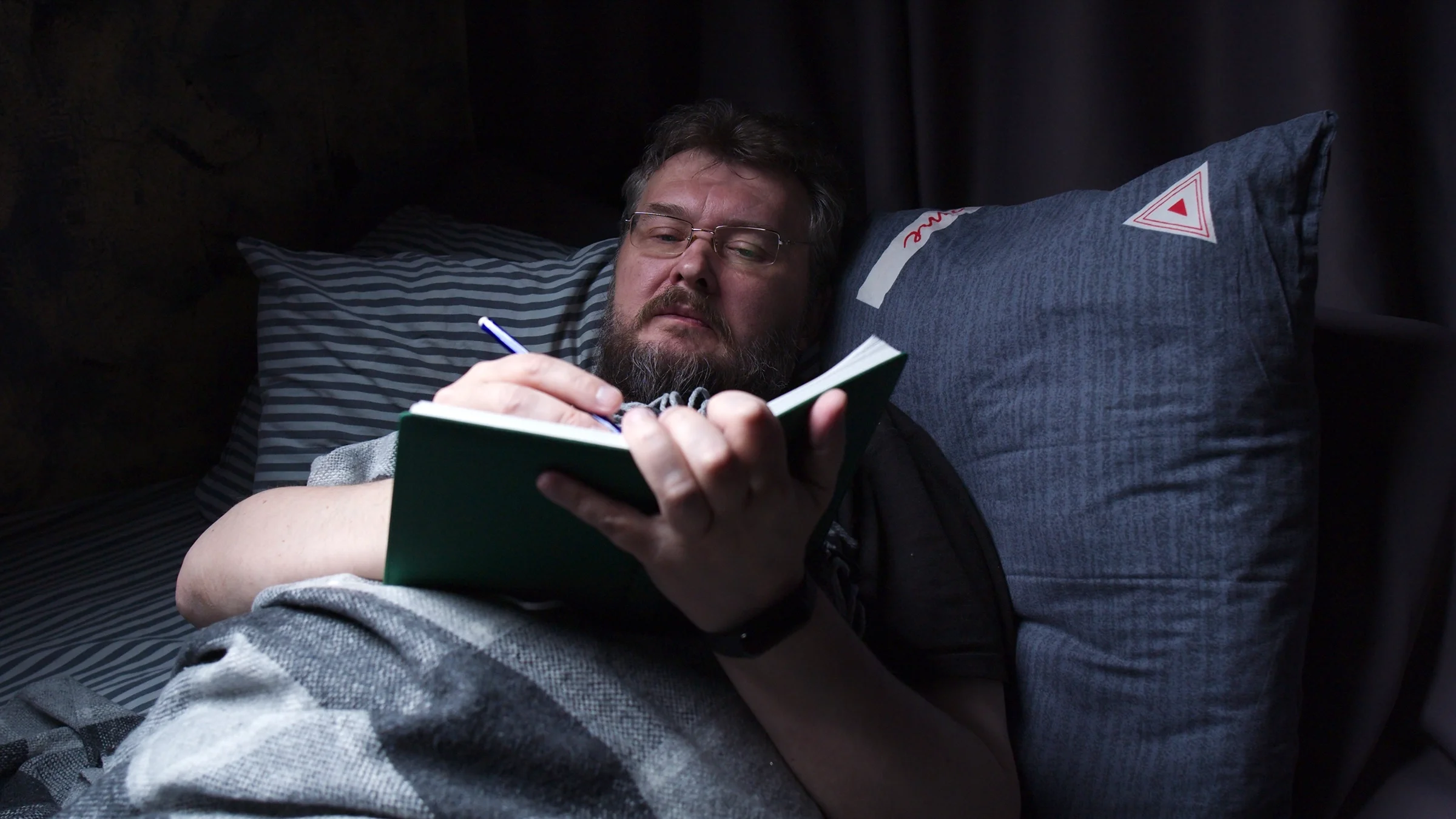
Too much exposure to blue light — whether it's from the sun or electronic devices — can disrupt your sleep. So, limiting screen time before bed could lead to a better night's sleep. There may be no better way to do that than curling up with a good book. One study found that reading a book before falling asleep improved sleep quality compared to a control group. Just 30 minutes of reading might be enough to lower your stress and help you relax.
3. Practice meditation
Mindfulness meditation may support emotional well-being. The practice helps you let go of thoughts and judgments as you focus on the present moment. So if racing thoughts stop you from falling asleep, meditation could be a helpful tool.
It may help people with sleep disorders like chronic insomnia get better sleep. One study found that practicing an 11-minute yoga meditation for 30 days reduced stress, improved sleep quality, and promoted better well-being.

Read more like this
Explore these related articles, suggested for readers like you.



There are many ways to practice mindfulness meditation. But it doesn't have to be daunting. You can use these steps to ease into a sitting meditation before bed:
Make time to meditate. You can start small with a 3 to 5-minute meditation at the same time every night.
Take a seat in a comfortable chair or cushion in a quiet room where you can be alone.
Focus on one calming point. Try repeating a positive word or phrase or focusing on your breath.
Relax. Don't worry about how you "should" feel. It's Ok if your mind wanders. Take a moment and slowly refocus your attention.
4. Give deep breathing a try
Deep breathing can soothe your body and mind after a long day. It activates the parasympathetic nervous system, which helps you relax. Physical changes like a slower heart rate and lower blood pressure make it easier to calm down and rest. Slow, deep breathing exercises can be an effective way to manage stress and anxiety. And they have been used as a complementary tool to help treat insomnia.
Experts recommend different types of breathing exercises for better sleep. So it may take some trial and error to find which ones work for you.
To start, you can give box breathing a try:
Inhale slowly through your nose, counting to 4 seconds.
Hold your breath for 4 seconds.
Slowly exhale through your mouth for 4 seconds.
Hold your breath for 4 seconds.
Repeat the process as needed.
5. Try progressive muscle relaxation
Progressive muscle relaxation involves tensing and relaxing muscle groups to relieve physical tension and lessen mental stress and anxiety. The technique may support better sleep. It's been shown to enhance sleep quality for people with COPD, multiple sclerosis, and chronic tension headaches.
Find a quiet spot to sit or lie down when you're ready to try progressive muscle relaxation. You can use a script as a guide. Here's one way to practice the technique:
Take some deep breaths and start at the top of your body, working your way up one muscle group at a time.
Tense each muscle group for 10 seconds and then release.
After releasing, take a few moments to breathe and notice how that muscle group feels before moving on to the next.
6. Do some yoga poses
Yoga is a mind-body practice with proven health benefits like lowering stress, reducing symptoms of depression, and easing chronic pain. All of these benefits can affect your ability to relax. The combination of movement, deep breathing, and meditation could help you catch some Zs.
Research suggests that yoga can improve sleep for:
People with sleep troubles, including insomnia
Prenatal and post-menopausal women
People with restless leg syndrome
But not all yoga is created equally. While some practices may help you fall asleep, others could do the opposite. Try slow or restful styles like hatha yoga or yoga nidra. And start with gentle poses for sleep.
7. Take a warm bath or shower
As the day winds down, your body temperature lowers to prepare for sleep. So, taking a warm bath or shower 1 to 2 hours before bed can help your body naturally settle into this cool-down period, making it easier to fall asleep.
Make sure your space is set up for sleep before hopping into a bath or shower. Going from a warm bath to a stimulating environment can be counterproductive. So, set yourself up for success by creating a comfortable sleep environment to settle into afterward.
When should you see a doctor for sleep problems?
Everything from stress to a late-night meal can disrupt your sleep. Occasional sleeplessness might not be a cause for concern. But talk to your healthcare provider if:
You have trouble falling or staying asleep 3 or more nights a week.
You don't feel refreshed when you wake up.
You often wake up earlier than you would like to.
You usually feel tired during the day, even if you got more than seven hours of sleep the night before.
You have difficulty staying awake or fall asleep during daily activities.
The bottom line
It can be hard to fall asleep sometimes. But next time you find yourself watching the clock or tossing and turning all night, try listening to soothing music or practicing deep breathing. These relaxing activities can calm your body and mind. And they're not just helpful in a pinch. You can add meditation or gentle yoga poses to your nighttime routine for better sleep.
Many people have trouble sleeping once in a while. But talk to your doctor about any persistent sleep problems.

Why trust our experts?




References
Aalbers, S., et al. (2017). Music therapy for depression. Cochrane Database of Systematic Reviews.
Afonso, R. F., et al. (2012). Yoga decreases insomnia in postmenopausal women. Menopause.
Arthritis Foundation. (n.d.). Progressive muscle relaxation.
Chegeni, P. S., et al. (2018). The effect of progressive muscle relaxation on the management of fatigue and quality of sleep in patients with chronic obstructive pulmonary disease: A randomized controlled clinical trial. Complementary Therapies in Clinical Practice.
Dayapoğlu, N., et al. (2012). Evaluation of the effect of progressive relaxation exercises on fatigue and sleep quality in patients with multiple sclerosis. Journal of Alternative and Complementary Medicine.
Field, T., et al. (2012). Tai chi/yoga reduces prenatal depression, anxiety and sleep disturbances. Complementary Therapies in Clinical Practice.
Finucane, E., et al. (2021). Does reading a book in bed make a difference to sleep in comparison to not reading a book in bed? The People’s Trial—An online, pragmatic, randomised trial. Trials.
Gopichandran, L., et al. (2021). Effectiveness of progressive muscle relaxation and deep breathing exercise on pain, disability, and sleep among patients with chronic tension-type headache. Holistic Nursing Practice.
Haghayegh, S., et al. (2019). Before-bedtime passive body heating by warm shower or bath to improve sleep: A systematic review and meta-analysis. Sleep Medicine Reviews.
Halpern, J., et al. (2014). Yoga for improving sleep quality and quality of life for older adults. Alternative Therapies.
Hamzeh, Y., et al. (2022). Best breathing exercises for sleep. Sleep Foundation.
Harding, E. C., et al. (2020). Sleep and thermoregulation. Current Opinion in Physiology.
InformedHealth.org. (2017). Insomnia: Relaxation techniques and sleeping habits. Institute for Quality and Efficiency in Health Care.
Innes, K. E., et al. (2013). Efficacy of an eight-week yoga intervention on symptoms of restless legs syndrome (RLS): A pilot study. Journal of Alternative and Complementary Medicine.
Jerath, R., et al. (2015). Self-regulation of breathing as a primary treatment for anxiety. Applied Psychophysiology and Biofeedback.
Jerath, R., et al. (2018). Self-regulation of breathing as an adjunctive treatment of insomnia. Frontiers in Psychiatry.
Lee, J. H. (2016). The effects of music on pain: A meta-analysis. Journal of Music Therapy.
Moszeik, E. N., et al. (2020). Effectiveness of a short Yoga Nidra meditation on stress, sleep, and well-being in a large and diverse sample. Current Psychology.
Ong, J. C., et al. (2014). A randomized controlled trial of mindfulness meditation for chronic insomnia. Sleep.
Pacheco, D., et al. (2022). How to talk to your doctor about your sleep. Sleep Foundation.
Pandi-Perumal, S. R., et al. (2022). The origin and clinical relevance of yoga nidra. Sleep Vigil.
Rizzolo, D., et al. (2009). Stress management strategies for students: The immediate effects of yoga, humor, and reading on stress. Journal of College Teaching and Learning.
Rusch, H. L., et al. (2018). The effect of mindfulness meditation on sleep quality: A systematic review and meta-analysis of randomized controlled trials. Annals of the New York Academy of Sciences.
Russo, M. A., et al. (2017). The physiological effects of slow breathing in the healthy human. Breathe.
Scarratt, R. J., et al. (2023). The audio features of sleep music: Universal and subgroup characteristics. PLOS One.
Tan, X., et al. (2012). The interplay of preference, familiarity and psychophysical properties in defining relaxation music. Journal of Music Therapy.
Therapist Aid, LLC. (2017). Progressive muscle relaxation script.
Tindle, J., et al. (2022). Neuroanatomy, parasympathetic nervous system. StatPearls.
Toussaint, L., et al. (2021). Effectiveness of progressive muscle relaxation, deep breathing, and guided imagery in promoting psychological and physiological states of relaxation. Evidence-Based Complementary and Alternative Medicine.
Trahan, T., et al. (2018). The music that helps people sleep and the reasons they believe it works: A mixed methods analysis of online survey reports. PLOS One.
Wahl, S., et al. (2019). The inner clock—Blue light sets the human rhythm. Journal of Biophotonics.
Wang, W., et al. (2020). The effect of yoga on sleep quality and insomnia in women with sleep problems: A systematic review and meta-analysis. BMC Psychiatry.
Wang, X., et al. (2019). The effect of mind-body therapies on insomnia: A systematic review and meta-analysis. Evidence-Based Complementary and Alternative Medicine.
Zaccaro, A., et al. (2018). How breath-control can change your life: A systematic review on psycho-physiological correlates of slow breathing. Frontiers in Human Neuroscience.