Key takeaways:
Watermelon can be a good food to include in a weight-loss plan because it’s low in calories, filling, and hydrating.
You can eat watermelon on its own. But it will be better for your blood sugar if you pair it with foods containing protein and fat.
If you have diabetes, irritable bowel syndrome (IBS), or kidney disease, too much watermelon may lead to side effects or health problems.
Watermelon is a summer staple. It’s juicy, refreshing, and naturally sweet — so it can feel like a treat. But some people worry about its sugar content. So when it comes to weight loss, is it good or bad? Let’s take a closer look at whether it can support your weight-loss goals.
What are the benefits of watermelon for weight loss?
Some studies have looked specifically at watermelon and weight loss — but these studies are small and don’t provide high-quality evidence.
For example, in one study, people who ate 2 cups of watermelon each day reported feeling more full than those who ate a low-fat cookie with the same number of calories. They also lost weight, while the group who ate the low-fat cookie gained weight during the study. Participants who ate watermelon also had improved blood pressure and cholesterol levels.
But this study was funded by the National Watermelon Promotion Board. While that doesn’t mean the findings are untrue, it does mean there’s a high risk of bias. Other studies on watermelon and weight loss are also funded by companies within the watermelon industry.
Still, watermelon has certain known qualities that may help with weight loss. Here are some ways watermelon may support your weight goals.
Helps you feel full
Eating watermelon can help you feel full, so you may consume fewer calories overall. There are a few different reasons watermelon is so filling:
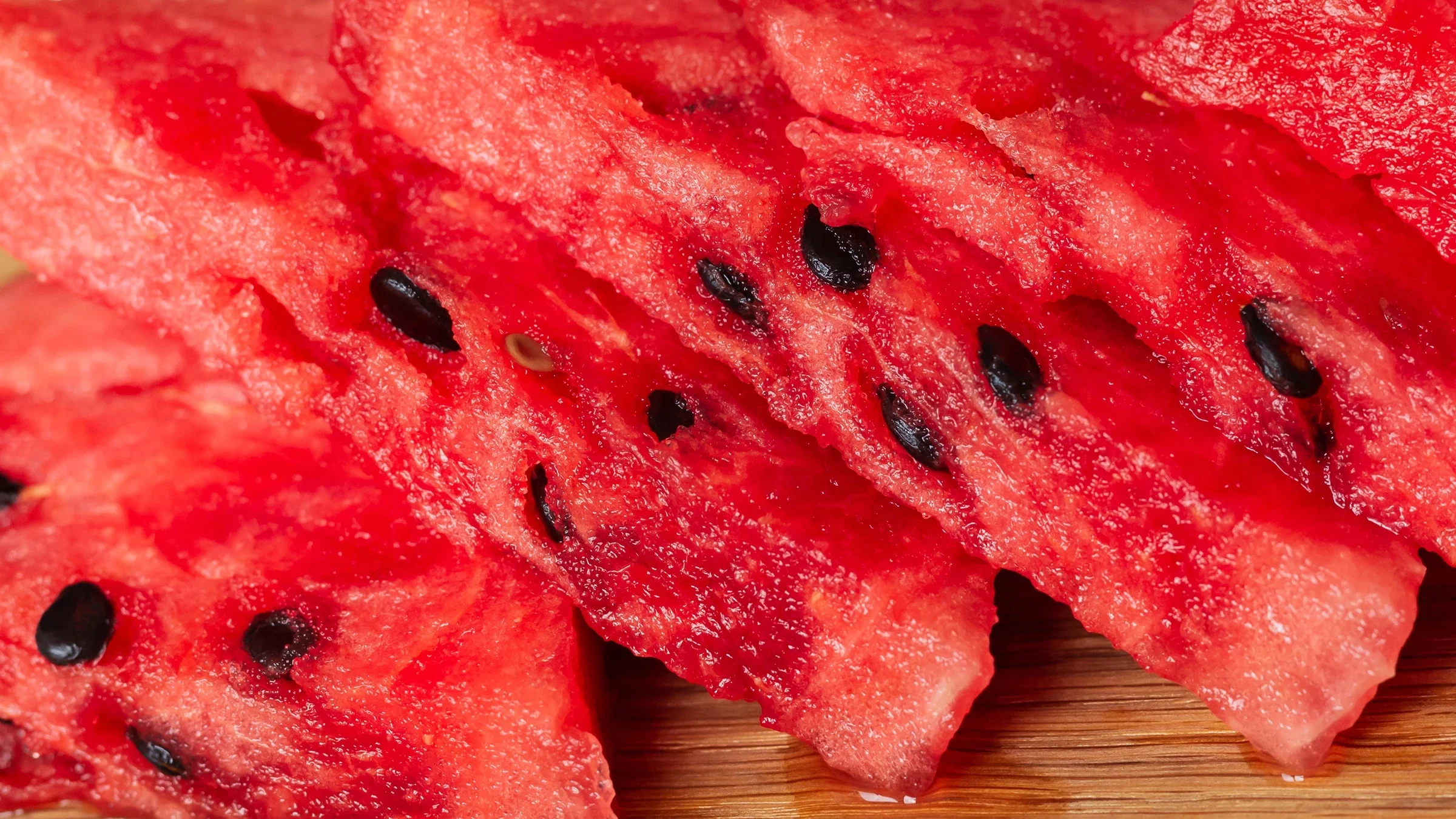
It’s mostly water. Watermelon is about 91% water, making it one of the most hydrating fruits. Foods with a high water content take up extra space in your stomach, which can help you feel more full after eating.
It contains fiber. Watermelon isn’t one of the highest-fiber fruits. But a cup of watermelon contains a small amount of fiber, which can contribute to feelings of fullness.
It takes time to eat. Because watermelon is bulky and juicy, it naturally slows down your eating. Eating more slowly at meals and snacks can help you feel more satisfied afterward. On a related note, spending more time chewing may be linked to the release of gut hormones that signal fullness.
Low in calories
Most fruits are low in calories and can help with weight loss. But watermelon stands out because it has even fewer calories than most other fruits. So you can eat a larger volume of watermelon for fewer calories.
High in antioxidants
Watermelon contains many powerful antioxidants, especially lycopene. Research suggests that lycopene may help protect against conditions like heart disease, stroke, and Type 2 diabetes. Lycopene and other antioxidants may also support weight loss by:
Reducing inflammation in the body
Helping your body burn fat
Helping regulate hormones that influence appetite and weight
Keeps you hydrated
The fluid in watermelon might do more than fill you up. It may also support weight loss by helping to regulate hunger hormones. When you’re dehydrated, your body can produce more ghrelin, the hormone that signals hunger. This can make you feel hungry when you’re actually thirsty. As a result, you might reach for a snack when what your body really needs is water.
To be clear, we’re not suggesting you drink water instead of eating food when your body truly needs calories and nourishment. This is why a food like watermelon can be a good choice, since it provides both energy and hydration.
Can satisfy a sweet tooth
Watermelon has a sugary taste, making it a great stand-in for ice cream or other high-sugar frozen treats. Watermelon’s sweetness comes from natural sugars, not the added sugars or artificial sweeteners commonly found in ultra-processed foods. The sugar in whole fruit (fructose) is an important part of a balanced diet because it comes along with water, fiber, vitamins, and antioxidants. Science is uncovering how sugars from fruit don’t seem to lead to weight gain as much as added sugars do.
Watermelon nutrition facts
Below are some of the nutrients in 1 cup of watermelon.
Calories | 46 |
Fat | 0.23 g |
Carbohydrates | 11.6 g |
Protein | 1 g |
Fiber | 0.6 g |
Vitamin C | 12.5 mg (14% of the daily value, or DV) |
Vitamin B5 | 0.34 mg (7% DV) |
Vitamin A | 43 mcg (5% DV) |
Potassium | 172.5 mg (4% DV) |
Is there a downside to eating watermelon for weight loss?
Watermelon is nutritious, but as with any food, you should eat it in moderation to steer clear of:
Excess sugar: Watermelon contains natural fruit sugar, not added sugar. Still, watermelon has a high glycemic index (GI). Foods with a high GI cause your blood sugar to rise quickly after eating.
Digestive issues: Watermelon is high in FODMAPs (fermentable oligosaccharides, disaccharides, monosaccharides, and polyols). These are carbohydrates that can be difficult for some people to digest.
Who should avoid watermelon for weight loss?
You might want to limit your watermelon intake if you have:
Irritable bowel syndrome (IBS): If you have IBS, you may feel better eating low-FODMAP foods. High-FODMAP foods like watermelon may trigger symptoms like bloating, gas, and abdominal discomfort.
Diabetes: Low-glycemic fruits like apples, blackberries, and strawberries will do a better job at keeping your blood sugar stable.
Chronic kidney disease (CKD): Watermelon contains a moderate amount of potassium, a mineral processed by the kidneys. For this reason, the National Kidney Foundation recommends limiting intake to 1 cup/day if you have elevated potassium levels.
How to eat watermelon for weight loss
There are so many ways to enjoy watermelon — including snacking on slices as is. But you can also try:
Grilling it for a smokey flavor
Adding it to salsa
Blending it with lime juice and natural sweetener to make sorbet
Tossing it with mint and feta cheese for a refreshing fruit salad
Blending it into soup, such as gazpacho (a cold, blended soup)
Like most fruits, watermelon doesn’t contain much protein. So you can make a filling snack by pairing watermelon with protein- and fat-containing foods like nuts, seeds, Greek yogurt, and cottage cheese. This slows digestion and keeps you full longer. It will also help regulate your blood sugar.
Frequently asked questions
There isn’t a single “best” fruit for weight loss. In general, the most helpful fruits for weight loss are low in calories, and high in fiber and water. Examples are apples, blueberries, and pears. Avocado can also be a good fruit for weight loss — but for different reasons. Although it’s a fruit, it’s higher in calories because of its nutritious fat and protein, both of which are filling.
Watermelon juice isn’t a magic drink. But it can fit into a weight-loss plan, especially if you drink it in place of high-calorie drinks like soda. Watermelon juice without added sugar is low-calorie, hydrating, and naturally sweet. But unlike whole watermelon, it doesn’t contain fiber. If weight loss is your goal, eat whole watermelon instead of juice — you’ll get a bit of fiber and feel fuller.
Yes, there are carbs in watermelon in the form of natural sugar. A cup of watermelon contains 11.6 g of carbohydrates.
There isn’t a single “best” fruit for weight loss. In general, the most helpful fruits for weight loss are low in calories, and high in fiber and water. Examples are apples, blueberries, and pears. Avocado can also be a good fruit for weight loss — but for different reasons. Although it’s a fruit, it’s higher in calories because of its nutritious fat and protein, both of which are filling.
Watermelon juice isn’t a magic drink. But it can fit into a weight-loss plan, especially if you drink it in place of high-calorie drinks like soda. Watermelon juice without added sugar is low-calorie, hydrating, and naturally sweet. But unlike whole watermelon, it doesn’t contain fiber. If weight loss is your goal, eat whole watermelon instead of juice — you’ll get a bit of fiber and feel fuller.
Yes, there are carbs in watermelon in the form of natural sugar. A cup of watermelon contains 11.6 g of carbohydrates.
The bottom line
Watermelon can be a great food to include in a weight-loss plan since it can fill you up for very few calories. And since it’s so sweet and refreshing, you can swap it in for high-calorie desserts when you’re craving something sugary. But watermelon is high in natural sugars, so enjoy it in moderation. Whether your goal is weight loss or not, watermelon can be an excellent — and delicious — part of a balanced diet.

Why trust our experts?




References
Almoraie, N. M., et al. (2024). The potential effects of dietary antioxidants in obesity: A comprehensive review of the literature. Healthcare.
Davy, B. M., et al. (2025). Water intake, hydration, and weight management: the glass is half-full! Physiology & Behavior.
Harris, W. (2024). Influence of hydration on appetite and caloric intake. Journal of Nutrition & Weight Loss.
Hawton, K., et al. (2018). Slow down: Behavioural and physiological effects of reducing eating rate. Nutrients.
Lum, T., et al. (2019). Effects of fresh watermelon consumption on the acute satiety response and cardiometabolic risk factors in overweight and obese adults. Nutrients.
Miquel-Kergoat, S., et al. (2015). Effects of chewing on appetite, food intake and gut hormones: A systematic review and meta-analysis. Physiology & Behavior.
MyFoodData. (n.d.). Watermelon.
National Kidney Foundation. (2023). Potassium in your CKD diet.
U.S. Food and Drug Administration. (2026). Added sugars on the nutrition facts label.