Key takeaways:
Many people think of garlic as an herb, but it’s a root vegetable and part of the allium family.
Garlic has many benefits for your health. Its antibacterial properties may help slow the growth of microorganisms that can make you sick. And garlic supports gut health, heart health, and blood sugar.
Garlic is a common trigger for heartburn and gastrointestinal (GI) symptoms for some people.
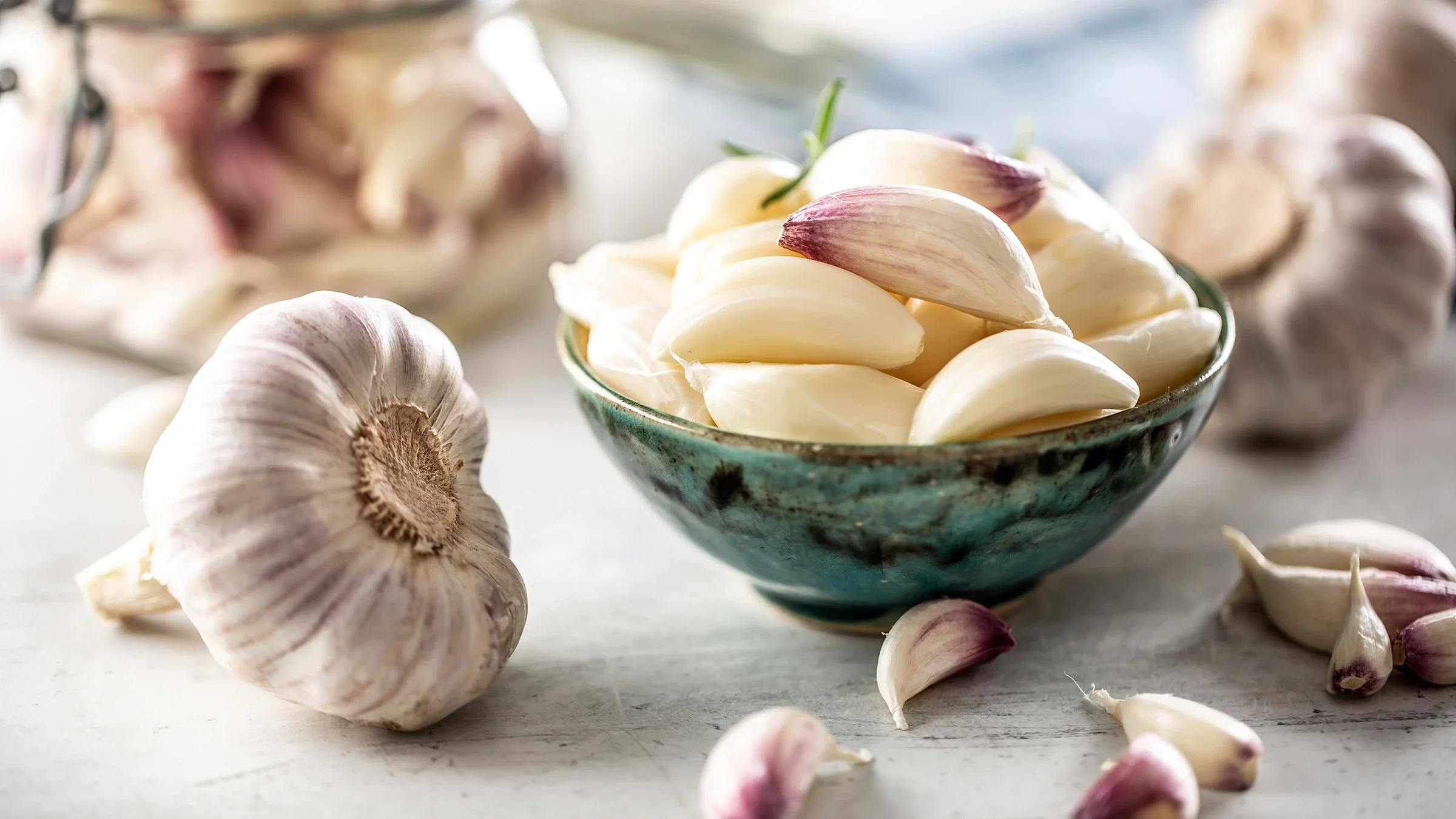
Known for its potent smell and taste, garlic is a beloved staple in cuisines around the world. Though it’s often considered an herb, garlic is a root vegetable in the allium family — along with onions, leeks, and chives. You might not realize that garlic is more than an all-star food; it’s also rich in nutrients that can benefit your health. That’s why cultures have used it as medicine for thousands of years.
Here are some of the standout benefits of garlic.
1. Helps prevent illness
The sulfur compounds in garlic have antibacterial properties. That means that garlic can kill or slow the growth of microorganisms that might otherwise make you sick. Garlic also has antifungal and antiviral properties.
What’s more, garlic activates your body’s immune response. It stimulates the production of antibodies and immune cells that can help your body heal. So, this is another way that garlic might prevent you from getting sick as often. Research has also found that garlic may help you experience less-severe symptoms and recover faster.
2. Supports gut health
Garlic is a natural source of prebiotics. Prebiotics are indigestible fibers from carbohydrates that serve as food for the healthy bacteria in your gut. By helping these bacteria thrive and do their job, prebiotic foods play an important role in gut health.
Garlic's antimicrobial properties also help prevent the growth of harmful microorganisms that could otherwise lead to dysbiosis, an imbalance of healthy versus harmful bacteria in your gut.
3. Prevents blood clots
The compounds in garlic may help prevent blood clots from forming. In one study, participants ate a clove of garlic (about 3 g) daily for 16 weeks. This led to an 80% decrease in thromboxane, a substance in blood that causes blood clotting. Another way garlic may help prevent blood clotting is by preventing platelets from clumping together.
4. Fights inflammation
Garlic contains antioxidants. Antioxidants are nutrients that protect your body’s cells from damage. This damage can increase your risk for chronic conditions, like heart disease and cancer.
Antioxidants also have anti-inflammatory properties. By reducing chronic inflammation in your body, garlic’s antioxidants protect many aspects of your health. That’s because chronic inflammation plays a role in several conditions, including:
Heart disease
Arthritis
Diabetes
Cancer
Alzheimer’s disease
Allergies
Irritable bowel syndrome (IBS)
Irritable bowel disease (IBD)
5. Regulates blood sugar
Garlic’s sulfur compounds — including its main compound, called allicin — may help regulate blood sugar levels.
Studies have shown that garlic improves fasting blood sugar levels in people with diabetes. Garlic may also improve hemoglobin A1C. This is a marker of longer-term blood sugar control. One study had participants with Type 2 diabetes consume 0.05 g to 1.5 g of garlic per day — less than half of a standard-sized garlic clove. After 12 weeks and 24 weeks, participants had a significant reduction in A1C levels. This may be because garlic improves the way your body responds to insulin, the hormone that helps regulate your blood sugar.
6. Supports heart health
Garlic may support your heart health in many ways.
Research suggests that the allicin in garlic may decrease total cholesterol, “bad” LDL (low-density lipoprotein) cholesterol, and triglycerides.
Garlic may also improve blood pressure. This may be because allicin helps blood vessels relax. A large analysis suggests that garlic may lower blood pressure in people with and without high blood pressure. But many of these studies note that this benefit was seen when people took garlic supplements, rather than fresh garlic. More studies are needed to clarify the garlic form and dosage required to achieve blood pressure benefits.
Garlic is also a salt-free way to flavor food. If garlic helps you use less salt on your food, this can also help your blood pressure.
7. May have anticancer properties
Lab research suggests that allicin and the other sulfur compounds in garlic may have anticancer properties. But there isn’t evidence that taking garlic supplements lowers your risk for cancer. The American Institute for Cancer Research (AICR) has stated that clinical human studies are needed to understand garlic’s role in cancer risk.
Garlic nutrition
If you look at a nutrition label on fresh garlic, you won’t see too much. A single clove of garlic (one segment of the bulb) has:
4 calories
1 g carbohydrates
Trace amounts of vitamin C, selenium, and certain B vitamins
Garlic has almost zero protein, fat, or fiber.
The main nutrition in garlic comes from nutrients that aren’t named on food labels. Examples are prebiotics, sulfur compounds, and antioxidants.
Who should limit or avoid garlic?
Despite the many health benefits of garlic, it has some downsides, including:
Gastrointestinal (GI) issues: Garlic contains FODMAPs (fermentable oligosaccharides, disaccharides, monosaccharides, and polyols) — carbohydrates that can be difficult for some people to digest. Eating high-FODMAP foods like garlic can cause symptoms, like bloating, gas, and diarrhea, especially if you have irritable bowel syndrome (IBS).
Heartburn: Garlic is a common trigger food for heartburn and gastroesophageal reflux disorder (GERD).
Bad breath: The sulfur compounds in garlic can give breath a strong, unpleasant odor. The smell of garlic on your breath or skin can linger for up to 2 days. This is usually more pronounced with raw garlic, rather than cooked garlic, since cooked garlic contains fewer sulfur compounds.
Increased risk of bleeding: Garlic helps prevent blood from clotting. For this reason people on blood thinning medications should avoid taking high amounts of garlic. This applies to garlic supplements, not the garlic in food.
When it comes to how much is too much garlic, there are no official guidelines. Most people can aim to consume one to two cloves of garlic per day. Some people may discover they can eat much more than this with no issues. But others may experience side effects.
How to use garlic
There are many food forms of garlic, such as:
Raw
Minced
Crushed
Frozen
Powdered
Oils
All of these food forms of garlic are highly versatile. You can use them in sauces, dressings, and stir-fries. Garlic’s uses are endless.
As far as which food form of garlic offers the most benefits, it’s not clear. Research has found benefits in multiple forms of garlic. It’s possible that the amount you consume — and how often you consume it — matters more than the form it’s in.
Garlic supplements vs. fresh garlic
You can also take garlic as a supplement in pill or liquid form. Supplements typically provide a much larger dose of allicin — and possibly the other compounds in garlic as well — compared to fresh garlic. Supplements may be particularly helpful if you’re using garlic for a specific therapeutic purpose, such as supporting cholesterol or blood pressure.
There’s not a one-size-fits-all supplement dosage. It depends on what you’re trying to treat. Research has found different doses of garlic to be beneficial for different things.
Frequently asked questions
Garlic plays an indirect role in detoxing the body. Your liver, kidneys, and digestive system work around the clock to process and get rid of toxins, like drugs, alcohol, and heavy metals. And the nutrients in garlic support these organs to help them function well.
The 10-minute garlic rule says that when you chop or crush garlic, you should try to wait for about 10 minutes before cooking it. That’s because an enzyme in garlic called alliinase (a precursor to allicin) is sensitive to heat. This means it loses some of its health benefits when cooked. But, if you let cut garlic sit before cooking, it’ll keep more alliinase. The allicin that develops is responsible for many of garlic’s health benefits.
Consuming garlic may provide benefits for sexual health for both men and women. Studies in men suggest the antioxidants in garlic may enhance fertility, increase testosterone levels, and help erections. In women, garlic may help improve both premenstrual syndrome (PMS) and hormonal balance, both of which can help boost sex drive.
Garlic plays an indirect role in detoxing the body. Your liver, kidneys, and digestive system work around the clock to process and get rid of toxins, like drugs, alcohol, and heavy metals. And the nutrients in garlic support these organs to help them function well.
The 10-minute garlic rule says that when you chop or crush garlic, you should try to wait for about 10 minutes before cooking it. That’s because an enzyme in garlic called alliinase (a precursor to allicin) is sensitive to heat. This means it loses some of its health benefits when cooked. But, if you let cut garlic sit before cooking, it’ll keep more alliinase. The allicin that develops is responsible for many of garlic’s health benefits.
Consuming garlic may provide benefits for sexual health for both men and women. Studies in men suggest the antioxidants in garlic may enhance fertility, increase testosterone levels, and help erections. In women, garlic may help improve both premenstrual syndrome (PMS) and hormonal balance, both of which can help boost sex drive.
The bottom line
Garlic is more than a beloved, versatile food. It’s also an excellent source of antioxidants that may help lower cholesterol, support gut health, and prevent blood clots. People who are sensitive to high-FODMAP foods may want to limit garlic. The same applies to those prone to heartburn, or people on blood-thinning medications. But, for most people, eating a clove or two of garlic per day can be both good for your health and delicious.

Why trust our experts?




References
Abe, K., et al. (2019). Volatile compounds of fresh and processed garlic. Experimental and Therapeutic Medicine.
Ali, M., et al. (1995). Consumption of a garlic clove a day could be beneficial in preventing thrombosis. Prostaglandins, Leukotrienes, and Essential Fatty Acids.
American Institute for Cancer Research. (2021). Garlic: Lab studies find potential cancer-preventive compounds.
Ansary, J., et al. (2020). Potential health benefit of garlic based on human intervention studies: A brief overview. Antioxidants.
Arulselvan, P., et al. (2016). Role of antioxidants and natural products in inflammation. Oxidative Medicine and Cellular Longevity.
Bachrach, Z. Y. (2025). Garlic as a medicine throughout the ages (review). World Academy of Sciences Journal.
Bhat, G. S., et al. (2024). Prospective, randomized, placebo-controlled, two-arm study to evaluate the efficacy of coadministration of garlic as a hydrogen sulfide donor and tadalafil in patients with erectile dysfunction not responding to tadalafil alone – A pilot study. Indian Journal of Pharmacology.
Bhatwalkar, S. B., et al. (2021). Antibacterial properties of organosulfur compounds of garlic (Allium sativum). Frontiers in Microbiology.
Chowdhury, R. (2010). Garlic: A promising antidote to heavy metal toxicity. Food and Beverage Consumption and Health.
Drugs.com. (2024). Garlic.
Du, Y., et al. (2024). Garlic consumption can reduce the risk of dyslipidemia: A meta-analysis of randomized controlled trials. Journal of Health, Population and Nutrition.
Herdiana, Y. (2023). Functional food in relation to gastroesophageal reflux disease (GERD). Nutrients.
Jafari, F., et al. (2023). Therapeutic effects of garlic (Allium sativum) on female reproductive system: A systematic review. Heliyon.
Knight-Sepulveda, K., et al. (2015). Diet and inflammatory bowel disease. Gastroenterology & Hepatology.
Lim, W. Q., et al. (2022). Role of garlic in chronic diseases: Focusing on gut microbiota modulation. Progress in Microbes and Molecular Biology.
Lissiman, E., et al. (2014). Garlic for the common cold. The Cochrane Database of Systematic Reviews.
Mulawarman, R., et al. (2021). Garlic effect on reduce blood pressure and cholesterol in patients with and without hypertension: A systematic review and meta-analysis of randomized controlled trials. Journal of Hypertension.
Musavi, H., et al. (2018). Effect of garlic (Allium sativum) on male fertility: A systematic review. Journal of Herbmed Pharmacology.
My Food Data. (n.d.). Raw garlic (fresh).
Netzel, M. E. (2020). Garlic: Much more than a common spice. Foods.
Oregon State University. (2016). Garlic.
Pahwa, R., et al. (2023). Chronic inflammation. StatPearls.
Percival, S. S. (2016). Aged garlic extract modifies human immunity. The Journal of Nutrition.
Rahman, K. (2007). Effects of garlic on platelet biochemistry and physiology. Molecular Nutrition & Food Research.
Sahidur, M. R., et al. (2023). Garlic (Allium sativum) as a natural antidote or a protective agent against diseases and toxicities: A critical review. Food Chemistry Advances.
Sengupta, A., et al. (2004). Allium vegetables in cancer prevention: An overview. Asian Pacific Journal of Cancer Prevention.
Shabani, E., et al. (2019). The effect of garlic on lipid profile and glucose parameters in diabetic patients: A systematic review and meta-analysis. Primary Care Diabetes.
Singh, M. (2014). Science of stink: Blame sulfur compounds for your garlic breath. NPR.
Sleiman, C., et al. (2024). Garlic and hypertension: Efficacy, mechanism of action, and clinical implications. Nutrients.
Wang, J., et al. (2017). Effect of garlic supplement in the management of Type 2 diabetes mellitus (T2DM): A meta-analysis of randomized controlled trials. Food & Nutrition Research.
Zhang, Q., et al. (2022). Allium vegetables, garlic supplements, and risk of cancer: A systematic review and meta-analysis. Frontiers in Nutrition.