Key takeaways:
Like all fruits, blueberries provide fiber, vitamins, and minerals. Many of their health benefits come from their high antioxidant content.
Eating blueberries may support your heart, brain, and digestive health.
Both fresh and frozen blueberries are nutritious choices.
Blueberries are easy to love. They’re naturally sweet and refreshing, need little preparation, and can be used in many different ways.
Even though they’re tiny, blueberries are packed with nutrients that support your health — from your heart to your brain. Let’s take a closer look at how adding blueberries to your diet can benefit your health.
Why are blueberries good for you?
You may not be surprised to learn that blueberries are among the healthiest fruits. They’re packed with important nutrients, including fiber, which supports gut and overall health.
But blueberries’ “superpower” may be their antioxidants. Antioxidants are important because they help lower inflammation in your body. They do this by preventing oxidative stress, which happens when too many free radicals build up in your body.
By reducing oxidative stress, antioxidants decrease your risk for chronic conditions, including:
Cancer
Type 2 diabetes
Heart disease
Alzheimer’s disease
Parkinson’s disease
All fruits contain antioxidants, but blueberries stand out because they have especially high levels. In particular, they’re rich in anthocyanins, a type of flavonoid antioxidant. These compounds give blueberries their deep blue color. They also have strong anti-inflammatory effects.
Because of their antioxidants and other nutrients, blueberries have been the focus of a lot of research. Let’s take a closer look at the science.
1. Anti-cancer
Regularly eating blueberries may help reduce cancer risk, specifically colorectal cancer. Blueberries can increase antioxidant activity in your blood, which may help prevent DNA damage that can lead to cancer. The fiber in blueberries also contributes to a reduced cancer risk.
Blueberries may also play a role in future cancer treatments. Lab studies suggest that anthocyanins may help inhibit the growth of cancer cells. But more human research is needed to better understand the role of blueberries.
2. Heart health
Adding blueberries to your daily diet may support your heart in several important ways, including:
Lowering inflammation: The anthocyanins in blueberries may help reduce markers of inflammation. Chronic inflammation can damage blood vessels and contribute to plaque buildup over time.
Reducing blood pressure: Some studies suggest blueberries may slightly lower systolic blood pressure (the top number). It’s possible that blueberries increase nitric oxide, which helps blood vessels relax and widen.
Improving cholesterol: One study found that eating about 1 cup of blueberries each day improved “good” high-density lipoprotein (HDL) cholesterol in older adults with metabolic syndrome. More research is needed to confirm these effects in larger populations.
3. Brain health
Blueberries may support your brain in a few different ways, including:
Helping your brain form new connections, which supports memory and learning
Reducing your risk of dementia
Improving cognition
Reducing inflammation in your brain
For these reasons, berries are a key component of the MIND diet, an eating pattern with a special emphasis on supporting brain health.
4. Joint pain
The anti-inflammatory properties of blueberries may help with osteoarthritis. This is an inflammatory condition that causes joint pain from wear and tear over time. Osteoarthritis is common in the hands, knees, and neck.
In one study, adults with osteoarthritis ate freeze-dried blueberry powder every day for 4 months. The amount was equal to about 2 cups of fresh blueberries. They reported less pain and stiffness. But because the study used only powdered blueberries, it’s unclear whether fresh blueberries would provide the same benefits.
It’s also important to note that the study was funded by the U.S. Highbush Blueberry Council. This doesn’t mean the findings are untrue, but it does mean there’s a risk of bias. More research is needed.
5. Blood sugar
Blueberries can be good for blood sugar when eaten in moderation as part of a balanced diet.
Blueberries have a low glycemic index (GI) of 53. This means they don’t spike blood sugar as fast as some other foods. Instead, blueberries cause a slower, more gradual rise in blood sugar. In general, low-glycemic fruits (and other foods) are a better choice. This is especially true if you have diabetes or are watching your sugar intake.
The fiber in blueberries is partially responsible for this blood sugar benefit. That’s because fiber slows how quickly sugar enters your bloodstream. Anthocyanins also help by improving insulin sensitivity. This means your body’s cells can use sugar more effectively for energy.
A large review showed that blueberries may help improve blood sugar control in people with Type 2 diabetes. In these studies, participants ate frozen, freeze-dried, or powdered blueberries in different amounts. If you have diabetes, work with a dietitian to see how to add blueberries to your eating plan.
6. Gut health
Blueberries can also support your gut microbiome, which is the ecosystem of bacteria in your digestive tract. It plays an important role in digestion and immune health.
The anthocyanins in blueberries act as prebiotics. Prebiotics are fibers that feed healthy bacteria in your gut and help them do their job. A healthy balance of gut bacteria supports digestion and overall gut health.
Then, when prebiotic fibers reach your large intestine, they’re fermented. This process makes short-chain fatty acids (SCFAs), which travel throughout your body and may help to:
Reduce intestinal inflammation
Lower your risk of colon cancer
Help you feel full after a meal
Blueberries also contain both insoluble and soluble fiber, which help keep bowel movements regular.
7. Weight management
Anthocyanins may help with weight management because they may help metabolism and fat storage. In one study, high anthocyanin intake was associated with 3% to 9% lower fat mass, including less central belly fat.
Blueberries also have qualities that can be helpful for weight management, including that they have:
High water content (around 85%)
High fiber content
Low calorie content
Blueberries’ nutrition
Here are some of the standout nutrients in 1 cup of blueberries:
Calories: 84
Carbohydrates: 21 g (15 g of natural sugars)
Fat: 0 g
Fiber: 3.6 g
Protein: 1 g
Sodium: 1 mg
Blueberries also contain vitamins and minerals, including:
24% of your daily value (DV) of vitamin K
22% DV of manganese
16% DV of vitamin C
6% DV of vitamin E
5% DV of vitamin B1
5% DV of vitamin B2
Is it OK to eat blueberries every day?
Yes, it’s fine to eat blueberries every day. A standard serving is 1 cup. Most nutrition guidelines recommend getting 2 cups of fruit each day.
If you’re watching your sugar intake, a cup of blueberries might seem like too much. But you don’t have to skip blueberries entirely. Even smaller portions can be beneficial. Research suggests that eating just ⅓ cup of blueberries each day is still linked to a lower risk of certain chronic conditions.
Frequently asked questions
Frozen blueberries have the same nutrients as fresh blueberries, including fiber, vitamins, and antioxidants. In fact, one study showed that frozen blueberries may have even more vitamin C than fresh ones. You can buy whichever option is more convenient and affordable.
Blueberries are one of the best fruits for weight loss. To be clear, there’s no food that magically makes you lose weight. But blueberries can be part of a balanced eating pattern that helps you stay at a comfortable weight. Blueberries contain fiber and water, which help you feel full. Fiber also helps with blood sugar management. And it’s possible that anthocyanins in blueberries may also help with weight management.
Blueberries have 15 g of natural sugar in a 1-cup serving, which is a moderate amount compared to other fruits. For example, raspberries have about 5 g of sugar per cup, while mangos have more than 22 g.
Blueberries (and other fruit) contain natural sugar, not added sugar. Natural sugar from fruit is better for you than the added sugar in soda or candy because it comes with nutrients like fiber and antioxidants. Even though blueberries have some sugar, they’re still a low-glycemic fruit.
No food can burn belly fat, including blueberries. Reducing belly fat requires a balanced diet and an active lifestyle. But blueberries can be part of a balanced diet that supports your metabolism.
Frozen blueberries have the same nutrients as fresh blueberries, including fiber, vitamins, and antioxidants. In fact, one study showed that frozen blueberries may have even more vitamin C than fresh ones. You can buy whichever option is more convenient and affordable.
Blueberries are one of the best fruits for weight loss. To be clear, there’s no food that magically makes you lose weight. But blueberries can be part of a balanced eating pattern that helps you stay at a comfortable weight. Blueberries contain fiber and water, which help you feel full. Fiber also helps with blood sugar management. And it’s possible that anthocyanins in blueberries may also help with weight management.
Blueberries have 15 g of natural sugar in a 1-cup serving, which is a moderate amount compared to other fruits. For example, raspberries have about 5 g of sugar per cup, while mangos have more than 22 g.
Blueberries (and other fruit) contain natural sugar, not added sugar. Natural sugar from fruit is better for you than the added sugar in soda or candy because it comes with nutrients like fiber and antioxidants. Even though blueberries have some sugar, they’re still a low-glycemic fruit.
No food can burn belly fat, including blueberries. Reducing belly fat requires a balanced diet and an active lifestyle. But blueberries can be part of a balanced diet that supports your metabolism.
The bottom line
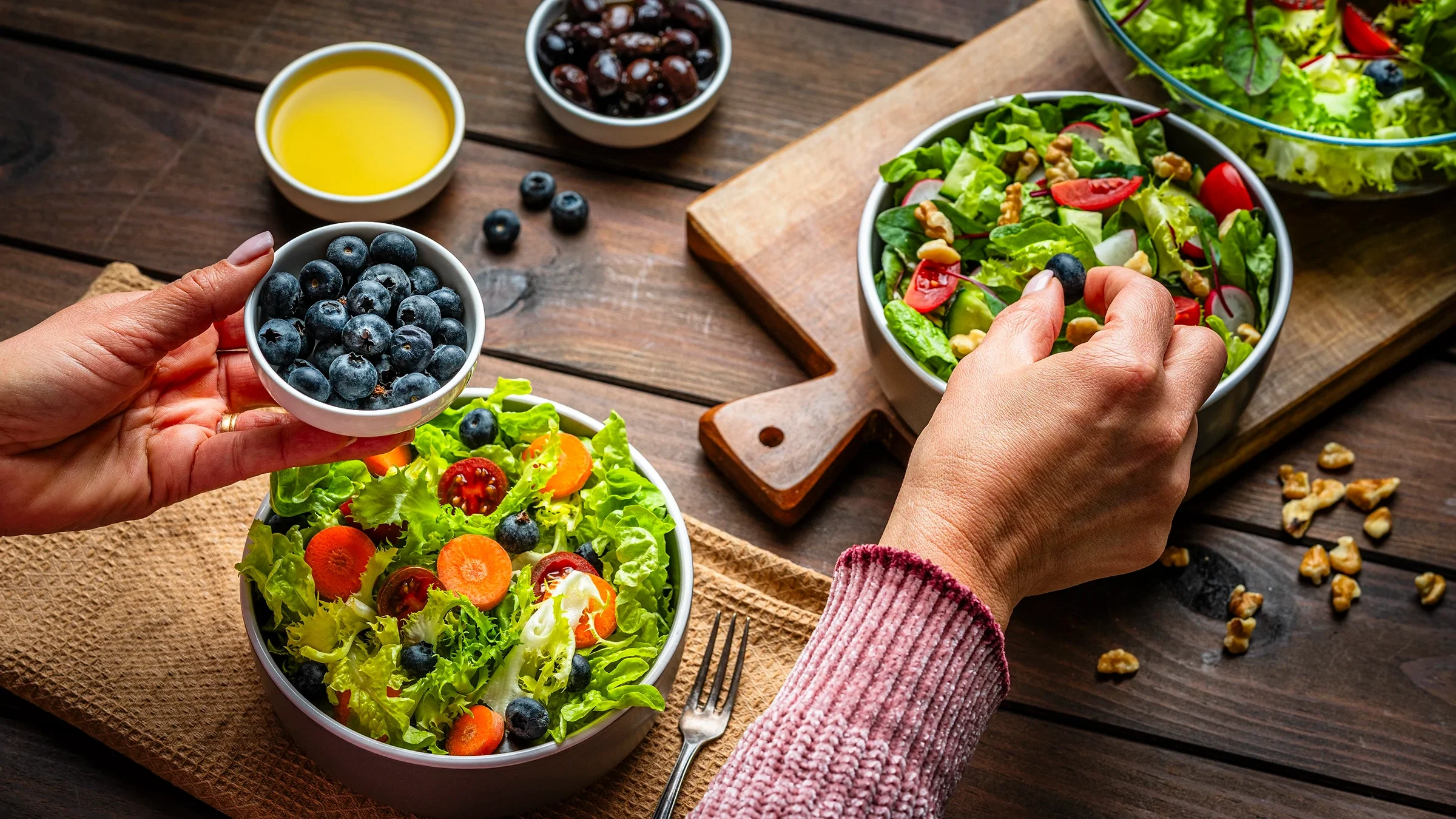
Blueberries are a tasty fruit with many potential health benefits. Their fiber, vitamins, and antioxidants may help lower blood pressure, decrease inflammation, and lower heart disease risk — among other things. Enjoy fresh or frozen blueberries in salads, yogurt, or oatmeal — or just enjoy them by the juicy handful.

Why trust our experts?




References
Aedin, C., et al. (2017). The role of metabolism (and the microbiome) in defining the clinical efficacy of dietary flavonoids. The American Journal of Clinical Nutrition.
American Heart Association. (2024). Suggested servings from each food group.
American Institute for Cancer Research. (2021). Blueberries: Increase antioxidant activity in the blood.
Bouzari, A., et al. (2014). Vitamin retention in eight fruits and vegetables: A comparison of refrigerated and frozen storage. Journal of Agricultural and Food Chemistry.
Cani, P. D., et al. (2005). Oligofructose promotes satiety in healthy human: A pilot study. The European Journal of Clinical Nutrition.
Delphino, F. M., et al. (2024). Effects of blueberry and cranberry on type 2 diabetes parameters in individuals with or without diabetes: A systematic review and meta-analysis of randomized clinical trials. Nutrition, Metabolism and Cardiovascular Diseases.
Du, C., et al. (2019). Blueberries improve pain, gait performance, and inflammation in Individuals with symptomatic knee osteoarthritis. Nutrients.
Fernando de Sousa Moraes, L., et al. (2017). Anthocyanins/anthocyanidins and colorectal cancer: What is behind the scenes? Critical Reviews in Food Science and Nutrition.
Houston, M., et al. (2014). Acute effects of an oral nitric oxide supplement on blood pressure, endothelial function, and vascular compliance in hypertensive patients. Journal of Clinical Hypertension.
Jennings, A., et al. (2017). Higher dietary flavonoid intakes are associated with lower objectively measured body composition in women: Evidence from discordant monozygotic twins. The American Journal of Clinical Nutrition.
Joseph, S. V., et al. (2014). Berries: Anti-inflammatory effects in humans. Journal of Agricultural and Food Chemistry.
Kalt, W., et al. (2020). Recent research on the health benefits of blueberries and their anthocyanins. Advances in Nutrition.
Lin, B. W., et al. (2017). Effects of anthocyanins on the prevention and treatment of cancer. British Journal of Pharmacology.
Looijer-van Langen, M. A., et al. (2009). Prebiotics in chronic intestinal inflammation. Inflammatory Bowel Diseases.
MyFoodData. (n.d.). Blueberries.
Martini, D., et al. (2023). Blueberries and their bioactives in the modulation of oxidative stress, inflammation and cardio/vascular function markers: A systematic review of human intervention studies. The Journal of Nutritional Biochemistry.
National Institute of Arthritis and Musculoskeletal and Skin Diseases. (2023). Osteoarthritis.
Norouzkhani, N., et al. (2024). Therapeutic potential of berries in age-related neurological disorders. Frontiers in Pharmacology.
Peter, C. J., et al. (2019). Blueberries improve biomarkers of cardiometabolic function in participants with metabolic syndrome—results from a 6-month, double-blind, randomized controlled trial. The American Journal of Clinical Nutrition.
Rahaman, M. M., et al. (2023). Natural antioxidants from some fruits, seeds, foods, natural products, and associated health benefits: An update. Food Science & Nutrition.
Reddy V. P. (2023). Oxidative stress in health and disease. Biomedicines.
SciNews. (2019). Blueberry anthocyanins may reduce blood pressure.
Silva Y. P., et al. (2020) The role of short-chain fatty acids from gut microbiota in gut-brain communication. Frontiers in Endocrinology.
Sivamaruthi, B. S., et al. (2020). The influence of supplementation of anthocyanins on obesity-associated comorbidities: A concise review. Foods.
Wang, M., et al. (2022). Research progress of anthocyanin prebiotic activity: A review. Phytomedicine.