Key takeaways:
Plantains are closely related to bananas, but they have some differences. Plantains are typically larger than bananas and need to be cooked before eating.
Plantains are full of nutrients. They have potassium, which supports blood pressure, and vitamin C, which helps immune health. Plantains also have fiber — including prebiotic fiber — that’s good for gut health.
Plantains are most often served fried, which adds fat and calories. Baking them can be a healthier way to cook them.
It’s easy to recognize a banana. But its close relative, the plantain, isn’t as well known, especially in the U.S. Plantains look quite similar to bananas, so you may have seen them at a grocery store without realizing it. But are plantains healthy? Let’s take a look at their nutrients and potential health benefits.
What are plantains?
Plantains are often confused with bananas because the two fruits are related. And they do have some similarities. Like bananas, plantains are starchy tropical fruits that grow on trees. They also look alike and have similar nutrients.
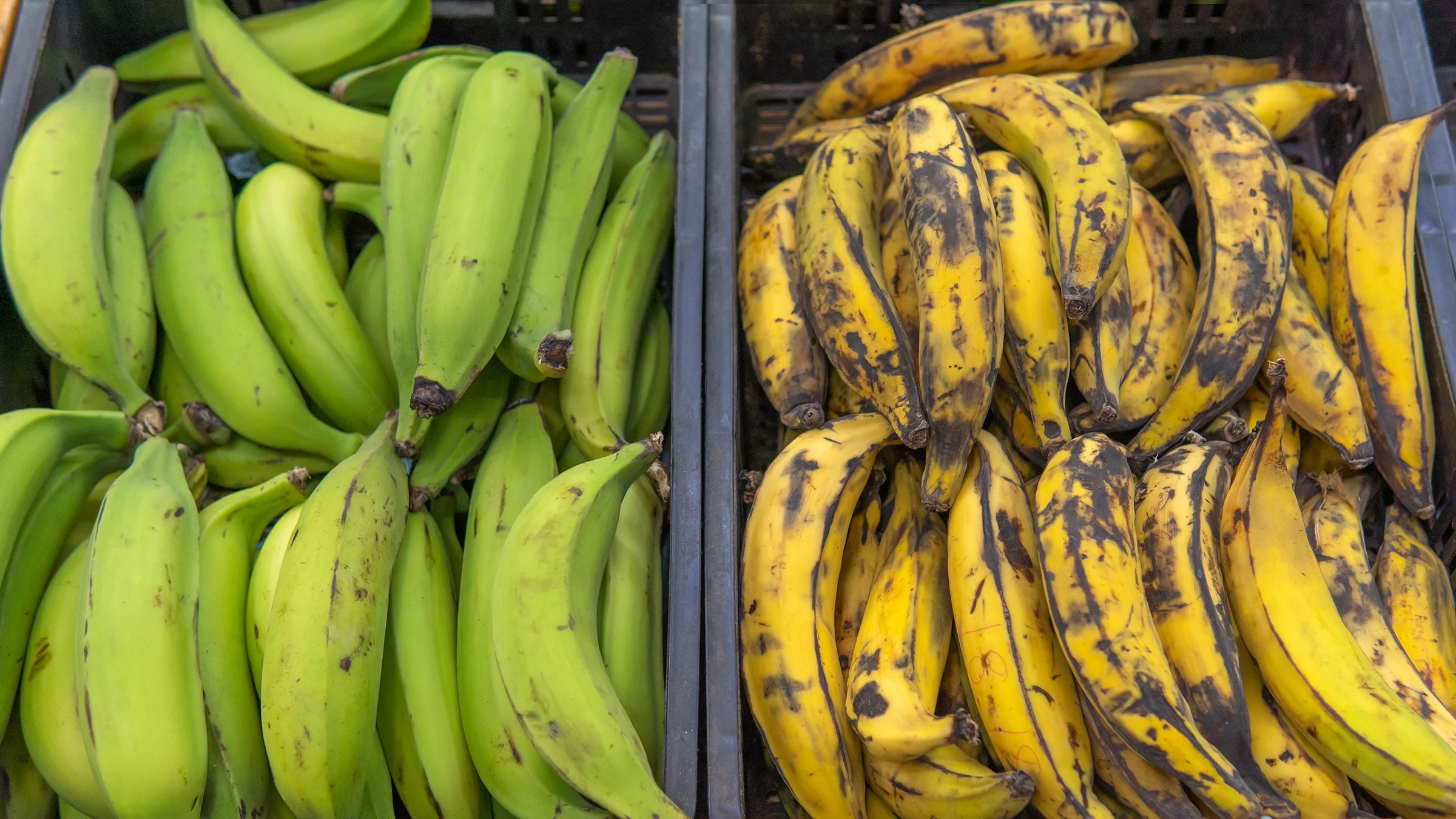
But there are some differences between plantains and bananas. Plantains are a bit larger than bananas and have a thicker, tougher skin. Raw plantains are less sweet than bananas and they need to be cooked before eating. Once cooked, plantains taste sweeter than bananas. That’s because they have more starch, which turns into sugar as they ripen.
Nutrients
Here are the nutrients in one medium-sized raw plantain (about 180 g):
Calories: 218
Fat: Less than 1 g
Carbs: 57 g
Fiber: 3 g
Total sugar: 31 g
Protein: 2 g
Vitamin C: 33 mg (37% of the daily value, or DV)
Potassium: 872 mg (19% DV)
Magnesium: 64 mg (15% DV)
Health benefits
Thanks to their vitamins, minerals, and fiber, plantains provide several potential health benefits.
Good for your gut
Plantains contain a type of carbohydrate called resistant starch, which acts as a prebiotic. Prebiotics are special fibers that feed the healthy bacteria in your gut. This helps the good bacteria flourish and do their job better. Green plantains have more resistant starch than ripe yellow ones, but both contain prebiotics.
In addition to resistant starch, plantains also have other types of fiber that support a healthy gut by:
Keeping your gut’s mucus lining healthy
Helping you break down food and absorb nutrients
Helping protect against inflammation
Helping make short-chain fatty acids (SCFAs), which provide several health benefits, including reducing your risk of colon cancer.
Rich in potassium
One plantain gives you about 20% of your daily potassium needs. Potassium serves many crucial functions in your body, including:
Helping to regulate blood pressure
Supporting normal muscle contraction
Balancing the amount of fluids in your body
Most people in the U.S. don’t get enough potassium, so eating plantains is one way to help you get more through your diet.
Good source of magnesium
Magnesium is another mineral that many people in the U.S. struggle to get enough of. One plantain gives you 15% of your daily magnesium needs. If you also eat magnesium-containing foods like nuts, seeds, and whole grains, this can add up fast.
Magnesium supports hundreds of functions in your body, including:
Blood sugar regulation
Brain health
Muscle contraction
Bone health
Gut function
Great source of vitamin C
Plantains are a great source of vitamin C. One medium fruit gives you over one-third of your daily needs.
Vitamin C helps your body make healthy white blood cells to fight off infections. And vitamin C serves as an antioxidant, protecting your immune cells from damage caused by free radicals.
Free radicals are unstable molecules that build up over time from environmental toxins, stress, or illness. Reducing this damage helps prevent chronic health conditions, including:
Heart disease
Type 2 diabetes
Cancer
Excess weight
Vitamin C also helps your body build collagen, a protein your body naturally makes. Collagen supports your connective tissues, like skin, bones, and tendons.
What are the disadvantages of eating plantains?
There are no disadvantages to eating plantains as part of a balanced diet. But it’s good to keep a few things in mind.
One of the most common ways plantains are prepared is by frying them. Fried foods are cooked in oil, which means they’re often high in fat. Sometimes this could be saturated fat, depending on the type of oil used. Eating too much saturated fat can increase your risk of heart disease.
Baking plantains instead of frying them is one way to cut back on saturated fat. You can bake plantains yourself or buy baked plantain chips at the grocery store.
Also, note that plantains are a starchy fruit and are high in carbohydrates. This isn’t a disadvantage. But it’s something to know if you’re trying to watch your carbohydrate intake because of diabetes or any other reason.
Tips for use
If you’re looking for plantains at the grocery store, here are some tips to help:
Check the right stores. Not all grocery store chains carry plantains. If yours doesn’t, try a store that carries more global foods.
Choose larger plantains. Larger plantains are usually more mature and may taste better. Look for ones that are about twice the size of a banana.
Pick yellow when you can. Like bananas, plantains can be green or yellow. Green plantains aren’t ripe yet and will be firmer and less sweet. Ripe ones will be yellow with a few (or many) brown spots. The more brown spots, the sweeter they’ll be.
Test the firmness. A ripe plantain will feel slightly firm, but still have a little give when you press on its skin. If it’s too firm, it’s not ripe yet. If it feels too soft, it may be overripe and mushy inside.
How to use plantains
Before you can cook plantains, you’ll need to peel them. Their peel is tougher than a banana’s. Try cutting off the ends of the plantain first. Then, use a knife to carefully slice the skin lengthwise. You can use a spoon or the end of the knife to gently peel back the skin until it’s fully removed.
To bake plantains:
Slice the peeled plantain into rounds about ¼ to ½ inch thick.
Sprinkle them with your favorite seasoning, like sea salt or cinnamon.
Bake at 350°F for 10 minutes on each side.
Frequently asked questions
Fried foods tend to be high in calories and fat — sometimes saturated fat and trans fat. Research has shown that eating fried foods can increase your risk of developing conditions like heart disease. But that doesn’t mean you need to avoid fried foods altogether. Eating them occasionally as part of an overall balanced diet is OK. No matter how they’re cooked, plantains still provide vitamins, minerals, antioxidants, and fiber.
Since bananas and plantains are eaten differently, it’s hard to compare their nutrients directly. Most people eat bananas as a whole fruit. But plantains are usually sliced, cooked, and served as a side dish.
One nutritional difference is that cooked plantains often have added fat and calories (from oils used in cooking). But they also have more vitamin C and potassium than bananas. So which one is healthier may depend on how it’s prepared and how much you eat.
Plantains contain a combination of fiber, starch, and natural sugar — all of which are nutritious carbohydrates. Sometimes, cooked plantains have added sugars. While added sugars aren’t as good for you as natural sugars, smaller amounts can still be part of a balanced diet.
Fried foods tend to be high in calories and fat — sometimes saturated fat and trans fat. Research has shown that eating fried foods can increase your risk of developing conditions like heart disease. But that doesn’t mean you need to avoid fried foods altogether. Eating them occasionally as part of an overall balanced diet is OK. No matter how they’re cooked, plantains still provide vitamins, minerals, antioxidants, and fiber.
Since bananas and plantains are eaten differently, it’s hard to compare their nutrients directly. Most people eat bananas as a whole fruit. But plantains are usually sliced, cooked, and served as a side dish.
One nutritional difference is that cooked plantains often have added fat and calories (from oils used in cooking). But they also have more vitamin C and potassium than bananas. So which one is healthier may depend on how it’s prepared and how much you eat.
Plantains contain a combination of fiber, starch, and natural sugar — all of which are nutritious carbohydrates. Sometimes, cooked plantains have added sugars. While added sugars aren’t as good for you as natural sugars, smaller amounts can still be part of a balanced diet.
The bottom line
Plantains are related to bananas, but they’re larger, have tougher skin, and need to be cooked before eating. Their nutrients may benefit your gut, blood pressure, and immune system. But plantains are often eaten fried, which can take away from some of their nutritional benefits. Still, there are plenty of ways to enjoy plantains as part of a balanced diet.

Why trust our experts?




References
American Heart Association. (2024). Added sugars.
Besten, G. D., et al. (2013). The role of short-chain fatty acids in the interplay between diet, gut microbiota, and host energy metabolism. Journal of Lipid Research.
Carr, A. C., et al. (2017). Vitamin C and immune function. Nutrients.
Chen, Z. (2024). Resistant starch and the gut microbiome: Exploring beneficial interactions and dietary impacts. Food Chemistry: X.
Hoy, M. K., et al. Dietary data brief no. 47 potassium intake of the U.S. population. FSRG Dietary Data Briefs.
My Food Data. (n.d.). Raw plantains.
Office of Dietary Supplements. (2022). Magnesium. National Institutes of Health.
Office of Dietary Supplements. (2022). Potassium. National Institutes of Health.
Silva, Y. P., et al. (2020). The role of short-chain fatty acids from gut microbiota in gut-brain communication. Frontiers in Endocrinology.