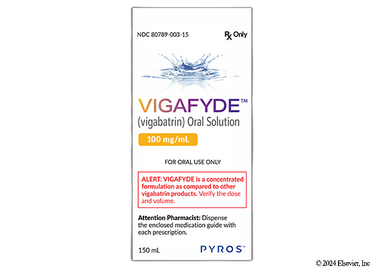
Vigafyde
Vigafyde (vigabatrin) is an antiepileptic medication used for infantile spasms, a rare type of seizure in babies. It’s approved for babies ages 1 month to 2 years. Because it can cause permanent vision loss, the medication is used only when the expected benefits are greater than this serious risk. Vigafyde (vigabatrin) is availably only through a special safety program. It comes as a ready-to-use oral solution that's taken by mouth or through a gastrostomy tube. It's given twice a day, and the dose is based on your baby’s weight. More common side effects include sleepiness, bronchitis, and ear infection.


What is Vigafyde (vigabatrin)?
What is Vigafyde (vigabatrin) used for?
- Infantile spasms in babies ages 1 month to 2 years
How Vigafyde (vigabatrin) works
Vigafyde (vigabatrin) is an antiepileptic medication. It works by helping keep levels of a calming chemical in the brain called gamma-aminobutyric acid (GABA) high.
When GABA levels stay higher, overactive brain signals become calmer. This can help lower the number of infantile spasms and seizures your baby has.
Drug facts
| Common Brands | Vigafyde |
|---|---|
| Drug Class | Antiepileptic |
| Controlled Substance Classification | Not a controlled medication |
| Generic Status | No lower-cost generic available |
| Availability | Prescription only |

Side effects of Vigafyde (vigabatrin)
The following side effects may get better over time as your body gets used to the medication. Let your healthcare provider know immediately if you continue to experience these symptoms or if they worsen over time.
Common Side Effects
- Sleepiness (45%)
- Bronchitis (30%)
- Ear infection (10%)
Less Common Side Effects
- Vomiting
- Diarrhea
- Constipation
- Poor appetite
- Weight gain
- Fever
- Irritability
- Trouble sleeping
- Rash
Vigafyde (vigabatrin) serious side effects
Contact your healthcare provider immediately if you experience any of the following.
- Vision problems or vision loss: trouble seeing things in your baby's side vision, bumping into things, changes in how your baby tracks or notices things
- Anemia: unusual tiredness, pale skin, weakness, trouble feeding, shortness of breath
- Severe sleepiness or fatigue: can't wake up easily, poor feeding, low energy
- Swelling: puffiness; swelling in the hands, feet, or face
- Withdrawal seizures after stopping too fast: more seizures, seizures that won’t stop
The following Vigafyde (vigabatrin) side effects have also been reported
Side effects that you should report to your care team as soon as possible:
- Allergic reactions—skin rash, itching, hives, swelling of the face, lips, tongue, or throat
- Change in vision such as blurry vision, seeing halos around lights, vision loss
- Low red blood cell level—unusual weakness or fatigue, dizziness, headache, trouble breathing
- Pain, tingling, or numbness in the hands or feet
- Thoughts of suicide or self-harm, worsening mood, feelings of depression
Side effects that usually do not require medical attention (report these to your care team if they continue or are bothersome):
- Dizziness
- Drowsiness
- Fatigue
- Loss of balance or coordination
- Swelling of the ankles, hands, or feet
- Tremors or shaking
- Weight gain

Pros and cons of Vigafyde (vigabatrin)
Pros
- FDA approved to treat infantile spasms in babies as young as 1 month old
- Ready-to-use oral solution
- Can be given by mouth or through a G-tube
- Might be easier to take because each dose uses less liquid than some other vigabatrin medication
Cons
- Can make your baby sleepy or make feeding harder
- Has a serious risk of permanent vision loss (need regular eye exams)
- Dose can change often as your baby grows since it's based on weight
- Dose has to be measured carefully because it’s more concentrated than some other vigabatrin medications

Pharmacist tips for Vigafyde (vigabatrin)

- If you're switching from another vigabatrin medication to Vigafyde (vigabatrin), your baby might need a smaller amount of liquid for each dose. This is because Vigafyde (vigabatrin) is more concentrated. Stop using the old vigabatrin medication unless the prescriber tells you otherwise. Giving too much vigabatrin can raise your baby's risk of serious side effects.
- Give Vigafyde (vigabatrin) twice a day, with or without food. Try to give the medication at around the same times each day.
- How to measure your baby's Vigafyde (vigabatrin) dose: Always use the oral syringe from the pharmacy to measure each dose of Vigafyde (vigabatrin). Double check the dose you've measured. Don’t mix the medication with water or other liquids because it can make the dose less accurate. Ask the prescriber or pharmacist if you have questions about measuring the dose.
- How to give Vigafyde (vigabatrin): Make sure your baby is sitting upright. Put the syringe tip into your baby's mouth, towards either cheek. Push the plunger down slowly, little by little, until you've given all the medication. If you use a G-tube or G-port, be sure to flush the tube after you give the dose.
- If your baby misses a dose or spits up or vomits after taking of Vigafyde (vigabatrin), ask the prescriber what to do. The next step depends on how much medication your baby got and how close it is to the next dose.
- Keep track of how many seizures your baby has while taking Vigafyde (vigabatrin). Tell the prescriber if the medication doesn't seem to be helping within 2 to 4 weeks after starting. The prescriber can decide if your baby should keep taking it or switch to a different treatment.
- Keep all of your baby's eye appointments while they're taking Vigafyde (vigabatrin). This medication can cause permanent vision loss, and babies might not show signs until the damage is severe. Regular eye exams give your baby’s care team the best chance to find vision problems early. Tell the care team right away if you think your baby isn’t seeing well or is acting differently.
- Watch for sleepiness, trouble feeding, or unusual fussiness after your baby starts Vigafyde (vigabatrin). Some babies can become very sleepy, which can make feeding harder. Tell the care team if you notice these changes. The prescriber might decide to adjust your baby's dose to help.
- Don’t stop giving your baby Vigafyde (vigabatrin) suddenly unless the prescriber tells you to. Stopping treatment too fast can make seizures worse or cause seizures that won’t stop. If your baby needs to stop treatment, the prescriber will usually lower the dose slowly.
- Tell the prescriber and pharmacist about all the medications your baby takes. Vigafyde (vigabatrin) can affect how some other seizure medications work. The prescriber might need to watch your baby more closely or adjust your baby's treatment.
- How to store Vigafyde (vigabatrin) and when to throw it away: Unopened bottles of Vigafyde (vigabatrin) should stay at room temperature. Once you open the bottle, you can keep the medication in the refrigerator or at room temperature. Throw it away 90 days after opening, even if there's some left.

Risks and warnings for Vigafyde (vigabatrin)
Vigafyde (vigabatrin) can cause some serious health issues. This risk may be even higher for certain groups. If this worries you, talk to your doctor or pharmacist about other options.
Risk of permanent vision loss
- Risk factors: Higher dose | Longer use | Other eye conditions that can already cause permanent vision loss | Use with medications linked to serious eye problems
 Vigafyde (vigabatrin) can cause permanent vision loss. This can include trouble seeing off to the side (sometimes called tunnel vision). It might also make vision less sharp. Vision loss can start early within weeks of starting treatment or after months or even years. The risk generally goes up with higher doses and longer treatment. But there's no dose of Vigafyde (vigabatrin) that's known to be free of this risk.
Babies can’t tell you if their vision has changed. You might not notice a problem until the vision loss is already severe. That's why your baby should have regular eye exams with Vigafyde (vigabatrin). They're done before starting or within 4 weeks of starting, at least every 3 months during treatment, and then 3 to 6 months after stopping. Tell the prescriber right away if you think your baby isn’t seeing as well or is acting differently.
Because of this risk, Vigafyde (vigabatrin) is only available through the Vigabatrin REMS program. This program helps make sure your baby is monitored properly. It also makes sure that everyone involved in your baby's care understands the risk of vision loss. The care team will help enroll your baby in this safety program before treatment starts. If you have questions about the program, ask the prescriber.
Brain MRI changes
Vigafyde (vigabatrin) has been linked to unusual changes on brain MRI scans in some babies. These changes can be found on scans of different areas of the brain. In many cases, the MRI changes went away after treatment was stopped.
It isn’t known what these MRI changes mean or if they cause problems for babies. Your baby’s care team will watch for changes in your baby's movement or development. Tell them right away if you notice unusual movements or changes in muscle tone. Talk to the prescriber if you have concerns about your baby’s development.
Withdrawal seizures after suddenly stopping Vigafyde (vigabatrin)
Don't stop giving your baby Vigafyde (vigabatrin) without talking to the prescriber first. Stopping the medication too fast can make seizures worse or cause withdrawal seizures. The prescriber will slowly lower the dose when it's time to stop treatment. Tell the care team right away if your baby's seizures get worse while the dose is being lowered.
Anemia
Vigafyde (vigabatrin) can lower lab values that tell you about your baby's red blood cells. These lab changes have been linked to anemia.
Watch for symptoms in your baby like unusual tiredness, pale skin, weakness, or trouble feeding. If this happens, tell the prescriber so they can decide if blood tests are needed to check for anemia.
Sleepiness and fatigue
Vigafyde (vigabatrin) can make your baby sleepy or tired. This can affect daily feeding and comfort. Sleepy babies can have a harder time suckling and staying awake for feeds.
Watch for changes in feeding, alertness, and irritability after your baby starts Vigafyde (vigabatrin) or after any dose changes. Tell the prescriber if your baby seems too sleepy, isn’t feeding well, or is much harder to wake than usual.
Nerve damage (peripheral neuropathy)
Vigabatrin can sometimes cause nerve damage called peripheral neuropathy. Adults taking vigabatrin have experienced this, but it’s harder to study this risk in babies. Because of this, it’s not fully clear how often it happens in babies taking Vigafyde (vigabatrin).
Tell the prescriber if you notice unusual movements or changes in how your baby moves or uses their legs or feet. The care team can examine your baby to look for signs of nerve problems.
Weight gain
Vigafyde (vigabatrin) can cause weight gain in children. In some cases, this weight gain can happen without any noticeable swelling. Your baby’s care team will check your baby's weight and growth during treatment. Tell the prescriber if you notice your baby is gaining weight very fast. Also talk to the prescriber if you’re worried about how your baby is growing.
Swelling due to fluid buildup in the body
It's possible for vigabatrin to cause swelling from fluid buildup in the body. This can show up as puffiness. Tell the prescriber if you notice new swelling in your baby’s face, hands, feet, or legs. The care team can see if this is from Vigafyde (vigabatrin) or from another cause.

Vigafyde (vigabatrin) dosage
 Bottle of oral solution
| Dosage | Quantity | Price as low as | Price per unit |
|---|---|---|---|
| 150ml of 100mg/ml | 3 bottles | $11,027.69 | $3,675.90 |
Typical dosage for Vigafyde (vigabatrin)
The dose is based on your baby's body weight (in kilograms, or kg). Your baby's prescriber will calculate your baby's dose for you.
In general, the typical starting dose is 25 mg/kg by mouth twice a day.
The prescriber can raise the total daily dose by 25 mg/kg/day to 50 mg/kg/day every 3 days. This will be based on your baby's response to the medication and side effects.
The maximum dose is 75 mg/kg twice a day.

How much does Vigafyde (vigabatrin) cost?
$11,027.69

What are alternatives to Vigafyde (vigabatrin)?

Vigafyde (vigabatrin) images