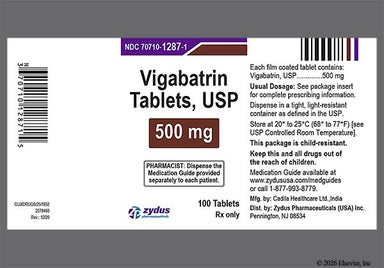
Vigabatrin (Sabril) can treat certain types of seizures: infantile spasms and complex partial seizures. It's available as a powder that's made into a solution and a tablet, both of which you take by mouth. The medication is typically taken twice daily. Vigabatrin (Sabril) is only available through the Vigabatrin Risk Evaluation and Mitigation Strategy (REMS) program because of the risk for permanent vision loss due to eye damage. Other side effects include sleepiness and dizziness. This medication is available as brand-name and lower-cost generic versions.
Difficult-to-treat complex partial seizures in people age 2 years and older (as add-on therapy to other medications)
Infantile spasms in children age 1 month to 2 years
How Vigabatrin (Sabril) works
Vigabatrin (Sabril) is an antiepileptic (another name for anti-seizure medication). It's not exactly clear how it works to treat seizures. But it's thought to raise the levels of gamma-aminobutyric acid (GABA), a chemical in the brain that calms nerves. This helps control seizures.
The following side effects may get better over time as your body gets used to the medication. Let your healthcare provider know immediately if you continue to experience these symptoms or if they worsen over time.
Common Side Effects
Adults
Headache (33%)
Dizziness (24%)
Tiredness (23%)
Drowsiness (22%)
Uncontrolled shaking (15%)
Common cold symptoms (14%)
Blurred vision (13%)
Eye twitching (13%)
Diarrhea (10%)
Nausea (10%)
Joint pain (10%)
Abnormal coordination (6%)
Children age 3 to 16 years (for complex partial seizures)
Weight gain (15%)
Upper respiratory tract infection (e.g., cough, common cold; 15%)
Tiredness (10%)
Children age 1 month to 2 years (for infantile spasms)
Upper respiratory tract infection (up to 51%)
Middle ear infection (up to 44%)
Fever (up to 29%)
Irritable behavior (up to 23%)
Vomiting (up to 20%)
Sleepiness (up to 19%)
Less Common Side Effects
Vomiting
Constipation
Pain in the hands or feet
Swelling in the hands or feet due to fluid buildup (edema)
Weight gain
Double vision
General weakness
Flu-like symptoms
Memory problems
Difficulty paying attention
Tingling sensation
Feeling irritable
Depression
Menstrual cramps (in women)
Rash
Vigabatrin (Sabril) serious side effects
Contact your healthcare provider immediately if you experience any of the following.
Doesn't require regular blood work to check medication levels
Available as a tablet and oral solution
Available as a lower-cost generic form
Cons
Can cause weight gain, especially in children
Can raise the risk for suicidal thoughts or behaviors
Can cause permanent vision loss
Pharmacist tips for Vigabatrin (Sabril)
You can take vigabatrin (Sabril) with or without food, but if it upsets your stomach, try taking it with food to help.
Vigabatrin (Sabril) commonly causes sleepiness, tiredness, and dizziness. Don't drive or do anything requiring concentration until you know how this medication affects you. Also, avoid drinking alcohol because it can worsen these effects.
Vigabatrin (Sabril) can cause vision loss and changes in vision, including blurriness or difficulty seeing things that aren't directly in front of you. Make sure you see your provider for an eye exam every 3 months while you're taking this medication. Report any signs of vision changes to your provider right away.
Weight gain can be a side effect of vigabatrin (Sabril). It's important to closely keep track of your weight and keep a healthy diet and exercise routine while taking vigabatrin (Sabril). Contact your provider if you're concerned with any changes in weight you might experience during treatment.
Vigabatrin (Sabril) can raise the risk of suicidal thoughts. Contact your provider right away if you or your loved ones notice any new or worsening changes in your behavior or mood while taking this medication.
Don't change your dose or suddenly stop taking vigabatrin (Sabril) without talking to your provider first. Doing so can cause your seizures to come back. If you're interested in stopping the medication, contact your provider and follow their instructions on how to lower your dose slowly over a period of time to stop the medication completely.
Make sure you know exactly how to prepare the powder for oral solution to get the right dose each time. The amount of water you'll need to use to mix the powder with depends on the number of powder packets you need for your dose. Once mixed, measure out the correct amount of solution with the oral syringe that's provided by the pharmacy. Review the helpful instructions on how to prepare the medication that comes with your vigabatrin (Sabril) prescription. Ask your provider or pharmacist if you have any questions on how to prepare vigabatrin (Sabril) properly.
Be sure to use the oral syringes that's given to you by the pharmacy to measure out your dose. Don't use household spoons because they aren't accurate and might cause you to take the wrong dose.
To give the vigabatrin (Sabril) solution to a young child, put the tip of the oral syringe into their mouth towards either cheek. Then, push the plunger down slowly so that a small amount of medication is given at a time. Give all the medication in the oral syringe.
Store the powder packets at room temperature. Mix the powder with water only when you're ready to take the dose.
Risks and warnings for Vigabatrin (Sabril)
Vigabatrin (Sabril) can cause some serious health issues. This risk may be even higher for certain groups. If this worries you, talk to your doctor or pharmacist about other options.
Permanent vision loss
Risk factors: Taking higher doses of vigabatrin (Sabril) | Taking other medications that could affect vision or cause eye conditions like glaucoma
Vigabatrin (Sabril) can affect your vision, including causing blurry vision or making it hard to see things that aren't directly in front of you ("tunnel vision"). This medication can also cause vision loss, which can occur at any time after starting vigabatrin (Sabril) (within weeks of starting or after many months to years). This effect is permanent and might continue to get worse even after you stop taking the medication. Make sure to get your vision checked with a provider every 3 months while you're taking vigabatrin (Sabril) and at least one more time after you stop taking it. Tell your provider right away if you notice a change in your vision or if you're clumsier than usual, like tripping or bumping into things more easily.
Because of the risk of permanent vision loss with vigabatrin (Sabril), you, your provider, and your pharmacy are required to sign up with the Vigabatrin Risk Evaluation and Mitigation Strategy (REMS) program. This program makes sure that your provider checks your eye health regularly and that you understand this risk with taking the medication.
Abnormal brain MRI in young children
Risk factors: Children 6 years old or younger
Young children who take vigabatrin (Sabril) can have abnormal MRIs (brain scans). These abnormalities might be due to nerve swelling in certain parts of the brain. In studies with young children with infantile spasms, the abnormalities went away in most cases after the medication was stopped. But there have been a few cases where they stayed even after stopping treatment. This unusual brain scan imaging isn't usually a problem for adults or children over 6 years of age. If this happens, your child's provider might want to try a different medication instead.
Suicidal thoughts or behavior
Risk factors: Taking other anti-seizure medications
Vigabatrin (Sabril) raises your risk of having thoughts of suicide or harming yourself. This risk can appear as early as 1 week after you start taking vigabatrin (Sabril). If you or anyone around you notices that you have suicidal thoughts or unusual behavior (e.g., anxiety, panic attacks, difficulty sleeping, feeling angry or irritated, restlessness) while taking vigabatrin (Sabril), get medical help right away.
Withdrawal seizures after stopping the medication suddenly
Antiepileptic (anti-seizure) medications like vigabatrin (Sabril) shouldn't be stopped suddenly because it can cause your seizures to come back. Don't stop taking vigabatrin (Sabril) without talking to your provider first. They'll instruct you on how to lower your dose slowly over time until you can completely stop taking it.
Low red blood cell counts (anemia)
Some people taking vigabatrin (Sabril) developed anemia, a condition that happens when your red blood cell counts are low. Your provider might order tests to check your red blood cell count before and during treatment with vigabatrin (Sabril). Let your provider know if you notice possible symptoms of anemia, such as tiredness, weakness, pale skin, or getting short of breath more than usual.
Difficulty concentrating, extreme sleepiness or tiredness, and dizziness
Risk factors: Taking high doses of vigabatrin (Sabril) | Drinking alcohol | Taking other medications that can cause sleepiness
Vigabatrin (Sabril) can cause extreme dizziness, tiredness, or sleepiness. These side effects can lower your ability to think, react, and focus. Your risk might be higher if you're taking other medications that can cause you to feel sleepy (e.g., benzodiazepines, muscle relaxants, sleep medications). Make sure you know how this medication affects you before driving a car or doing activities that require your concentration. Talk to your healthcare provider right away if you feel too sleepy from taking vigabatrin (Sabril).
Nerve pain in adults
Vigabatrin (Sabril) can cause nerve problems (called peripheral neuropathy) in adults. These nerve problems can include pain, numbness, or tingling in your feet. It might also lead to gradual problems with movement or reflexes. Let your provider know if you experience any abnormal sensations in your toes, feet, or ankles while you're taking this medication.
Weight gain
Vigabatrin (Sabril) can cause weight gain. This tends to be more common in children, but this effect can happen in adults as well. In clinical studies, the average weight gain in adults was about 8 pounds. Let your provider know if you or your child has gained an abnormal amount of weight after starting this medication.
Age 17 years or older: The typical dose is 500 mg to 1,500 mg by mouth twice per day.
Age 2 to less than 17 years: The dose is based on your child's body weight.
22 to 33 pounds: The typical dose is 175 mg to 525 mg by mouth twice per day.
33 to 44 pounds: The typical dose is 225 mg to 650 mg by mouth twice per day.
44 to 55 pounds: The typical dose is 250 mg to 750 mg by mouth twice per day.
55 to 132 pounds: The typical dose is 250 mg to 1,000 mg by mouth twice per day.
Greater than 132 pounds: The typical dose is 500 mg to 1,500 mg by mouth twice per day.
Infantile spasms: The dose is based on your child's body weight. The starting dose is 25 mg/kg by mouth twice per day. The maximum dose is 75 mg/kg twice per day.
Your provider will change the dose depending on how well the medication is working for you and if you're having side effects. Your dose might differ if you have kidney problems.
GoodRx Health has strict sourcing policies and relies on primary sources such as medical organizations, governmental agencies, academic institutions, and peer-reviewed scientific journals. Learn more about how we ensure our content is accurate, thorough, and unbiased by reading our editorial guidelines.
Prescription savings
Stop paying too much for your prescriptions. Compare prices, get pharmacy coupons, and save up to 80%.
Based on available research, there isn't a clear time frame for when exactly Vigabatrin will start to work. It might take a few days or weeks for the medication to start working for you. It'll probably depend on several factors, such as why you need Vigabatrin, your dose, how severe your seizures are, and what other seizure medications you're taking. One small study found that it took an average of 5 days for infantile spasms to go away completely in children who took Vigabatrin. For complex partial seizures in adults, there are mixed results as to how long it takes for the medication to work; it could range anywhere from about 2 weeks for Vigabatrin to up to 3 months. Your provider will follow up with you regularly to discuss how well Vigabatrin is working for you. They might adjust your dose as needed to reach the dose that will benefit you the most.
Since Vigabatrin can put you at risk for permanent vision loss, the medication is only available through a restricted program under a Risk Evaluation and Mitigation Strategy (REMS). The program for this medication is called the Vigabatrin REMS program. All providers who prescribe Vigabatrin, pharmacies that dispense Vigabatrin, and people who take Vigabatrin must register with the REMS program. This is to make sure the medication is distributed and taken under the safest conditions possible for you. Your provider will discuss with you about the risk for permanent vision loss with Vigabatrin and the need for regular eye check-ups during treatment.
Vigabatrin can damage the retina, which is the back part of your eye that senses light and sends signals to your brain so you can see. A damaged retina can cause changes in vision, such as blurry vision or vision loss. To lower your risk, it's recommended to use the lowest dose of Vigabatrin that works to treat your condition. It's also recommended to get your eyes checked regularly. Discuss with your provider if you're concerned about this risk with Vigabatrin treatment.
Yes, weight gain is a known side effect of Vigabatrin. Data from clinical studies found that 17% of adults and 47% of children gained at least 7% of the weight they were at before starting the medication. For this reason, it's important to keep track of your weight as well as have a healthy diet and exercise routine while taking Vigabatrin. Let your provider know if you or your child has gained an abnormal amount of weight after starting this medication.
Yes, Vigabatrin is FDA approved for use in babies 1 month to 2 years of age with infantile spasms and in children 2 years of age or older with complex partial seizures. If your child is young and unable to swallow tablets, talk with your child's provider about the oral solution formulation. Keep in mind that Vigabatrin can have side effects, like weight gain, vision loss, fatigue, and changes in behavior, that can affect your child's normal daily activities. It's important that your child gets regular check-ups while taking Vigabatrin so they can be closely monitored for side effects. Talk to your child's provider if you're concerned your child is having side effects that don't go away or don't get better.
There's limited research done about the safety of Vigabatrin during pregnancy. Small studies with pregnant women haven't been able to show that Vigabatrin puts the mother or unborn baby at risk of serious harm. But animal studies found that babies were harmed when born to mothers exposed to the medication. In general, Vigabatrin should only be used during pregnancy if it's clearly needed and the benefits are greater than the risks. If you're pregnant or thinking about becoming pregnant, talk with your provider about the benefits and risks of taking Vigabatrin. If you choose to take Vigabatrin while pregnant, you're encouraged to enroll in the North American Antiepileptic Drug (NAAED) Pregnancy Registry. This registry helps monitor the safety of Vigabatrin during your pregnancy.
Discuss with your provider if it's safe to breastfeed while you're taking Vigabatrin. Based on available research, Vigabatrin isn't expected to cause side effects in breastfed babies. This is because the levels of the medication that are found in breast milk are much lower than the dose typically used for babies. But it's always a good idea to talk to your provider first to make sure breastfeeding while you're taking Vigabatrin is the right option for you.


 Vigabatrin (Sabril) can affect your vision, including causing blurry vision or making it hard to see things that aren't directly in front of you ("tunnel vision"). This medication can also cause vision loss, which can occur at any time after starting vigabatrin (Sabril) (within weeks of starting or after many months to years). This effect is permanent and might continue to get worse even after you stop taking the medication. Make sure to get your vision checked with a provider every 3 months while you're taking vigabatrin (Sabril) and at least one more time after you stop taking it. Tell your provider right away if you notice a change in your vision or if you're clumsier than usual, like tripping or bumping into things more easily.
 Because of the risk of permanent vision loss with vigabatrin (Sabril), you, your provider, and your pharmacy are required to sign up with the