


What Medications Are Used to Treat Melanoma?
While surgery is often a first-choice treatment for melanoma, medications can prevent recurrence. Here's how immunotherapy and chemotherapy drugs work for melanoma.
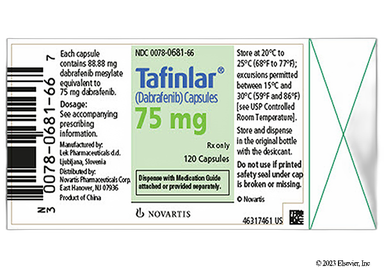
Tafinlar (dabrafenib) is a targeted anticancer therapy that’s usually taken with another medication called Mekinist (trametinib). Tafinlar (dabrafenib) is used to treat many types of cancer that have a certain mutation known as a BRAF mutation. It comes as capsules that are swallowed whole, as well as special tablets that can be used to make a liquid that you drink (typically for children). Tafinlar (dabrafenib) can cause side effects such as fever, rash, and high blood sugar.

Tafinlar (dabrafenib) is a kinase inhibitor known as a BRAF inhibitor. The BRAF protein is part of a whole chain of proteins that help cells grow. When the BRAF protein is mutated, the cancer grows uncontrollably and can spread more quickly. By blocking BRAF, Tafinlar (dabrafenib) helps stop tumor growth.
| Common Brands | Tafinlar |
|---|---|
| Drug Class | BRAF inhibitor |
| Controlled Substance Classification | Not a controlled medication |
| Generic Status | No lower-cost generic available |
| Availability | Prescription only |

The following side effects may get better over time as your body gets used to the medication. Let your healthcare provider know immediately if you continue to experience these symptoms or if they worsen over time.
The following side effects were reported in adults taking Tafinlar (dabrafenib). Side effects might differ depending on the cancer you have and in children.
Contact your healthcare provider immediately if you experience any of the following.
Along with its needed effects, a medicine may cause some unwanted effects. Although not all of these side effects may occur, if they do occur they may need medical attention.
Check with your doctor immediately if any of the following side effects occur:
More common
Bleeding gums
bloody or cloudy urine
blurred vision
coughing up blood
difficulty in breathing or swallowing
dizziness
flushed, dry skin
fruit-like breath odor
greatly decreased frequency of urination or amount of urine
headache
increased hunger
increased thirst
increased urination
lump or growth on the skin
nosebleed
prolonged bleeding from cuts
red or black, tarry stools
red or dark brown urine
redness, swelling, or pain of the skin
scaling of the skin on the hands and feet
skin blisters
skin rash
stomach pain
sweating
swelling of the feet or lower legs
tingling of the hands and feet
ulceration of the skin
unable to move
unexplained weight loss
unusual tiredness or weakness
vomiting
Less common
Blurred vision or other change in vision
change in color vision
difficulty seeing at night
increased sensitivity of the eyes to sunlight
redness of the eye
tearing
Incidence not known
Blistering, peeling, loosening of the skin
chills
joint or muscle pain
red skin lesions, often with a purple center
sores, ulcers, or white spots in the mouth or on lips
swollen, painful, or tender lymph glands in the neck, armpit, or groin
yellow eyes or skin
Some side effects may occur that usually do not need medical attention. These side effects may go away during treatment as your body adjusts to the medicine. Also, your health care professional may be able to tell you about ways to prevent or reduce some of these side effects. Check with your health care professional if any of the following side effects continue or are bothersome or if you have any questions about them:
More common
Back pain
difficulty having a bowel movement
fast heartbeat
hair loss or thinning of the hair
headache
indigestion
loss of appetite
muscle ache or stiffness
pains in the stomach, side, or abdomen, possibly radiating to the back
stuffy or runny nose
Other side effects not listed may also occur in some patients. If you notice any other effects, check with your healthcare professional.
Call your doctor for medical advice about side effects. You may report side effects to the FDA at 1-800-FDA-1088.



Tips for the Tafinlar (dabrafenib) capsules:
Tips for the Tafinlar (dabrafenib) tablets that are used to make a liquid:

Tafinlar (dabrafenib) can cause some serious health issues. This risk may be even higher for certain groups. If this worries you, talk to your doctor or pharmacist about other options.
Some people taking Tafinlar (dabrafenib) developed a new cancer. In studies, these cancers included different kinds of skin cancer and other cancer types. While you’re taking Tafinlar (dabrafenib), your provider will monitor you for new signs and symptoms of cancer, especially skin cancers.
Tafinlar (dabrafenib) isn’t recommended for people with cancers without a BRAF mutation. Lab studies have shown that if a BRAF inhibitor is used to treat a cancer that doesn’t have a BRAF mutation, it might cause cancer cells to grow. For this reason, BRAF inhibitors like Tafinlar (dabrafenib) should only be used in people with certain BRAF mutations. Your provider will confirm that you have a BRAF mutation before you start taking Tafinlar (dabrafenib).
Tafinlar (dabrafenib), taken with Mekinist (trametinib), can cause bleeding. This can include nosebleeds, bleeding in the gut, and rarely, bleeding in the brain. If you have any unusual bleeding, tell your provider right away. If it’s mild, your provider might pause Tafinlar (dabrafenib) and you might be able to restart it later at a lower dose. But sometimes, the medication must be permanently stopped.
Though uncommon, some people taking Tafinlar (dabrafenib) with Mekinist (trametinib) developed a heart condition where their heart doesn’t pump as well. Some people with this condition might not feel anything. But others might have symptoms like tiredness, trouble breathing, and swelling in the legs. Your provider will monitor how well your heart is pumping through imaging called an echocardiogram (echo). You’ll usually need imaging scans of your heart every 2 to 3 months while you’re taking Tafinlar (dabrafenib). If the scans show that your heart isn’t pumping as well as it should or if you experience related symptoms while you’re taking Tafinlar (dabrafenib), you might need to pause or stop the medication.
Rarely, people taking Tafinlar (dabrafenib) alone or with Mekinist (trametinib) developed swelling inside their eye, also called uveitis. Contact your provider if you have vision changes, eye pain, or light sensitivity. You’ll probably need an eye exam so your provider or ophthalmologist can check your eyes. Depending on how severe the swelling is, you might have to pause Tafinlar (dabrafenib) treatment and use eye drops to treat the eye problem.
People taking Tafinlar (dabrafenib) have developed a serious reaction with fever. Sometimes, fever is the only symptom; other times, people also experience chills, low blood pressure, and dehydration. If you have a fever of 100.4 degrees Fahrenheit or higher, contact your provider as soon as possible. Your provider might recommend you take medications to lower your temperature, like acetaminophen (Tylenol). You also might need to pause taking Tafinlar (dabrafenib) until your fever goes away.
Rashes are common and aren’t usually serious for people taking Tafinlar (dabrafenib) with Mekinist (trametinib). But rarely, this medication can also cause severe and sometimes life-threatening skin reactions (that happen with or without infections), such as Stevens-Johnson syndrome (SJS) or drug reaction with eosinophilia and systemic symptoms (DRESS). Tell your provider right away if you develop painful blisters, skin wounds, or peeling skin, as these are signs of a serious skin reaction that need immediate medical attention.
Some people with diabetes who took Tafinlar (dabrafenib) alone or together with Mekinist (trametinib) have had higher blood sugar levels. Sometimes, this effect requires starting or changing their diabetes medication to help manage blood sugar. Your provider will check your blood sugar levels while you’re taking Tafinlar (dabrafenib), especially if you have diabetes. If you check your own blood sugar at home and notice higher levels, contact your provider.
People with a rare genetic condition called G6PD deficiency who take Tafinlar (dabrafenib) are at risk of developing hemolytic anemia. This happens when red blood cells break down faster than they should. If you have G6PD deficiency and you’re taking Tafinlar (dabrafenib), contact your provider right away if you have symptoms of hemolytic anemia, such as severe tiredness, weakness, or swollen and tender stomach.
Rarely, people taking Tafinlar (dabrafenib) with Mekinist (trametinib) developed a serious blood condition called hemophagocytic lymphohistiocytosis (HLH). HLH might cause fever, low white blood cells, low red blood cells, and damage to organs such as the kidneys and liver. Seek medical attention right away if you have fever; swollen lymph nodes; or a tender, swollen stomach.
Based on animal studies, Tafinlar (dabrafenib) might harm an unborn baby or raise the risk for miscarriage (pregnancy loss). Because of these risks, if you’re a woman who can get pregnant, you should use birth control while taking Tafinlar (dabrafenib) and for 2 weeks after the last dose. It’s important to use non-hormonal birth control when you’re taking Tafinlar (dabrafenib) because this medication might make hormonal birth control methods, like birth control pills, work less well. If you’re a man taking Tafinlar (dabrafenib) and you have a partner who can have children, use condoms during sex until 2 weeks after your last dose. Tell your provider as soon as you can if you or your partner becomes pregnant during treatment.


Although certain medicines should not be used together at all, in other cases two different medicines may be used together even if an interaction might occur. In these cases, your doctor may want to change the dose, or other precautions may be necessary. When you are taking this medicine, it is especially important that your healthcare professional know if you are taking any of the medicines listed below. The following interactions have been selected on the basis of their potential significance and are not necessarily all-inclusive.
Using this medicine with any of the following medicines is not recommended. Your doctor may decide not to treat you with this medication or change some of the other medicines you take.
Using this medicine with any of the following medicines is usually not recommended, but may be required in some cases. If both medicines are prescribed together, your doctor may change the dose or how often you use one or both of the medicines.




Prescription savings
Stop paying too much for your prescriptions. Compare prices, get pharmacy coupons, and save up to 80%. Find expert answers to your health questions so you can make the best decisions for yourself and your family.
Health conditions
Medications & treatment
Access & affordability
 Our monthly healthcare membership can help you save thousands on your prescription costs.
Resources

Tafinlar works by blocking a specific protein inside cancer cells that’s important for tumor growth called BRAF. As a result, cancer cells can’t grow or spread as well. But there are other proteins in cancer cells, such as MEK, that also help the tumor grow. While Tafinlar blocks BRAF, Mekinist (trametinib) blocks MEK. By blocking two different proteins, Tafinlar and Mekinist (trametinib) work together to stop the growth and spread of cancer better.
Some people experienced hair loss while taking Tafinlar, but it’s not common. Sometimes, people’s hair changed texture (became curlier) or changed color. If you do notice hair loss, consider using a soft-bristled brush, only washing hair when necessary, and using mild shampoos to help manage this effect. You might also want to talk to your provider because there can be other causes of hair loss.
Tafinlar isn’t FDA approved or recommended for people with colon cancer and BRAF mutations, even though it is for many other cancer types with BRAF mutations like non-small-cell lung cancer (NSCLC) and melanoma. Research studying the use of Tafinlar for BRAF-mutated colon cancer found that the medication didn’t work as well as other treatment options. It’s possible that more research is needed in this area. In the meantime, if you have colon cancer with a BRAF mutation, talk with your provider about what treatment options are best for you.
Contact your provider right away if you have a temperature above 100.4 degrees Fahrenheit that happens with or without chills, sweating, or other flu-like symptoms. It’s not clear why exactly this happens, but some people taking Tafinlar can have a serious fever. It’s also possible to have complications such as dehydration, low blood pressure, and kidney problems from this reaction. For this reason, your provider should examine you when you have a fever to make sure you get the treatment you need for the reaction. You might need to stop taking Tafinlar temporarily or in some cases stop treatment altogether.
It depends on the type of cancer your child has. Tafinlar is approved for children 1 year of age and older with low-grade glioma (a type of brain tumor). It’s also used for children 6 years and older with certain solid tumors. If your child is taking Tafinlar, contact their provider if you have questions or concerns. Tafinlar isn’t safe for children who haven’t been prescribed Tafinlar by a provider. If you or an adult in your household is taking Tafinlar, make sure you keep it up and away from children.
How long you take Tafinlar depends on many factors. These factors include the type of cancer you have, how well the medication is working for you, and whether you’re having any side effects. Your provider will regularly follow up with you while you’re taking Tafinlar. They’ll check how well the medication is working for you based on your scan results and your symptoms. Let your provider know if you experience any side effects during treatment, such as headache, rash, or muscle pain. Depending on how severe your side effects are, you might be able to continue treatment, temporarily stop treatment, or permanently stop Tafinlar. In general, don’t stop taking Tafinlar without first discussing with your provider.
