Sympazan
Sympazan (clobazam) is used to seizures in people ages 2 years and older with Lennox-Gastaut syndrome (LGS). It's a benzodiazepine that works by slowing down activity in the brain. Sympazan (clobazam) is an oral film that's dissolved on the tongue. This medication is typically taken twice per day. Possible side effects include sleepiness, weakness, and fever.


What is Sympazan (clobazam)?
What is Sympazan (clobazam) used for?
- Treatment of seizures from Lennox-Gastaut syndrome in people ages 2 years and older (as add-on to other anti-seizure medications)
How Sympazan (clobazam) works
Sympazan (clobazam) is a benzodiazepine that's used only used as an anti-seizure medication. It's thought to work by raising the activity of a chemical in the brain called gamma-aminobutyric acid (GABA). This helps to calm down brain activity and lower the risk of seizures.
Drug facts
| Common Brands | Sympazan |
|---|---|
| Drug Class | Benzodiazepine |
| Controlled Substance Classification | Schedule IV |
| Generic Status | No lower-cost generic available |
| Availability | Prescription only |

Risks and warnings for Sympazan (clobazam)
Sympazan (clobazam) can cause some serious health issues. This risk may be even higher for certain groups. If this worries you, talk to your doctor or pharmacist about other options.
Serious risks when used with opioids
 Taking Sympazan (clobazam) with opioid medications can cause severe sleepiness, tiredness, dangerously slow breathing, coma, or even death. These side effects can happen to anyone who's taking both medications. Sympazan (clobazam) and an opioid should be used together only if they're clearly needed and the benefits are greater than the risks. Your provider will prescribe the lowest dose of your medications for the shortest period of time possible in this case.
 Tell your provider about all your medications before and during treatment with Sympazan (clobazam). Get medical help right away if you or your loved ones notice you're breathing a lot slower or having trouble waking up easily.
Potential for misuse, addiction, and withdrawal
- Risk factors: Personal or family history of alcohol or substance use disorder | Personal or family history of mental health problems
Sympazan (clobazam) is a controlled substance because it has a risk for misuse, which can lead to addiction. Misusing Sympazan (clobazam) can raise the risk for side effects, such as memory and coordination problems, confusion, and muscle pain. It can also raise your risk for serious and possibly life-threatening slowed breathing and coma.
Sympazan (clobazam) also has a risk for dependence (when your body needs the medication to function normally). Stopping the medication too suddenly can lead to withdrawal symptoms, such as nausea, tremors, sweating, muscle pain, and life-threatening seizures, panic attacks, and psychosis.
Take Sympazan (clobazam) exactly as prescribed. Don't change the dose or how often you take it without talking to your healthcare provider first. Your provider will prescribe the lowest amount of medication that's necessary to manage your seizures for the shortest period of time possible.
Extreme sleepiness or tiredness, leading to trouble with concentration
- Risk factors: Taking higher doses of Sympazan (clobazam) | Drinking alcohol | Taking other medications that can cause sleepiness
Sympazan (clobazam) can cause extreme sleepiness, which can lower your ability to think, react, and focus. You can feel sleepier than usual within the first month of treatment, and it might lessen as you continue taking the medication. Your risk for these side effects is higher if you're taking other medications that can make you tired (e.g., other benzodiazepines, muscle relaxants). Make sure you know how Sympazan (clobazam) affects you before driving a car or doing activities that require your concentration. Talk to your provider right away if these side effects affect your daily life while you're taking Sympazan (clobazam).
Serious skin reactions
Sympazan (clobazam) can cause serious and life-threatening skin reactions, such as Stevens-Johnson syndrome (SJS) and toxic epidermal necrolysis (TEN). Watch for unusual skin reactions during treatment, especially during the first 2 months of starting, or restarting, Sympazan (clobazam). Stop using the medication and get medical attention as soon as possible if you notice a sore throat, fever, fatigue, rash, painful blisters, skin reddening, skin peeling, swelling in your face, or trouble breathing.
Suicidal thoughts or behavior
- Risk factors: Taking other anti-seizure medications
Sympazan (clobazam) raises your risk of having thoughts of suicide or harming yourself. This risk can appear as early as 1 week after you start taking Sympazan (clobazam) and can continue throughout treatment. Get medical help right away if you or anyone around you notices that you have suicidal thoughts or unusual behavior, like anxiety, panic attacks, trouble sleeping, feeling angry or irritated, or restlessness, while you're taking Sympazan (clobazam).
Side effects in newborn babies when used during pregnancy
Side effects like weakness, slowed breathing, and withdrawal symptoms (e.g., irritability, restlessness, trouble feeding) can happen in newborn babies if mothers take Sympazan (clobazam) during late pregnancy. Talk to your provider about the risks and benefits of using Sympazan (clobazam) while you're pregnant. It's encouraged that you enroll in the North American Antiepileptic Drug (NAAED) Pregnancy Registry if you're currently pregnant and taking Sympazan (clobazam). This registry monitors the safety of anti-seizure medications during pregnancy and helps researchers learn more about the risks.
More on Sympazan (clobazam) warnings


Side effects of Sympazan (clobazam)
The following side effects may get better over time as your body gets used to the medication. Let your healthcare provider know immediately if you continue to experience these symptoms or if they worsen over time.
Common Side Effects
- Sleepiness (26%)
- Fever (13%)
- Upper respiratory tract infection (12%)
- Low energy (10%)
- Drooling (9%)
- Acting aggressive or being angry or violent (8%)
- Vomiting (7%)
Less Common Side Effects
- Cough
- Slurred speech
- Trouble swallowing
- Constipation
- Pain with urination
- Changes in appetite
- Trouble sleeping
- Problems with coordination
Sympazan (clobazam) serious side effects
Contact your healthcare provider immediately if you experience any of the following.
- Serious allergic and skin reactions: fever, sore throat, fatigue, rash, hives, painful blisters, skin reddening, skin peeling, swollen lymph nodes
- Severe sleepiness and dizziness
- Suicidal behavior or thoughts of self-harm
The following Sympazan (clobazam) side effects have also been reported
Side effects that you should report to your care team as soon as possible:
- Allergic reactions—skin rash, itching, hives, swelling of the face, lips, tongue, or throat
- CNS depression—slow or shallow breathing, shortness of breath, feeling faint, dizziness, confusion, trouble staying awake
- Rash, fever, and swollen lymph nodes
- Redness, blistering, peeling, or loosening of the skin, including inside the mouth
- Thoughts of suicide or self-harm, worsening mood, feelings of depression
Side effects that usually do not require medical attention (report these to your care team if they continue or are bothersome):
- Constipation
- Dizziness
- Drowsiness
- Excessive drooling
- Fever
- Unusual weakness or fatigue

Get your GoodRx coupon

Pros and cons of Sympazan (clobazam)
Pros
- Works well to control the number of seizures you have if you have Lennox–Gastaut syndrome
- Can give to children 2 years of age and older
- Easy to take since it's an oral film that dissolves on the tongue
- Generally fewer drug interactions than other anti-seizure medications
Cons
- Need to take with other seizure-controlling medications
- Might lead to tolerance (doesn't work as well after you've taken it for a while)
- Seizures might come back if you suddenly stop taking the medication
- Available as a brand-name medication only

Pharmacist tips for Sympazan (clobazam)

- Carefully review the instructions for use for Sympazan (clobazam). Ask your pharmacist or provider if you have any questions.
- Keep Sympazan (clobazam) oral films at room temperature in their individual pouches.
- Take Sympazan (clobazam) with or without food. If it upsets your stomach, try taking the medication with food to help.
- How to use Sympazan (clobazam): Make sure your hands are clean and dry before you remove the oral film from its pouch. Place the film on top of your tongue, close your mouth, and let the film dissolve. It's okay to swallow your saliva as the film dissolves. But don't drink any liquids, chew, spit, or talk with the film on your tongue. Wash and dry your hands well after you take the medication.
- Dissolve one film on the tongue at a time if you need to use more than one film for your dose. Wait until the first film has completely dissolved before placing the next one on the tongue.
- Sympazan (clobazam) can make you sleepy or dizzy. Don't drink alcohol, drive, or do anything that requires concentration until you know how this medication affects you.
- Sympazan (clobazam) can raise the risk of suicidal thoughts. Call your provider right away if you or your loved ones see any changes in your behavior or mood while you're taking this medication.
- Don't change your dose or suddenly stop taking Sympazan (clobazam) without talking to your provider first. You might have withdrawal symptoms, like nausea, tremors, sweating, muscle pain, more seizures, or panic attacks, if you do. Talk to your provider if you want to stop the medication; follow your provider's directions to slowly lower your dose over a period of time to safely stop the medication.
- Be sure to tell your provider and pharmacist about all of the medications you're taking with Sympazan (clobazam). Sympazan (clobazam) can interact with some commonly prescribed medications, like omeprazole (Prilosec), and fluconazole (Diflucan).
- Sympazan (clobazam) can make hormonal birth control work less well, which raises the risk for unplanned pregnancies. Talk to your provider about which methods of birth control you can use instead and whether you need to use a back-up method of protection while you're taking Sympazan (clobazam).
- Tell your provider right away if you become pregnant while you're taking Sympazan (clobazam) to discuss the risks and benefits of continuing the medication. Sympazan (clobazam) can put your newborn at risk for serious side effects, like slowed breathing and withdrawal, when it's taken during late pregnancy.

Sympazan (clobazam) dosage
 Film
Film| Dosage | Quantity | Price as low as | Price per unit |
|---|---|---|---|
| 5mg | 90 films | $1,459.24 | $16.21 |
| 10mg | 30 films | $972.73 | $32.42 |
| 20mg | 60 films | $3,873.93 | $64.57 |
Typical dosage for Sympazan (clobazam)
Your dose is based on your body weight. Your dose might differ if you're of older age, if you have liver problems, or if you have certain genetics that affect how well your body breaks down the medication.
- Weight greater than 66 lbs: The typical starting dose is 5 mg (1 oral film) placed on the tongue to dissolve twice a day. The maximum dose is 20 mg twice a day (total 40 mg per day).
- Weight 66 lbs or less: The typical starting dose is 5 mg (1 oral film) placed on the tongue to dissolve once a day. The maximum dose is 10 mg twice a day (total 20 mg per day).
Your provider will change your dose during treatment based on how well Sympazan (clobazam) is helping your seizures and whether you're having side effects.

How much does Sympazan (clobazam) cost?
$972.73

What are alternatives to Sympazan (clobazam)?

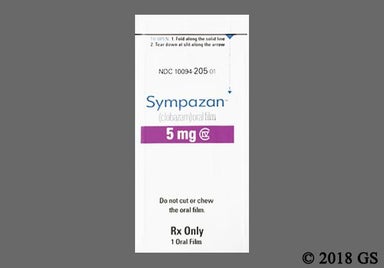
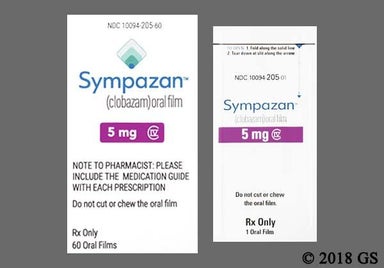
Sympazan (clobazam) images