Key takeaways:
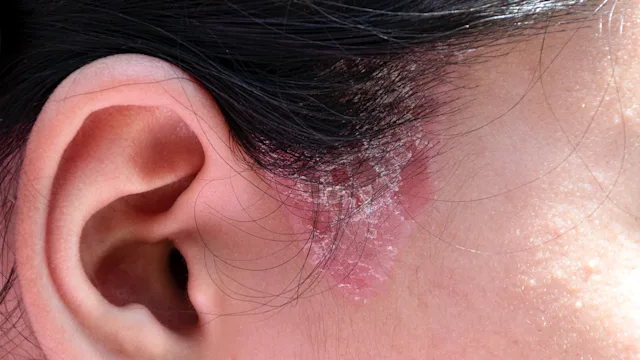
Skyrizi (risankizumab-rzaa) is an injectable medication that’s FDA approved to treat psoriatic arthritis, plaque psoriasis, and inflammatory bowel disease (IBD) in adults. It’s also approved for psoriasis and psoriatic arthritis in children ages 6 and older.
The recommended Skyrizi dosage for psoriatic arthritis and plaque psoriasis is 150 mg every 12 weeks after 2 loading doses of 150 mg given 4 weeks apart. For children who weigh under 40 kg (88 lbs), the dosage is 55 mg and follows the same schedule.
For IBD, you’ll start with 3 Skyrizi infusions given 4 weeks apart by a healthcare professional (600 mg for Crohn’s disease and 1,200 mg for ulcerative colitis). After that, the maintenance dosage of Skyrizi for both conditions is 180 mg or 360 mg injected under the skin once every 8 weeks.
There are ways to save on Skyrizi. If you’re eligible, a manufacturer savings card can help you get Skyrizi for as little as $0 per dose. A patient assistance program is also available.
Save on related medications
Skyrizi (risankizumab-rzaa) is a biologic medication that treats plaque psoriasis, psoriatic arthritis, and inflammatory bowel disease (IBD). IBD includes Crohn’s disease and ulcerative colitis. Skyrizi works by blocking a specific protein called an interleukin from causing inflammation in your body. This helps lessen the symptoms of your condition.
Skyrizi is an injectable medication that you’ll receive at a medical office or give yourself at home. And you don’t use it every day — just once every 8 to 12 weeks after your first few doses. That’s only 4 to 6 times a year.
Below, we’ll look at the various Skyrizi dosages for adults and children. Keep in mind that these are general guidelines. Your prescriber may tell you to use Skyrizi differently from what’s listed below. So be sure to follow their instructions.
What’s the typical Skyrizi dosage for adults?
The recommended Skyrizi dosage depends on what condition you’re treating.
In general, Skyrizi requires more frequent doses when you first start using it. These are called loading doses, because they help “load” the medication into your body. This helps Skyrizi start working faster.
After your loading doses, you’ll switch to a maintenance dose, which may be lower than your loading doses. This is the dose you’ll use throughout treatment.
Below are the recommended Skyrizi dosages for adults.

Plaque psoriasis and psoriatic arthritis
The Skyrizi dosages for plaque psoriasis and psoriatic arthritis are the same. You’ll start with a loading dose of 150 mg injected under the skin, followed by a second 150 mg dose 4 weeks later. After that, the maintenance Skyrizi dosage is 150 mg injected once every 12 weeks.
You can inject Skyrizi under the skin at home for plaque psoriasis and psoriatic arthritis. But in most cases, you’ll receive your first dose in a medical office to train you on proper injection technique.
Crohn’s disease
For Crohn’s disease, the recommended Skyrizi dosage starts with 3 loading doses of 600 mg, each given 4 weeks apart. The loading doses of Skyrizi for Crohn’s disease are not injections. Instead, they’re IV infusions that take at least 1 hour. So you’ll need to receive your loading doses in a medical office or an infusion center.
The recommended maintenance dosage of Skyrizi for Crohn’s disease is 180 mg or 360 mg injected under the skin every 8 weeks. You’ll start the maintenance dose 4 weeks after your last infusion. In most cases, you can inject your maintenance doses yourself at home.
Ulcerative colitis
For ulcerative colitis, the recommended Skyrizi dosage starts with 3 IV infusions of 1,200 mg each, given over at least 2 hours. Each infusion is separated by 4 weeks. You’ll receive your loading doses in a medical office or an infusion center.
The recommended maintenance dosage of Skyrizi for ulcerative colitis is 180 mg or 360 mg injected under the skin once every 8 weeks. You’ll start the maintenance dose 4 weeks after your last infusion. In most cases, you can inject your maintenance doses yourself at home.
What’s the typical Skyrizi dosage for children?
Skyrizi is approved for psoriasis and psoriatic arthritis in children ages 6 and older. Children who weigh 40 kg (88 lbs) or more will follow the same Skyrizi dosage as adults: 150 mg injected under the skin every 12 weeks after 2 loading doses of 150 mg given 4 weeks apart.
For children weighing under 40 kg, the recommended Skyrizi dosage starts with 2 loading doses of 55 mg given 4 weeks apart. Then you’ll inject 55 mg once every 12 weeks.
What are the different dosage forms of Skyrizi?
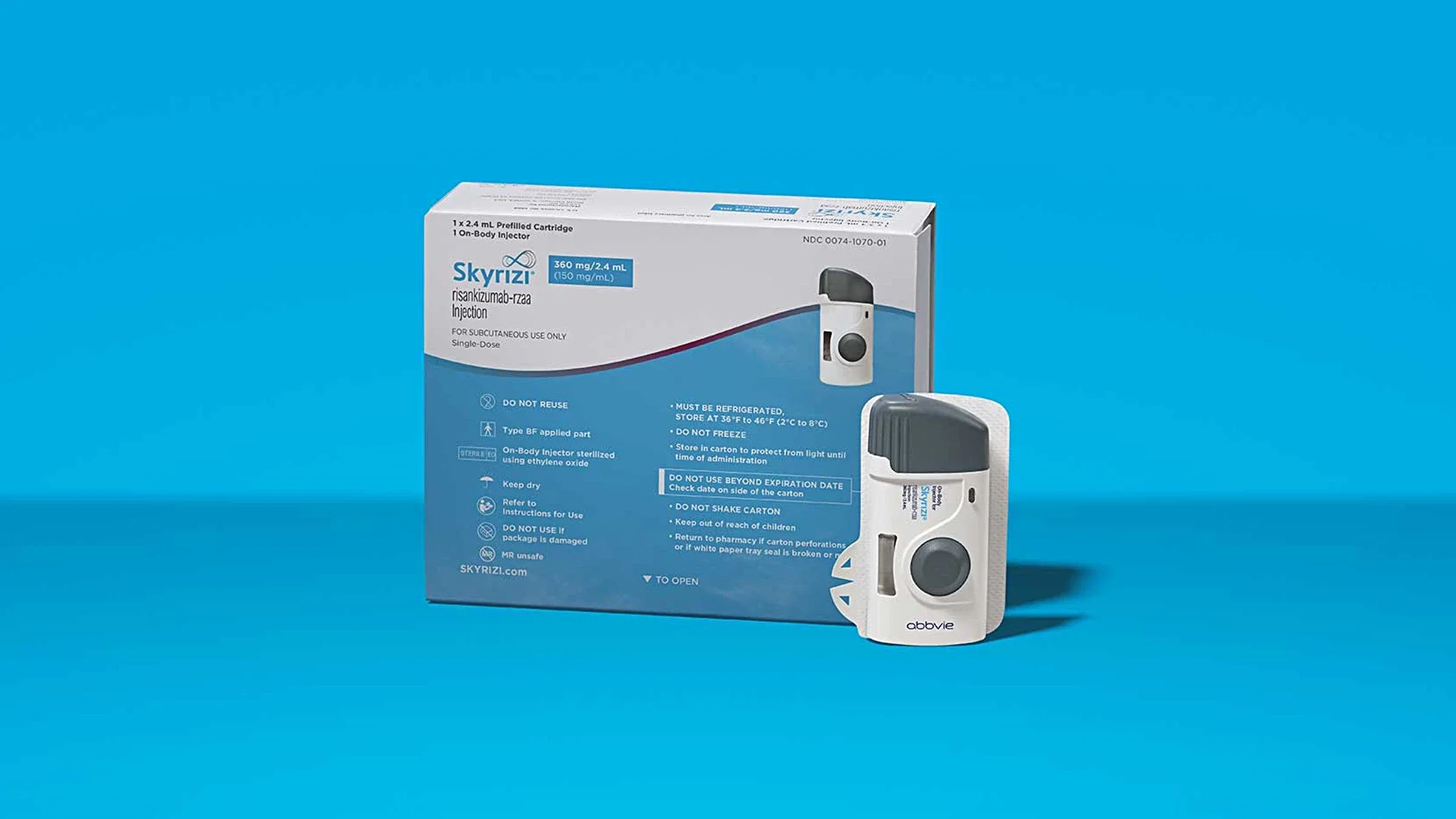
The different forms and doses of Skyrizi are shown in the chart below. Keep in mind that not all dosage forms are available for every condition. For example, the on-body injector comes only in doses used for IBD.
| Dosage form | Available doses |
|---|---|
| Prefilled single-dose injection pen |
|
| Prefilled single-dose syringe |
|
| Prefilled single-dose cartridge with on-body injector |
|
| Single-dose vial for IV infusion |
|
The vial of Skyrizi is used by a healthcare professional for IV infusion. You shouldn’t use this dosage form on your own.
You can use the Skyrizi injection pen, syringes, and on-body injectors at home. You can inject Skyrizi into your thigh or stomach. If you’re giving your child an injection or if someone else is giving you yours, Skyrizi can also be injected into the back of the upper arm.
These dosage forms are all prefilled and can’t be used more than once. You should dispose of each Skyrizi dose in a sharps container once you’ve used it.
Your prescriber should show you how to use your dosage form before you use it on your own. But you should reach out to your healthcare team if you have questions about how to inject Skyrizi.
You should store Skyrizi in the refrigerator. But it will help make injections less painful if you let it reach room temperature before you inject it.
What happens if you miss a dose of Skyrizi?
If you miss a dose of Skyrizi, inject it as soon as you remember. Then you can resume your regular dosage schedule. You can also ask your healthcare team if you have questions about what to do. They can help you get back on track.
An advantage of Skyrizi is that after your loading doses, you need to inject it only 4 or 6 times a year. Fewer injections are a huge benefit, but it can be easier to forget your dose when they’re far apart. To help prevent missed doses, try using a medication reminder app on your smartphone. You can also mark your yearly calendar and hang it somewhere you see often (such as on the fridge).
What should you do if you take too much Skyrizi?
Since Skyrizi comes only in single doses, it’s difficult to inject too much. If you aren’t sure if you’ve injected Skyrizi, count the doses you have left in the fridge. That may help you figure out if you have an extra. If you still aren’t sure, contact your prescriber for next steps.
If you’ve injected more Skyrizi than prescribed, contact your prescriber or call Poison Control at 1-800-222-1222.
How to save on Skyrizi
There are ways to save on Skyrizi, which is available only as a brand-name medication. GoodRx can help you navigate between patient assistance programs and copay savings cards to save money on your prescription.
Save with patient assistance programs. If you’re uninsured or underinsured, you may be eligible for Skyrizi’s patient assistance program, which offers the medication for free.
Save with a copay savings card. If you have commercial insurance, you may be eligible to pay as little as $0 for Skyrizi using a savings card from the manufacturer.
Frequently asked questions
It depends. In clinical studies, participants saw significant results for psoriasis after 16 weeks (4 months) of treatment. Those treating psoriatic arthritis symptoms saw improvement after 24 weeks (6 months). And those treating inflammatory bowel disease saw their symptoms improve after 12 weeks. This is an average measure, so your symptoms may improve sooner, or in some cases it may take longer to notice a difference. Your prescriber should keep an eye on your symptoms to help determine whether Skyrizi is a good fit for your needs.
No, Skyrizi isn’t a corticosteroid (steroid) medication. It’s a biologic medication, specifically a monoclonal antibody. It uses your body’s immune system to block certain proteins that cause inflammation. But like steroids, Skyrizi can make your immune system less effective. So you’re more likely to get certain infections while you’re receiving Skyrizi. But Skyrizi doesn’t have the other long-term side effects that are a concern with taking steroids regularly.
It depends. In clinical studies, participants saw significant results for psoriasis after 16 weeks (4 months) of treatment. Those treating psoriatic arthritis symptoms saw improvement after 24 weeks (6 months). And those treating inflammatory bowel disease saw their symptoms improve after 12 weeks. This is an average measure, so your symptoms may improve sooner, or in some cases it may take longer to notice a difference. Your prescriber should keep an eye on your symptoms to help determine whether Skyrizi is a good fit for your needs.
No, Skyrizi isn’t a corticosteroid (steroid) medication. It’s a biologic medication, specifically a monoclonal antibody. It uses your body’s immune system to block certain proteins that cause inflammation. But like steroids, Skyrizi can make your immune system less effective. So you’re more likely to get certain infections while you’re receiving Skyrizi. But Skyrizi doesn’t have the other long-term side effects that are a concern with taking steroids regularly.
The bottom line
Skyrizi (risankizumab-rzaa) is an injectable medication that helps reduce inflammation caused by certain autoimmune disorders. It’s FDA approved for plaque psoriasis and psoriatic arthritis in adults and children ages 6 and older. It’s also approved for Crohn’s disease and ulcerative colitis in adults.
For plaque psoriasis and psoriatic arthritis, the recommended Skyrizi dosage for adults and children who weigh 40 kg (88 lbs) or more is 150 mg injected once every 12 weeks. But first, you’ll inject 2 loading doses of 150 mg, separated by 4 weeks. For children who weigh under 40 kg, the recommended Skyrizi dosage schedule is the same, but with a lower (55 mg) dose.
For Crohn’s disease and ulcerative colitis, you’ll start with 3 IV infusions of Skyrizi, 1 every 4 weeks. For Crohn’s disease, each infusion contains 600 mg of Skyrizi. For ulcerative colitis, each infusion contains 1,200 mg. After that, the recommended Skyrizi dosage for both conditions is 180 mg or 360 mg injected under the skin once every 8 weeks.
Skyrizi infusions are given by a healthcare professional. But you can inject Skyrizi under the skin at home once you’ve been trained to do so. Reach out to your healthcare team if you have questions about your Skyrizi dosage or how to inject it.

Why trust our experts?




References
AbbVie. (n.d.). myAbbVie Assist Program.
AbbVie. (2026). Skyrizi- risankizumab-rzaa injection [package insert].
AbbVie. (2026). Skyrizi (risankizumab-rzaa) now approved for pediatric use in psoriatic disease.
Harris, A., et al. (2025). Interleukin. StatPearls.
MedlinePlus. (2026). Risankizumab-rzaa injection.
Poison Control. (n.d.). Get Poison Control help now. National Capital Poison Center.
Skyrizi. (2026). Discover Skyrizi savings. AbbVie.