Key takeaways:
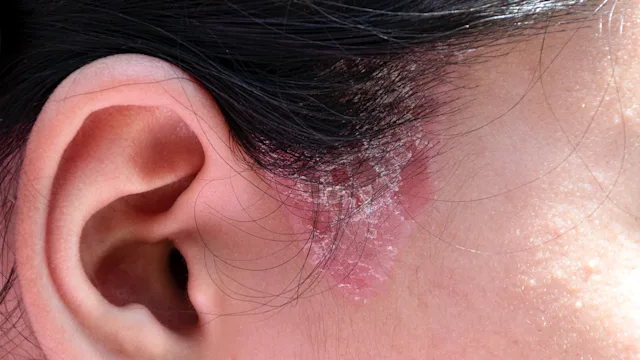
Skyrizi (risankizumab-rzaa) is an injectable biologic medication that treats plaque psoriasis, psoriatic arthritis, and inflammatory bowel disease.
Skyrizi’s price without insurance is about $30,000 per dose, on average. But how much you’ll pay depends on several factors, including your dosage and whether you have insurance coverage.
A manufacturer copay savings card or patient assistance program may help lower the price of Skyrizi. Talk with your prescriber, specialty pharmacy team, or insurance provider for guidance.
Save on related medications
Skyrizi (risankizumab-rzaa) is an injectable biologic medication that treats several autoimmune conditions. These include plaque psoriasis, psoriatic arthritis, and inflammatory bowel disease.
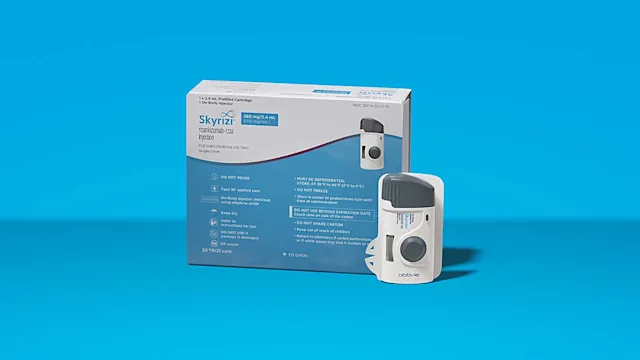
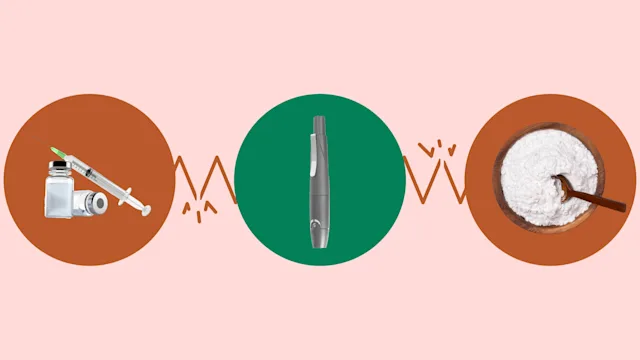
Skyrizi comes in a prefilled injection pen, a syringe, and an on-body injector device for at-home use. How much you’ll pay for Skyrizi depends on several factors, including your dosage and whether you have insurance coverage. Below, we’ll break down the price of Skyrizi without insurance along with ways to save on your prescription.
Good to know: Skyrizi also comes as an IV infusion that’s given in a healthcare setting by a medical professional. This form of Skyrizi is often covered by medical insurance, not prescription insurance. For this reason, it’s not included in this savings guide.
How much does Skyrizi cost?
The list price for 1 dose of Skyrizi is $23,838.42 as of January 6, 2026, according to its manufacturer. But the out-of-pocket cost is typically higher because of wholesaler and pharmacy markups.
The chart below shows the average retail price of Skyrizi without insurance for 1 dose of the most common forms available for at-home use.
What factors affect the cost of Skyrizi?
Several factors can affect the cost of Skyrizi, including:
Dose and dosage form: The dose and dosage form of Skyrizi you’re prescribed can affect your cost. For example, the on-body injector typically costs more than the prefilled injection pen.
Location: Where you live can affect the cost of your medication. For example, according to GoodRx research, medications are typically more affordable in Denver than in New Orleans.
Pharmacy: Skyrizi is typically filled by a specialty pharmacy. But prices can vary depending on the pharmacy you choose. Your prescriber and insurance plan can help you find the most affordable location to fill your prescription.
Insurance coverage: You’ll usually pay less for Skyrizi if your prescription insurance covers it. But your copay may vary based on your plan’s formulary (list of covered medications).
Biosimilar availability: Skyrizi is a biologic medication. Biologics don’t have traditional generics. Instead, a biologic can have biosimilars, which are highly similar (but not identical) to the original (reference) medication. Biosimilars are often available at a lower cost. But Skyrizi is available only as a reference (“brand-name”) product. This can play a role in its high price.
Does insurance cover Skyrizi?
Nearly every health insurance plan in the U.S. covers Skyrizi. But in many cases, you’ll need a prior authorization. This means your prescriber will have to provide documentation to the insurance company before the medication is approved. Step therapy (when you need to try lower-cost options first) is also required by many plans.
How different insurance plans cover Skyrizi
The table below breaks down the percentage of enrollees who have coverage for Skyrizi by insurance type. It also shows the likelihood of having prior authorization and step therapy requirements.
Insurance type | Enrollees covered for Skyrizi prefilled injection pen 150 mg/1 mL | Enrollees required to get prior authorization | Enrollees required to do step therapy |
|---|---|---|---|
Affordable Care Act (ACA) plans | 99.6% | 96.6% | 88.6% |
Commercial plans (excluding ACA plans) | 99.5% | 89.9% | 84.6% |
Medicare (Medicare Advantage and Part D plans) | 98.8% | 95.4% | 83% |
Medicaid, including state-run and managed care plans | 99.6% | 81.7% | 70.6% |
Source: Managed Markets Insight & Technology, LLC™, as of August 8, 2025. (See methodology below.)
Tips if your medication isn’t covered by insurance
If your insurance doesn’t cover Skyrizi, you still have options:
Request a formulary exception from your insurance company.
File an appeal if coverage is denied.
See if you qualify for Skyrizi’s patient assistance program.
Ask your prescriber about potential Skyrizi alternatives, such as Stelara (ustekinumab) or Humira (adalimumab), that may be preferred by your insurance or have lower-cost biosimilars available.
During your next open enrollment window, look for a health insurance plan that includes Skyrizi as a covered medication.
Ways to save on Skyrizi
There are several ways to save on the cost of Skyrizi. Specialty pharmacy staff can also help you find ways to make your medication more affordable, so don’t hesitate to ask them for help.
1. See if you qualify for a copay savings card
If you have commercial insurance, you may be able to pay as little as $0 per dose of Skyrizi using a savings card from the manufacturer. The card may also cover your copay for methotrexate, leflunomide, or hydroxychloroquine if you’re taking one of these medications along with Skyrizi for psoriatic arthritis. Monthly and yearly maximum savings caps may apply.
This program can also cover up to $1,000 per year for lab tests related to your Skyrizi prescription. You can use the copay card at the pharmacy, or submit a rebate request if you’ve already paid for the medication or services it covers.
To be eligible for the Skyrizi manufacturer copay card you must:
Have commercial insurance coverage for Skyrizi (government-funded insurance plans, such as Medicare or Medicaid, are not eligible)
Not have an insurance plan that uses an accumulator adjustment program or a copay maximizer program
You can access Skrizi manufacturer savings online or by calling 1-866-759-7494.
2. See if you qualify for a patient assistance program
If you’re uninsured or underinsured and you meet certain income requirements, you may be eligible for the myAbbVie Assist program. It offers Skyrizi at no cost. To qualify, you must:
Live in the U.S., including Puerto Rico, American Samoa, or the U.S. Virgin Islands
Have a prescription for Skyrizi from a licensed U.S. healthcare professional for an FDA-approved use
Have limited or no health insurance coverage
Demonstrate financial need and meet income restrictions
You can apply for my AbbVie Assist online, or call 1-800-222-6885. Your prescriber will also need to complete paperwork to confirm your eligibility for this program.
3. Look into independent patient assistance programs
Several nonprofit organizations also offer patient assistance programs that could help lower your Skyrizi costs. These are often catered to people living with a specific health condition, and each program has its own eligibility criteria. Examples of organizations that offer these programs include:
Keep in mind that you may need to join a wait list if a program isn’t accepting new applicants.
4. Tap into your HSA, FSA, or HRA
If you have a health savings account (HSA), a flexible spending account (FSA), or a health reimbursement arrangement (HRA), you can use it to help cover your out-of-pocket costs for Skyrizi. These tax-advantaged healthcare accounts let you pay for eligible expenses with tax-free dollars.
You can pay directly with your HSA or FSA card at the pharmacy, or cover the cost yourself and request reimbursement. The funds in HSAs roll over annually. But you typically have to use FSA dollars before your plan’s deadline.
Frequently asked questions
You should avoid receiving live vaccines, such as FluMist, while receiving Skyrizi. There’s a higher risk of the vaccine causing an infection, since Skyrizi weakens your immune system. It’s also a good idea to limit alcohol, since it can worsen inflammation and raise your risk of infections. Talk with your healthcare team before taking over-the-counter supplements, since some may interfere with Skyrizi’s effects. Examples include echinacea, ginseng, and melatonin.
It depends. In clinical studies, participants saw significant results for psoriasis after 16 weeks (4 months) of treatment. Those treating psoriatic arthritis symptoms saw improvement after 24 weeks (6 months). And those treating inflammatory bowel disease saw their symptoms improve after 12 weeks. This is an average measure, so your symptoms may improve sooner, or in some cases it may take longer to notice a difference. Your prescriber should keep an eye on your symptoms to help determine whether Skyrizi is a good fit for your needs.
No, Skyrizi isn’t a corticosteroid (steroid) medication. It’s a biologic medication, specifically a monoclonal antibody. It uses your body’s immune system to block certain proteins that cause inflammation. But like steroids, Skyrizi can make your immune system less effective. So you’re more likely to get certain infections while you’re receiving Skyrizi. But Skyrizi doesn’t have the other long-term side effects that are a concern with taking steroids regularly.
You should avoid receiving live vaccines, such as FluMist, while receiving Skyrizi. There’s a higher risk of the vaccine causing an infection, since Skyrizi weakens your immune system. It’s also a good idea to limit alcohol, since it can worsen inflammation and raise your risk of infections. Talk with your healthcare team before taking over-the-counter supplements, since some may interfere with Skyrizi’s effects. Examples include echinacea, ginseng, and melatonin.
It depends. In clinical studies, participants saw significant results for psoriasis after 16 weeks (4 months) of treatment. Those treating psoriatic arthritis symptoms saw improvement after 24 weeks (6 months). And those treating inflammatory bowel disease saw their symptoms improve after 12 weeks. This is an average measure, so your symptoms may improve sooner, or in some cases it may take longer to notice a difference. Your prescriber should keep an eye on your symptoms to help determine whether Skyrizi is a good fit for your needs.
No, Skyrizi isn’t a corticosteroid (steroid) medication. It’s a biologic medication, specifically a monoclonal antibody. It uses your body’s immune system to block certain proteins that cause inflammation. But like steroids, Skyrizi can make your immune system less effective. So you’re more likely to get certain infections while you’re receiving Skyrizi. But Skyrizi doesn’t have the other long-term side effects that are a concern with taking steroids regularly.
The bottom line
Skyrizi (risankizumab-rzaa) is an injectable biologic medication that treats plaque psoriasis, psoriatic arthritis, and inflammatory bowel disease. Skyrizi’s price without insurance is about $30,000 per dose, on average. But how much you’ll pay depends on several factors, including your dosage and whether you have insurance coverage.
A manufacturer copay savings card or patient assistance program may help lower the price of Skyrizi. Talk with your prescriber, specialty pharmacy team, or insurance provider for guidance.

Why trust our experts?



Methodology
We obtained national prescription coverage data for each medication from Managed Markets Insight & Technology (MMIT). The data reflects health insurance coverage as of August 2025.
We calculated the **percentage of enrollees in plans that cover each medication** by dividing the number of enrollees covered for the medication within a specific insurance channel (e.g., ACA, Medicare, Medicaid) by the total number of enrollees in all plans within that channel.
We determined the **percentage of enrollees in plans with a prior authorization **requirement by calculating the proportion of enrollees in plans that required prior authorization for the medication within each channel.
Finally, we measured the **percentage of enrollees in plans with a step therapy** requirement by calculating the proportion of enrollees in plans that imposed step therapy requirements for the medication in each channel.
These estimates, derived from national MMIT coverage data, provide insight into health insurance coverage for each medication. They take into account restrictions such as prior authorization, step therapy, and quantity limits. The percentages are expressed relative to the total number of enrollees covered by various insurance channels, including ACA plans, commercial (excluding ACA) plans, Medicare, and Medicaid (both state-run and managed care plans).
References
AbbVie. (n.d.). Available programs.
AbbVie. (n.d.). Registration.
AbbVie. (2026). Skyrizi- risankizumab-rzaa [package insert].
The Assistance Fund. (n.d.). Disease program hub.
HealthWell Foundation. (n.d.). Disease funds.
Medicaid.gov. (n.d.). Managed care. Centers for Medicare & Medicaid Services.
Patient Advocate Foundation TotalAssist. (n.d.). Get help with your out-of-pocket healthcare costs.
Skyrizi (risankizumab-rzaa). (n.d.). Discover Skyrizi savings.
Skyrizi (risankizumab-rzaa). (n.d.). Prescription rebate. AbbVie.
Skyrizi (risankizumab-rzaa). (n.d.). Skyrizi cost and savings. AbbVie.
Skyrizi (risankizumab-rzaa). (n.d.). Updates, answers, and Skyrizi treatment support are just a few clicks away. AbbVie.