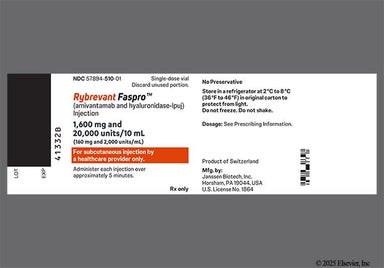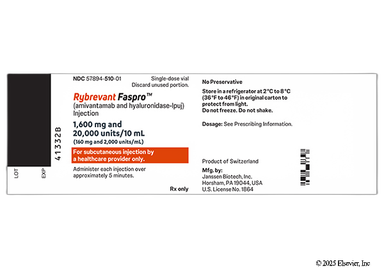
Rybrevant Faspro
Rybrevant Faspro (amivantamab-vmjw / hyaluronidase-vhjc) is a combination medication used to treat adults with non-small cell lung cancer (NSCLC) that have specific EGFR mutations. The medication is injected under the skin in your stomach by a healthcare professional. Depending on your treatment plan, you might receive it alone or with other cancer medications. Common side effects include rash, muscle or joint pain, and skin infections around the nails.


What is Rybrevant Faspro (amivantamab / hyaluronidase)?
What is Rybrevant Faspro (amivantamab / hyaluronidase) used for?
- Used with lazertinib as a first-choice treatment
- Used with carboplatin and pemetrexed if the cancer has gotten worse or it didn't respond well to EGFR inhibitors
- Used with carboplatin and pemetrexed as a first-choice treatment
- Used alone if the cancer has gotten worse or didn't respond well to platinum-based chemotherapy
How Rybrevant Faspro (amivantamab / hyaluronidase) works
Rybrevant Faspro (amivantamab / hyaluronidase) is a combination of 2 different medications:
- Amivantamab is a bispecific EGFR- and MET-directed antibody. It targets two proteins called EGFR and MET, which can help certain lung cancer cells grow and spread. By attaching to these proteins, it blocks signals that tell cancer cells to grow and helps your immune system find and destroy cancer cells.
- Hyaluronidase is an endoglycosidase. It helps your body absorb amivantamab after it’s injected under the skin.
Drug facts
| Common Brands | Rybrevant Faspro |
|---|---|
| Drug Class | Bispecific EGF and MET receptor-directed antibody / Endoglycosidase |
| Controlled Substance Classification | Not a controlled medication |
| Generic Status | No lower-cost generic available |
| Availability | Prescription only |

Side effects of Rybrevant Faspro (amivantamab / hyaluronidase)
The following side effects may get better over time as your body gets used to the medication. Let your healthcare provider know immediately if you continue to experience these symptoms or if they worsen over time.
Common Side Effects
Used with lazertinib:
- Rash (80%)
- Infected skin around the nail (58%)
- Muscle and joint pain (50%)
- Tiredness (37%)
- Mouth sores (36%)
- Swelling (34%)
- Nausea (30%)
- Diarrhea (22%)
- Vomiting (22%)
- Constipation (22%)
- Reduced appetite (22%)
- Headache (21%)
- Changes in certain blood tests
Note: Side effects might differ if you use Rybrevant Faspro (amivantamab / hyaluronidase) alone or with chemotherapy
Less Common Side Effects
Used with lazertinib:
- Dry skin
- Itchy skin
- Fever
- Injection site reactions
- Tingling sensation
- Dizziness
Rybrevant Faspro (amivantamab / hyaluronidase) serious side effects
Contact your healthcare provider immediately if you experience any of the following.
- Allergic and injection-related reactions: shortness of breath, fever, chills, flushing, chest discomfort, lightheadedness, vomiting
- Lung problems: shortness of breath, cough, fever
- Blood clot problems (when used with lazertinib): swelling, pain, or tenderness in the leg; sudden unexplained chest pain, shortness of breath
- Skin problems: severe rash, blisters, peeling, skin pain, sores, redness, raised acne-like bumps, itching, dry skin
- Eye problems: eye pain, inflammation of eyelids, dry eyes, eye redness, blurred vision, changes in vision, itchy eyes, excessive tearing, sensitivity to light
The following Rybrevant Faspro (amivantamab / hyaluronidase) side effects have also been reported
Side effects that you should report to your care team as soon as possible:
- Allergic reactions—skin rash, itching, hives, swelling of the face, lips, tongue, or throat
- Dry cough, shortness of breath or trouble breathing
- Eye pain, redness, irritation, or discharge with blurry or decreased vision
- Injection reactions—chest pain, shortness of breath or trouble breathing, feeling faint or lightheaded
- Redness, blistering, peeling, or loosening of the skin, including inside the mouth
Side effects that usually do not require medical attention (report these to your care team if they continue or are bothersome):
- Bone, joint, or muscle pain
- Constipation
- Fatigue
- Nail infection—redness, swelling, warmth, or pain around the nail
- Nausea
- Pain, redness, or swelling with sores inside the mouth or throat
- Swelling of the ankles, hands, or feet

Pros and cons of Rybrevant Faspro (amivantamab / hyaluronidase)
Pros
- Recommended option for NSCLC for certain adults
- Given as an injection under the skin instead of an IV infusion
- Typically given every 1 to 3 weeks
Cons
- Must be given by a healthcare professional
- Commonly causes rash and nail problems
- Can cause serious lung and skin side effects

Pharmacist tips for Rybrevant Faspro (amivantamab / hyaluronidase)

- Rybrevant Faspro (amivantamab / hyaluronidase) is injected under the skin in the stomach by a healthcare professional. The injection takes about 5 minutes to complete.
- Keep all of your Rybrevant Faspro (amivantamab / hyaluronidase) treatment appointments. If you miss an appointment, call your oncology care team as soon as possible to reschedule.
- If you're also taking lazertinib, take it before your Rybrevant Faspro (amivantamab / hyaluronidase) injection. Follow your care team's instructions on when to take it.
- Allergic or injection-related reactions are common with Rybrevant Faspro (amivantamab / hyaluronidase). Tell your oncology care team right away if you have symptoms like fever, chills, shortness of breath, nausea, flushing, chest discomfort, dizziness, or vomiting.
- Rybrevant Faspro (amivantamab / hyaluronidase) can cause skin problems, including rash. Wear broad-spectrum sunscreen when going outside and limit sun exposure during and for 2 months after your last treatment with this medication. Also apply moisturizer regularly to reduce the risk of skin issues.
- Rybrevant Faspro (amivantamab / hyaluronidase) can sometimes cause an infection around your nails, called paronychia. Contact your oncology care team if you notice pain, swelling, redness, or tenderness around a nail.
- Rybrevant Faspro (amivantamab / hyaluronidase) can cause eye problems. Tell your oncologist if you have eye pain, dry eyes, redness, blurry vision, vision changes, itching, excessive tearing, or sensitivity to light.
- Contact your oncology care team right away if you develop a new cough, shortness of breath, or worsening breathing problems while taking Rybrevant Faspro (amivantamab / hyaluronidase).
- Pregnancy: Rybrevant Faspro (amivantamab / hyaluronidase) can harm an unborn baby. If you’re able to become pregnant, use birth control during treatment and for 3 months after your last dose.
- Breastfeeding: Avoid breastfeeding while taking Rybrevant Faspro (amivantamab / hyaluronidase) and for 3 months after your last dose. It isn't known whether the medication passes into breast milk.

Risks and warnings for Rybrevant Faspro (amivantamab / hyaluronidase)
Rybrevant Faspro (amivantamab / hyaluronidase) can cause some serious health issues. This risk may be even higher for certain groups. If this worries you, talk to your doctor or pharmacist about other options.
Allergic and injection-related reactions
- Risk factors: First dose of Rybrevant Faspro (amivantamab / hyaluronidase)
Rybrevant Faspro (amivantamab / hyaluronidase) can cause reactions during or shortly after the injection. Symptoms can include shortness of breath, flushing, fever, chills, chest discomfort, low blood pressure, or vomiting. These reactions usually happen within a few hours of treatment and are most common with the first dose.
Before each dose, your oncology care team will give you medications to help lower the risk of a reaction. You’ll be monitored during and after your injection. Tell your care team right away if you notice any symptoms so they can treat the reaction and decide whether treatment should be paused or stopped.
Lung problems
Rybrevant Faspro (amivantamab / hyaluronidase) can cause serious lung inflammation, also called interstitial lung disease (ILD) or pneumonitis. In rare cases, this side effect can be life-threatening.
Tell your oncology care team right away if you develop new or worsening breathing problems while taking Rybrevant Faspro (amivantamab / hyaluronidase). Watch for symptoms such as shortness of breath, cough, or fever. Your oncologist might pause treatment while checking your symptoms.
Blood clots (when used with lazertinib)
- Risk factors: Taking Rybrevant Faspro (amivantamab / hyaluronidase) with lazertinib
When Rybrevant Faspro (amivantamab / hyaluronidase) is used with lazertinib, it can increase your risk of serious blood clots, including clots in the legs (deep vein thrombosis) and lungs (pulmonary embolism). Most blood clots happen during the first 4 months of treatment.
Your oncology care team will likely prescribe a blood thinner during the first 4 months to help lower this risk. Tell your care team right away if you have leg pain, leg swelling, chest pain, shortness of breath, or cough up blood. These can be signs of a blood clot and need immediate medical attention.
Skin problems
Rybrevant Faspro (amivantamab / hyaluronidase) commonly causes skin problems, including rash, acne-like bumps, itching, and dry skin. These reactions often start within the first few weeks of treatment and can sometimes be severe.
To help lower your risk, limit sun exposure and wear protective clothing and broad-spectrum sunscreen during treatment and 2 months after your last dose of Rybrevant Faspro (amivantamab / hyaluronidase). Using a moisturizer regularly can help prevent dry skin and reduce the risk of skin reactions. Get medical help right away if you develop severe skin peeling, blisters, sores, or a widespread rash, since these can be signs of a serious skin reaction.
Eye problems
Rybrevant Faspro (amivantamab / hyaluronidase) can cause eye problems, including dry eyes, red eyes, itchy eyes, blurry vision, eyelid inflammation, and, rarely, more serious eye conditions. These side effects can happen at any time during treatment.
Tell your oncology care team right away if you notice new or worsening eye symptoms, such as eye pain, redness, blurry vision, vision changes, sensitivity to light, or excessive tearing. Your oncologist might refer you to an eye specialist and might adjust your treatment depending on how severe the problem is.
Harm to unborn babies
Rybrevant Faspro (amivantamab / hyaluronidase) can harm an unborn baby. If you can become pregnant, use effective birth control during treatment and for 3 months after your last dose. Talk with your oncologist about the risks and benefits of treatment if you're planning to become pregnant.

Rybrevant Faspro (amivantamab / hyaluronidase) dosage
Typical dosage for Rybrevant Faspro (amivantamab / hyaluronidase)
Rybrevant Faspro (amivantamab / hyaluronidase) is injected under the skin in your stomach by a healthcare professional. Your dose depends on your body weight, the type of lung cancer being treated, and whether you're using it with other cancer medications.
In general:
- Used with carboplatin and pemetrexed:
- Weight less than 80 kg: The typical dose is 1,600 mg / 20,000 units once. Then, 2.400 mg / 30,000 units is given once a week for 2 weeks, followed by once every 3 weeks starting in Week 4.
- Weight 80 kg or more: The typical dose is 2,240 mg / 28,000 units once. Then, 3,360 mg / 42,000 units is given once a week for 2 weeks, followed by once every 3 weeks starting in Week 4.
- Used alone or with lazertinib:
- Weight less than 80 kg: The typical dose is 1,600 mg / 20,000 units once a week for 4 weeks. Starting in Week 5, you’ll receive either 1,600 mg / 20,000 units every 2 weeks OR 3,520 mg / 44,000 units every 4 weeks.
- Weight 80 kg or more: The typical dose is 2,240 mg / 28,000 units once a week for 4 weeks. Starting in Week 5, you’ll receive either 2,240 mg / 28,000 units every 2 weeks OR 4,460 mg / 58,000 units every 4 weeks.
Your dose might differ if you experience side effects to Rybrevant Faspro (amivantamab / hyaluronidase).
Before each injection, you'll receive medications to help lower the risk of injection-related reactions. If you miss an appointment, contact your oncology team as soon as possible to reschedule.

What are alternatives to Rybrevant Faspro (amivantamab / hyaluronidase)?
Adults with advanced or metastatic NSCLC with certain EGFR mutations:

Rybrevant Faspro (amivantamab / hyaluronidase) images