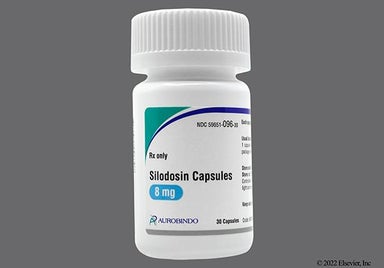
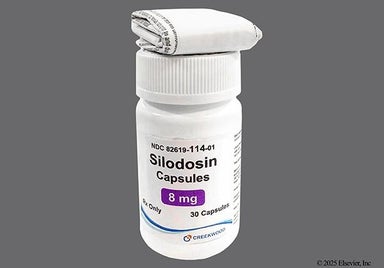
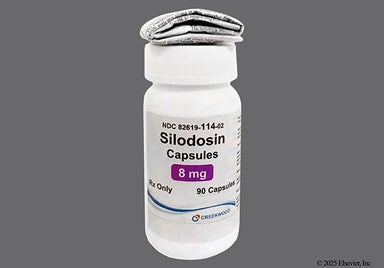
Silodosin (Rapaflo) is used to treat symptoms of benign prostatic hyperplasia (BPH), or having an enlarged prostate. This medication is available as a brand-name and generic version, and it comes as a capsule that you take by mouth. The dosage is typically just once daily with a meal, but it can affect your ejaculation as a side effect (for example, causing you to orgasm with less or no semen).
Silodosin (Rapaflo) is an alpha-1 blocker. It specifically blocks the alpha-1 receptor (protein) located on your prostate and bladder. This helps relax those muscles and make it easier for you to urinate.
The following side effects may get better over time as your body gets used to the medication. Let your healthcare provider know immediately if you continue to experience these symptoms or if they worsen over time.
Common Side Effects
Retrograde ejaculation (orgasm with less or no semen; 28%)
Dizziness (3%)
Diarrhea (3%)
Drop in blood pressure when standing from a seated or lying down position (3%)
The following Silodosin (Rapaflo) side effects have also been reported
Along with its needed effects, a medicine may cause some unwanted effects. Although not all of these side effects may occur, if they do occur they may need medical attention.
Check with your doctor immediately if any of the following side effects occur:
Some side effects may occur that usually do not need medical attention. These side effects may go away during treatment as your body adjusts to the medicine. Also, your health care professional may be able to tell you about ways to prevent or reduce some of these side effects. Check with your health care professional if any of the following side effects continue or are bothersome or if you have any questions about them:
Can open capsules and sprinkle the powder inside on applesauce if it's hard to swallow the capsules whole
Lower-cost generic version available
Cons
Has some side effects related to low blood pressure, such as dizziness
Can cause retrograde ejaculation (an orgasm with little or no semen), but is reversible when you stop the medication
Might complicate cataract surgery
Can't use if you have severe kidney or liver problems
Pharmacist tips for Silodosin (Rapaflo)
Take silodosin (Rapaflo) with a meal. Taking the medication on an empty stomach might lead to more side effects.
If you have a hard time swallowing the capsule, you can open it up and sprinkle the powder inside onto a tablespoon of applesauce (cool or room temperature). Once sprinkled, swallow the spoonful right away without chewing. Then, drink a full glass of water to make sure you've swallowed all of the medication.
You might feel dizzy or lightheaded while you're taking silodosin (Rapaflo), especially when you stand from a lying down or sitting position. This can be dangerous if the dizziness causes you to fall. When you stand up, try to hold onto something like a sturdy table to help support your weight. Don't stand up too quickly.
Avoid drinking alcohol with silodosin (Rapaflo). Both alcohol and silodosin (Rapaflo) can make you dizzy, which could possibly lead to falls.
Avoid driving, using heavy machinery, or doing other activities that require a lot of coordination when you first start silodosin (Rapaflo). This medication can cause side effects like dizziness that make these activities more difficult or dangerous so it's best to wait until you know how it affects your body first.
Make sure you talk to your provider about all the medications you're taking. Your provider can check to see whether there are drug interactions with silodosin (Rapaflo) that can raise your risk of harm. If there are, your provider might need to change the doses of your medications to make sure you're getting the right amount of everything you're prescribed.
Risks and warnings for Silodosin (Rapaflo)
Silodosin (Rapaflo) can cause some serious health issues. This risk may be even higher for certain groups. If this worries you, talk to your doctor or pharmacist about other options.
Silodosin (Rapaflo) makes your blood pressure drop when you go from sitting to standing. Sometimes, this can cause dizziness or fainting. This blood pressure drop is usually worse when you first start taking silodosin (Rapaflo). Your risk might be higher if you're taking blood pressure medications or PDE5 inhibitors like sildenafil. Avoid driving or using heavy machinery until you know how this medication makes you feel.
Higher risk for side effects in people with kidney problems
You might be at higher risk of side effects from silodosin (Rapaflo) if you have kidney problems. When your kidneys don't work as well as they should, your body can't get rid of the medication from your system as well. As a result, the medication can build up in your body and raise your risk for toxicity. Let your provider know before starting silodosin (Rapaflo) if you have kidney problems. Your provider might recommend a low dose for you to lower your risk for side effects. Tell your provider if you experience any side effects while taking silodosin (Rapaflo). You can't take silodosin (Rapaflo) and will need to take a different medication if you have severe kidney problems.
Interactions with other medications
Silodosin (Rapaflo) interacts with a number of medications. Some medications, like ketoconazole, clarithromycin, and ritonavir, can slow down the breakdown of silodosin (Rapaflo) and cause its levels to go too high in your body. Other medications have similar side effects as silodosin (Rapaflo). For example, be careful if you're also taking PDE5 inhibitors like sildenafil; both silodosin (Rapaflo) and PDE5 inhibitors can lower your blood pressure. Make sure you talk to your providers and pharmacists about all the medications you're taking. They might need to change the doses of the medications you're taking to keep you safe.
Should rule out prostate cancer
Many of the symptoms of prostate cancer and enlarged prostate overlap. Your healthcare provider will examine you for prostate cancer to rule it out before treating you for BPH with silodosin (Rapaflo).
Floppy iris syndrome (a cataract surgery complication)
Risk factors: Cataracts surgery
Tell your eye provider if you are or have ever taken silodosin (Rapaflo) in the past. Although rare, some people have experienced a rare eye condition during cataract surgery called floppy iris syndrome (FIS). FIS can raise your risk of having eye problems during and after cataract surgery, and it can happen even after you've stopped taking silodosin (Rapaflo). Let your eye provider know if you're taking silodosin (Rapaflo) so they're aware of your risk for FIS.
Silodosin (Rapaflo) dosage
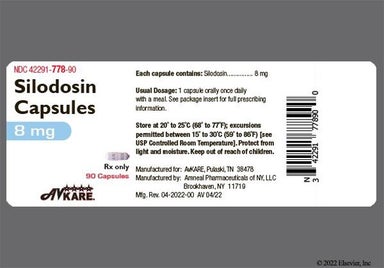
The average cost for 90 capsules of 8mg of Silodosin (Rapaflo) is $49.17 with a free GoodRx coupon. This is 87.71% off the average retail price of $400.18.
Interactions between Silodosin (Rapaflo) and other drugs
Silodosin (Rapaflo) may interact with certain medications or supplements. Always let your doctor and pharmacist know about any other medications or supplements (including prescribed and over-the-counter medications, vitamins, and dietary or herbal supplements) that you are currently taking. The list below does not include all possible drug interactions with Silodosin (Rapaflo). Please note that only the generic name of each medication is listed below.
Although certain medicines should not be used together at all, in other cases two different medicines may be used together even if an interaction might occur. In these cases, your doctor may want to change the dose, or other precautions may be necessary. When you are taking this medicine, it is especially important that your healthcare professional know if you are taking any of the medicines listed below. The following interactions have been selected on the basis of their potential significance and are not necessarily all-inclusive.
Using this medicine with any of the following medicines is not recommended. Your doctor may decide not to treat you with this medication or change some of the other medicines you take.
Using this medicine with any of the following medicines is usually not recommended, but may be required in some cases. If both medicines are prescribed together, your doctor may change the dose or how often you use one or both of the medicines.
Using this medicine with any of the following medicines may cause an increased risk of certain side effects, but using both drugs may be the best treatment for you. If both medicines are prescribed together, your doctor may change the dose or how often you use one or both of the medicines.
Contraindications are specific health conditions or situations in which a person should not take a medication due to safety concerns. If you have any of the following conditions or if any of the following apply to you, let your healthcare provider know because Silodosin (Rapaflo) will not be safe for you to take.
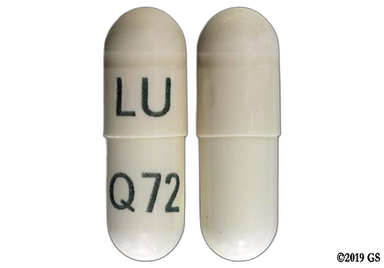
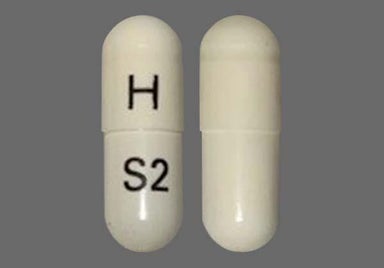
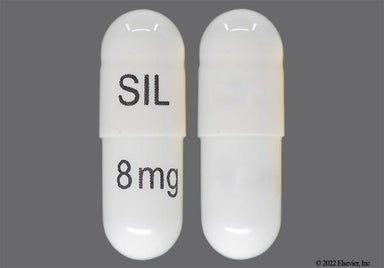
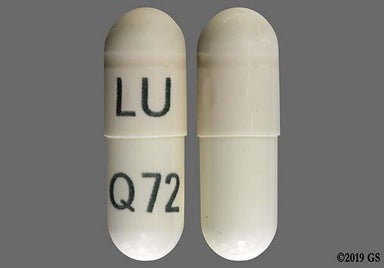
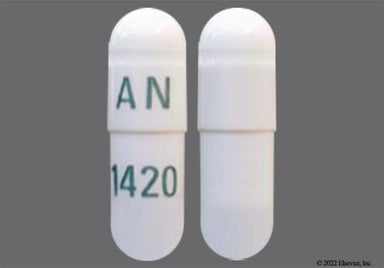
This medicine is White Capsule Imprinted With "H S2".White Capsule H S2 - Silodosin 8mg CapsuleThis medicine is White Capsule Imprinted With "An 1420".White Capsule AN 1420 - Silodosin 8mg CapsuleThis medicine is White Capsule Imprinted With "Sil 8 Mg".White Capsule SIL 8 mg - Silodosin 8mg CapsuleThis medicine is White Capsule Imprinted With "Sil 8 Mg".White Capsule SIL 8 mg - Silodosin 8mg CapsuleThis medicine is White Capsule Imprinted With "Lu Q72".White Capsule LU Q72 - Silodosin 8mg CapsuleThis medicine is White Capsule Imprinted With "An 1420".White Capsule AN 1420 - Silodosin 8mg CapsuleThis medicine is White Capsule Imprinted With "480 8".White Capsule 480 8 - Silodosin 8mg CapsuleThis medicine is White Capsule Imprinted With "480 8".White Capsule 480 8 - Silodosin 8mg Capsule
GoodRx Health has strict sourcing policies and relies on primary sources such as medical organizations, governmental agencies, academic institutions, and peer-reviewed scientific journals. Learn more about how we ensure our content is accurate, thorough, and unbiased by reading our editorial guidelines.
Prescription savings
Stop paying too much for your prescriptions. Compare prices, get pharmacy coupons, and save up to 80%.
Plans start at $9.99/mo. (when paid yearly). Terms apply.
Common questions about Silodosin
Most people in studies had improvements in their prostate symptoms within the first month of taking Silodosin. Keep in mind that this can be different for everyone. Talk to your healthcare provider if you don't notice any positive changes in your urinary symptoms within the first few months of taking Silodosin daily.
Silodosin can stay in your system for a few days after your last dose. Because Silodosin can linger around in your system, you might still continue to see effects of the medication for a few days after you've stopped it. Keep in mind that this time frame is based on the medication's half-life. Silodosin might stay in your system for a bit longer if you're taking medications that raise the amount of Silodosin in your body (e.g., fluconazole (Diflucan)).
No, they're not the same. Silodosin and tamsulosin (Flomax) are different medications but are both categorized as alpha blockers. They both target proteins in the body (namely the prostate and bladder) that are involved in BPH. One doesn't necessarily work better than the other, but it might be worthwhile to try switching from one to the other if you're having bothersome side effects. Your provider will help you compare and decide which best fits your needs, but you should never take both alpha blockers together because they share similar side effects.
Some people have reported having erectile dysfunction while they're taking Silodosin. But more commonly, the medication causes issues with ejaculation like having orgasm with little to no semen, which typically go away after stopping the medication. There's also a study that found that people experienced more sexual side effects with Silodosin if they were warned about the side effects before taking the medication. Have a discussion with your healthcare provider if you have concerns about these effects on your sexual life.
You can take Silodosin for as long as it's helping your symptoms and as long as side effects are tolerable. Talk with your provider if you've been taking the medication for several months and haven't seen an improvement in your urinary symptoms. Also let your provider know if you're experiencing bothersome symptoms like problems with ejaculation or dizziness. Your provider might consider trying a different BPH medication.
Take your Silodosin dose every day with a meal. You can choose a time that's most convenient for you, but make sure you take your medication around the same time each day. You might feel dizzy or lightheaded after you take the medication, so it might be best to take it in the evening with your dinner so that you can sleep through this side effect.
No, Silodosin won't change the size of your prostate. Instead, it works by relaxing the muscles around your prostate and bladder to relieve your BPH symptoms. There are other types of BPH medications like finasteride (Proscar) that specifically help to shrink the prostate. Talk with your provider about the best type of medication for your symptoms.
It might not be a good idea to take sildenafil (Viagra) with Silodosin because this combination can make your blood pressure go too low. Talk to your provider before taking any erectile dysfunction medications like sildenafil (Viagra) or tadalafil (Cialis) with Silodosin.