



7 Statin Alternatives You Can Take to Help Lower Your Cholesterol
Statins may not be safe and effective for all people with high cholesterol. Some statin alternatives, like fibrates, may be able to help. Review your options here.
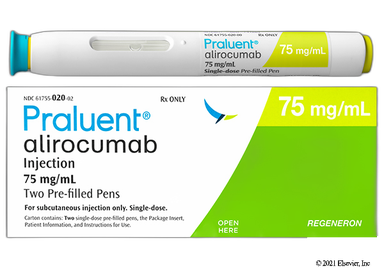
Praluent (alirocumab), is a PCSK9 inhibitor used to treat high cholesterol in certain adults and children, including those with a genetic condition called familial hypercholesterolemia. The medication also helps lower the risk of heart attack, stroke, and hospitalization for chest pain in adults with heart disease. Praluent (alirocumab) is injected under the skin in the thigh, stomach, or upper arm every 2 weeks or 4 weeks, depending on your dose. Common side effects include injection-site reactions, flu or flu-like symptoms (e.g. sneezing, coughing, runny nose), and diarrhea.

Praluent (alirocumab) is a PCSK9 inhibitor, which means it blocks a protein called PCSK9. Normally, PCSK9 prevents the liver from removing LDL cholesterol from the blood. By blocking PCSK9, Praluent (alirocumab) helps your body clear out more LDL cholesterol, leading to lower cholesterol levels.
| Common Brands | Praluent |
|---|---|
| Drug Class | PCSK9 inhibitor |
| Controlled Substance Classification | Not a controlled medication |
| Generic Status | No lower-cost generic available |
| Availability | Prescription only |

The following side effects may get better over time as your body gets used to the medication. Let your healthcare provider know immediately if you continue to experience these symptoms or if they worsen over time.
Contact your healthcare provider immediately if you experience any of the following.
Side effects that you should report to your care team as soon as possible:
Side effects that usually do not require medical attention (report these to your care team if they continue or are bothersome):



Tips for what to do if you miss a dose:
How to use Praluent (alirocumab):

Praluent (alirocumab) can cause some serious health issues. This risk may be even higher for certain groups. If this worries you, talk to your doctor or pharmacist about other options.
Praluent (alirocumab) can cause serious allergic reactions, including life-threatening ones like anaphylaxis. Symptoms include rash, itching, hives, facial swelling, and trouble breathing. If you experience any signs of a serious allergic reaction, stop using the medication immediately and get medical help right away.






Prescription savings
Stop paying too much for your prescriptions. Compare prices, get pharmacy coupons, and save up to 80%. Find expert answers to your health questions so you can make the best decisions for yourself and your family.
Health conditions
Medications & treatment
Access & affordability
Medication discounts

No, Praluent isn't a statin, it's a PCSK9 inhibitor. Both statins and PCSK9 inhibitors work differently to lower cholesterol. Statins reduce how much cholesterol your body makes, whereas PCSK9 inhibitors, like Praluent, help your body remove more cholesterol from the blood. Some people might need to take both a statin and a PCSK9 inhibitor to better control their cholesterol levels.
Praluent and Repatha (evolocumab) are both PCSK9 inhibitors that help lower cholesterol. They are both injected under the skin either every 2 or 4 weeks, and studies show they are similar in how well they work and safety. One key difference is their FDA-approved age cut-offs. For HoFH, Praluent is approved for adults, while Repatha (evolocumab) can be used in adults and children ages 10 and older. For HeFH, Praluent is approved for children ages 8 and older, while Repatha (evolocumab) is approved for people ages 10 and older. Talk to your prescriber if you have questions about comparing these medications.
It's not completely clear if Praluent raises blood sugar since study results are mixed. While some studies show Praluent doesn't raise blood sugar or A1c, other data suggests it might slightly raise blood sugar. If you have diabetes or concerns about blood sugar control, talk to a healthcare professional to see how Praluent fits into your treatment plan.
Hair loss wasn't reported as a side effect in clinical studies of Praluent. Contact your prescriber if you notice hair loss, hair shedding, or hair thinning while you're taking this medication. They can help figure out possible causes and discuss potential solutions.
It takes about 2 to 3 months for most of Praluent to leave your body after a single dose. This estimate is based on the half-life, which measures how long a medication stays in your system. Even though Praluent remains in your body for months, it should be taken every 2 or 4 weeks to keep the medication levels high enough in your body for it to work well to lower cholesterol.
It's best to take Praluent on schedule, either every 2 weeks or 4 weeks as prescribed. But occasionally taking it a day early is unlikely to be harmful. Staying as close to your regular schedule as possible helps keep your cholesterol levels stable. If you’re unsure or need to adjust your schedule, talk to your prescriber for guidance.
Praluent should be stored in the refrigerator. But it also can be kept at room temperature (up to 77°F) in the original carton for up to 30 days. If the medication isn't used within 30 days, it should be thrown away.

