



Xocova vs. Paxlovid: 6 Ways These COVID-19 Medications Compare
Xocova and Paxlovid are both prescribed for COVID-19, but Xocova is for prevention rather than treatment. Read on to learn more about Xocova versus Paxlovid.
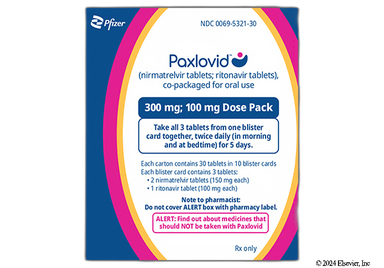
Paxlovid (nirmatrelvir / ritonavir) is a prescription antiviral medication. It's used to treat mild-to-moderate COVID-19 in people at high risk for severe illness. The medication comes in a pre-packaged blister card with all the tablets you need. The usual dose is taken by mouth twice a day for 5 days. Common side effects include changes in taste and diarrhea. Paxlovid (nirmatrelvir / ritonavir) can have many drug interactions, so your healthcare team will review your medications before you start treatment.
Note: Paxlovid (nirmatrelvir / ritonavir) is fully FDA approved to treat COVID-19 in adults. But it's still available under emergency use authorization (EUA) for children ages 12 to 18 years old weighing at least 88 lbs.

Paxlovid contains two antiviral medications that work together to treat COVID-19. Both antivirals are known as protease inhibitors.
Nirmatrelvir blocks a protease that the virus uses to make more copies of itself. This stops the virus from spreading in your body.
Ritonavir slows nirmatrelvir from breaking down in your body. This helps keep nirmatrelvir in your body longer so it can keep fighting the virus.
| Common Brands | Paxlovid |
|---|---|
| Drug Class | Antiviral |
| Controlled Substance Classification | Not a controlled medication |
| Generic Status | No lower-cost generic available |
| Availability | Prescription only |

The following side effects may get better over time as your body gets used to the medication. Let your healthcare provider know immediately if you continue to experience these symptoms or if they worsen over time.
Contact your healthcare provider immediately if you experience any of the following.
Side effects that you should report to your care team as soon as possible:
Side effects that usually do not require medical attention (report these to your care team if they continue or are bothersome):




Paxlovid (nirmatrelvir / ritonavir) can cause some serious health issues. This risk may be even higher for certain groups. If this worries you, talk to your doctor or pharmacist about other options.
 Paxlovid (nirmatrelvir / ritonavir) interacts with many medications. Some interactions can raise the amount of certain medications in your body. This can raise your risk of serious side effects. Other medications interactions can make Paxlovid work less well. This can make your COVID-19 infection get worse. Examples of medications that can interact with Paxlovid are simvastatin (Zocor), lurasidone (Latuda), some seizure medications, and St. John's wort.
Before starting Paxlovid (nirmatrelvir / ritonavir), tell your prescriber and pharmacist about all the medications and supplements you take. This is important so your care team can check for drug interactions. They might stop or change some of your medications to keep you safe during treatment. Don't start any new medications without talking to your care team first.
Some people have had an allergic reaction to Paxlovid (nirmatrelvir / ritonavir). This can include serious skin reactions or anaphylaxis. Sometimes, it can be life-threatening.
Get medical help right away if you notice a rash, blisters, peeling skin, or trouble breathing. Also get help if you have swelling of your face, lips, or tongue. These can be signs of a serious allergic reaction.
Paxlovid contains ritonavir, which can sometimes cause liver damage. Tell your prescriber before starting this medication if you have liver problems, including hepatitis. They can make sure it's safe for you.
Watch for signs of liver problems while taking Paxlovid (nirmatrelvir / ritonavir). These can include stomach pain, loss of appetite, dark urine, or yellowing of your skin or the whites of your eyes. Call your care team right away if you notice any of these symptoms.
Paxlovid contains ritonavir, a medication that's also used to treat human immunodeficiency virus (HIV). If you have undiagnosed or untreated HIV, taking Paxlovid without HIV treatment can make HIV become resistant to some HIV medications. This means those medications might work less well in the future. Tell your prescriber if you have HIV or think you might have HIV before starting Paxlovid.

 Carton
| Dosage | Quantity | Price as low as | Price per unit |
|---|---|---|---|
| 30 tablets of 150mg/100mg | 1 carton | $1,489.86 | $1,489.86 |
| 20 tablets of 150mg/100mg | 1 carton | $1,488.45 | $1,488.45 |
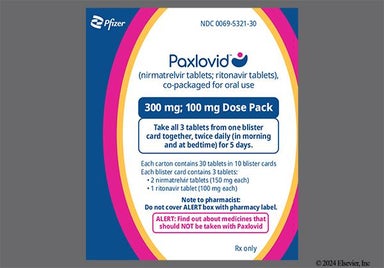
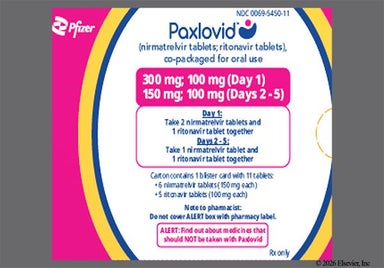
Paxlovid comes in a pre-packaged blister card with all the tablets you need for treatment.
For most people, take 1 Paxlovid dose by mouth every 12 hours for 5 days. Each dose is three tablets: two nirmatrelvir tablets (150 mg each) and one ritonavir tablet (100 mg).
If you have kidney problems, your blister card and dose might be different. Follow your prescriber's instructions.


Contraindications are specific health conditions or situations in which a person should not take a medication due to safety concerns. If you have any of the following conditions or if any of the following apply to you, let your healthcare provider know because Paxlovid (nirmatrelvir / ritonavir) will not be safe for you to take.












Prescription savings
Stop paying too much for your prescriptions. Compare prices, get pharmacy coupons, and save up to 80%. Find expert answers to your health questions so you can make the best decisions for yourself and your family.
Health conditions
Medications & treatment
Access & affordability
Medication discounts

Yes, most people can take Paxlovid safely. It can cause some side effects, like diarrhea and changes in taste. But side effects are usually mild and go away after treatment ends. But still, Paxlovid might not be safe for everyone. This can include people with severe liver or kidney problems. It can also include people who take medications that have serious interactions with Paxlovid. Talk to your prescriber to find out if Paxlovid is safe for you.
You need a prescription to get Paxlovid. You can get a prescription from a healthcare professional, like your primary care provider. This is usually through an in-person or telehealth visit. In some states, trained pharmacists can also prescribe Paxlovid. Before prescribing, they'll review your health history and medications to make sure it's safe for you. Most pharmacies have Paxlovid, but it's a good idea to make sure it's in stock. Ask your care team if you have more questions on how to get Paxlovid.
Yes, if you're at high risk of becoming very sick from COVID-19 and your symptoms started less than 5 days ago. Paxlovid is used to treat mild-to-moderate COVID symptoms. It's for adults and children ages 12 years and older who weigh at least 88 pounds and are at high risk of severe illness. Talk to a healthcare professional as soon as you notice COVID symptoms. They can help decide if Paxlovid is right for you.
No. Paxlovid is FDA approved to be started within 5 days of your first COVID-19 symptoms. Starting it later means that the medication might not work as well to lower your risk of severe illness. Paxlovid hasn't been studied or approved for late use. If it's been more than 5 days since your symptoms started, talk to a healthcare professional about other treatment options.
Paxlovid starts working soon after you take your first dose. Some people can notice their COVID-19 symptoms start to improve within 1 to 2 days. But it can take a few more days before your symptoms get better all the way. Finish all the tablets in your Paxlovid blister card, even if you feel much better before you're done. Stopping treatment early might your COVID-19 infection get worse or be harder to treat. Talk to your prescriber if you're not sure of Paxlovid is working to treat your COVID infection.
Paxlovid doesn't directly make you less contagious. It helps stop the COVID-19 virus from making copies of itself. This gives your immune system time to clear the infection. You can still spread COVID to others while taking Paxlovid, even if you feel better. Follow current public health guidance to help prevent spreading COVID. Stay home while you're sick and wear a mask when recommended.
Yes, it's possible to have diarrhea as a side effect of Paxlovid. Keep in mind that diarrhea can also sometimes be a symptom of COVID-19. So it can be hard to tell if it's from the medication or the infection. If you have diarrhea, be sure to drink plenty of fluids, like water or broth, so you don't get dehydrated. Remember to keep taking Paxlovid as prescribed, even if diarrhea bothers you. This is important because skipping doses can make the virus harder to fight off. If your diarrhea becomes severe, call your primary care provider right away.
It takes a little more than a day for most of Paxlovid to leave your system after you take a dose. This is based on the half-life of the medication, or how long it takes half the amount to leave your body. Keep in mind that this timing can differ for people who have kidney or liver problems. It can also differ for people who take medications that interact with Paxlovid. Ask your care team if you have other questions about how long Paxlovid stays in your system.
