Padcev
Padcev (enfortumab vedotin) treats advanced or metastatic bladder cancer in adults. It’s a type of targeted therapy called an antibody-drug conjugate. Padcev is given as an infusion through the vein (IV), usually at an infusion clinic. It can be given together with Keytruda (pembrolizumab). But Padcev is used alone for people who’ve tried other treatments already. Common side effects of Padcev are rash, fatigue, and numbness or tingling in the hands and feet.


What is Padcev?
What is Padcev used for?
- Advanced or metastatic bladder cancer
How Padcev works
Padcev is a type of targeted cancer medication called an antibody-drug conjugate (ADC). It has two components that work together to find and destroy cancer cells in the body.
Padcev has a component that works as a monoclonal antibody. It finds Nectin-4, a protein found on bladder cancer cells. The antibody helps guide Padcev directly to the cancer cells with the Nectin-4 protein on them.
Once Padcev reaches and enters the bladder cancer cell, the chemotherapy part of the medication starts working. The chemotherapy works as a microtubule inhibitor. It stops the cancer cell from growing and dividing. This destroys the cancer cell and keeps the bladder cancer from growing.
Drug facts
| Common Brands | Padcev |
|---|---|
| Drug Class | Antibody-drug conjugate |
| Controlled Substance Classification | Not a controlled medication |
| Generic Status | No lower-cost generic available |
| Availability | Prescription only |

Side effects of Padcev
The following side effects may get better over time as your body gets used to the medication. Let your healthcare provider know immediately if you continue to experience these symptoms or if they worsen over time.
Common Side Effects
- Rash (54%)
- Feeling very tired (50%)
- Numbness, tingling, or pain in the hands and feet (peripheral neuropathy) (50%)
- Hair loss (47%)
- Not feeling as hungry (41%)
- Lower white blood cell count (up to 41%)
- Diarrhea (35%)
- Itching (34%)
- Higher blood sugar levels (33%)
- Nausea (30%)
Less Common Side Effects
- Fever
- Constipation
- Stomach pain
- Muscle, bone, or joint pain
- Dry eye
- Dry skin
- Taste changes
- Bleeding
- Lower weight
- Urinary tract infection (UTI)
- Changes in electrolyte levels or other lab values
Note: Side effects were reported by adults taking Padcev by itself. They might differ if you’re taking it with other cancer medications.
Padcev serious side effects
Contact your healthcare provider immediately if you experience any of the following.
- Serious skin reactions: rash, feeling very itchy, skin redness, blistering or peeling skin
- High blood sugar levels: feeling very hungry or thirsty, urinating often
- Lung problems: cough, feeling like you can’t catch your breath
- Eye problems: changes in vision
- Irritation at the infusion site: pain, swelling, or redness around the infusion site
The following Padcev side effects have also been reported
Side effects that you should report to your care team as soon as possible:
- Allergic reactions—skin rash, itching, hives, swelling of the face, lips, tongue, or throat
- Dry cough, shortness of breath or trouble breathing
- Eye pain, redness, irritation, or discharge with blurry or decreased vision
- High blood sugar (hyperglycemia)—increased thirst or amount of urine, unusual weakness or fatigue, blurry vision
- Painful swelling, warmth, or redness of the skin, blisters or sores at the infusion site
- Pain, tingling, or numbness in the hands or feet
- Redness, blistering, peeling, or loosening of the skin, including inside the mouth
- Unusual bruising or bleeding
Side effects that usually do not require medical attention (report these to your care team if they continue or are bothersome):

Pros and cons of Padcev
Pros
- Recommended option for advanced or metastatic bladder cancer
- A type of targeted therapy, which works in a more specific way to fight cancer than traditional chemotherapy
Cons
- Given as an infusion through the vein (IV) at a medical center
- Can cause hair loss and numbness and tingling in the hands and feet

Pharmacist tips for Padcev

- Be sure to plan enough time for your Padcev infusions. Each infusion is given over 30 minutes. But you might need some extra time to get settled in or receive any other treatments.
- While rare, the area around your infusion site might get irritated during or after your Padcev infusion. Tell your nurse right away if you notice pain, swelling, or redness around the infusion site. They can help manage and relieve these symptoms.
- It’s common for Padcev to cause rashes, which are usually mild. But in rare situations, they can be life-threatening. Tell your oncology care team right away if you have a rash, skin redness, peeling skin, or blisters. Also let them know if you feel very itchy. Your care team can find ways to help you.
- Let your care team know if you feel numbness, tingling, burning, pain, or weakness in your hands or feet while taking Padcev. These can be signs of nerve problems called peripheral neuropathy. Your oncologist might adjust your treatment plan to help manage and prevent this side effect.
- Your oncologist might suggest using artificial tears while you’re taking Padcev. This can help prevent dry eye from the medication. If your eyes feel too dry or your vision changes, tell your care team.
- Although rare, Padcev can cause lung problems. Call your oncology care team if you have a new cough, a cough that gets worse, or trouble breathing.
- Some people have had higher blood sugar levels while taking Padcev. Tell your oncology care team and your primary care provider if you feel very hungry or thirsty or need to urinate more often than usual. These can be signs of high blood sugar. If you have diabetes, check your blood sugar levels often during treatment.
- If you or your partner can become pregnant, use effective birth control while taking Padcev. For women, keep using birth control for 2 months after your last Padcev infusion. And for men, continue using birth control for another 4 months after your last dose. Tell your oncologist right away if you or your partner gets pregnant. This medication can harm an unborn baby.

Risks and warnings for Padcev
Padcev can cause some serious health issues. This risk may be even higher for certain groups. If this worries you, talk to your doctor or pharmacist about other options.
Serious skin reactions
Rash is a common Padcev side effect. But in rare cases, serious and possibly life-threatening skin reactions can happen. These can include Stevens-Johnson syndrome (SJS) or toxic epidermal necrolysis (TEN). Most times, these serious skin reactions happened during the first cycle of treatment. But they can happen during later cycles too.
If you have itching, any rash, or blisters while taking Padcev, tell your oncology care team right away. They can check your skin and recommend medications like antihistamines or steroid creams to help with your symptoms. If your rash is severe, your oncologist might stop Padcev and make changes to your treatment plan.
High blood sugar levels
- Risk factors: History of high blood sugar or diabetes | Higher body mass index (BMI) | High hemoglobin A1C before starting treatment
In studies, some people taking Padcev had higher blood sugar levels. In some cases, this led to more serious problems like diabetic ketoacidosis (DKA). Most times, blood sugar levels went up within a month of treatment.
Talk to your oncologist about your medical history. People with diabetes, high A1C levels, or higher BMI might have a greater risk of very high blood sugar levels. If you have diabetes or are at risk for it, your care team will ask you to check your blood sugar regularly.
Tell your care team right away if your blood sugar is high or if you notice symptoms of high blood sugar. Be aware if you feel very hungry, feel very thirsty, or need to urinate often. Depending on your blood sugar levels, you might need to start taking medications to help keep them under control.
Lung problems
- Risk factors: Taking with Keytruda (pembrolizumab)
Some people who received Padcev had rare but serious inflammation or damage in the lungs. This side effect usually happened within 2 to 4 months after starting the medication.
Let your oncologist know if you have trouble breathing or a cough that doesn’t get better. They can check your lungs to make sure it's safe to continue Padcev treatment.
Nerve problems (peripheral neuropathy)
- Risk factors: Taking with Keytruda (pembrolizumab)
Padcev can cause new or worsening nerve problems in your arms, hands, legs, or feet. This is called peripheral neuropathy. In studies, it usually started within 4 to 6 months after treatment began.
Let your oncologist know if you feel numbness, weakness, pain, burning, or "pins and needles" in your arms or legs. Also tell them if you have tremors (shakiness) or problems with balance. These could be signs of peripheral neuropathy. Your oncologist might need to change your Padcev dose or treatment schedule.
Eye problems
People taking Padcev can have some eye problems, typically within the first 2 months of treatment. The most common eye problems are dry eye and blurry vision. Your oncologist might recommend you to use artificial tears to prevent dry eye.
Let your care team know if you have dry eye or any vision changes while taking Padcev. They might refer you to an ophthalmologist to check your eyes.
Irritation at the infusion site
The nurse will help give you your Padcev infusion through a vein properly. But in rare cases, the medication can leak out of the vein during the infusion. This can cause irritation and damage to the skin or tissue around the area. Sometimes, these reactions happen during the infusion. But other times, they can get worse a couple days after and then slowly get better over the next few weeks.
Tell your nurse right away if you feel pain, burning, or warmth around the IV site during or after your Padcev infusion. Also let them know if you see any redness or swelling around the area. They can help manage and treat these reactions.
Harm to an unborn baby
Animal studies show that Padcev can harm an unborn baby if it’s used during pregnancy. If you or your partner can get pregnant, use birth control while taking Padcev to prevent pregnancy. After treatment, keep using birth control for 2 more months if you’re a woman, or 4 more months if you’re a man. Tell your care team right away if you or your partner becomes pregnant.

Padcev dosage
Typical dosage for Padcev
Your oncology care team will calculate your Padcev dose based on your weight. The typical dose is 1.25 mg/kg as an infusion through the vein (IV). The highest dose you can get for each infusion is 125 mg.
Your Padcev dosing schedule depends on whether it's used by itself or together with other cancer treatments.
- When using Padcev by itself: Your Padcev infusions will be on day 1, 8, and 15 of each 28-day treatment cycle.
- When using Padcev together with Keytruda (pembrolizumab): Your Padcev infusions will be on day 1 and 8 of each 21-day treatment cycle.

What are alternatives to Padcev?

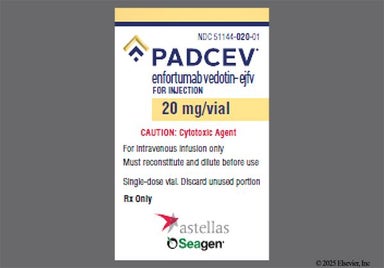
Padcev images