Key takeaways:
Ozempic and other glucose receptor agonist (GLP-1) medications may lower blood pressure by a few points.
Ozempic lowers the risk of heart attack and strokes for people who have Type 2 diabetes or heart disease.
Rapid or repeated weight gain and loss — which can happen with Ozempic — can increase stress on the heart and blood vessels.
Save on related medications
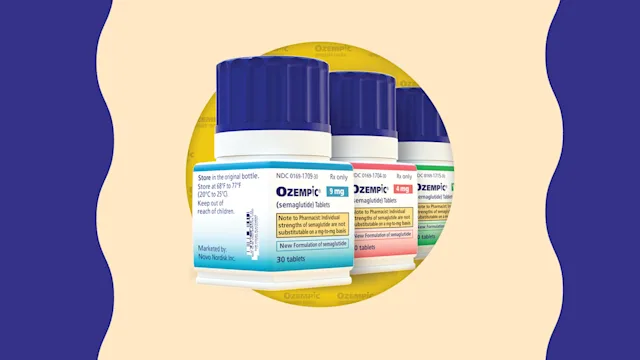
Medications like Ozempic (semaglutide) are popular and powerful options to treat Type 2 diabetes. Glucose receptor agonist (GLP-1) medications can also help with weight management and heart health. Lowering blood pressure is one way that Ozempic may support the health of your heart and blood vessels.
Does Ozempic help lower blood pressure?
People who take Ozempic or other GLP-1s often have a slight drop in systolic blood pressure. Systolic blood pressure is the top number of a blood pressure reading. On average, Ozempic lowers systolic blood pressure by about 3 points. Dual GLP-1s like tirzepatide (Mounjaro or Zepbound) lower systolic blood pressure by about 5 points.
For most people, taking a GLP-1 alone isn’t enough to treat high blood pressure. But it can help. Most blood pressure benefits happen because people lose weight on medications like Ozempic, and weight loss may lead to lower blood pressure.
Search and compare options
But GLP-1s may help the heart and blood vessels in other ways, like lowering inflammation. People who take GLP-1s for longer often have better blood pressure over time.
Can you take Ozempic with high blood pressure?
Yes, people with high blood pressure can take Ozempic. In fact, GLP-1s may help with blood pressure management. Most people will only see their blood pressure lowered by a few points. But for some people, that’s enough to add to the cardiovascular benefits.
Does Ozempic interact with blood pressure medications?
Ozempic slows down the passage of food through the stomach. That could affect how fast pills pass through your system, too. But it doesn’t significantly affect how blood pressure medications work.
Sometimes people on GLP-1s may need to lower the dose of their blood pressure medication. Especially if their blood pressure continues to improve over time.
Ozempic also helps to flush extra sodium from the body. Some people with heart failure who take it may need a lower dose of their diuretic, or water pill.
How can Ozempic improve your heart health?
GLP-1s improve blood pressure and blood glucose. Both of these benefits can improve your heart health. But there may be other benefits for your heart that include:
Lower LDL or “bad” cholesterol and triglycerides
Less inflammation in blood vessels
Relaxation of blood vessels
Slowed plaque formation in blood vessels, a process called atherosclerosis
Together, these benefits can translate to a lower risk of heart attacks and strokes.
Does Ozempic cause any heart problems?
For people with diabetes, high blood pressure, and heart disease, Ozempic has benefits for the heart.
But some people could see an increase in diastolic blood pressure (the bottom number). Or their heart rate may go up a little. These changes don’t usually make much of a difference in how you feel. But it’s something to be aware of — especially if you have a condition where slight changes in heart rate or blood pressure could affect you.
Another potential problem to consider is that people who repeatedly gain and lose weight have a higher risk of heart disease. Taking medications like Ozempic is safest with the guidance of a healthcare team.
Frequently asked questions
Most visits with a healthcare professional include a blood pressure measurement. But it’s also a good idea to check it outside the clinic. You can do this with a blood pressure cuff at home, or at places like your local pharmacy or community center.
Ozempic has a few rare but serious side effects. These include thyroid cancer, pancreatitis, and gallbladder disease. The more common side effects include nausea, bloating, diarrhea, and constipation.
There aren’t any medications you have to completely avoid with Ozempic. People who take sulfonylureas or insulin may need to stop or lower the dose of these medications to avoid episodes of low blood sugar. And some medication levels may need closer monitoring when taking Ozempic.
Most visits with a healthcare professional include a blood pressure measurement. But it’s also a good idea to check it outside the clinic. You can do this with a blood pressure cuff at home, or at places like your local pharmacy or community center.
Ozempic has a few rare but serious side effects. These include thyroid cancer, pancreatitis, and gallbladder disease. The more common side effects include nausea, bloating, diarrhea, and constipation.
There aren’t any medications you have to completely avoid with Ozempic. People who take sulfonylureas or insulin may need to stop or lower the dose of these medications to avoid episodes of low blood sugar. And some medication levels may need closer monitoring when taking Ozempic.
The bottom line
GLP-1 medications like Ozempic (semaglutide) tend to lower systolic blood pressure by a few points. They are safe for most people with high blood pressure or heart disease. Several of these medications, including Ozempic, also lower the risk of heart attacks and strokes. GLP-1s are safest and most effective as part of a complete program of nutrition and exercise, and the support of your healthcare team.

Why trust our experts?



References
Basile, C., et al. (2026). Effect of incretin-based therapies on blood pressure: A systematic review and meta-analysis. European Journal of Preventive Cardiology.
Calvarysky, B., et al. (2024). Drug-drug interactions between glucagon-like peptide 1 receptor agonists and oral medications: A systematic review. Drug Safety.
Das, S. R., et al. (2020). 2020 expert consensus decision pathway on novel therapies for cardiovascular risk reduction in patients with Type 2 diabetes. Journal of the American College of Cardiology.
Grenet, G., et al. (2025). Blood pressure lowering efficacy of dual glucose‐dependent insulinotropic polypeptide/glucagon‐like peptide‐1 (GIP/GLP‐1) receptor agonists compared to glucagon‐like peptide‐1 (GLP‐1) receptor agonists. Cochrane Database of Systematic Reviews.
Moiz, A., et al. (2025). GLP-1 receptor agonists and blood pressure: A state-of-the-art review of mechanisms, evidence, and clinical implications. American Journal of Hypertension.
Nauck, M. A., et al. (2026). GLP-1 receptor agonists and next-generation incretin-based medications: metabolic, cardiovascular, and renal benefits. The Lancet.
Novo Nordisk Pharmaceutical Industries. (2026). OZEMPIC- semaglutide injection, solution [package insert].
Rivera, F. B., et al. (2024). Glucagon-like peptide-1 receptor agonists modestly reduced blood pressure among patients with and without diabetes mellitus: A meta-analysis and meta-regression. Diabetes, Obesity and Metabolism.
Shah, S. J., et al. (2024). Semaglutide and diuretic use in obesity-related heart failure with preserved ejection fraction: a pooled analysis of the STEP-HFpEF and STEP-HFpEF-DM trials. European Heart Journal.