


How Much Does Orilissa Cost Without Insurance?
A dose pack of Orilissa can cost over $1,500 per month without insurance. See what affects the price of Orilissa and ways to save on your prescription.
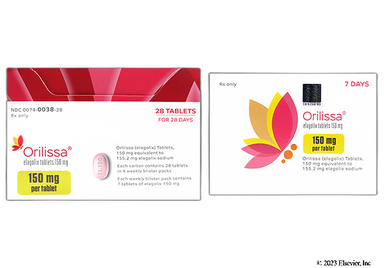
Orilissa (elagolix) is a hormone-free medication that's used to help manage moderate-to-severe pain caused by endometriosis. It belongs to a drug class called gonadotropin-releasing hormone (GnRH) antagonists. The medication is a tablet that's typically taken by mouth once or twice a day. Common side effects include hot flashes and headaches. It might also raise your risk of mood changes, and very rarely, suicidal thoughts. Orilissa (elagolix) can interact with many medications, including birth control pills.

Orilissa (elagolix) is a gonadotropin-releasing hormone (GnRH) antagonist. It blocks GnRH receptors in the brain from releasing various sex hormones, including estrogen, that play a role in endometriosis and the pain the condition causes. By lowering the levels of these sex hormones in the body, the medication helps relieve pain related to endometriosis.
| Common Brands | Orilissa |
|---|---|
| Drug Class | Gonadotropin-releasing hormone (GnRH) antagonist |
| Controlled Substance Classification | Not a controlled medication |
| Generic Status | No lower-cost generic available |
| Availability | Prescription only |

The following side effects may get better over time as your body gets used to the medication. Let your healthcare provider know immediately if you continue to experience these symptoms or if they worsen over time.
Contact your healthcare provider immediately if you experience any of the following.
Side effects that you should report to your care team as soon as possible:
Side effects that usually do not require medical attention (report these to your care team if they continue or are bothersome):




Orilissa (elagolix) can cause some serious health issues. This risk may be even higher for certain groups. If this worries you, talk to your doctor or pharmacist about other options.
Orilissa (elagolix) can cause bone loss (a decrease in bone mineral density). It's possible that the bone loss isn't completely reversible after you stop this medication. Your risk is higher if you're taking a higher dose and if you take the medication for a long period of time. You shouldn't take Orilissa (elagolix) if you have a history of osteoporosis
Because of the greater risk for bone loss with longer treatment, your prescriber will limit the amount of time you take Orilissa (elagolix) — either up to 6 months or 2 years, depending on your situation. To help further lower your risk, ask your prescriber about taking calcium and vitamin D supplements during therapy. Your prescriber can also recommend other ways to keep your bones healthy.
People who take Orilissa (elagolix) might have less bleeding during their monthly menstrual periods. The periods might also be less intense or shorter than usual. These changes can make it harder to tell whether you're pregnant or not. Take a pregnancy test if you think you might be pregnant. And stop taking Orilissa (elagolix) and let your prescriber know if the results of the test say that you're pregnant. This is important because the medication might raise the risk for pregnancy loss if it's taken early in pregnancy.
Orilissa (elagolix) can raise your risk of depression, mood changes, and suicidal thoughts or behavior. Let your care team know right away if you or your loved ones notice that you have any new or worsening depression, anxiety, or other unusual mood or behavior changes while you're taking Orilissa (elagolix). Your prescriber will discuss with you about whether you should continue taking this medication and whether you should speak with a mental health professional. Call 911 as soon as possible if you have suicidal thoughts or behaviors.
In clinical studies, some people who took Orilissa (elagolix) had elevated liver enzyme levels, which can be a sign of liver damage. You're at higher risk if you're taking a higher dose of Orilissa (elagolix).
To be safe, you should take Orilissa (elagolix) at the lowest dose possible to manage your symptoms. Get medical help right away if you have nausea, vomiting, stomach pain, poor appetite, or yellowing of your skin or whites of your eyes. These can be signs of liver damage. Your care team will check your liver health through blood tests to decide whether to continue treatment.
Orilissa (elagolix) can interact with hormonal birth control. It can make the progestin in combined hormonal birth control work less well, putting you at risk for an accidental pregnancy if you're sexually active. It's not clear what the effects of taking progestin-only birth control (e.g., pills, implants, intrauterine devices) with Orilissa (elagolix) are.
Orilissa (elagolix) can also make the levels of estrogen from hormonal birth control higher in the body and raise the risk for side effects from estrogen. In addition, hormonal birth control might make Orilissa (elagolix) work less well for endometriosis symptoms.
Because of these interactions, it's recommended to use effective non-hormonal birth control methods, like condoms or spermicide. Work with your prescriber to find safe birth control options that best fit your needs while you're taking Orilissa (elagolix).
Orilissa (elagolix) might raise the risk for pregnancy loss if it's taken early in pregnancy. If you're able to have children, your prescriber might ask you to take a pregnancy test to make sure you're not pregnant before you start taking this medication. Be sure to use effective non-hormonal birth control methods, like condoms, while you're taking Orilissa (elagolix) and for 28 days after your last dose.
Stop taking Orilissa (elagolix) and call your prescriber right away if you become pregnant while you're taking this medication. There's a pregnancy registry that you can enroll in that follows the progress of your health and your baby's health. This helps researchers learn more about the safety of the medication when it's been taken during pregnancy. Enroll in the pregnancy registry by calling 1-833-782-7241 or by visiting their website.

 Dose pack
| Dosage | Quantity | Price as low as | Price per unit |
|---|---|---|---|
| 28 tablets of 150mg | 1 dose pack | $1,232.38 | $1,232.38 |
| 56 tablets of 200mg | 1 dose pack | $1,233.40 | $1,233.40 |
The typical starting dose is 150 mg by mouth once daily for 2 years.
Your dose might differ if you have genital pain during sex or liver problems. People with these conditions can take Orilissa (elagolix) for 6 months only.


Contraindications are specific health conditions or situations in which a person should not take a medication due to safety concerns. If you have any of the following conditions or if any of the following apply to you, let your healthcare provider know because Orilissa (elagolix) will not be safe for you to take.





Prescription savings
Stop paying too much for your prescriptions. Compare prices, get pharmacy coupons, and save up to 80%. Find expert answers to your health questions so you can make the best decisions for yourself and your family.
Health conditions
Medications & treatment
Access & affordability
 Our monthly healthcare membership can help you save thousands on your prescription costs.
Resources

Yes. Orilissa works by blocking GnRH receptors in the brain from releasing hormones like estrogen. Estrogen plays a role in managing endometriosis tissue (tissue normally lining the uterus that's found growing outside the uterus). By blocking estrogen release, Orilissa is thought to prevent the endometriosis tissue from growing. This helps to relieve pain related to endometriosis.
Orilissa is FDA approved for use up to 6 months or 2 years, depending on your other medical conditions. Once you stop taking Orilissa, it's possible that your endometriosis symptoms can come back. There's currently not enough information to know how long the effects of the medication will last once you stop taking it. Contact your prescriber if your symptoms return after you stop taking Orilissa.
Not everyone who takes Orilissa will experience weight gain, but some people who took the medication reported it as a side effect during clinical studies. Speak to your prescriber if you have concerns about your weight while you're taking Orilissa.
It's possible for Orilissa to temporarily stop your period. In clinical studies, up to almost 20% of people who took 150 mg once a day experienced a missed period during the first 6 months of taking the medication. And up to about 50% of people who took 200 mg twice daily reported missing their period within the first 6 months of treatment. Missed periods as a side effect from the medication can make it hard to know whether you're pregnant if you're sexually active. Be sure to take a pregnancy test or tell your prescriber if you miss a period while you're taking Orilissa. Most people start having a normal period again within 6 months of stopping the medication.
Although you might not feel symptom relief right away, Orilissa starts to lower hormone levels that play a role in endometriosis within hours after taking your dose. Endometriosis pain relief might not come until a month or later after you start taking the medication. It's important that you continue to take Orilissa as prescribed to try to get the most from treatment. Speak to your prescriber if you have concerns or if you need options for faster pain relief as you wait for Orilissa to work fully.
No, endometriosis medications, like Orilissa, don't typically affect or improve fertility. One study found that people who take Orilissa can still ovulate (the release of an egg from the ovary), even though the medication might slightly lower ovulation rates. This means that you can still get pregnant while you're taking Orilissa if you're sexually active. Keep in mind that getting pregnant during treatment is dangerous because the medication can harm your unborn baby. This is why you'll need to use non-hormonal birth control while you're taking Orilissa and for 28 days after your last dose to prevent pregnancy. Speak with your prescriber about family planning.
No, Orilissa isn't birth control. This medication is used to manage pain related to endometriosis, not to prevent pregnancy. It's important that you use a non-hormonal form of birth control to prevent pregnancy while you're taking Orilissa and for 28 days after your last dose if you're sexually active. The reason why is because there's a risk of harm to an unborn baby if it's taken during early pregnancy. And Orilissa can make hormonal birth control work less well. What's more, hormonal birth control can cause Orilissa to not work as well for managing endometriosis symptoms, too.
