Key takeaways:
Opdivo (nivolumab) is an immunotherapy medication that treats several types of cancer in adults and children ages 12 and older. Typical Opdivo dosages for adults are 240 mg every 2 weeks or 480 mg every 4 weeks as a 30-minute IV infusion.
Opdivo Qvantig (nivolumab / hyaluronidase) is a form of Opdivo that’s injected under the skin over 3 to 5 minutes. Typical dosages for adults are 600 mg/10,000 units every 2 weeks or 1,200 mg/20,000 units every 4 weeks.
You may need a different Opdivo dosage based on your age, your body weight, and whether you’re receiving other cancer medications along with it. Your prescriber may also pause or stop treatment if you develop certain side effects.
Opdivo and Opdivo Qvantig are available only as reference (“brand-name”) biologic medications. But GoodRx can help you navigate ways to save on your prescription.
Save on related medications
Opdivo (nivolumab) is an immunotherapy medication that treats several types of cancer. It works by helping your immune system find and attack cancer cells.
Your prescriber will determine your Opdivo dosage based on your age and what cancer you’re treating. Let’s review the recommended Opdivo dosages and how they’re administered to help you know what to expect during treatment.
What’s the typical Opdivo dosage for adults?
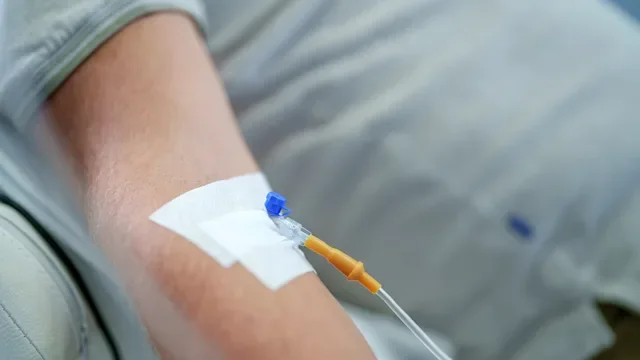
Opdivo comes as a liquid that’s mixed with sodium chloride (saline) or dextrose (medical-grade sugar water) and infused into a vein over 30 minutes. It also comes as Opdivo Qvantig (nivolumab / hyaluronidase-nhvy), an injection that’s given under the skin over 3 to 5 minutes. You’ll need to receive both forms of Opdivo from a healthcare professional in a medical setting — they aren’t medications you can give yourself at home.
The recommended Opdivo and Opdivo Qvantig dosages depend on what type of cancer you’re treating and which form you’re prescribed. Your prescriber can tell you how long treatment will last, since this can vary from person to person.
Opdivo and Opdivo Qvantig dosages when used without other treatments
The recommended Opdivo dosage for adults when it’s given without other treatments is 240 mg every 2 weeks or 480 mg every 4 weeks for the following cancers:
Metastatic non-small cell lung cancer
Advanced renal cell carcinoma
Classical Hodgkin lymphoma
Squamous cell carcinoma of the head and neck
Locally advanced, metastatic, or adjuvant treatment of urothelial carcinoma
Esophageal squamous cell carcinoma
Unresectable or metastatic melanoma
Adjuvant treatment of melanoma
Microsatellite instability high (MSI-H) or mismatch repair deficient metastatic (dMMR) colorectal cancer that has progressed after prior treatment
Adjuvant treatment of resected esophageal or gastroesophageal junction cancer
The recommended Opdivo Qvantig dosages for adults when it’s given without other treatments is 600 mg nivolumab/10,000 units hyaluronidase every 2 weeks or 1,200 mg/20,000 units every 4 weeks for the following cancers:
Metastatic non-small cell lung cancer
Advanced renal cell carcinoma
Squamous cell carcinoma of the head and neck
Locally advanced, metastatic, or adjuvant treatment of urothelial carcinoma
Hepatocellular carcinoma previously treated with sorafenib
Esophageal squamous cell carcinoma
Unresectable or metastatic melanoma
Adjuvant treatment of melanoma
Unresectable or metastatic MSI-H or dMMR colorectal cancer
MSI-H or dMMR colorectal cancer that has progressed after prior treatment
First-line unresectable or metastatic hepatocellular carcinoma
Adjuvant treatment of resected esophageal or gastroesophageal junction cancer
Opdivo and Opdivo Qvantig dosages when used along with other treatments
The recommended Opdivo dosages for adults can change when it’s being used along with other cancer medications. Opdivo and Opdivo Qvantig are approved for the following cancers as a combination treatment:
Neoadjuvant and adjuvant treatment of resectable non-small cell lung cancer
Advanced renal cell carcinoma
First-line unresectable or metastatic urothelial carcinoma
Esophageal squamous cell carcinoma
Gastric cancer, gastroesophageal junction cancer, and esophageal adenocarcinoma
Opdivo is also approved for the following cancers as a combination treatment:
Unresectable or metastatic melanoma
Metastatic or recurrent non-small cell lung cancer
Malignant pleural mesothelioma
Previously untreated classical Hodgkin lymphoma
MSI-H or dMMR metastatic colorectal cancer
Hepatocellular carcinoma
Typical Opdivo dosages when used in combination with other medications include:
1 mg per kg body weight every 3 weeks
3 mg per kg of body weight every 2 or 3 weeks
240 mg every 2 or 3 weeks
360 mg every 3 weeks
480 mg every 4 weeks
Typical Opdivo Qvantig dosages when used in combination with other medications include:
600 mg/10,000 units every 2 weeks
900 mg/15,000 units every 3 weeks
1,200 mg/20,000 units every 4 weeks
The Opdivo or Opdivo Qvantig dosage that’s right for you depends on the cancer you’re treating and what other medications you’re taking with it (if any).
What’s the typical Opdivo dosage for children?
Opdivo and Opdivo Qvantig are also approved for certain cancers in children ages 12 and older. The recommended dosage depends on the cancer type and whether your child is receiving Opdivo as a single agent or along with other cancer medications.
Children’s Opdivo and Opdivo Qvantig dosages when used without other treatments
Opdivo and Opdivo Qvantig are approved for children ages 12 and older for the following cancers as a single treatment:
Unresectable or metastatic melanoma
Adjuvant treatment of melanoma
MSI-H or dMMR colorectal cancer
The Opdivo dosages for children ages 12 and older are based on body weight, as follows:
Body weight of 88 lbs (40 kg) or more: 240 mg every 2 weeks or 480 mg every 4 weeks
Body weight of less than 88 lbs: 3 mg per kg of body weight every 2 weeks or 6 mg per kg of body weight every 4 weeks
Opdivo Qvantig dosages for children ages 12 and older are also based on body weight, as follows:
Body weight of 40 kg or more: 600 mg/10,000 units every 2 weeks or 1,200 mg/20,000 units every 4 weeks
Body weight of 30 kg (66 lbs) to less than 40 kg: 300 mg/5,000 units every 2 weeks or 600 mg/10,000 units every 4 weeks (Opdivo Qvantig isn’t recommended for children who weigh under 30 kg)
Children’s Opdivo dosages when used along with other treatments
Opdivo dosages for children ages 12 and older when used in combination with other cancer medications are:
Unresectable or metastatic melanoma: 1 mg per kg of body weight of Opdivo every 3 weeks for up to 4 doses along with ipilimumab (Yervoy), followed by the typical single-agent Opdivo dosage described above
Previously untreated classical Hodgkin lymphoma: 240 mg (weight of 88 lbs or more) or 3 mg per kg of body weight (weight under 88 lbs) of Opdivo every 2 weeks for 6 cycles, in combination with doxorubicin (Doxil), vinblastine, and dacarbazine
MSI-H or dMMR colorectal cancer: 240 mg (weight of 88 lbs or more) or 3 mg per kg of body weight (weight under 88 lbs) of Opdivo every 3 weeks for up to 4 doses along with ipilimumab, followed by the typical single-agent Opdivo dosage described above
Opdivo Qvantig isn’t approved as a combination treatment in children.
Are there any Opdivo dosage adjustments for medical conditions?
Adults may need a lower Opdivo or Opdivo Qvantig dosage if their body weight drops below 88 lbs. But there are no other recommended dosage changes.
If you experience certain side effects, your prescriber may pause Opdivo treatment until the side effect resolves. For severe side effects, you may need to stop treatment altogether.
What happens if you miss a dose of Opdivo?
You’ll receive Opdivo at an infusion center or clinic. If you miss an appointment, contact your cancer care team to reschedule it as soon as possible. They’ll adjust the timing of future doses if needed.
You can also let your care team know about any schedule conflicts in advance so they can work around them if possible. This can help you avoid missing doses, which can affect your treatment. Using a medication reminder app or calendar alert can help you keep track of your appointments.
How to save on Opdivo and Opdivo Qvantig
There are ways to save on Opdivo, which is available only as a reference (“brand-name”) medication.
Save with a copay savings card: If you have commercial insurance, you may be able to pay as little as $0 per dose of Opdivo or Opdivo Qvantig with a savings card from the manufacturer
Save with a patient assistance program: If you are uninsured or underinsured and meet income requirements, you may be able to receive Opdivo and Opdivo Qvantig at no cost through the manufacturer’s patient assistance program
Keep in mind that Opdivo is given in a healthcare setting. So you may need to use a specialty pharmacy to receive your medication or your care team may have it on hand for you. This medication may also be billed under your medical benefit instead of your pharmacy benefit in some cases. Your cancer care team can help answer questions about medication costs, insurance coverage, and financial assistance programs.
Frequently asked questions
Opdivo is an immunotherapy cancer treatment. It helps your immune system recognize and attack cancer cells. It works differently than traditional chemotherapy, which can target healthy cells along with cancer cells. But Opdivo is often prescribed along with chemotherapy medications for certain cancers.
Opdivo is typically infused into a vein over a period of 30 minutes. Opdivo Qvantig injections are typically given over a period of 3 to 5 minutes. But other medications in your treatment plan may have different infusion times. And there may also be additional time needed for blood tests or monitoring. Your care team will tell you how long your full appointment may take so you can plan accordingly.
Opdivo is approved for use every 2 weeks or every 4 weeks in many cases. The schedule your prescriber chooses may depend on the cancer you’re treating, your other medications, and other factors. Ask your cancer care team about your treatment options, and discuss your preferences if different schedules are available.
Opdivo treatment length depends on the type of cancer you’re treating and your overall treatment plan. Some uses have a set number of treatments. But others require ongoing treatment as long as it continues working and side effects are minimal. Your care team can tell you what to expect based on your situation.
The bottom line
Opdivo (nivolumab) is an immunotherapy medication that treats several types of cancer. Opdivo is given as a 30-minute IV infusion. It also comes as Opdivo Qvantig (nivolumab / hyaluronidase), which is injected under the skin over 3 to 5 minutes. Both are given by a healthcare professional.
Your Opdivo dosage and treatment schedule depends on factors such as the type of cancer being treated, your age, and your body weight. When used on its own, a typical Opdivo dosage for adults is 240 mg every 2 weeks or 480 mg every 4 weeks. For Opdivo Qvantig, typical single-agent dosages are 600 mg/10,000 units every 2 weeks or 1,200 mg/20,000 units every 4 weeks. Opdivo and Opdivo Qvantig dosages for children ages 12 and older are based on body weight.
There typically aren’t dosage adjustments for Opdivo or Opdivo Qvantig based on medical conditions. But your prescriber may pause or stop treatment if you develop certain side effects. Contact your cancer care team as soon as possible if you experience side effects or miss a treatment appointment.

Why trust our experts?

References
Bristol Myers Squibb Patient Assistance Foundation. (n.d.). We provide certain Bristol Myers Squibb medicines to eligible patients free of charge.
E. R. Squibb & Sons. (2026). Opdivo- nivolumab injection .
E. R. Squibb & Sons. (2026). Opdivo Qvantig- nivolumab and hyaluronidase-nvhy injection, solution .
Medline Plus. (2025). Nivolumab injection. American Society of Health-System Pharmacists.
Rendon, A., et al. (2024). Nivolumab. StatPearls.