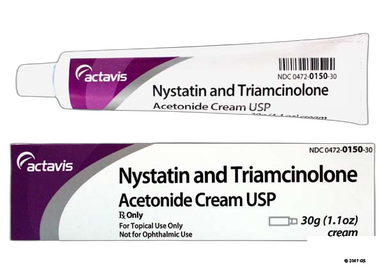
nystatin / triamcinolone
Nystatin/triamcinolone is a combination topical medication used to treat certain fungal skin infections caused by yeast. Nystatin is an antifungal that kills the yeast and triamcinolone is a corticosteroid that eases skin itching and redness from the infection. Nystatin/triamcinolone is available as a cream and an ointment, and can be used by adults and children ages 2 years and older. This medication is applied to the skin, typically twice a day. Most people experience few to no side effects while using nystatin/triamcinolone as directed. But there have been rare reports of itching and burning at the application site.


What is Nystatin/triamcinolone?
What is Nystatin/triamcinolone used for?
- Treatment of fungal skin infections caused by Candida
How Nystatin/triamcinolone works
Nystatin/triamcinolone is a combination of two medications:
- Nystatin is a topical antifungal medication. It works by damaging the protective covering of the fungus. This stops the growth of the fungus and kills it to treat the infection.
- Triamcinolone is a topical corticosteroid. When it’s used on the skin, it lowers the amount of inflammatory chemicals that cause redness, itching, and swelling. This helps to lower skin inflammation.
Drug facts
| Common Brands | Mycolog II |
|---|---|
| Drug Class | Antifungal / Corticosteroid |
| Controlled Substance Classification | Not a controlled medication |
| Generic Status | Lower-cost generic available |
| Availability | Prescription only |

Side effects of Nystatin/triamcinolone
The following side effects may get better over time as your body gets used to the medication. Let your healthcare provider know immediately if you continue to experience these symptoms or if they worsen over time.
Common Side Effects
- Burning
- Itching
- Irritation
- Dryness
Less Common Side Effects
- Inflamed hair follicles
- Excessive hair growth
- Acne-like bumps
- Changes in skin color
- Rash
- Skin thinning
- Stretch marks
- Heat rash
The following Nystatin/triamcinolone side effects have also been reported
Along with its needed effects, a medicine may cause some unwanted effects. Although not all of these side effects may occur, if they do occur they may need medical attention.
Check with your doctor immediately if any of the following side effects occur:
Rare
Blistering, burning, dryness, itching, peeling, or other sign of irritation not present before use of this medicine
Check with your doctor as soon as possible if any of the following side effects occur:
Acne or oily skin
increased hair growth, especially on the face
increased loss of hair, especially on the scalp
reddish purple lines on arms, face, legs, trunk, or groin
thinning of skin with easy bruising
Many of the above side effects are more likely to occur in children, who may absorb greater amounts of this medicine.
Other side effects not listed may also occur in some patients. If you notice any other effects, check with your healthcare professional.
Call your doctor for medical advice about side effects. You may report side effects to the FDA at 1-800-FDA-1088.

Pros and cons of Nystatin/triamcinolone
Pros
- Combines two medications into one topical product for convenience
- Available as a lower-cost generic medication
- Available in both a topical cream and ointment
Cons
- Only treats some fungal skin infections, not bacterial or viral infections
- Can cause skin-thinning or irritation
- Not meant for long-term use

Pharmacist tips for Nystatin/triamcinolone

- Nystatin/triamcinolone should only be used on the skin. To avoid side effects like irritation or a burning sensation, don't use this medication in your eyes, nose, or ears. Never use this medication to treat a vaginal yeast infection.
- Wash your hands before and after using nystatin/triamcinolone to help prevent getting the medication in your eyes. If it does get into your eyes, rinse your eyes with water or saline. Contact your primary care provider if the irritation doesn't go away.
- Use nystatin/triamcinolone exactly as prescribed (typically for at most 25 days). Make sure to finish your treatment course, even if you see that your skin infection is getting better. Stopping the medication earlier than prescribed can make your infection come back and become harder to treat.
- Nystatin/triamcinolone isn't meant to be used long term, so ask your dermatologist how long your treatment should last. Don't use nystatin/triamcinolone for more than 25 days without speaking to your care team. Your dermatologist will test your skin infection to make sure this medication is right for you.
- Some temporary burning or itching after applying nystatin/triamcinolone is possible. But if you notice a rash or side effects that don't go away, contact your care team.
- Don't keep leftover nystatin/triamcinolone around to use later or use this medication without talking to a healthcare professional. Nystatin/triamcinolone might not be the right medication to treat the type of skin infection you have.
- Don't cover the treated area with a bandage after applying nystatin/triamcinolone unless directed by your dermatologist. If you're applying this medication around the diaper area, don't use tight fitting diapers or plastic pants on your toddler. Doing so might affect how much medication gets absorbed.
- If you're using other topical steroid products, check with your care team first before using nystatin/triamcinolone. Using multiple topical steroids can raise your risk of side effects.

Risks and warnings for Nystatin/triamcinolone
Nystatin/triamcinolone can cause some serious health issues. This risk may be even higher for certain groups. If this worries you, talk to your doctor or pharmacist about other options.
Allergic reaction
Tell your dermatologist before using nystatin/triamcinolone if you've ever had an allergic reaction to nystatin or triamcinolone before. Watch out for signs and symptoms of allergic reactions, such as swollen skin, rash, itchy skin, or other skin irritation. Please stop using nystatin/triamcinolone and tell your dermatologist if you have these signs and symptoms. Get medical help right away if the swelling is severe or if you're having trouble breathing.
Changes in adrenal gland function
- Risk factors: Using high potency topical steroids | Using nystatin/triamcinolone for a long period of time | Using excessive amounts of nystatin/triamcinolone on your skin | Covering applied area with a bandage | Young children
Nystatin/triamcinolone contains triamcinolone, which is a topical steroid. In some rare cases, using a topical steroid for a long time and over a large skin area can cause a medical condition called adrenal suppression. This is when your adrenal gland starts to make less steroid hormones because the body is depending on the medication instead. And if you suddenly stop using triamcinolone, you can experience serious side effects.
In adults, symptoms of withdrawal include fever, joint or muscle pain, and low energy. In children, symptoms often include stunted growth, weight gain, and headaches. To prevent adrenal suppression from happening, your dermatologist will prescribe the lowest possible dose of nystatin/triamcinolone that works well for you for the shortest amount of time. If you need to use nystatin/triamcinolone for a long period of time or for a large area, your dermatologist might ask you to do some lab work to test how well your adrenal gland works. Let your dermatologist know if you have symptoms of withdrawal. Don't suddenly stop using nystatin/triamcinolone without talking to your care team first.

Nystatin/triamcinolone dosage


Interactions between Nystatin/triamcinolone and other drugs
Although certain medicines should not be used together at all, in other cases two different medicines may be used together even if an interaction might occur. In these cases, your doctor may want to change the dose, or other precautions may be necessary. When you are taking this medicine, it is especially important that your healthcare professional know if you are taking any of the medicines listed below. The following interactions have been selected on the basis of their potential significance and are not necessarily all-inclusive.
Using this medicine with any of the following medicines is not recommended. Your doctor may decide not to treat you with this medication or change some of the other medicines you take.
- Desmopressin
- Rotavirus Vaccine, Live
Using this medicine with any of the following medicines is usually not recommended, but may be required in some cases. If both medicines are prescribed together, your doctor may change the dose or how often you use one or both of the medicines.
- Aldesleukin
- Balofloxacin
- Bemiparin
- Besifloxacin
- Ceritinib
- Ciprofloxacin
- Enoxacin
- Fleroxacin
- Flumequine
- Gatifloxacin
- Gemifloxacin
- Levofloxacin
- Lomefloxacin
- Lutetium Lu 177 Dotatate
- Macimorelin
- Moxifloxacin
- Nadifloxacin
- Nadroparin
- Norfloxacin
- Ofloxacin
- Pazufloxacin
- Pefloxacin
- Prulifloxacin
- Ritonavir
- Rufloxacin
- Sargramostim
- Sparfloxacin
- Tosufloxacin
Using this medicine with any of the following medicines may cause an increased risk of certain side effects, but using both drugs may be the best treatment for you. If both medicines are prescribed together, your doctor may change the dose or how often you use one or both of the medicines.
- Alcuronium
- Aspirin
- Atracurium
- Auranofin
- Fosphenytoin
- Gallamine
- Hexafluorenium
- Licorice
- Metocurine
- Phenytoin
- Primidone
- Saiboku-To

How much does Nystatin/triamcinolone cost?
$16.65

What are alternatives to Nystatin/triamcinolone?

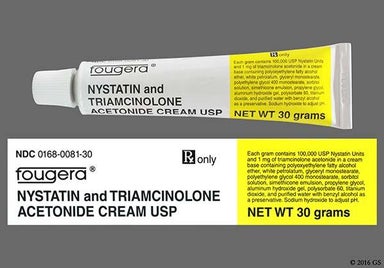
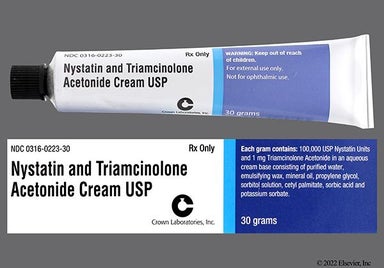
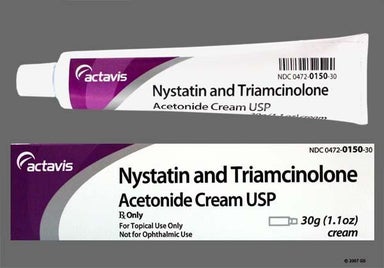
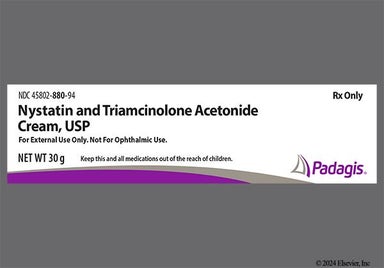
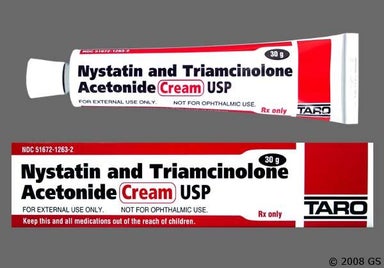
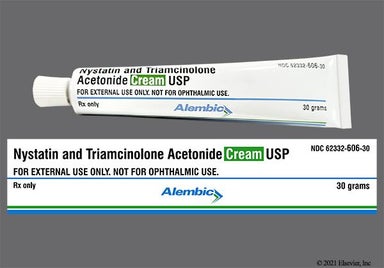
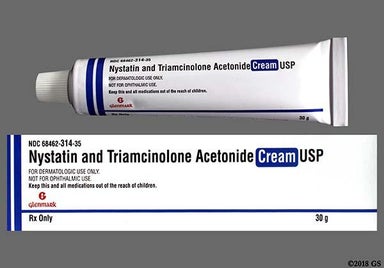
Nystatin/triamcinolone images