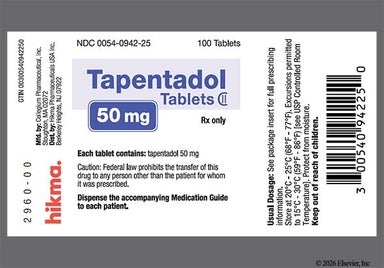
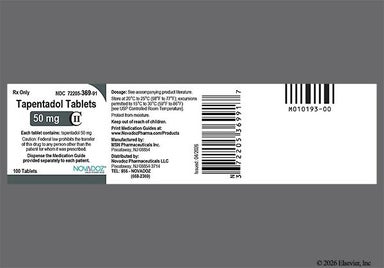
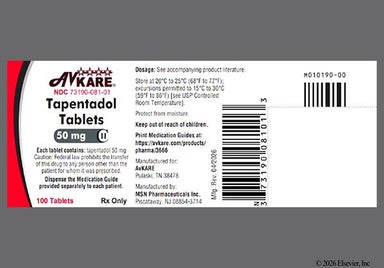
Nucynta (tapentadol) is an opioid that's used to treat pain that isn't relieved by non-opioid pain medications. It's available as an immediate-release tablet that's taken by mouth every 4 to 6 hours as needed for pain. There's also an extended-release version that's taken every 12 hours. Side effects include nausea, constipation, and dizziness. This medication is a controlled substance because of its high risk of misuse and dependence. Nucynta (tapentadol) is available as a brand-name medication only.
Nucynta (tapentadol) is a controlled substance, which means that it's more likely to be misused or cause dependence. There are federal and state laws that limit the amount of medication that can be prescribed or dispensed within a certain period of time.
Severe nerve pain from diabetes (diabetic neuropathy) - extended-release tablet only
How Nucynta (tapentadol) works
Nucynta (tapentadol) is an opioid medication. It's thought to treat pain in two ways. It attaches to certain mu-opioid receptors in your brain. This changes the way you recognize pain. Nucynta (tapentadol) also raises the levels of a chemical in your brain called norepinephrine that might be involved in regulating pain.
Are you looking for information on tramadol instead?
When does Nucynta (tapentadol) start working?Time passed since treatment started:
Nucynta (tapentadol) can cause some serious health issues. This risk may be even higher for certain groups. If this worries you, talk to your doctor or pharmacist about other options.
Potential for addiction and misuse
Risk factors: Personal or family history of alcohol or substance use disorder | Personal or family history of mental health problems
Nucynta (tapentadol) is a controlled substance because it has a risk for misuse and addiction. Misusing this medication can raise the risk for serious and possibly life-threatening side effects, such as dangerously slow breathing, not able to stay awake, addiction, and opioid overdose.
Because of the risk for misuse and addiction, Nucynta (tapentadol) is only available through a Risk Evaluation and Mitigation Strategy (REMS) program called the Opioid Analgesic REMS program. Your prescriber and pharmacy must register with the program, receive training on proper medication use, and discuss with you about how to take Nucynta (tapentadol) safely.
Take Nucynta (tapentadol) exactly as prescribed — take the lowest amount of medication that's necessary to manage your pain for the shortest period of time possible. Don't change how much or how often you take it without talking to your prescriber first.
Risk factors: Older age | Weak or frail people | Medical conditions that cause breathing problems (e.g., COPD, asthma, head injury) | Drinking alcohol | Taking medications that can cause slow breathing | Taking too much Nucynta (tapentadol)
Nucynta (tapentadol) can cause dangerously slow breathing, which can be life-threatening. This can happen to anyone and at recommended doses. But the risk is greatest when you first start treatment or when your prescriber raises your dose.
Don't drink alcohol while you're taking Nucynta (tapentadol). Also don't take Nucynta (tapentadol) with medications that slow your body down, like benzodiazepines, other opioids, and muscle relaxants. These combinations put you at high risk for having dangerously slow breathing.
Your prescriber will recommend that you have naloxone (Narcan) to carry with you at all times. Naloxone is a medication that can reverse slowed breathing from opioids. Use naloxone and call 911 right away if you or your loved one notices that you have trouble breathing or have bluish-colored lips, fingers, or toes.
Risk for opioid overdose
Risk factors: History of opioid use disorder | Previous opioid overdose | Taking high doses of Nucynta (tapentadol) | Taking more opioids than prescribed | Alcohol use
Take Nucynta (tapentadol) exactly as prescribed. Taking too much medication or taking it more often than prescribed can lead to a life-threatening overdose. Be sure to keep Nucynta (tapentadol) out of reach from children, pets, and visitors to prevent them from accidentally taking the medication and possible overdose.
It's important that you and your loved ones can recognize symptoms of an opioid overdose, such as not responding to sound or touch, extremely slow breathing, extreme sleepiness, and cold or clammy skin. Your prescriber will recommend getting naloxone (Narcan) — either by prescription or over the counter. Naloxone can help treat an opioid overdose. Always have naloxone with you; use it and call 911 right away if an overdose happens.
Difficulty concentrating and extreme sleepiness
Risk factors: Taking high doses of Nucynta (tapentadol) | Age 65 years or older | Drinking alcohol | Taking other medications that can cause sleepiness
Nucynta (tapentadol) can cause extreme sleepiness and lower your ability to think, react, and focus. Don't drink alcohol with Nucynta (tapentadol). Also don't take Nucynta (tapentadol) with other medications that can cause sleepiness or "brain fog," like benzodiazepines, muscle relaxants, and sleep medications. Otherwise, these side effects might worsen and put you at risk for accidents.
Make sure you know how Nucynta (tapentadol) affects you before driving a car or doing activities that need your concentration. Talk to your prescriber right away if you feel too sleepy from the medication or if you're having a hard time thinking clearly.
Harm to newborn babies
Long-term use of Nucynta (tapentadol) during pregnancy can cause your unborn baby to become dependent on the medication. This is because Nucynta (tapentadol) can pass through the placenta to your unborn baby.
Once born, your baby can experience withdrawal symptoms, such as high-pitched crying, poor feeding behavior, trembling, abnormal sleep patterns, and even seizures. This condition is called neonatal opioid withdrawal syndrome and can be life-threatening if not recognized and treated in time. Let your prescriber or a healthcare professional know if you've taken Nucynta (tapentadol) during pregnancy or if you notice these symptoms in your baby.
Physical dependence and withdrawal
Risk factors: Long-term use of Nucynta (tapentadol)
If taken regularly for a long time, Nucynta (tapentadol) can cause physical dependence. This means that your body relies on the medication to function. And you might experience withdrawal if you lower your dose too quickly or suddenly stop taking the medication. Withdrawal symptoms include anxiety, restlessness, irritability, runny nose, yawning, sweating, and chills.
Don't suddenly lower your dose or stop taking Nucynta (tapentadol) suddenly without talking to your prescriber first. If needed, your prescriber will slowly lower your dose over time to prevent withdrawal symptoms. Talk to your prescriber if you have concerns about taking Nucynta (tapentadol) because of the risk for withdrawal.
Low blood pressure
Nucynta (tapentadol) can cause low blood pressure. For example, your blood pressure might suddenly drop when you stand from a sitting or lying down position. This can lead to dizziness and fainting. To avoid falling, get up slowly if you've been sitting or lying down. Talk to a healthcare professional if dizziness or lightheadedness doesn't go away.
Low adrenal hormone levels
Risk factors: Taking Nucynta (tapentadol) for longer than 1 month
Some people taking opioids like Nucynta (tapentadol) have had low adrenal hormone levels. This can be more likely to happen after taking opioids for longer than 1 month. Tell your prescriber or primary care provider if you have symptoms of low adrenal hormone levels, like tiredness, dizziness, weakness, not feeling hungry, nausea, and vomiting. If your adrenal hormone levels are too low, you might need to stop Nucynta (tapentadol) and get treated with corticosteroids.
Seizures
Risk factors: History of seizure conditions
If you've had a seizure in the past, Nucynta (tapentadol) can raise the risk of having seizures more often. Opioids can also raise your risk of seizures in certain situations. Get medical help right away if you have a seizure while you're taking Nucynta (tapentadol).
The following side effects may get better over time as your body gets used to the medication. Let your healthcare provider know immediately if you continue to experience these symptoms or if they worsen over time.
The following Nucynta (tapentadol) side effects have also been reported
Along with its needed effects, a medicine may cause some unwanted effects. Although not all of these side effects may occur, if they do occur they may need medical attention.
Check with your doctor immediately if any of the following side effects occur:
seeing, hearing, or feeling things that are not there
shivering
sweating
talking or acting with excitement you cannot control
thoughts of killing oneself
trembling or shaking
twitching
vomiting
Some side effects may occur that usually do not need medical attention. These side effects may go away during treatment as your body adjusts to the medicine. Also, your health care professional may be able to tell you about ways to prevent or reduce some of these side effects. Check with your health care professional if any of the following side effects continue or are bothersome or if you have any questions about them:
Available as both immediate-release and extended-release tablets
Cons
Has many safety warnings, including a high risk for addiction and dependence
Not a good choice for people who have trouble swallowing pills because the tablet can't be crushed and there isn't a liquid version available
Pharmacist tips for Nucynta (tapentadol)
Follow your prescriber's instructions to take Nucynta (tapentadol) safely. The immediate-release tablet is meant to be taken as-needed, but no sooner than every 4 to 6 hours, for sudden pain. The extended-release tablet is meant to be taken every 12 hours for chronic pain that lasts throughout the day. Ask your prescriber if you're not sure about how to take this medication.
You can take Nucynta (tapentadol) with or without food. Keep in mind that nausea is a very common side effect of the medication. So if Nucynta (tapentadol) is hurting your stomach, taking it with food can help.
Swallow Nucynta (tapentadol) tablets whole. Don't break, cut, chew, or crush the tablet. This can cause too much medication to get absorbed into the body too quickly and possibly lead to a life-threatening overdose. Talk to your prescriber about your options if you're having trouble swallowing the tablet.
Nucynta (tapentadol) can make you sleepy and dizzy. It can also affect your ability to think, react, and focus. Don't drive or do anything that needs a lot of your attention until you know how this medication affects you.
Don't drink alcohol while you're taking Nucynta (tapentadol). Mixing alcohol with this medication can worsen sleepiness and dizziness and lead to falls or other accidents. It can also lead to a potential life-threatening overdose.
You might get constipated while you're taking Nucynta (tapentadol). Make sure to stay hydrated and add more foods with fiber to your diet. Speak to your care team for more recommendations if your constipation doesn't get better even with these lifestyle changes.
Tell your care team about all the medications you're taking with Nucynta (tapentadol) so they can make sure all your medications are safe to take together. This is because it can be harmful to take Nucynta (tapentadol) with some other medications, like certain antidepressants and benzodiazepines, among others.
Always carry naloxone (Narcan) with you. Naloxone is a medication that reverses the effects of Nucynta (tapentadol) in situations like an accidental overdose. Teach your loved ones about how to give naloxone to you if you can't do it yourself. Call 911 if you need to use naloxone because its effects are temporary.
Keep Nucynta (tapentadol) out of reach from children, pets, and visitors. Ask your prescriber or pharmacist about safe options to get rid of the medication if you don't need to take it anymore. This lessens the risk for misuse and accidental overdose.
Nucynta (tapentadol) dosage
The average cost for 60 tablets of 50mg of of Nucynta (tapentadol) is $217.38 with a free GoodRx coupon. This is 76.32% off the average retail price of $917.99.
Interactions between Nucynta (tapentadol) and other drugs
Nucynta (tapentadol) may interact with certain medications or supplements. Always let your doctor and pharmacist know about any other medications or supplements (including prescribed and over-the-counter medications, vitamins, and dietary or herbal supplements) that you are currently taking. The list below does not include all possible drug interactions with Nucynta (tapentadol). Please note that only the generic name of each medication is listed below.
Although certain medicines should not be used together at all, in other cases two different medicines may be used together even if an interaction might occur. In these cases, your doctor may want to change the dose, or other precautions may be necessary. When you are taking this medicine, it is especially important that your healthcare professional know if you are taking any of the medicines listed below. The following interactions have been selected on the basis of their potential significance and are not necessarily all-inclusive.
Using this medicine with any of the following medicines is not recommended. Your doctor may decide not to treat you with this medication or change some of the other medicines you take.
Using this medicine with any of the following medicines is usually not recommended, but may be required in some cases. If both medicines are prescribed together, your doctor may change the dose or how often you use one or both of the medicines.
Contraindications are specific health conditions or situations in which a person should not take a medication due to safety concerns. If you have any of the following conditions or if any of the following apply to you, let your healthcare provider know because Nucynta (tapentadol) will not be safe for you to take.
This medicine is Yellow, Round Tablet Imprinted With "O-M", "50".Yellow Round O-M - Tapentadol 50mg TabletThis medicine is Pink, Round Tablet Imprinted With "T", "25".Pink Round 25 - Tapentadol 50mg TabletThis medicine is Pink, Round Tablet Imprinted With "T", "25".Pink Round 25 - Tapentadol 50mg Tablet
GoodRx Health has strict sourcing policies and relies on primary sources such as medical organizations, governmental agencies, academic institutions, and peer-reviewed scientific journals. Learn more about how we ensure our content is accurate, thorough, and unbiased by reading our editorial guidelines.
Prescription savings
Stop paying too much for your prescriptions. Compare prices, get pharmacy coupons, and save up to 80%.
Yes. Nucynta is an opioid medication that treats different types of pain not relieved by non-opioid pain medications. Although opioids are a treatment option for helping with pain, they have many safety warnings. So be sure to discuss with your prescriber about the risks of opioid use and whether it's an appropriate option for you.
Yes, Nucynta is a schedule II controlled substance. This medication has a black box warning for its risk for misuse, addiction, and dependence. To minimize your risk, your pain specialist will prescribe the lowest dose of Nucynta for the shortest period of time needed to treat your pain.
No. Nucynta and tramadol are opioid medications that can both treat pain, but they have many differences. They both have immediate-release versions that help relieve sudden pain quickly and extended-release versions that help manage long-lasting pain. But the immediate-release version of Nucynta can start to work a bit faster than that of tramadol. And extended-release Nucynta is taken every 12 hours, whereas extended-release tramadol is taken once per day. Tramadol also has many more medication interactions than Nucynta. And lastly, Nucynta has a higher risk of misuse and addiction than tramadol, so Nucynta has stricter federal and state laws for prescribing and dispensing than tramadol. Talk to your pain specialist to learn more about comparisons between the two medications.
It takes about 24 hours for most of Nucynta to leave your body after a single dose. This time frame is estimated from the half-life of Nucynta. The half-life is a measure of the time it takes for the medication to leave the body. Speak with your prescriber if you're concerned about how long the medication stays in your system.
Speak with your prescriber first before you stop taking Nucynta. If you've been taking Nucynta regularly and you suddenly stop taking the medication, you might experience opioid withdrawal. Typical symptoms of opioid withdrawal include sweating, a pounding heart, stomach upset, body aches, and irritability. Opioid withdrawal can be uncomfortable. Your prescriber can help minimize your risk for withdrawal if you're interested in stopping Nucynta. They'll prescribe lower doses of Nucynta for you until it's safe for you to completely stop the medication.
It's possible for Nucynta to make you feel anxious, but it isn't a common side effect. In clinical studies, up to 2% of people reported feeling anxious while they were taking Nucynta. Keep in mind that anxiety is also one of the symptoms of opioid withdrawal, so this could happen if you suddenly stop taking Nucynta after you've been taking it regularly. Contact your prescriber if you're feeling overly anxious while you're taking Nucynta.
No. Nucynta is currently only available as a brand-name medication.
It's generally not recommended to take Nucynta during pregnancy. It's also recommended to avoid taking opioid medications while you're breastfeeding. Nucynta can raise the risk of harm to your baby. Let your prescriber know if you're pregnant or breastfeeding. They can discuss with you about safer treatment options.
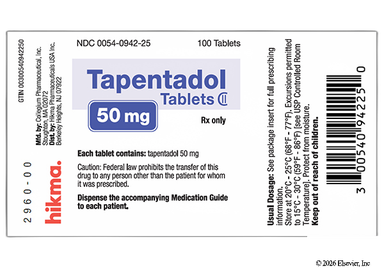


 Nucynta (tapentadol) is a
  Because of the risk for misuse and addiction, Nucynta (tapentadol) is only available through a