


Hot Flashes, Bone Loss, and More: 8 Myfembree Side Effects to Know About
Learn about the side effects of Myfembree for heavy menstrual bleeding and endometriosis pain, including common and long-term, and how to manage them.
Myfembree is a combination medication containing relugolix, estradiol, and norethindrone. It's used to manage heavy menstrual bleeding related to uterine fibroids. This medication can also help relieve pain from endometriosis. Myfembree is approved for use in women who haven't reached menopause and is a tablet that's taken once daily. Common Myfembree side effects include hot flashes and headaches.

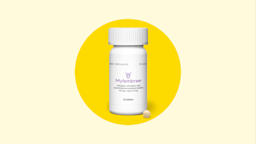
Myfembree is a combination of three medications.
| Common Brands | Myfembree |
|---|---|
| Drug Class | GnRH antagonist / Estrogen replacement / Progestin |
| Controlled Substance Classification | Not a controlled medication |
| Generic Status | No lower-cost generic available |
| Availability | Prescription only |

The following side effects may get better over time as your body gets used to the medication. Let your healthcare provider know immediately if you continue to experience these symptoms or if they worsen over time.
Uterine fibroids:
Endometriosis:
Contact your healthcare provider immediately if you experience any of the following.
Side effects that you should report to your care team as soon as possible:
Side effects that usually do not require medical attention (report these to your care team if they continue or are bothersome):




Myfembree can cause some serious health issues. This risk may be even higher for certain groups. If this worries you, talk to your doctor or pharmacist about other options.
 Myfembree can raise your risk for blood clots. Blood clots can be very dangerous and lead to a life-threatening heart attack, stroke, or pulmonary embolism (blood clot in the lungs).
 There are several medical conditions that can raise the risk for blood clots even further, such as smoking among females over 35 years old and a history of blood clots. Be sure to discuss all the medical conditions you have or have had with your provider before you start Myfembree. Don't take this medication if you've had blood clots before (including stroke or heart attack) or if you have a condition that makes your blood clot more than normal.
Call 911 or get medical help right away if you have leg, arm, or chest pain; sudden and severe headaches; trouble breathing; or sudden changes in your speech or vision.
Myfembree can cause bone loss. Taking the medication for a long time can put you at higher risk for bone loss. This is why it's recommended that you take Myfembree for up to a maximum of 2 years.
Your provider will check your bone strength (bone mineral density or BMD) through imaging scans occasionally while you're taking Myfembree. After your treatment ends, your bones might partially recover. But there's a chance that there might not be complete recovery. It's not known whether this bone loss can raise your risk for broken bones as you get older.
Talk to your provider about the risks and benefits of taking Myfembree if you have a history of broken bones or if you're at high risk for osteoporosis or bone loss. Don't take this medication if you have osteoporosis.
Because Myfembree contains the sex hormones estrogen and progesterone, it's possible that it can make cancers that are sensitive to these hormones grow. Tell your provider about your medical history before you start Myfembree. You won't be able to take the medication if you've had or are at risk for certain hormone-sensitive cancers, such as breast cancer.
If it's safe for you to start Myfembree, it's recommended that you get regular breast examinations and mammograms during treatment. You'll need to stop the medication if your provider finds cancer tissue in your breast. Let your provider know right away if you develop any symptoms of breast cancer, such as a new lump in your breast or armpit or discharge from your nipple.
Changes in your menstrual bleeding patterns can happen while you're taking Myfembree. You might have irregular and heavy bleeding at the beginning of treatment if you start the medication later than 7 days after your period starts. Myfembree can also lessen how much or how long you bleed during your period. It can sometimes make your period stop altogether. Speak with your provider if you're concerned about any unusual bleeding patterns.
Myfembree can change your menstrual bleeding patterns, such as less bleeding, shorter bleeding time, or no periods at all. These changes can make it harder for you to recognize that you're pregnant if you're sexually active.
If you can become pregnant and you're sexually active, you should use nonhormonal birth control while you're taking Myfembree and for 1 week after your last dose. It's important to prevent pregnancy while you're taking Myfembree because the medication can cause miscarriage. Stop Myfembree and tell your provider right away if you become pregnant.
Be sure to use nonhormonal birth control while you're taking Myfembree. Since Myfembree contains estradiol (a form of estrogen), taking hormonal birth control that has estrogen in it can raise your estrogen levels. This can make you more likely to have side effects from estrogen, like bloating, stomach cramps, and weight gain. It can also raise your risk of blood clots. Estrogen-containing birth control can also affect how well Myfembree works.
People who take Myfembree have had depression, irritability, anxiety, and suicidal thoughts and behavior. Let your provider know right away if you or anyone around you notices that you have any new or worsening dark thoughts or changes in your mood or behavior, especially shortly after you start taking Myfembree. Get medical attention as soon as possible if you start having thoughts of harming yourself while you're taking this medication.
Myfembree might raise the risk for liver damage or gallbladder problems. Before you start this medication, make sure to tell your provider about your medical history. Don't take Myfembree if you have a liver condition. Let your provider know right away if you have symptoms of liver or gallbladder problems, like yellowing of your skin or eyes (jaundice), pain in upper right part of your stomach, nausea or vomiting that doesn't go away, or dark urine.
It's possible for your uterine fibroid to completely or partially come out of your vagina during treatment with Myfembree. Get medical help if you have severe bleeding or cramping while you're taking this medication.
Myfembree can cause changes to certain lab test results, like for thyroid, steroid, and blood clotting levels. Your provider might adjust the dose of any thyroid or cortisol medications that you might be taking to account for their related lab changes.

 Tablet
| Dosage | Quantity | Price as low as | Price per unit |
|---|---|---|---|
| 40mg/1mg/0.5mg | 28 tablets | $5.00 | $0.18 |
The typical dose is 1 tablet by mouth once a day around the same time each day, with or without food. It's recommended to take the medication for a maximum of 2 years because of the risk for bone loss.
Each tablet of Myfembree contains 40 mg of relugolix, 1 mg of estradiol, and 0.5 mg of norethindrone.


Contraindications are specific health conditions or situations in which a person should not take a medication due to safety concerns. If you have any of the following conditions or if any of the following apply to you, let your healthcare provider know because Myfembree will not be safe for you to take.



Prescription savings
Stop paying too much for your prescriptions. Compare prices, get pharmacy coupons, and save up to 80%. Find expert answers to your health questions so you can make the best decisions for yourself and your family.
Health conditions
Medications & treatment
Access & affordability
 Our monthly healthcare membership can help you save thousands on your prescription costs.
Resources

No, Myfembree doesn't help shrink the size of uterine fibroids. But it can help lessen symptoms from the fibroids. In clinical studies, about 70% of people who took Myfembree noticed significantly less menstrual bleeding after they took the medication for 6 months. Studies also found that people who took Myfembree felt relief from pain and pelvic pressure related to uterine fibroids.
It's possible for Myfembree to stop your periods. Other changes to menstrual bleeding patterns that you might have with the medication include less bleeding and shorter bleeding time. Talk with your provider if you're concerned about any irregular menstrual bleeding that you have while you're taking Myfembree.
No, Myfembree isn't birth control. This medication helps lessen bleeding from uterine fibroids and relieve pain from endometriosis, not prevent pregnancy. It can sometimes make your periods stop altogether as a side effect, but this doesn't mean that you won't get pregnant. In fact, it's recommended that you use nonhormonal birth control while you're taking Myfembree if you're sexually active. Changes in menstrual bleeding patterns during treatment can make it harder for you to realize that you're pregnant. And the medication can raise the risk for early pregnancy loss (miscarriage) if it's taken during pregnancy.
In clinical studies of Myfembree for uterine fibroids and endometriosis, some people who took the medication noticed improvements in their symptoms as soon as 1 month after they started treatment. Keep in mind that how long it takes for the medication to start relieving symptoms can vary from person to person. So it's important to take Myfembree every day as prescribed, even if you don't see or feel the effects right away. Follow up with your provider to discuss how well Myfembree is working for you.
Weight gain wasn't a reported side effect during clinical studies of Myfembree. Speak with your provider if you notice unusual changes in weight while you're taking this medication. Your provider can examine you to see what might be causing weight gain.
Hair loss or hair thinning is a possible side effect of Myfembree. The hair might not grow back or go back to normal after you stop taking the medication. Discuss with your provider about your options if you're concerned about hair loss from Myfembree.
Myfembree and Orilissa are both medications that can help relieve pain from endometriosis. But Myfembree can also help with heavy bleeding related to uterine fibroids. Both medications are taken once daily and are generally limited to a maximum of 2 years of treatment because of the risk for bone loss. There's an option to take a higher strength of Orilissa, but treatment is only limited to 6 months because of the same risk.
Myfembree and Oriahnn are both medications that can help lessen heavy bleeding related to uterine fibroids in women who haven't reached menopause. But Myfembree can also relieve pain from endometriosis. The dosing schedule for Myfembree is fairly simple (1 tablet containing relugolix, estradiol, and norethindone that's taken once daily). But there's a specific dosing schedule that you need to follow for Oriahnn: 1 white-yellow capsule containing elagolix, estradiol, and norethindrone that you take every morning (AM) and 1 white-blue capsule containing elagolix only that you take every evening (PM).
