mitomycin
Mitomycin (Mutamycin), also known as mitomycin C, is a cancer medication called an alkylating agent. It's FDA approved for advanced stomach and pancreatic cancer. But it’s more often used off-label for other cancers, including bladder and anal cancers. Mitomycin (Mutamycin) is usually given with other treatments, such as chemotherapy, radiation, or surgery. How it’s given and how often you receive it depend on your treatment plan. A common side effect is low blood cell counts. This puts you at risk of infection, anemia, and easy bleeding.


What is Mitomycin (Mutamycin)?
What is Mitomycin (Mutamycin) used for?
- Advanced stomach or pancreatic cancer, with other cancer treatments
How Mitomycin (Mutamycin) works
Mitomycin (Mutamycin) is a type of cancer medication called an alkylating agent. It works by damaging the DNA inside cells. This destroys fast-growing cells in the body, including cancer cells. This can help slow or stop the cancer from growing.
Drug facts
| Common Brands | Mutamycin |
|---|---|
| Drug Class | Alkylating agent |
| Controlled Substance Classification | Not a controlled medication |
| Generic Status | No lower-cost generic available |
| Availability | Prescription only |

Side effects of Mitomycin (Mutamycin)
The following side effects may get better over time as your body gets used to the medication. Let your healthcare provider know immediately if you continue to experience these symptoms or if they worsen over time.
Common Side Effects
- Low blood cell counts (low platelets, low white blood cells)
- Nausea
- Vomiting
- Loss of appetite
- Fever
Less Common Side Effects
- Hair loss
- Mouth sores
- Trouble breathing
- Dry cough
- Injection site irritation (if given through a vein)
Mitomycin (Mutamycin) serious side effects
Contact your healthcare provider immediately if you experience any of the following.
- Infection: fever, chills, feeling very tired
- Easy bleeding or bruising: unusual bleeding or bruising, bleeding or bruising that doesn’t go away, frequent nosebleeds
- Kidney problems: little or no urine, dark urine, bloody urine
- Lung problems: cough, wheezing, trouble catching your breath
- Heart problems: shortness of breath, dry cough, irregular heartbeat, chest pain, sudden weight gain
The following Mitomycin (Mutamycin) side effects have also been reported
Along with its needed effects, a medicine may cause some unwanted effects. Although not all of these side effects may occur, if they do occur they may need medical attention.
Also, because of the way cancer medicines act on the body, there is a chance that they might cause other unwanted effects that may not occur until months or years after the medicine is used. These delayed effects may include certain types of cancer. Discuss these possible effects with your doctor.
Check with your doctor immediately if any of the following side effects occur:
Less common
Black, tarry stools
blood in urine or stools
cough or hoarseness
fever or chills
lower back or side pain
painful or difficult urination
pinpoint red spots on skin
unusual bleeding or bruising
Rare
Redness or pain, especially at place of injection
Check with your doctor as soon as possible if any of the following side effects occur:
Less common
decreased urination
shortness of breath
sores in mouth and on lips
swelling of feet or lower legs
Rare
Bloody vomit
Some side effects may occur that usually do not need medical attention. These side effects may go away during treatment as your body adjusts to the medicine. Also, your health care professional may be able to tell you about ways to prevent or reduce some of these side effects. Check with your health care professional if any of the following side effects continue or are bothersome or if you have any questions about them:
Less common
Numbness or tingling in fingers and toes
purple-colored bands on nails
skin rash
unusual tiredness or weakness
Mitomycin sometimes causes a temporary loss of hair. After treatment has ended, normal hair growth should return.
After you stop using this medicine, it may still produce some side effects that need attention. During this period of time, check with your doctor immediately if you notice the following side effects:
Blood in urine
Also, check with your doctor if you notice any of the following:
Black, tarry stools
blood in stools
cough or hoarseness
decreased urination
fever or chills
lower back or side pain
painful or difficult urination
pinpoint red spots on skin
red or painful skin
shortness of breath
swelling of feet or lower legs
unusual bleeding or bruising
Other side effects not listed may also occur in some patients. If you notice any other effects, check with your healthcare professional.
Call your doctor for medical advice about side effects. You may report side effects to the FDA at 1-800-FDA-1088.

Pros and cons of Mitomycin (Mutamycin)
Pros
- Can treat several types of cancers
- Less likely to cause hair loss than some other chemotherapy medications
Cons
- Can cause low blood cell counts, putting you at risk of infections and easy bleeding
- Must be given by a trained healthcare professional

Pharmacist tips for Mitomycin (Mutamycin)

- Mitomycin (Mutamycin) is often used with other cancer treatments. These might include other chemotherapy medications, radiation, or surgery. Your mitomycin (Mutamycin) dose, the way it’s given, and how often you get it will depend on your cancer treatment plan. Ask your oncologist what to expect from your treatment.
- Keep all of your blood test appointments during and after treatment with mitomycin (Mutamycin). Your care team will check your blood cell counts and kidney function. Based on your labs, your oncologist can adjust your treatment if needed to keep you safe. Blood counts can drop several weeks after a dose, so you’ll need monitoring even after treatment ends.
- Tell your care team right away if you have a fever or chills. These can be signs of an infection. Mitomycin (Mutamycin) can lower your white blood cells, putting you at risk of infection. Get care early to help keep an infection from becoming more serious.
- Let your care team know if you bruise easily or have unusual bleeding. This can include frequent nosebleeds, bleeding gums after brushing your teeth, blood in your urine or stool, or bleeding that’s hard to stop. These can be signs of low platelets, a common side effect of mitomycin (Mutamycin).
- If you’re receiving mitomycin (Mutamycin) as an infusion through the vein (IV), watch for any burning, itching, swelling, or redness around where the IV goes into your skin. These can be signs that the medication has leaked outside the vein, which can happen during or after the infusion. Let your nurse know right away if you notice this so they can check the area.
- If you’re pregnant, planning to become pregnant, or thinking about breastfeeding: Talk to your oncologist. But based on how it works, mitomycin (Mutamycin) might harm an unborn baby. It’s also not known if the medication passes into breast milk or how it could affect a breastfed baby. Your oncologist can help you understand the risks and benefits of treatment.

Risks and warnings for Mitomycin (Mutamycin)
Mitomycin (Mutamycin) can cause some serious health issues. This risk may be even higher for certain groups. If this worries you, talk to your doctor or pharmacist about other options.
Low blood cell counts
 Mitomycin (Mutamycin) can lower your blood cell counts. This is one of the medication’s most common and serious side effects. Low white blood cells can put you at risk of infection. Low platelets can make you bleed or bruise more easily. And low red blood cells can cause anemia and make you feel very tired.
Your blood cell counts can drop at any time within 8 weeks after starting mitomycin (Mutamycin). But on average, it happens around 4 weeks. This effect can build up with each dose. And after you stop treatment, it can take up to 10 weeks to recover. Your care team will check your blood cell counts regularly during treatment and for at least 8 weeks afterward.
Tell your care team right away if you have a fever, chills, or severe tiredness. Also let them know about any unusual bleeding or bruising, such as frequent nosebleeds, bleeding gums when brushing your teeth, or bleeding that’s hard to stop. These can be signs that your blood cell counts are too low.
Hemolytic uremic syndrome (HUS)
- Risk factors: Receiving mitomycin (Mutamycin) IV, or through a vein | High mitomycin (Mutamycin) dose | Receiving blood transfusions
Although rare, some people receiving IV mitomycin (Mutamycin) have developed a serious condition called hemolytic uremic syndrome (HUS). HUS can damage your red blood cells, lower your platelet count, and seriously harm your kidneys. It can happen at any time during treatment. But the risk might go up as you receive more mitomycin (Mutamycin).
Tell your care team right away if you feel very tired, have trouble breathing or wheezing, or bruise or bleed easily. Also tell them right away if you have dark or bloody urine or you’re urinating less than usual. These can be signs of HUS. Your care team will check your blood and kidneys for problems.
Skin and tissue damage from IV leaks
- Risk factors: Older age
When mitomycin (Mutamycin) is given through a vein (IV), it can sometimes leak into the area around the vein. This can cause pain, irritation, or serious damage to the skin and tissue nearby.
To help lower this risk, the trained healthcare professional will give mitomycin (Mutamycin) through the vein properly. Let your nurse know right away if you notice pain, swelling, or burning around your IV during or after your infusion. They can check the area and treat symptoms if needed.
Lung problems
Although rare, mitomycin (Mutamycin) can cause serious lung problems. This can include trouble breathing or fluid buildup in the lungs. Tell your care team right away if you have a new or worsening cough, trouble breathing, or wheezing. Your oncologist might decide to pause mitomycin (Mutamycin) while they check your lungs.
Heart problems
- Risk factors: Previous treatment with doxorubicin (Adriamycin)
Heart problems have rarely happened in people receiving mitomycin (Mutamycin). This has included heart failure, which means the heart has trouble pumping blood through the body. Almost all reported cases happened in people who previously received doxorubicin (Adriamycin), which is known to have a risk of heart damage.
Let your care team know if you have trouble breathing, a dry cough, an irregular heartbeat, chest pain, or sudden weight gain. These can be signs of heart failure. If this happens, your care team can help manage it with medications.
Harm to an unborn baby
Mitomycin (Mutamycin) might harm an unborn baby if it's given during pregnancy. There aren't enough studies in people who are pregnant to know the full risk. But based on how the medication works and animal studies, harm is possible.
Tell your oncologist if you're pregnant or planning to become pregnant before starting treatment. They can help you understand the risks and benefits of mitomycin (Mutamycin).

Mitomycin (Mutamycin) dosage
Typical dosage for Mitomycin (Mutamycin)
Prescribing information dosage
- Advanced stomach or pancreatic cancer: Your dose is based on your body surface area (BSA), which uses your height and weight. The typical dose is 20 mg/m² given through a vein (IV) every 6 to 8 weeks. Your oncologist might adjust your dose or schedule based on your blood counts, side effects, and how you respond to treatment.
For other cancers (off-label)
- Your mitomycin (Mutamycin) treatment might be different from what’s listed in the prescribing information. Your dose, how it’s given, and how often you get it can vary. Your oncologist will choose the treatment plan that's right for your cancer.

Interactions between Mitomycin (Mutamycin) and other drugs
Although certain medicines should not be used together at all, in other cases two different medicines may be used together even if an interaction might occur. In these cases, your doctor may want to change the dose, or other precautions may be necessary. When you are taking this medicine, it is especially important that your healthcare professional know if you are taking any of the medicines listed below. The following interactions have been selected on the basis of their potential significance and are not necessarily all-inclusive.
Using this medicine with any of the following medicines is not recommended. Your doctor may decide not to treat you with this medication or change some of the other medicines you take.
- Measles Virus Vaccine, Live
- Mumps Virus Vaccine, Live
- Rotavirus Vaccine, Live
- Rubella Virus Vaccine, Live
- Varicella Virus Vaccine, Live
- Zoster Vaccine, Live
Using this medicine with any of the following medicines is usually not recommended, but may be required in some cases. If both medicines are prescribed together, your doctor may change the dose or how often you use one or both of the medicines.
- Adenovirus Vaccine
- Bacillus of Calmette and Guerin Vaccine, Live
- Cholera Vaccine, Live
- Dengue Tetravalent Vaccine, Live
- Hexaminolevulinate
- Influenza Virus Vaccine, Live
- Poliovirus Vaccine, Live
- Smallpox Vaccine
- Tamoxifen
- Typhoid Vaccine, Live
- Vinblastine
- Yellow Fever Vaccine

Mitomycin (Mutamycin) contraindications
Contraindications are specific health conditions or situations in which a person should not take a medication due to safety concerns. If you have any of the following conditions or if any of the following apply to you, let your healthcare provider know because Mitomycin (Mutamycin) will not be safe for you to take.
- Low platelets (thrombocytopenia)
- Problems with blood clotting
- Other conditions that raise the risk of bleeding

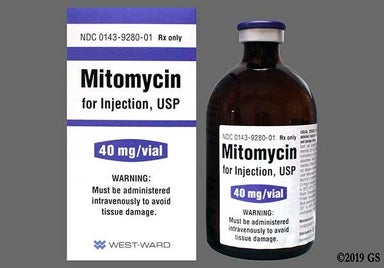
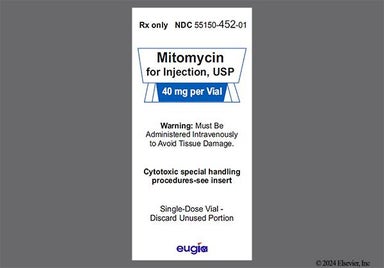
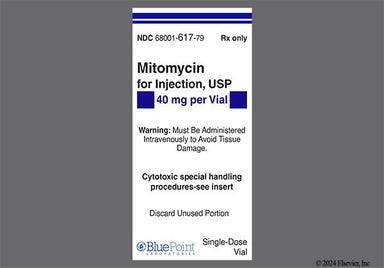
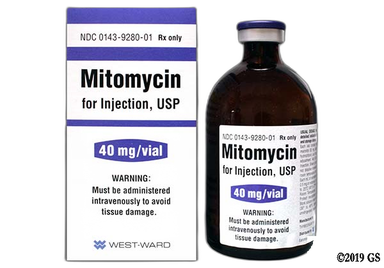
Mitomycin (Mutamycin) images