Key takeaways:
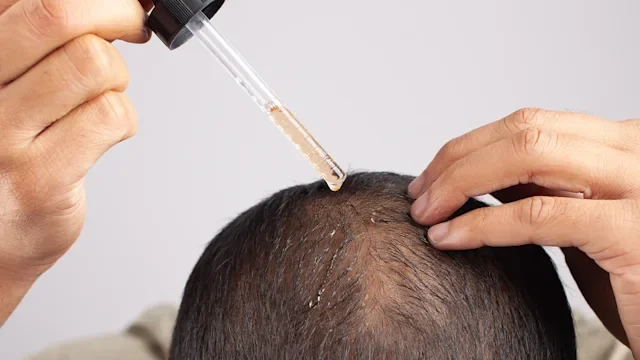
Minoxidil comes as a topical medication (Rogaine) and an oral tablet. Both forms work the same way: They widen blood vessels.
Topical minoxidil allows more blood to flow to the hair follicles where you apply it. Oral minoxidil relaxes blood vessels throughout your body, lowering blood pressure.
It takes each form of minoxidil about 2 to 4 months to start working. And it can take 6 months or longer to see full effects.
With GoodRx for Hair Loss, generic minoxidil costs as little as $20 per month.
Save on related medications
Minoxidil is one of several medications with multiple uses. It’s most well known for its use as an over-the-counter hair-loss treatment (sold under the brand name Rogaine). But minoxidil can also be used as a prescription-only blood pressure medication.
But how does one medication treat two different health conditions? What is minoxidil’s mechanism of action (the way it works)? Below are details on how minoxidil works and when you can expect results.
What is minoxidil’s mechanism of action?
Minoxidil is a vasodilator. This means it widens blood vessels, allowing more blood to flow through them. But the way minoxidil works for hair loss isn’t fully understood.
Scientists believe that minoxidil increases blood flow to your scalp. This brings more oxygen and nutrients to your hair follicles. Minoxidil may also help move your hair from a “resting phase” to a “growth phase.” This triggers new hair growth.
How does minoxidil work for high blood pressure?
Minoxidil works for hypertension (high blood pressure) by widening blood vessels. This allows blood to flow throughout your body more easily. But this effect can raise your heart rate. So it’s recommended to take minoxidil with another medication that can help limit this side effect, such as a beta blocker.
Do oral and topical minoxidil have the same mechanism of action?
Yes, both oral and topical minoxidil have the same mechanism of action (widening blood vessels). But oral minoxidil affects your whole body. Topical minoxidil only affects the area you apply it to.
One difference to keep in mind is that your body uses a certain enzyme (protein) to change minoxidil into its active form. Not everyone has high enough levels of this protein in their scalp for minoxidil to be activated. So the topical version doesn’t work for everyone.
In this case, prescribers may recommend taking oral minoxidil off-label for hair loss. There are higher levels of this protein in other areas of your body, such as in the liver. When you take the medication by mouth, it passes through your liver, where it’s activated by the protein. So for people with lower levels in their scalp, oral minoxidil may work better than topical versions.
How long does it take for minoxidil to start working?
Topical and oral minoxidil usually take about 2 to 4 months of consistent use to start seeing effects. And full benefits may take 6 months or longer. So patience is key.
You may notice some initial hair shedding during the first 2 weeks of treatment. This is normal and expected. It happens because minoxidil is changing your hair’s growth cycle. Sometimes, your follicles shed hair in order to change to a growth phase. Your body should replace this shedded hair with new, thicker hair.
How can you get the best results from minoxidil?
There are tips to keep in mind to get the best results from minoxidil:
Follow your product’s instructions. Make sure to use minoxidil as directed. Topical products are typically applied once or twice daily. Read your product’s instructions carefully. Applying minoxidil more frequently can raise the risk of side effects without making it work better.
Use it consistently. Minoxidil isn’t a medication you use only when needed. You have to use it every day in order for it to work. Skipping doses may stop you from experiencing the medication’s full benefits.
Be patient. It can take several months of consistent use before seeing minoxidil’s effects. Make sure you give it long enough to work.
Know when to talk to a healthcare professional. If you’ve followed the above tips without success, tell your prescriber. If you’ve been using topical minoxidil, they may suggest trying the oral version. They may also recommend a different hair loss treatment, such as finasteride (Propecia).
How to save on minoxidil
There are ways to save on minoxidil:
Save with GoodRx for Hair Loss. You can pay as little as $20 per month for generic minoxidil. That’s one clear price that includes the telehealth visit, medication, and delivery.
Save with GoodRx at the pharmacy. Anyone with a valid prescription can use GoodRx to purchase oral minoxidil 2.5 mg for as little as $10.50 per month. And a can of topical minoxidil 5% foam may cost as little as $28.31.
Save with Companion. You can access discounted prescription medications with a GoodRx Companion subscription. Over 200 medications are available for free, with hundreds more under $10. The program also includes benefits to help you cut your self-pay costs, such as lower prices for online care visits, discounts on dental care, and other health services.
Frequently asked questions
Adults with hair loss can use topical minoxidil. But the doses and directions for topical minoxidil differ for men and women. Be sure to follow the instructions on your product label.
You shouldn’t use minoxidil to try to prevent hair loss. This medication only works if you’re already experiencing this symptom.
Topical minoxidil’s side effects are limited to the area where you apply it. These include:
Initial hair shedding
Scalp irritation
Dandruff or scalp dryness
Changes to hair texture or color
Greasy scalp residue
Oral minoxidil can have fully-body side effects, such as:
Hair growth in other areas of your body
Eye puffiness
Fluid buildup
Lightheadedness
Higher heart rate
Headache
Low blood pressure
Most likely. Minoxidil works only for as long as you’re using it. If you stop using it, your hair loss will likely return. If you want to stop taking minoxidil, talk to your prescriber if you’d like to continue treating your hair loss. There are other options available.
Adults with hair loss can use topical minoxidil. But the doses and directions for topical minoxidil differ for men and women. Be sure to follow the instructions on your product label.
You shouldn’t use minoxidil to try to prevent hair loss. This medication only works if you’re already experiencing this symptom.
Topical minoxidil’s side effects are limited to the area where you apply it. These include:
Initial hair shedding
Scalp irritation
Dandruff or scalp dryness
Changes to hair texture or color
Greasy scalp residue
Oral minoxidil can have fully-body side effects, such as:
Hair growth in other areas of your body
Eye puffiness
Fluid buildup
Lightheadedness
Higher heart rate
Headache
Low blood pressure
Most likely. Minoxidil works only for as long as you’re using it. If you stop using it, your hair loss will likely return. If you want to stop taking minoxidil, talk to your prescriber if you’d like to continue treating your hair loss. There are other options available.
The bottom line
Minoxidil comes as a topical medication (Rogaine) and an oral tablet. Both forms have the same mechanism of action (how they work). Minoxidil works by widening blood vessels. Topical versions affect only the blood vessels where you apply it. Oral forms affect vessels throughout your body.
It takes each form of minoxidil about 2 to 4 months to start working. And you need to use minoxidil consistently in order for it to work. If you’re not seeing results from minoxidil after at least 6 months of regular use, talk to your healthcare team.

Why trust our experts?



References
Kaiser, M., et al. (2023). Treatment of androgenetic alopecia: Current guidance and unmet needs. Clinical, Cosmetic and Investigational Dermatology.
Patel, P., et al. (2023). Minoxidil. StatPearls.
Pietrauszka, K., et al. (2020). Sulfotransferase SULT1A1 activity in hair follicle, a prognostic marker of response to the minoxidil treatment in patients with androgenetic alopecia: A review. Advances in Dermatology and Allergology.