Key takeaways:
Topical minoxidil is an FDA-approved hair loss treatment. Oral minoxidil can be used off-label to treat hair loss, too.
You may need to use minoxidil once or twice a day, depending on the form. Use minoxidil every day to get the best results.
Minoxidil doesn’t cure hair loss. Your hair will go back to its usual growth pattern if you stop using minoxidil.
Save on related medications
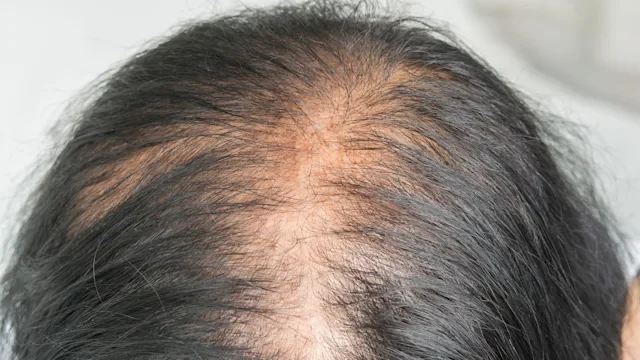
If you’ve experienced thinning hair or hair loss, you’re not alone. Up to half of all men experience hair loss by the time they’re 50 years old, and almost as many women do, too.
Fortunately, there are a number of different hair loss treatments available, like minoxidil. Minoxidil remains a first-line treatment for hair loss.
It takes time to see minoxidil’s effects on hair growth. And you may be wondering if you can speed things up by using minoxidil more often. But, when it comes to hair loss treatment, more medication isn’t always better.
Search and compare options
Here’s how often you should use minoxidil to get the best results.
How often should you use minoxidil?
How often you should use minoxidil depends on the product. Minoxidil is available in several forms including:
Topical solution
Topical foam
Oral pills
Both the topical solution and foam are FDA approved to treat hair loss in both men and women. They’re available over the counter (OTC) at retail pharmacies and many grocery stores.
You should follow the manufacturer’s instructions for application. In general:
Topical solution is applied twice a day.
Topical foam is applied once or twice a day.
Oral minoxidil is a prescription-only medication that can also be used off-label to promote hair growth. It’s taken once a day.
Studies show that both topical and oral minoxidil can work equally well to treat hair loss. Studies also show that both forms of topical minoxidil also work equally well. So, the best product depends on your medical history and your personal preferences.
It takes at least 4 months to see results from minoxidil treatment. Data from clinical trials showed that using topical minoxidil more often didn’t offer any additional benefits.
In general, people who used topical minoxidil more often than the recommended dose on the product didn’t see faster results. They also didn’t have thicker or fuller hair than the people who used minoxidil at standard doses. But people who used minoxidil more often were more likely to experience side effects, like unwanted facial hair growth and scalp irritation.
So, there’s no benefit to using minoxidil more often than what’s recommended by the product’s label. Following the manufacturers’ instructions will give you the best results, while also limiting the risk of unwanted side effects.
Follow your prescriber’s instructions if you’re taking oral minoxidil. Taking oral minoxidil more often than recommended can lead to serious side effects, like very low blood pressure and heart failure.
Do you have to use minoxidil every day?
Yes, you should use minoxidil every day to get the best results. In clinical trials, people used topical minoxidil every day. There aren’t many studies looking at whether less frequent minoxidil application offers the same results as daily minoxidil application. At this time, there’s no good evidence that using minoxidil less often can help you regrow hair.
For best results, use topical minoxidil daily. It can be hard to remember to use your product every day, especially if you need to use it twice a day. You can try setting a reminder on your phone or write out a schedule to remind yourself.
If you miss a dose, you can apply it as soon as you remember. If you completely forget to apply it one day, there’s no need to apply extra the next day. Just follow your usual dosing instructions.
How do you use minoxidil?
It can take a few tries to get the hang of applying topical minoxidil. Here’s a step-by-step guide on how to apply minoxidil foam or solution:
Clean your hands. Wash your hands with cool water and soap.
Measure the dose. Measure out your minoxidil dose according to the instructions on the package or as recommended by your healthcare team. Your product may come with a marked dispenser to help you measure out the right amount.
Apply. Apply minoxidil to areas of hair thinning and hair loss. Gently massage it in. Move on to the next area of hair loss and repeat the process until you’ve used up the entire dose.
Clean your hands. Wash your hands once you finish. And wash off any minoxidil that gets on your face, too.
Let it dry. Allow the minoxidil to dry completely before styling or blow-drying your hair or going to sleep.
Oral minoxidil is taken once a day with or without food. Some people start off taking a lower dose of the medication and then slowly increase their dose over time. Make sure to follow your healthcare team’s instructions regarding dosing.
When do you see results from minoxidil?
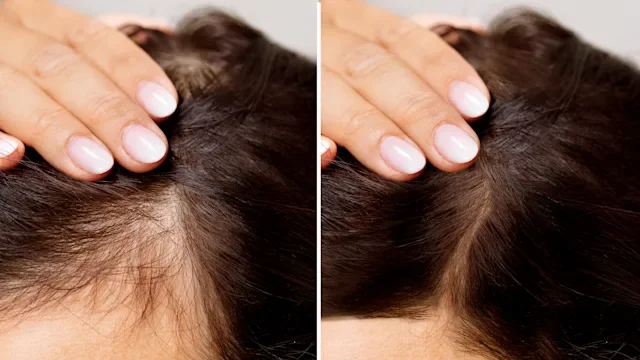
It takes time to see results from minoxidil. Many people start to see some results within 2 to 4 months. But it takes 6 to 12 months to see more significant hair regrowth.
Minoxidil shifts your hair follicles from a resting phase to a growth phase. This change takes time. And it takes even more time for your hair to grow long enough so that you see improvements in areas of thinning or baldness.
It’s important to stick with your daily minoxidil routine during this time. This will allow you to get the best results from your treatment.
It’s also helpful to know that you may see increased hair shedding when you first start using minoxidil. Your hair follicles will shed the old hair when it shifts from a rest phase to a growth phase. Then it grows a new strand of hair. So, shedding is the first sign that the medication is working. Shedding usually lasts for 2 weeks after you first start using minoxidil.
What happens when you stop using minoxidil?
Minoxidil doesn’t cure hair loss. You have to use minoxidil forever if you want to maintain your hair regrowth. Your hair will go back to its usual growth pattern if you stop using minoxidil.
You’ll see a gradual loss of hair regrowth if you stop using minoxidil. Within 1 to 2 months, you’ll start to experience hair shedding. Over the next several months, you’ll start to notice hair thinning and areas of hair loss. It may take up to a year before you lose all hair regrowth.
Using minoxidil is a long-term commitment. But it offers an effective and safe solution to hair thinning and hair loss.
The bottom line
Minoxidil is an effective hair loss treatment, whether it’s in topical or oral form. You’ll need to use it daily to get the best results. You should follow the manufacturer’s or your healthcare team’s instructions for minoxidil dosing. Using minoxidil more often than recommended won’t speed up results. Minoxidil doesn’t cure hair loss. You have to keep using it long term to maintain hair regrowth.

Why trust our experts?



References
American Academy of Dermatology. (2022). Hair loss: Diagnosis and treatment.
American Hair Loss Association. (n.d.). Low-dose oral minoxidil (Loniten).
Asfour, L., et al. (2023). Male androgenetic alopecia. Endotext.
Beach, R. A., et al. (2021). Side effects of low-dose oral minoxidil for treating alopecia. Journal of the American Academy of Dermatology.
Daylogic. (n.d.). Minoxidil topical solution USP, 2% [packaging]. DailyMed.
Patel, P., et al. (2023). Minoxidil. StatPearls.
Penha, M. A., et al. (2024). Oral minoxidil vs. topical minoxidil for male androgenetic alopecia: A randomized clinical trial. JAMA Dermatology.
Shadi, Z. (2023). Compliance to topical minoxidil and reasons for discontinuation among patients with androgenetic alopecia. Dermatology and Therapy.
Shannon, F., et al. (2016). Demographics of women with female pattern hair loss and the effectiveness of spironolactone therapy. Journal of the American Academy of Dermatology.
Suchonwanit, P., et al. (2019). Minoxidil and its use in hair disorders: A review. Drug Design, Development and Therapy.
White, L., et al. (2024). Treatment of hair loss with minoxidil. American Family Physician.