



What Is Serotonin Syndrome? What You Need to Know If You Take SSRIs
Serotonin syndrome is a reaction to commonly prescribed medications and supplements. Learn what serotonin syndrome is, what causes it, and how to treat it.
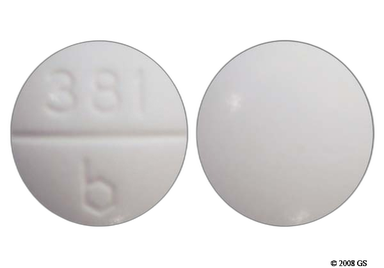
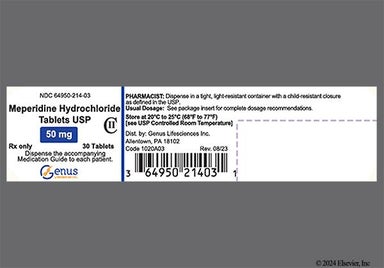
Demerol (meperidine) is an opioid medication that's typically used for pain when other treatment options haven't worked well. Your provider will work with you closely to find a safe dosage that can help relieve your pain. It shouldn't be used long term because of its serious risks and side effects, such as withdrawal if you stop the medication suddenly. Demerol (meperidine) is available as generic pill and liquid, as well as a brand-name and generic injection.

Demerol (meperidine) is an opioid. It works by attaching to certain proteins in your brain to change how you perceive pain. It helps lower how much pain you feel.
| Common Brands | Demerol |
|---|---|
| Drug Class | Opioid |
| Controlled Substance Classification | Schedule II |
| Generic Status | Lower-cost generic available |
| Availability | Prescription only |

Demerol (meperidine) can cause some serious health issues. This risk may be even higher for certain groups. If this worries you, talk to your doctor or pharmacist about other options.
 Demerol (meperidine) can cause dangerously slow breathing, which can be life-threatening. This can happen to anyone and at any time. But the risk is highest when you first start treatment or when your dose goes up. Don't take Demerol (meperidine) with alcohol or other medications that slow your body down (e.g., benzodiazepines, other opioids, muscle relaxants). Doing so raises your risk of extremely slowed breathing.
 Discuss with your provider about getting naloxone (Narcan) if you're concerned with the risk of overdosing with Demerol (meperidine). Naloxone can help reverse the effects of opioids and possibly save your life. Call 911 or get medical help right away if you or your loved ones notice that you have trouble breathing or have bluish-colored lips, fingers, or toes.
Demerol (meperidine) is a controlled substance that has a risk for addiction and misuse. Misusing this medication might cause it to not work as well. It can also raise the risk for serious and possibly life-threatening side effects, such as dangerously slow breathing, extreme sleepiness, and opioid overdose.
Because of these risks, the FDA has required Demerol (meperidine) and all opioids to be under a Risk Evaluation and Mitigation Strategy (REMS) program. This means your provider or pharmacist will talk to you about proper use, serious risks, and appropriate storage and disposal of this medication to keep you and your loved ones safe.
Take Demerol (meperidine) exactly as prescribed to lower your risk of addiction and misuse. Don't change the dose or how often you take it without talking to your provider first. Your healthcare provider will prescribe the lowest amount of Demerol (meperidine) that's necessary to manage your pain for the shortest period of time possible.
Take Demerol (meperidine) exactly as prescribed. Taking too much Demerol (meperidine) or taking it more often than prescribed can lead to an overdose. Symptoms of an opioid overdose include not responding to sound or touch, extremely slowed breathing, extreme sleepiness, slow heartbeat, and cold or clammy skin.
Be sure you and your loved ones know how to recognize an overdose. Your provider will probably recommend naloxone (Narcan), an opioid antagonist that can treat an opioid overdose. Make sure you carry naloxone with you at all times in case you experience an overdose. Call 911 right away if this happens. Store your medication out of reach from children, pets, or visitors to prevent accidental exposure or overdose.
Demerol (meperidine) can interact with other medications, which can change how it affects your body and pain overall. Some medications can raise the amount of Demerol (meperidine) in your body and cause fatal respiratory depression (slowed breathing). Others can lower the amount of Demerol (meperidine) and lead to poor control of your pain.
Some examples of medications that might interact with Demerol (meperidine) include certain antibiotics, antifungals, and medications used for anxiety or depression. If you're already taking stable doses of Demerol (meperidine) together with one of these other medications, don't stop taking them suddenly. Doing so can also lead to unsafe Demerol (meperidine) levels.
Let your provider or pharmacist know what other medications you take or plan to take to make sure they're safe to take with Demerol (meperidine). Also avoid drinking alcohol while you're taking Demerol (meperidine) because this combination can lead to serious side effects, such as slowed breathing, extreme sedation, and low blood pressure.
There's a high risk that your newborn baby could develop withdrawal symptoms if you've been using Demerol (meperidine) for a long time during pregnancy. This condition is called neonatal opioid withdrawal syndrome and can be life-threatening if not recognized and treated in time. If you're pregnant or think you might be pregnant, talk to your provider about all the risks that come with taking this medication.
Rarely, Demerol (meperidine) can cause you to be more sensitive to pain or have a higher amount of pain. Never try to raise your dose of Demerol (meperidine) without talking to your provider, since this could lead to a life-threatening overdose. Contact your healthcare provider if you're having more pain, feel more sensitive to pain, or feel pain from things that usually don't cause you pain.
Serotonin syndrome is a rare, but life-threatening condition caused by very high levels of serotonin in the brain. Your risk goes up if you use Demerol (meperidine) with other medications that affect serotonin (such as antidepressants, certain migraine medications, and St. John's wort). Symptoms of serotonin syndrome include fast heart rate, sweating, muscle stiffness or spasms, fever, and confusion. Get medical attention right away if you notice any of these symptoms.
Some people taking opioids like Demerol (meperidine) experienced low adrenal hormone levels. This might be more likely to happen after taking opioids for longer than 1 month. Symptoms include tiredness, weakness, not feeling hungry, nausea, and vomiting. Tell your provider if you experience these symptoms. If your adrenal hormone levels are too low, you might need to stop Demerol (meperidine) and get treated with corticosteroids.
Demerol (meperidine) can cause extremely low blood pressure. A drop in blood pressure can happen when you stand from a sitting or lying down position. This can lead to dizziness and fainting. To avoid falling, get up slowly if you've been sitting or lying down. Talk to your healthcare provider if the dizziness or lightheadedness doesn't go away.
If taken regularly for a long time, Demerol (meperidine) can cause physical dependence. This means that your body relies on the medication to function. And you might experience withdrawal if you stop taking the medication suddenly. Withdrawal symptoms include anxiety, restlessness, irritability, runny nose, yawning, sweating, chills, and body aches. Don't lower your dose or stop taking the medication suddenly without talking to your healthcare provider first. To prevent withdrawal, your provider will lower your dose little by little until you can stop the medication safely. Talk to your healthcare provider about alternative pain medications if you have concerns about taking Demerol (meperidine) because of this risk.
Demerol (meperidine) can cause extreme sleepiness and lower your ability to think, react, and focus. Don't mix Demerol (meperidine) with alcohol or take other medications that can cause sleepiness or "brain fog" (e.g., benzodiazepines, muscle relaxants, sleep medications). Doing so can worsen these side effects. Make sure you know how Demerol (meperidine) affects you before driving a car or doing activities that require your concentration. Talk to your healthcare provider right away if you feel too sleepy from taking Demerol (meperidine).
People who have a history of seizures are at higher risk of having seizures while they're taking Demerol (meperidine). In addition, people who have certain heart rhythm conditions (arrhythmias) can develop a fast heartbeat while taking this medication. Talk to your provider about your full medical history before you start this medication.
Don't use Demerol (meperidine) if you have certain stomach conditions or GI blockage because it can worsen your problems. Let your provider know if you experience stomach pain, feeling of fullness in your stomach, or extreme constipation while taking this medication. They'll examine your digestive tract to see what the problem might be.

The following side effects may get better over time as your body gets used to the medication. Let your healthcare provider know immediately if you continue to experience these symptoms or if they worsen over time.
Contact your healthcare provider immediately if you experience any of the following.
Side effects that you should report to your care team as soon as possible:
Side effects that usually do not require medical attention (report these to your care team if they continue or are bothersome):




Your provider will work with you to prescribe the right dose of Demerol (meperidine) for your individual needs. It's recommended to use the lowest dose possible for the shortest duration of time to manage your pain.


Contraindications are specific health conditions or situations in which a person should not take a medication due to safety concerns. If you have any of the following conditions or if any of the following apply to you, let your healthcare provider know because Demerol (meperidine) will not be safe for you to take.



Prescription savings
Stop paying too much for your prescriptions. Compare prices, get pharmacy coupons, and save up to 80%. Find expert answers to your health questions so you can make the best decisions for yourself and your family.
Health conditions
Medications & treatment
Access & affordability
 Our monthly healthcare membership can help you save thousands on your prescription costs.
Resources

Yes, Meperidine is a narcotic. Like other narcotics (a term that refers to opioids), it's a controlled substance. This is because it has risks of misuse and dependence (when you rely on a medication to function normally).
Pain relief from Meperidine typically only lasts a few hours (about 2.5 to 3.5 hours). This is why typical dosing for the medication is every 3 to 4 hours on an as-needed basis for your pain.
In healthy people, it takes about 15 to 40 hours for the body to get rid of Meperidine fully after a single dose of medication. This means that if you're having side effects like constipation or sleepiness, it can sometimes take up to this amount of time for them to go away. However, if you have kidney or liver problems, it could take longer for your body to process the medication and for side effects to disappear. Talk with your provider if any side effects you have from Meperidine are too bothersome or don't go away with time.
Long-term use of Meperidine can raise your risk for serious side effects, such as seizures. This is because the medication breaks down into a toxic substance that can build up in your body over time. In addition, long-term use of Meperidine also raises your risk for bothersome and sometimes serious withdrawal symptoms if you stop taking the medication all of a sudden. Talk to your provider about other alternatives if you have chronic (long-term) pain.
Yes. In fact, constipation is a common side effect from opioid medications like Meperidine. This is because these medications slow down your gut. Make sure to drink plenty of fluids, exercise regularly, and eat foods that are high in fiber. If you become constipated, talk to your provider about over-the-counter or prescription treatment options that can help.
Some research suggests that Meperidine can help with shivering that sometimes happens after a procedure. Keep in mind that Meperidine isn't FDA-approved to treat or prevent shivering due to any reason. This is considered an "off-label" use of the medication.
No, you shouldn't drink alcohol while you're taking Meperidine. When combined, Meperidine and alcohol can raise your risk for serious side effects such as extreme sedation, low blood pressure, and breathing problems.
Talk to your provider about whether you can take over-the-counter (OTC) pain medications, such as acetaminophen (Tylenol), naproxen (Aleve), or ibuprofen (Advil). Taking non-opioid pain medications in addition to Meperidine might give you extra pain relief. It could also help you take less Meperidine to manage your pain, which could in turn lessen your risks from opioid use. Your pharmacist or provider can help make sure other medications are safe for you to take with Meperidine.
