



How Much Is Latisse Without Insurance?
Read about the average cost of Latisse (bimatoprost) without insurance and ways to save with GoodRx.
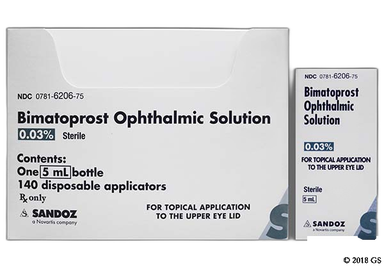
Bimatoprost (Latisse) is a prostaglandin that's used for people who need help with eyelash growth. Though unclear, it's thought to increase the number of eyelash hairs that are growing. Bimatoprost (Latisse) is a liquid that you apply directly onto the edge of the upper eyelid where your eyelashes are. This medication is used once every night. Side effects include itchy or red eyes. It might also darken the skin around your eyes.

Bimatoprost (Latisse) is a prostaglandin. It’s not known exactly how the medication works to improve eyelash growth. But it might cause more eyelash hairs to grow. The medication is also thought to make eyelashes longer, thicker, and darker.
| Common Brands | Latisse |
|---|---|
| Drug Class | Prostaglandin |
| Controlled Substance Classification | Not a controlled medication |
| Generic Status | Lower-cost generic available |
| Availability | Prescription only |

The following side effects may get better over time as your body gets used to the medication. Let your healthcare provider know immediately if you continue to experience these symptoms or if they worsen over time.
Side effects that you should report to your care team as soon as possible:
Side effects that usually do not require medical attention (report these to your care team if they continue or are bothersome):




Bimatoprost (Latisse) can cause some serious health issues. This risk may be even higher for certain groups. If this worries you, talk to your doctor or pharmacist about other options.
Bimatoprost is also used in the eye to treat high eye pressure in people with conditions like glaucoma. Using bimatoprost (Latisse) on the eyelids might lower eye pressure on its own, but not by enough to cause concerning problems. Using bimatoprost (Latisse) at the same time as other eye drops for high eye pressure, like bimatoprost (Lumigan) or latanoprost (Xalatan), can affect how much the medications lower your eye pressure. Make sure your prescriber and optometrist knows about all of the eye medications you use before you start bimatoprost (Latisse).
Bimatoprost (Latisse) can darken the color of your eyes, eyelids, and eyelashes. The change in color might not be noticeable until you've used bimatoprost (Latisse) for a few months or years. Brown coloring of your eyes can be permanent. The skin around your eyes and your eyelashes might also become darker, but this usually goes away after you stop using the medication. These side effects aren't known to be harmful, but it's best to check in with your prescriber regularly to make sure your eyes stay healthy.
Bimatoprost (Latisse) can cause more hair to grow on areas other than your eyelashes, especially on skin that often come in contact with the medication (e.g., if the medication were to run down your cheeks). Apply bimatoprost (Latisse) only to the upper eyelid at the base of the eyelashes using the provided applicators. Make sure to blot out any excess solution so that the medication doesn't get onto other parts of your face or body.
Prostaglandins like bimatoprost (Latisse) can cause or worsen eye inflammation. In addition, some people developed swelling in the macula (a part of the retina in the eye that's important for clear vision) when they used bimatoprost eye drops for glaucoma. These problems are more likely to happen if you already have eye inflammation or if the lens of your eye is damaged or missing. Talk to your optometrist right away if you notice eye discomfort or changes in your vision while you use bimatoprost (Latisse).

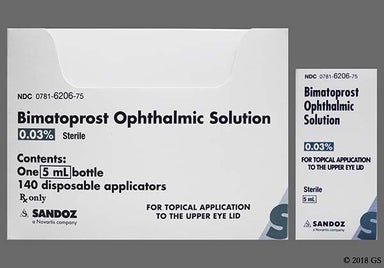
 Bottle of topical solution
| Dosage | Quantity | Price as low as | Price per unit |
|---|---|---|---|
| 3ml of 0.03% | 1 bottle | $38.25 | $38.25 |
| 5ml of 0.03% | 1 bottle | $61.31 | $61.31 |
The typical dose is 1 drop for each eye once per night. For each eye, use a new, clean applicator to apply the drop along the upper eyelid where your eyelashes grow out from.


Contraindications are specific health conditions or situations in which a person should not take a medication due to safety concerns. If you have any of the following conditions or if any of the following apply to you, let your healthcare provider know because Bimatoprost (Latisse) will not be safe for you to take.




Prescription savings
Stop paying too much for your prescriptions. Compare prices, get pharmacy coupons, and save up to 80%. Find expert answers to your health questions so you can make the best decisions for yourself and your family.
Health conditions
Medications & treatment
Access & affordability
 Our monthly healthcare membership can help you save thousands on your prescription costs.
Resources

Latisse is available by prescription only. Call your local pharmacy to see whether they have Latisse in stock. If not, they might be able to order it for your prescription.
In one study, people reported having about an 20% improvement in eyelash length and darkness and over 100% improvement in eyelash fullness after they used Latisse once per day for 4 months. Follow up with your prescriber about how well Latisse is working for you and about any concerns you have about your eyelash growth.
In clinical studies, people started to have eyelash growth as early as a week after they started using Latisse. But it can take 4 months to get the maximum benefit from the medication. Talk to your healthcare professional (HCP) if you're concerned with how well Latisse is working for you.
Latisse isn't FDA-approved for helping with eyebrow growth. But there are some reports that the medication might help with this problem; this is considered off-label use. Don't use Latisse on your eyebrows without discussing it with a healthcare professional (HCP) first.
Latisse is typically safe as long as you use it as directed and as long as you follow up with your prescriber regularly. There aren't any well-known severe side effects from Latisse. Cases of macular edema, or swelling in the back of the eye that can cause vision changes, were reported with Lumigan, a different brand name of bimatoprost that's used to treat glaucoma. Since Latisse also contains bimatoprost, it's possible for macular edema to develop as well if the medication gets into your eye. To keep your risk low, make sure you know how to properly apply Latisse. Contact your optometrist if you notice changes in your vision while you're using this medication.
Yes, it's possible for Latisse to turn your eye color brown. The medication can raise the levels of a protein called melanin in your eyes; melanin controls how dark your eye color is. This change in eye color is probably permanent, and it might not be noticeable until months to years after you start using Latisse. This medication can also darken the color of your eyelids as well. But your eyelids are likely to go back to normal after you stop using the medication.
If you're pregnant or thinking of getting pregnant, speak with a healthcare professional (HCP) before you use Latisse to see whether it's right for you. There haven't been any strong evidence about how Latisse affects pregnancy and unborn babies, so it's not completely known how safe the medication is. Some studies show that there isn't a higher risk of problems during pregnancy or harm to babies with prostaglandin medications, but the risk can't be completely ruled out.
