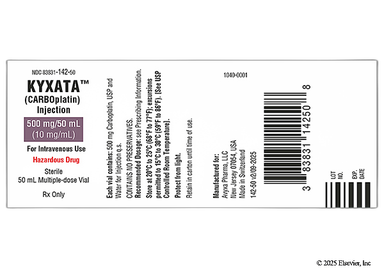
Kyxata
CARBOPLATIN treats some types of cancer. It works by slowing down the growth of cancer cells. Compare platinum-based drugs.
What is Kyxata?
Overview
Carboplatin belongs to the group of medicines known as alkylating agents. It is used to treat cancer of the ovaries. It may also be used to treat other kinds of cancer, as determined by your doctor.
Carboplatin interferes with the growth of cancer cells, which eventually are destroyed. Since the growth of normal body cells may also be affected by carboplatin, other effects also will occur. Some of these may be serious and must be reported to your doctor. Other effects may not be serious but may cause concern. Some effects may not occur until months or years after the medicine is used.
Before you begin treatment with carboplatin, you and your doctor should talk about the good this medicine will do as well as the risks of using it.
Carboplatin is to be administered only by or under the immediate supervision of your doctor.
Commonly Used Brand Name(s)
Paraplatin, Paraplatin NovaPlus
Therapeutic Classifications
Antineoplastic Agent
Pharmacologic Classifications
Platinum Coordination Complex
Blackbox Warning
Intravenous route (Solution)
Bone marrow suppression with carboplatin is dose-related and may be severe, resulting in infection and/or bleeding. Anemia may be cumulative and may require transfusion support. Vomiting is another frequent drug-related side effect. Anaphylactic-like reactions to carboplatin have been reported and may occur within minutes of carboplatin administration.
Proper Use
This medicine is sometimes given together with certain other medicines. If you are using a combination of medicines, it is important that you receive each one at the proper time. If you are taking some of these medicines by mouth, ask your healthcare professional to help you plan a way to take them at the right times.
This medicine usually causes nausea and vomiting that sometimes may be severe. However, it is very important that you continue to receive the medicine, even if you begin to feel ill. Ask your healthcare professional for ways to lessen these effects, especially if they are severe.
Dosing
The dose of this medicine will be different for different patients. Follow your doctor's orders or the directions on the label. The following information includes only the average doses of this medicine. If your dose is different, do not change it unless your doctor tells you to do so.
The amount of medicine that you take depends on the strength of the medicine. Also, the number of doses you take each day, the time allowed between doses, and the length of time you take the medicine depend on the medical problem for which you are using the medicine.
Before Using
In deciding to use a medicine, the risks of taking the medicine must be weighed against the good it will do. This is a decision you and your doctor will make.
Allergies
Tell your doctor if you have ever had any unusual or allergic reaction to this medicine or any other medicines. Also tell your healthcare professional if you have any other types of allergies, such as to foods, dyes, preservatives, or animals. For non-prescription products, read the label or package ingredients carefully.
Pediatric
Studies on this medicine have been done only in adult patients and there is no specific information comparing use of carboplatin in children with use in other age groups.
Geriatric
Some side effects of carboplatin (especially blood problems or numbness or tingling in fingers or toes) may be more likely to occur in the elderly.
Breastfeeding
There are no adequate studies in women for determining infant risk when using this medication during breastfeeding. Weigh the potential benefits against the potential risks before taking this medication while breastfeeding.
Drug Interactions
Although certain medicines should not be used together at all, in other cases two different medicines may be used together even if an interaction might occur. In these cases, your doctor may want to change the dose, or other precautions may be necessary. When you are taking this medicine, it is especially important that your healthcare professional know if you are taking any of the medicines listed below. The following interactions have been selected on the basis of their potential significance and are not necessarily all-inclusive.
Using this medicine with any of the following medicines is not recommended. Your doctor may decide not to treat you with this medication or change some of the other medicines you take.
- Measles Virus Vaccine, Live
- Mumps Virus Vaccine, Live
- Rotavirus Vaccine, Live
- Rubella Virus Vaccine, Live
- Varicella Virus Vaccine, Live
- Zoster Vaccine, Live
Using this medicine with any of the following medicines is usually not recommended, but may be required in some cases. If both medicines are prescribed together, your doctor may change the dose or how often you use one or both of the medicines.
- Adenovirus Vaccine
- Bacillus of Calmette and Guerin Vaccine, Live
- Candesartan
- Cholera Vaccine, Live
- Dengue Tetravalent Vaccine, Live
- Influenza Virus Vaccine, Live
- Poliovirus Vaccine, Live
- Smallpox Vaccine
- Typhoid Vaccine, Live
- Warfarin
- Yellow Fever Vaccine
Using this medicine with any of the following medicines may cause an increased risk of certain side effects, but using both drugs may be the best treatment for you. If both medicines are prescribed together, your doctor may change the dose or how often you use one or both of the medicines.
Other Interactions
Certain medicines should not be used at or around the time of eating food or eating certain types of food since interactions may occur. Using alcohol or tobacco with certain medicines may also cause interactions to occur. Discuss with your healthcare professional the use of your medicine with food, alcohol, or tobacco.
Other Medical Problems
The presence of other medical problems may affect the use of this medicine. Make sure you tell your doctor if you have any other medical problems, especially:
- Chickenpox (including recent exposure) or
- Herpes zoster (shingles)—Risk of severe disease affecting other parts of the body
- Hearing problems—May be worsened by carboplatin
- Infection—Carboplatin decreases your body's ability to fight infection
- Kidney disease—Effects may be increased because of slower removal from the body
Precautions
It is very important that your doctor check your progress at regular visits to make sure that this medicine is working properly and to check for unwanted effects.
While you are being treated with carboplatin, and after you stop treatment with it, do not have any immunizations (vaccinations) without your doctor's approval. Carboplatin may lower your body's resistance and there is a chance you might get the infection the immunization is meant to prevent. In addition, other people living in your household should not take oral polio vaccine since there is a chance they could pass the polio virus on to you. Also, avoid people who have taken oral polio vaccine within the last several months. Do not get close to them, and do not stay in the same room with them for very long. If you cannot take these precautions, you should consider wearing a protective face mask that covers the nose and mouth.
Carboplatin can temporarily lower the number of white blood cells in your blood, increasing the chance of getting an infection. It can also lower the number of platelets, which are necessary for proper blood clotting. If this occurs, there are certain precautions you can take, especially when your blood count is low, to reduce the risk of infection or bleeding:
- If you can, avoid people with infections. Check with your doctor immediately if you think you are getting an infection or if you get a fever or chills, cough or hoarseness, lower back or side pain, or painful or difficult urination.
- Check with your doctor immediately if you notice any unusual bleeding or bruising; black, tarry stools; blood in urine or stools; or pinpoint red spots on your skin.
- Be careful when using a regular toothbrush, dental floss, or toothpick. Your medical doctor, dentist, or nurse may recommend other ways to clean your teeth and gums. Check with your health care professional before having any dental work done.
- Do not touch your eyes or the inside of your nose unless you have just washed your hands and have not touched anything else in the meantime.
- Be careful not to cut yourself when you are using sharp objects such as a safety razor or fingernail or toenail cutters.
- Avoid contact sports or other situations where bruising or injury could occur.

