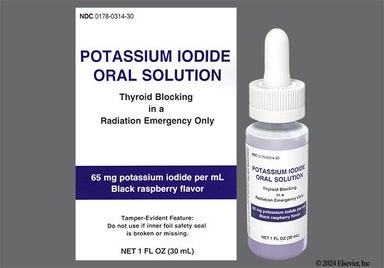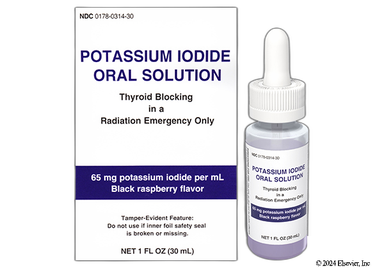
potassium iodide
Potassium iodide protects your thyroid gland from harmful radioactive iodine after a nuclear emergency. This helps reduce your risk of cancer and other health problems caused by radioactive exposure. Potassium iodide is available as a prescription oral solution for adults or as over-the-counter (OTC) tablets for adults and children. The dose depends on your age and the recommendations of public health officials or your prescriber. Side effects can include nausea, diarrhea, fever, and a metallic taste in the mouth.


What is Potassium iodide?
What is Potassium iodide used for?
- Protects the thyroid gland from radioactive iodine exposure during nuclear emergencies
How Potassium iodide works
Potassium iodide is an antithyroid medication. The medication works by blocking harmful radioactive iodine from building up in the thyroid gland. It forces the thyroid gland to absorb the stable iodine in the medication, filling it up so it can't take in radioactive iodine.
Drug facts
| Common Brands | ThyroSafe, iOSAT |
|---|---|
| Drug Class | Antithyroid |
| Controlled Substance Classification | Not a controlled medication |
| Generic Status | Lower-cost generic available |
| Availability | Prescription or over-the-counter |
More on Potassium iodide essentials


Side effects of Potassium iodide
The following side effects may get better over time as your body gets used to the medication. Let your healthcare provider know immediately if you continue to experience these symptoms or if they worsen over time.
Common Side Effects
- Swelling of the salivary glands
- Nausea
- Vomiting
- Diarrhea
- Stomach pain
- Fever
- Headache
- Metallic taste
Less Common Side Effects
- Chest pain
- Changes in heart rate
Potassium iodide serious side effects
Contact your healthcare provider immediately if you experience any of the following.
- Serious allergic reaction: trouble breathing or swallowing, skin rash, fever with joint pain; swelling in face, hands, or feet
The following Potassium iodide side effects have also been reported
Side effects that you should report to your care team as soon as possible:
- Allergic reactions—skin rash, itching, hives, swelling of the face, lips, tongue, or throat
- Low thyroid levels (hypothyroidism)—unusual weakness or fatigue, increased sensitivity to cold, constipation, hair loss, dry skin, weight gain, feelings of depression
Side effects that usually do not require medical attention (report to your care team if they continue or are bothersome):
- Change in taste
- Diarrhea
- Headache
- Nausea
- Upset stomach
- Vomiting

Pros and cons of Potassium iodide
Pros
- Tablets are available over the counter at your pharmacy
- Might only need to take one dose
- Can be used by most people, including adults and children of all ages
Cons
- Can cause an allergic reaction
- Can leave a metallic taste in your mouth
- Need to take it soon after a radiation exposure to get the most benefit

Pharmacist tips for Potassium iodide

- Anyone who is exposed to radioactive iodine can take potassium iodide, but public health officials will guide you on how much to take or if it's needed. Infants, children, and pregnant women are usually at the highest risk of harm from radioactive iodine, but high exposures can put anyone at risk.
- Don’t take more potassium iodide than needed, and never more than one dose in 24 hours. Taking extra won’t provide more protection from radiation poisoning and can raise your risk of side effects.
- You can take potassium iodide with or without food. But taking it with food or milk might help reduce stomach upset.
- Potassium iodide tablets can be crushed to make an oral solution for people with trouble swallowing. Mix the crushed tablets in water then combine with white or chocolate milk, orange juice, flat soda, raspberry syrup, or infant formula. Refer to the instructions on the package to mix the right amount.
- Store potassium iodide in a dry place at room temperature. The prescription oral solution can be stored until the expiration date on the bottle. But if you've created an oral solution from crushed tablets, you can store that in the refrigerator for up to 7 days. Protect potassium iodide from light.

Risks and warnings for Potassium iodide
Potassium iodide can cause some serious health issues. This risk may be even higher for certain groups. If this worries you, talk to your doctor or pharmacist about other options.
Serious allergic reactions
- Risk factors: Allergy to iodides
You might have an allergic reaction to potassium iodide. This is likely due to the iodide ingredient in the medication. The reaction can cause swelling, trouble breathing or swallowing, skin rash, or fever with joint pain. Be sure to contact a healthcare professional (HCP) or get medical help right away if you develop any of these symptoms.
Thyroid problems
- Risk factors: History of high thyroid hormone levels (hyperthyroidism) | Taking potassium iodide for a long period of time | Young children, newborns, and infants | People who are pregnant or breastfeeding
Potassium iodide can affect how your thyroid gland works. This medication is usually taken for one day, so short-term use is considered safe. But taking it for longer periods might raise the risk for thyroid problems. If you’re pregnant, breastfeeding, or have a child under 1 month old, let your healthcare professional know.

Potassium iodide dosage
 Bottle of oral solution
| Dosage | Quantity | Price as low as | Price per unit |
|---|---|---|---|
| 30ml of 65mg/ml | 1 bottle | $26.03 | $26.03 |

How much does Potassium iodide cost?
$26.03

Potassium iodide contraindications
Contraindications are specific health conditions or situations in which a person should not take a medication due to safety concerns. If you have any of the following conditions or if any of the following apply to you, let your healthcare provider know because Potassium iodide will not be safe for you to take.
- Allergy to iodides
- Nodular thyroid disease with heart disease
- Hypocomplementemic vasculitis
- Dermatitis herpetiformis

Potassium iodide images